Pisa
Plague 2019
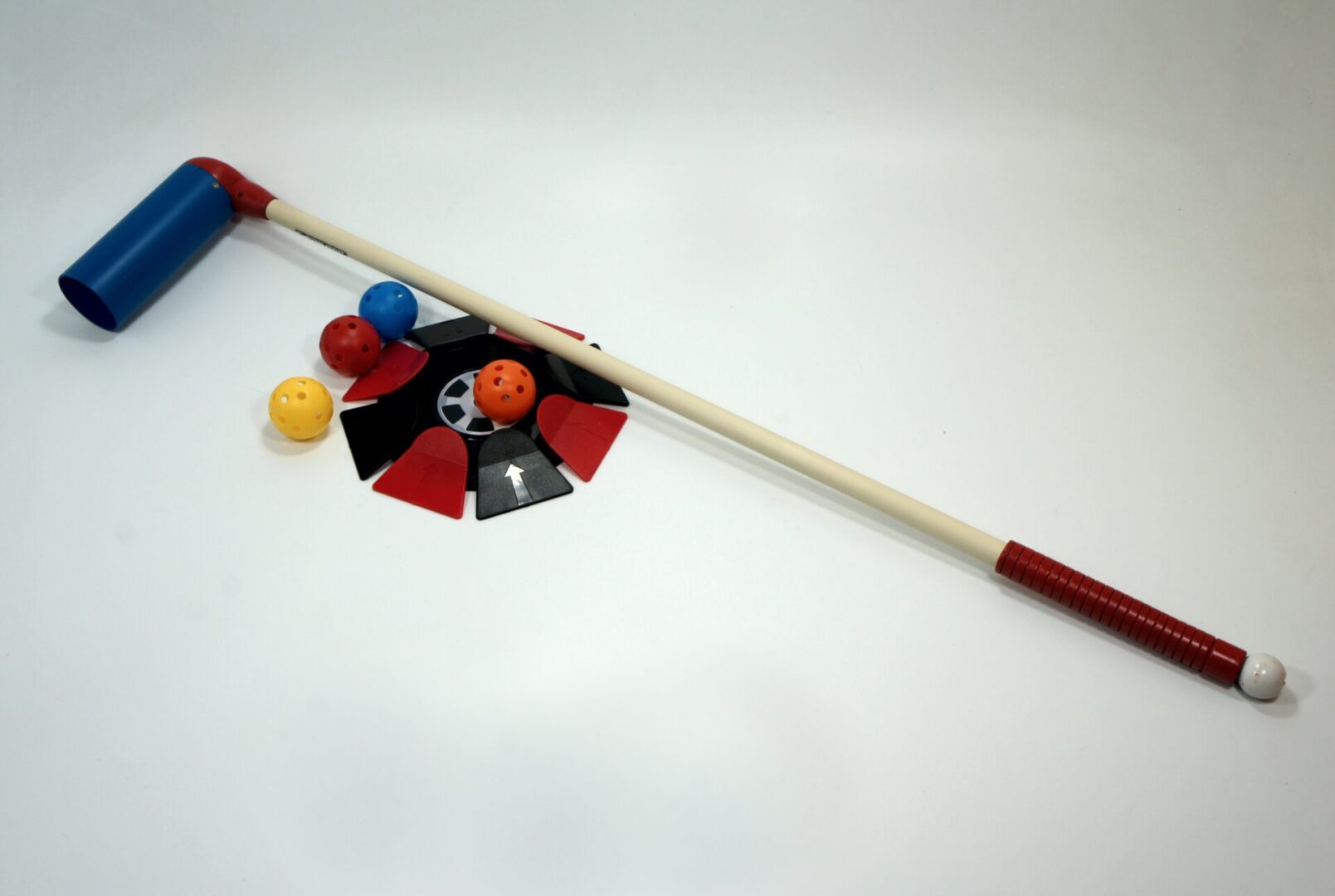
Pop Shot Golf 2020
Qwordle 2016
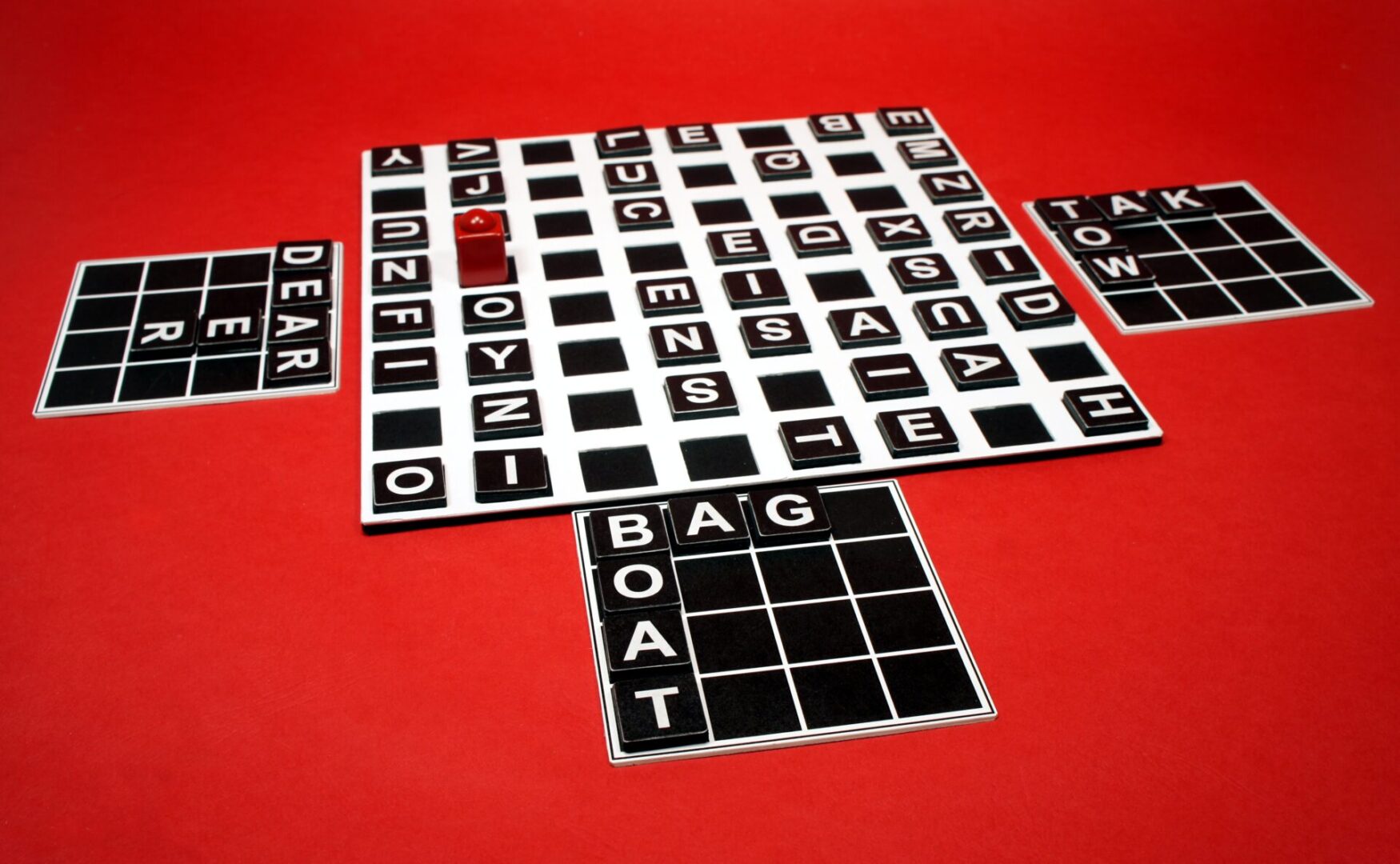
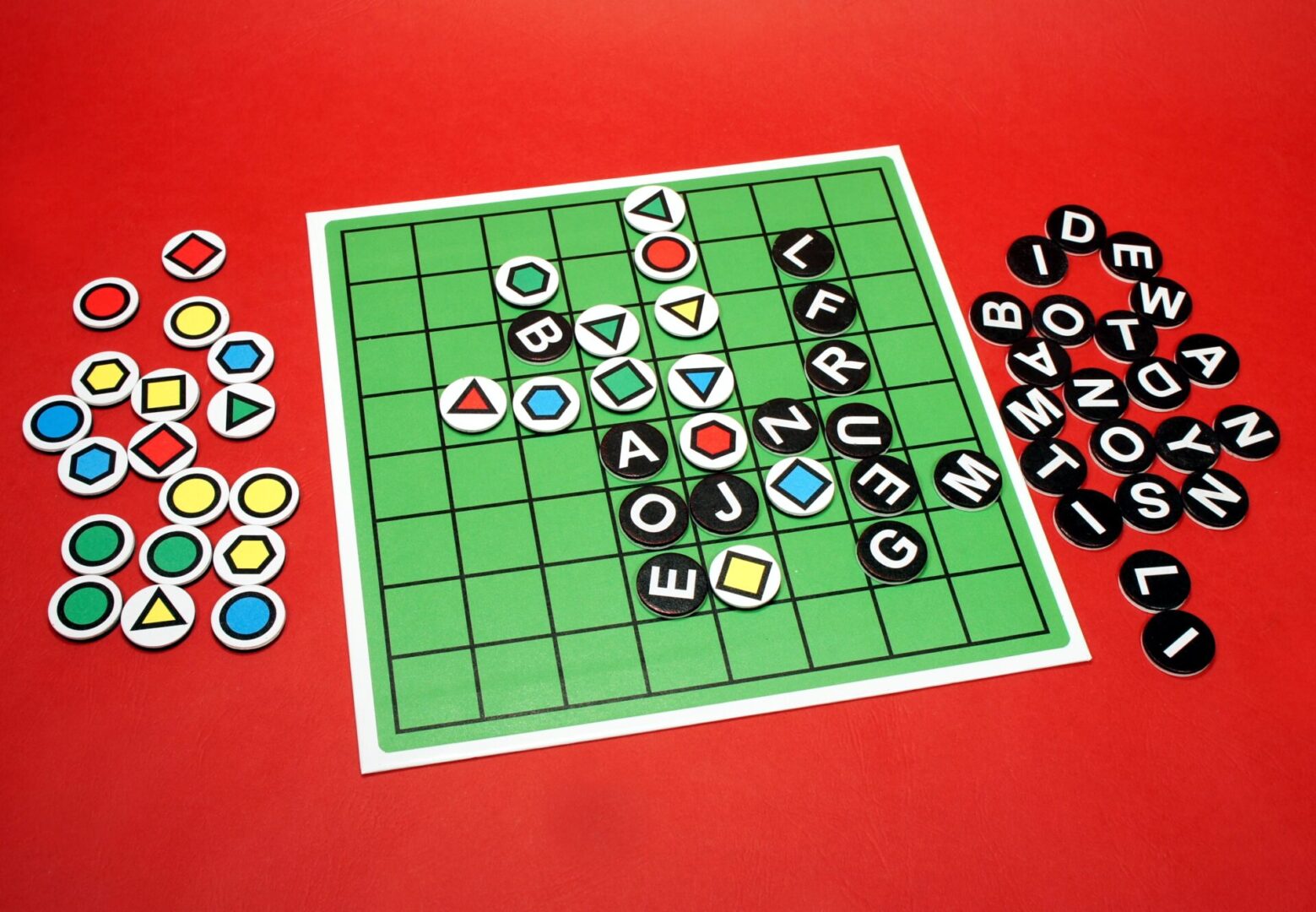
- Contents: 1 game board, 4 collecting boards, 64 tiles (printed on 2 sides with letters and symbols), and rules.
- Players: 2–4
- Object: Score the most points by forming words on your collecting board.
-
To Play:
- Place all 64 tiles into the recessed squares on the game board, letter side up.
- Give each player a collecting board.
- The youngest player takes the playing piece and begins by selecting any one letter tile and placing it on any of the 16 spaces on their collecting board.
- Place the playing piece in the empty recess where the tile was removed.
- Play passes to the left.
- The next player moves the playing piece any number of spaces horizontally, vertically, or diagonally from its current position.
- The selected tile must be in a row (horizontal, vertical, or diagonal) that includes the playing piece.
- After moving the playing piece, remove the chosen tile, place the playing piece in that recess, and put the tile on any of the 16 spaces on the collecting board.
- The tile cannot be moved once placed on the collecting board.
- Play continues to the left, with each player starting from the current position of the playing piece.
- If at least one tile is available in any direction from the starting position, the player must choose one of those tiles.
- If no tiles are available in any direction, the player may choose any tile on the board, move the playing piece to that recess, and continue play from there.
-
Word Forming and Scoring:
- Form as many 2-, 3-, or 4-letter words as possible using tiles on your collecting board.
- Words must be formed left to right or top to bottom.
- Letters in the same row or column may be used to form multiple words.
- Example: M-A-T-E in a row forms “MA,” “MAT,” “MATE,” “AT,” and “ATE.”
- Score 1 point per letter in each word formed. (Example above scores 14 points.)
-
Winning the Game:
- Play continues until all collecting boards are filled.
- Each player totals their score by counting letters used in all valid words formed vertically and horizontally.
- Proper names are not allowed.
- The player with the highest total score wins.
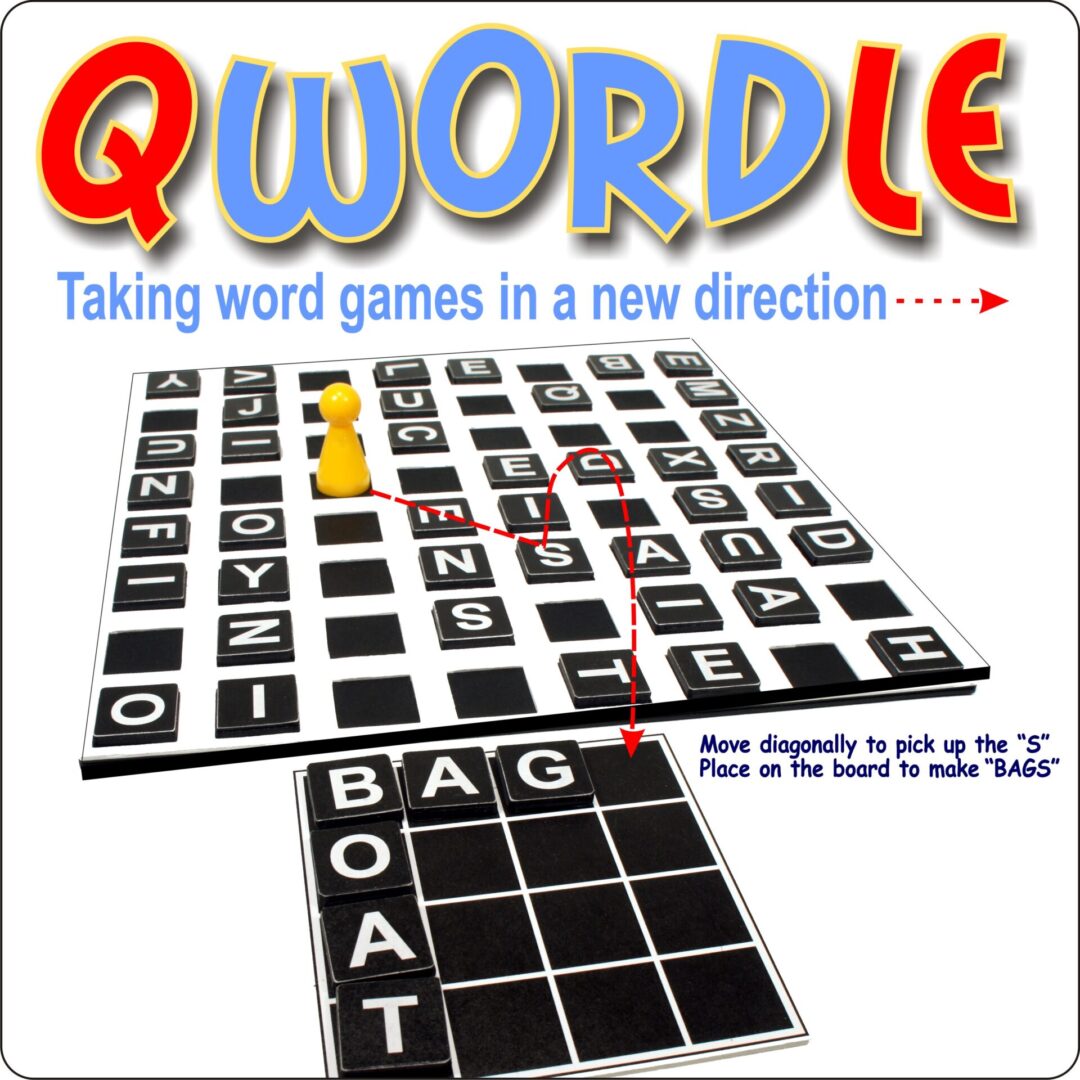
- When playing Qwordle Shapes, place the tiles on the board with the shape side facing up. All other Qwordle rules remain the same.
-
Scoring Qwordle Shapes:
- Score 1 point for any matching adjacent shapes in a row or column.
- Score 1 point for any matching adjacent colors in a row or column.
- Score 4 points for any row or column containing 4 different colors.
- No points are awarded for rows or columns with only 3 or 2 different colors.
-
Winning the Game:
- Total each player’s points and compare scores.
- The player with the highest total wins.
Pop Stix
- Players: 2
- Object: To capture 5 triangles by completing the third side using matching colored Pop Stix.
-
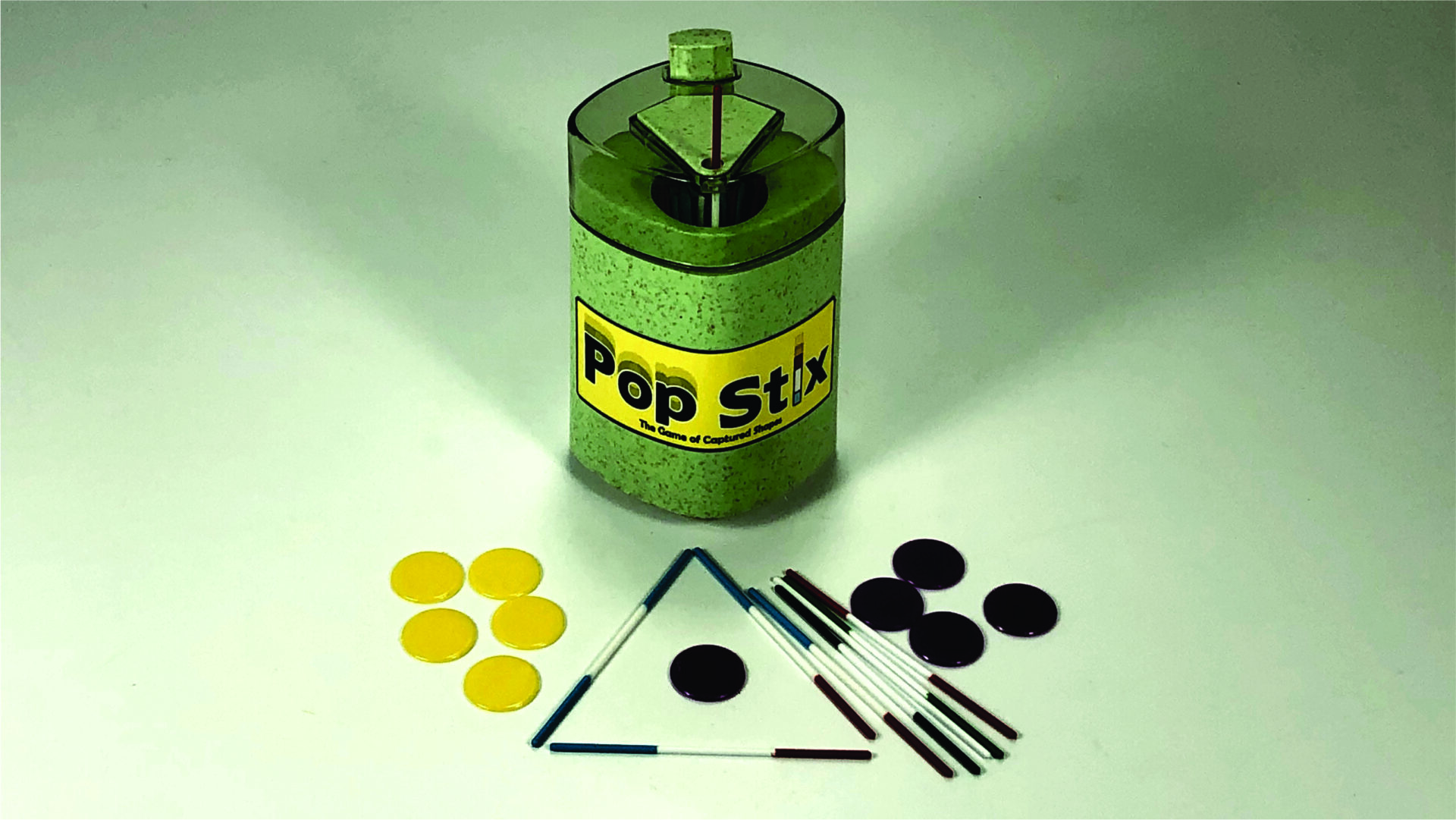
Contents: 1 Pop Stix popper, 32 Pop Stix (11 red/blue, 8 red/red, 8 blue/blue, 2 green/green, 2 white/white, 1 black/black), 5 yellow chips, 5 purple chips, and rules.
NOTE: All contents are stored inside the popper. -
To Play:
- Give each player 5 matching colored chips.
- Place all 32 Pop Stix into the popper by removing and replacing the lid.
- The youngest player starts by pushing and releasing the popper button.
- The Pop Stix that appears is removed and placed on the table. The turn ends.
- Players alternate turns in the same manner.
- If the Pop Stix has a matching colored tip to either end of one on the table, place the matching tips together to begin forming a triangle.
- If there is no matching colored tip, place it on the table to start a new triangle.
-
Capturing a Triangle:
- When a Pop Stix completes the third side of a triangle, place one of your chips inside it to capture it.
-
Pop Stix Types:
- Colored: Tips are red/red, blue/blue, or red/blue.
- Green: May be used as any color. It can be played immediately or saved for a later turn instead of popping a new Pop Stix.
- White: You lose your turn. Return it to the popper through the top hole and shake the popper.
- Black: Return it to the popper. Then move any previously played Pop Stix on the table to a new location, even if it breaks a captured triangle.
- If a captured triangle is broken, the chip is returned to its owner.
- If moving a Pop Stix completes a triangle, you capture it.
- If you cannot capture a triangle, you must either add the Pop Stix to a matching colored end of an existing triangle or start a new triangle.
- NOTE: Green Pop Stix cannot be moved. When placing a colored Pop Stix next to a green one, you may choose the color the green tip represents.
- Winning the Game: The first player to capture 5 triangles wins.
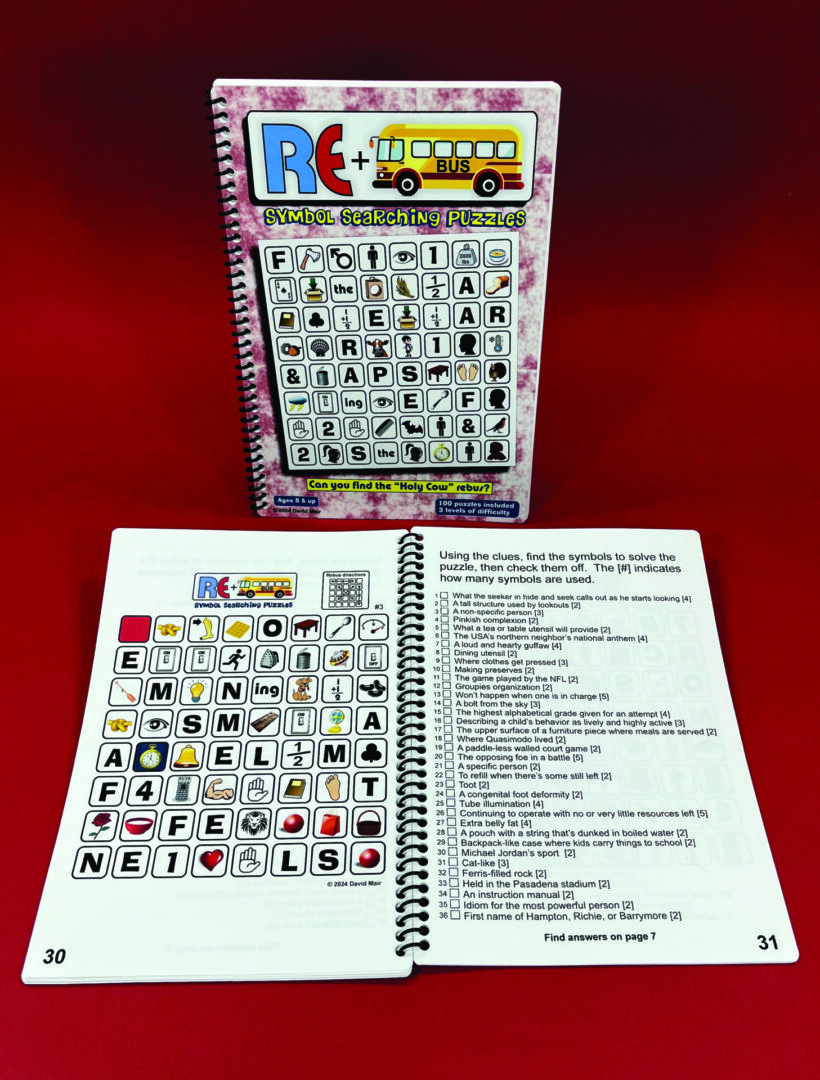
Rebus Puzzle Book
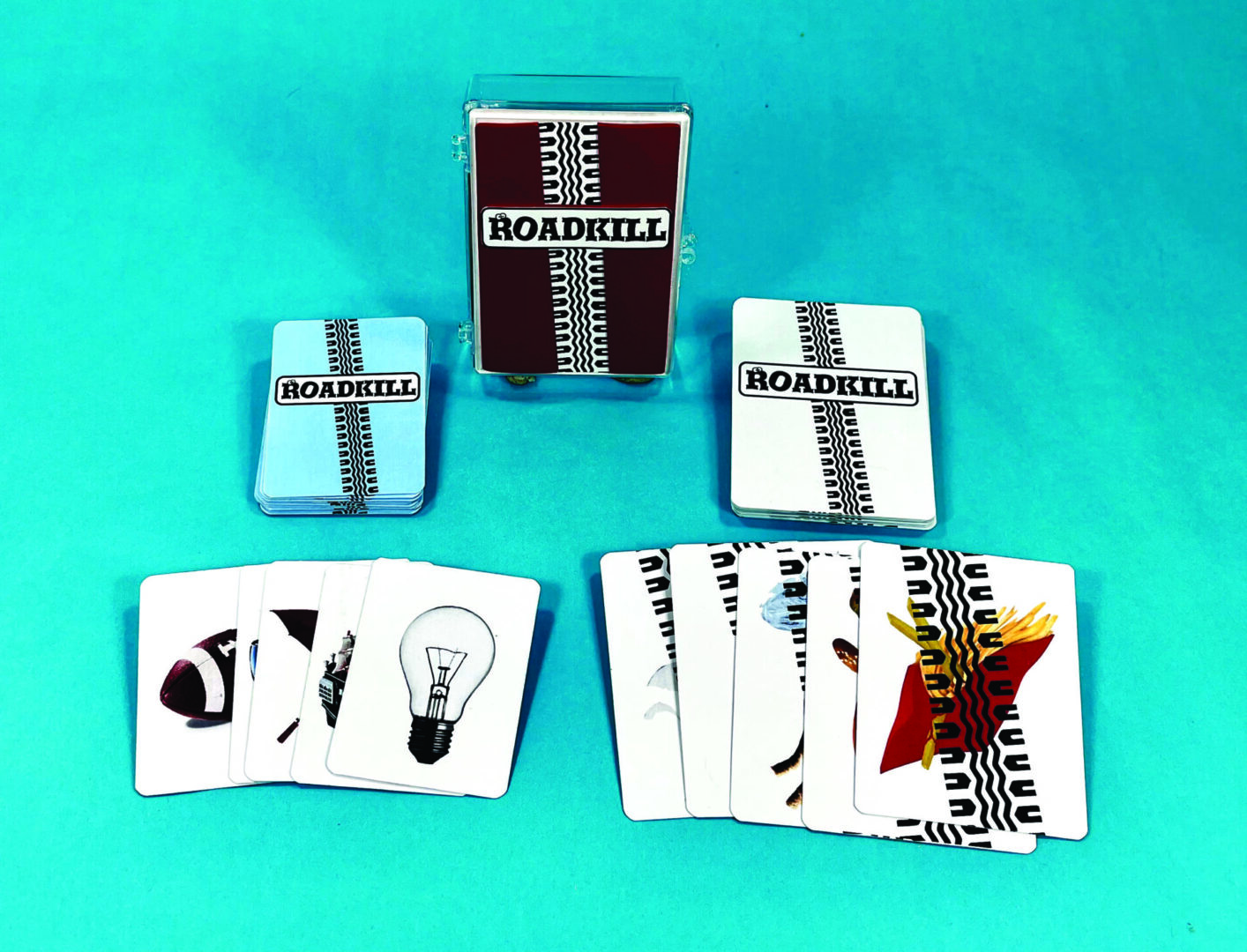
Road Kill
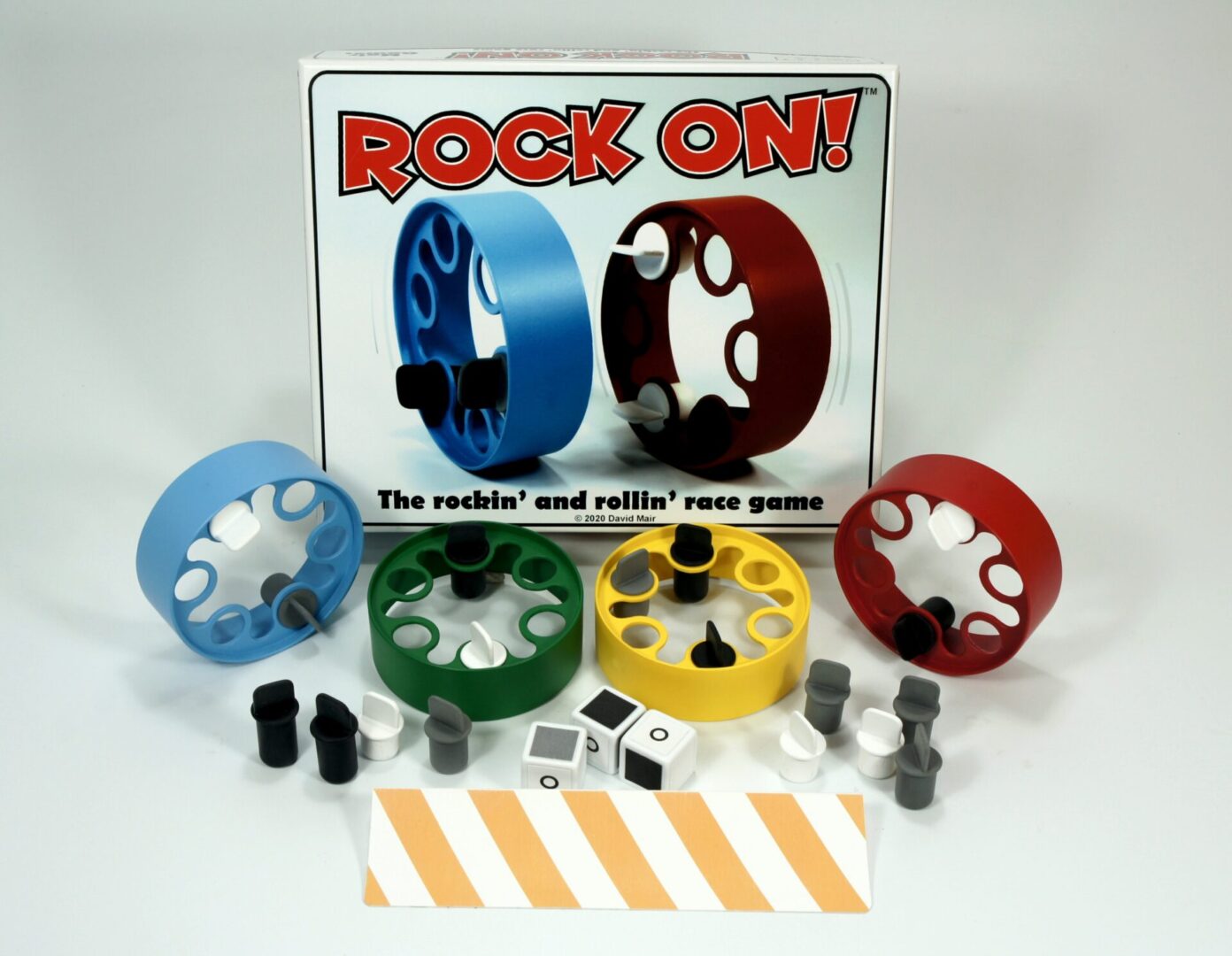
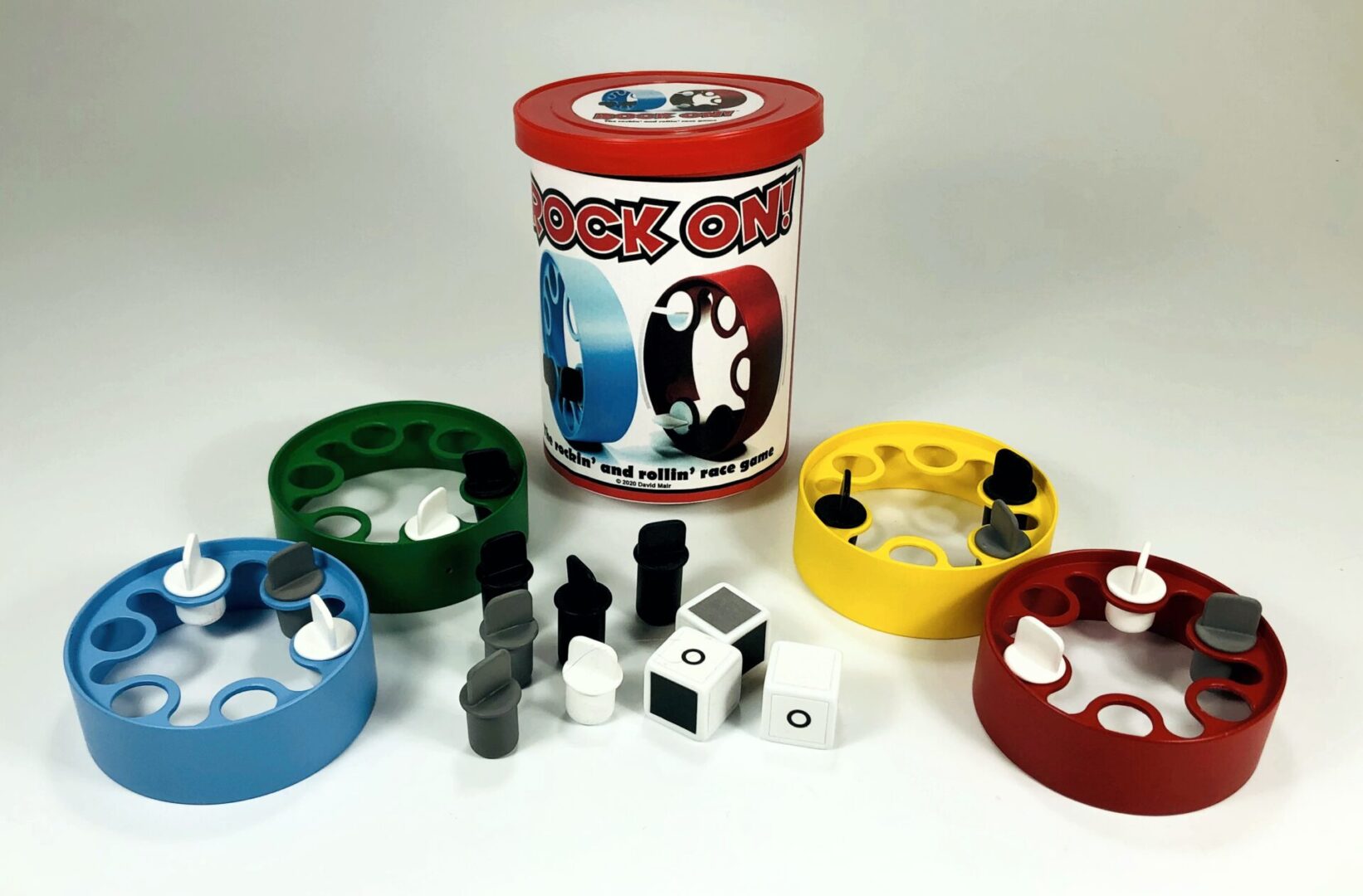
Rock On! 2020
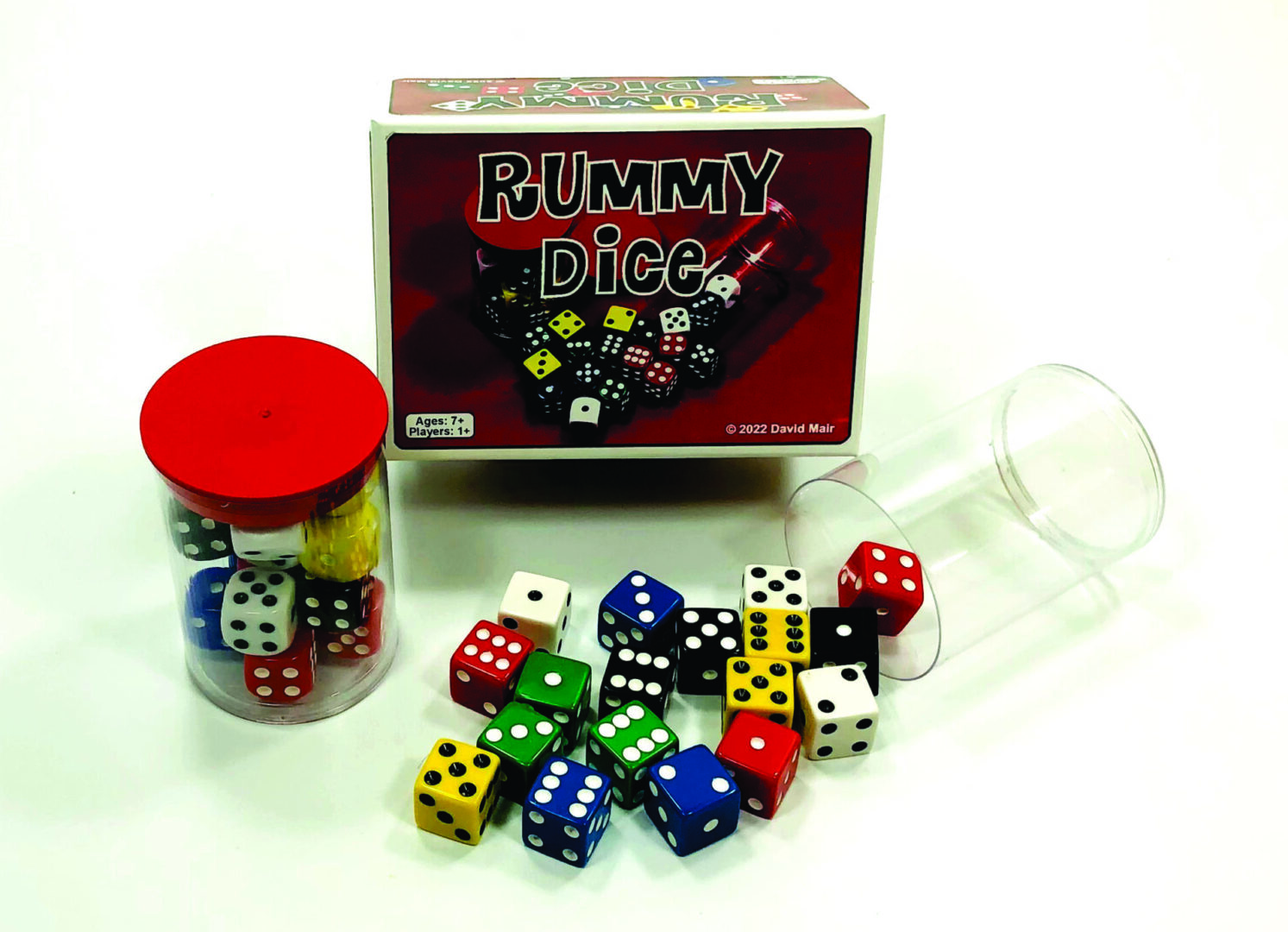
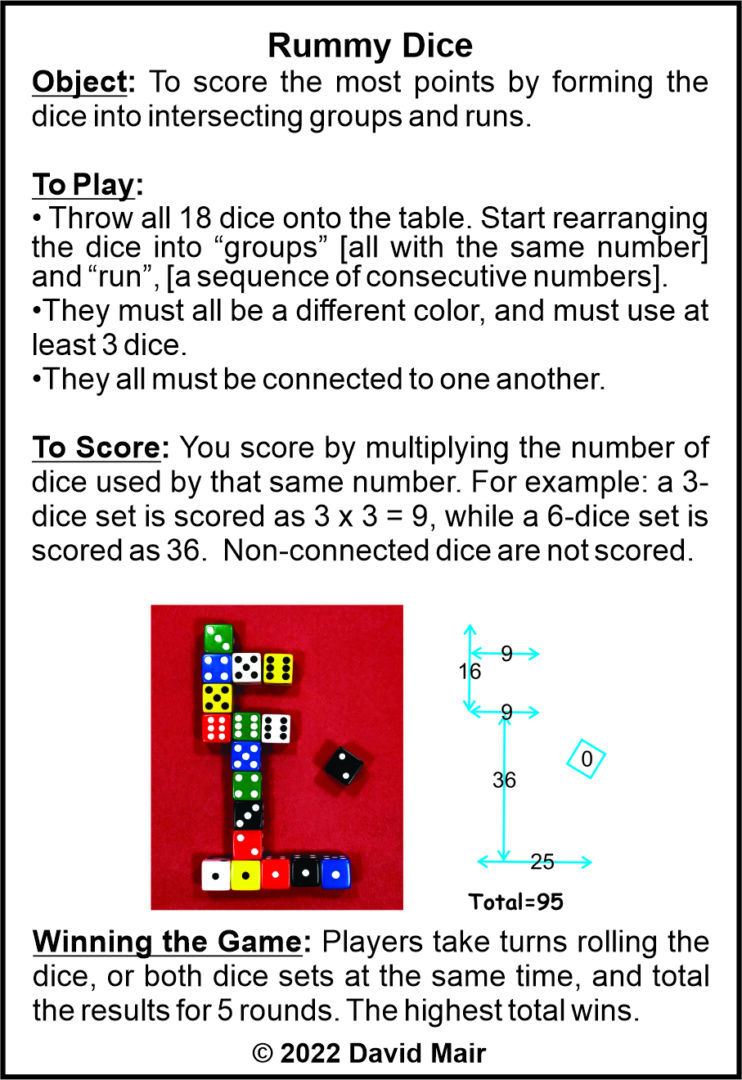
Rummy Dice
Sealed With a Kiss
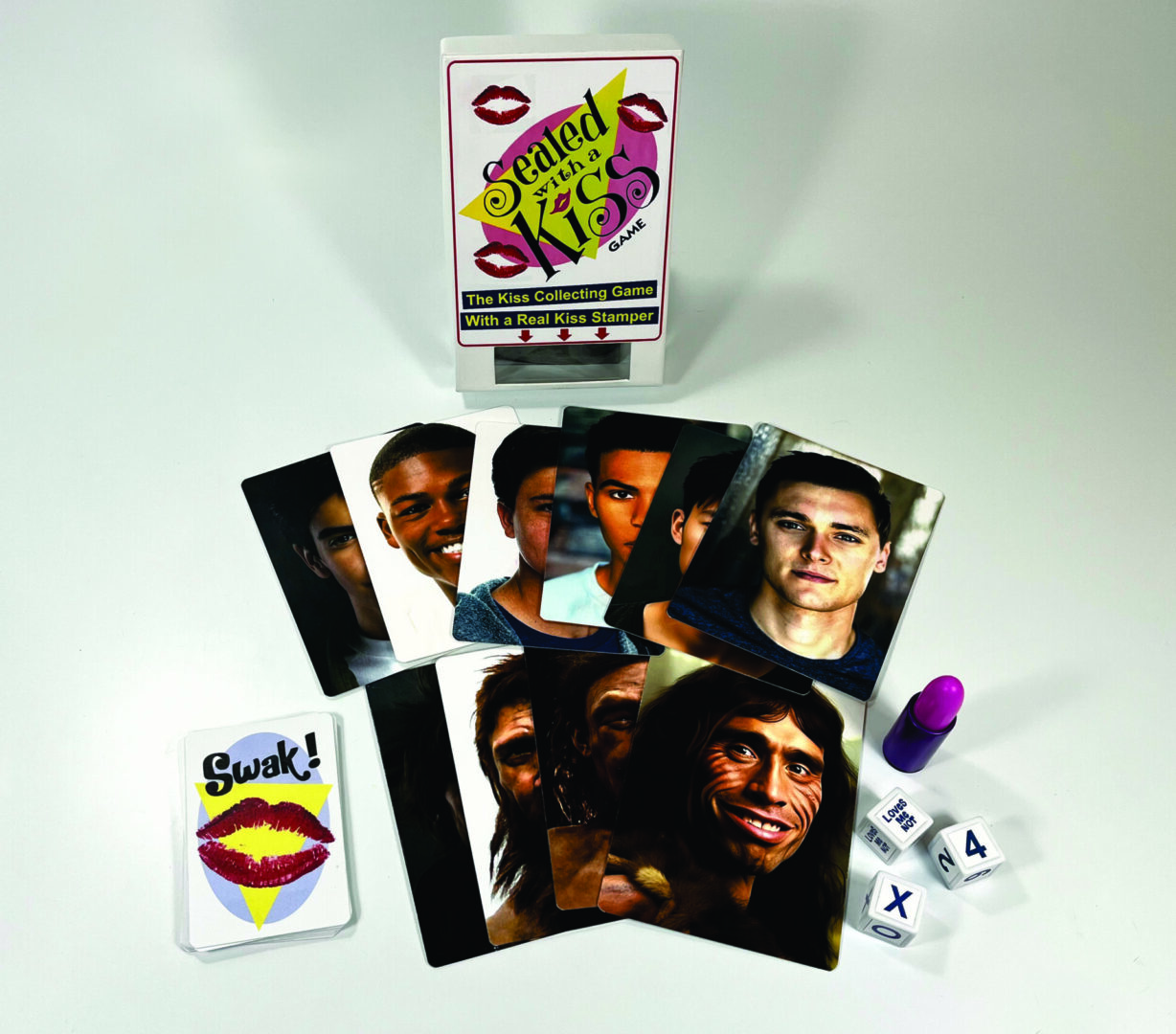
- Contents: 1 lipstick/playing piece, 14 cards (4 SWAK; 1 each of: Tunnel of Love, Too Eager, Broken Lipstick, Too Much Lipstick, Steal a Kiss, Lots of Love, On the Rebound, Be My Valentine, Give a Peck on the Cheek, Trade Boyfriends, Hugs or Kisses, Blind Date), 10 “boyfriend” cards (6 boys, 4 Neanderthals), 3 dice (1 numbered 1–6, 1 “Loves Me/Loves Me Not,” 1 “X/O”), and rules.
- Players: 2–4
- Object: Be the first player to “kiss” your boyfriend’s photograph five times.
-
To Set Up:
- Shuffle the 14 cards and place them face up in a circle like stepping stones. Distribute the “SWAK” cards evenly so they are not next to each other.
- Place the lipstick (cap on) on any one of the “SWAK” cards.
- Each player chooses a boyfriend card and places it face up in front of them. Shuffle remaining boyfriend cards and place them face down in a pile within reach.
A facial tissue is needed to wipe off kisses during and after the game.
-
The Lipstick:
- Used as both the playing piece and to “give a kiss.”
- Press down on the pink section to stamp a kiss on the boyfriend’s photo.
- A kiss may be stamped anywhere on the photo.
-
To Play:
- The youngest player rolls the numbered die and moves the lipstick clockwise that number of spaces.
- Follow the directions printed on the card landed on.
- Example: “Be My Valentine” — roll the “Loves Me/Loves Me Not” die to determine if you may give a kiss.
- If landing on “On the Rebound” or “Blind Date,” erase all collected kisses, place the boyfriend card face down at the bottom of the pile, and draw a new boyfriend card (even if it is a Neanderthal).
- Play passes to the left.
Note: The stamp pad is pre-inked and can make up to 50,000 impressions before refilling is needed.
-
Winning the Game:
- Continue play around the circle, following card directions and collecting or erasing kisses.
- The first player to collect 5 kisses on their boyfriend’s photo wins.
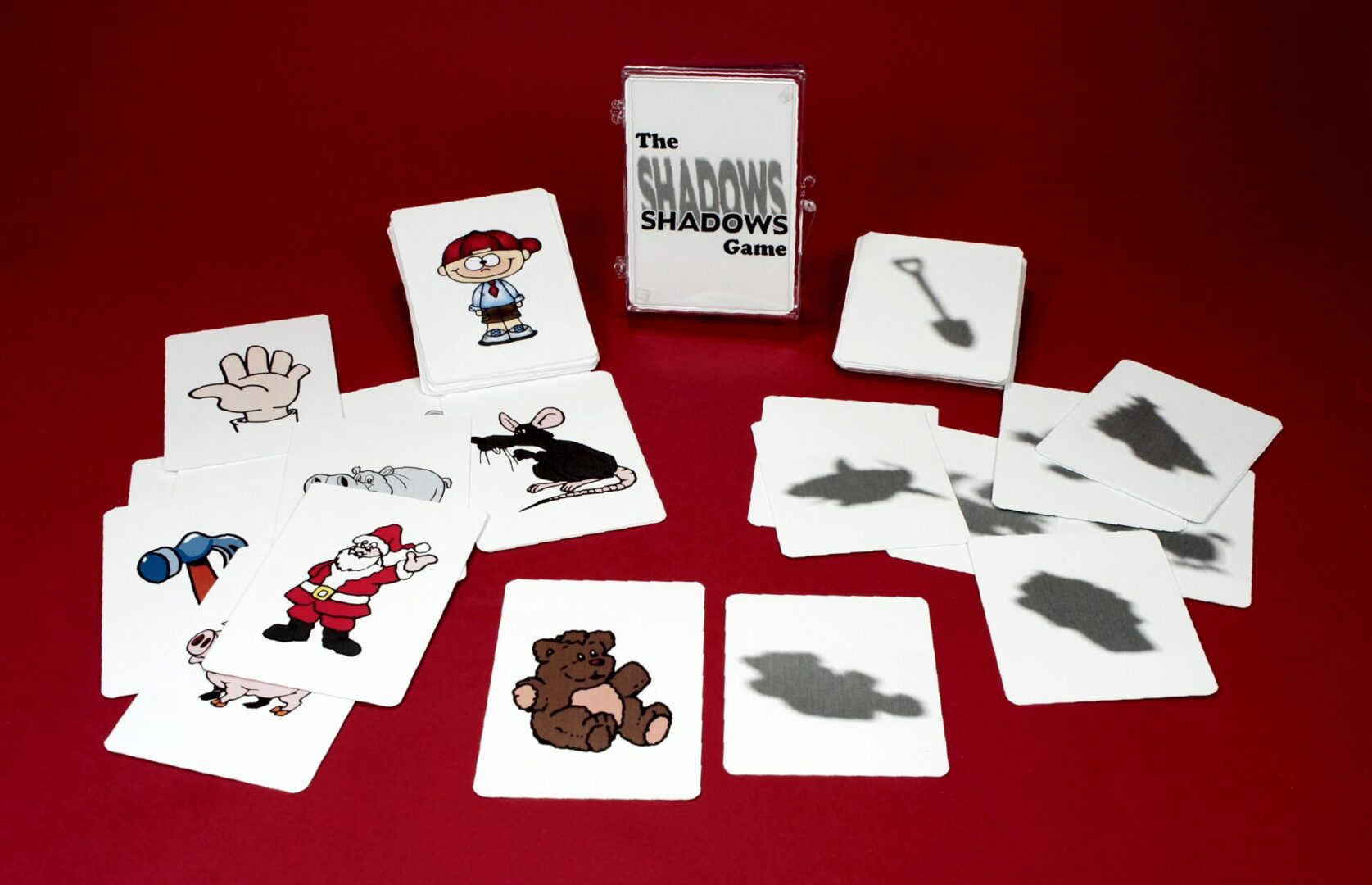
Shadows Game 2019
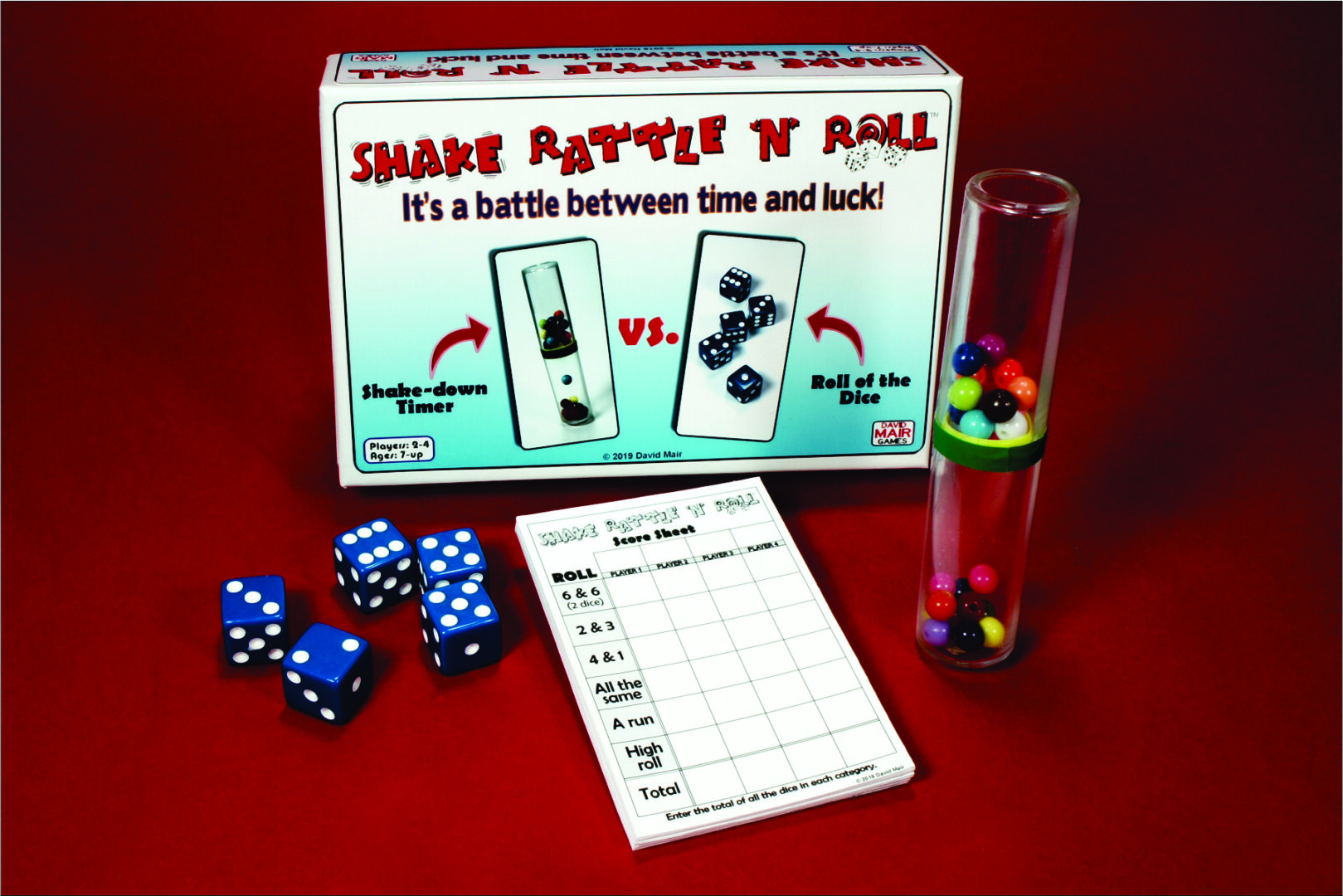
Shake Rattle and Roll 2019
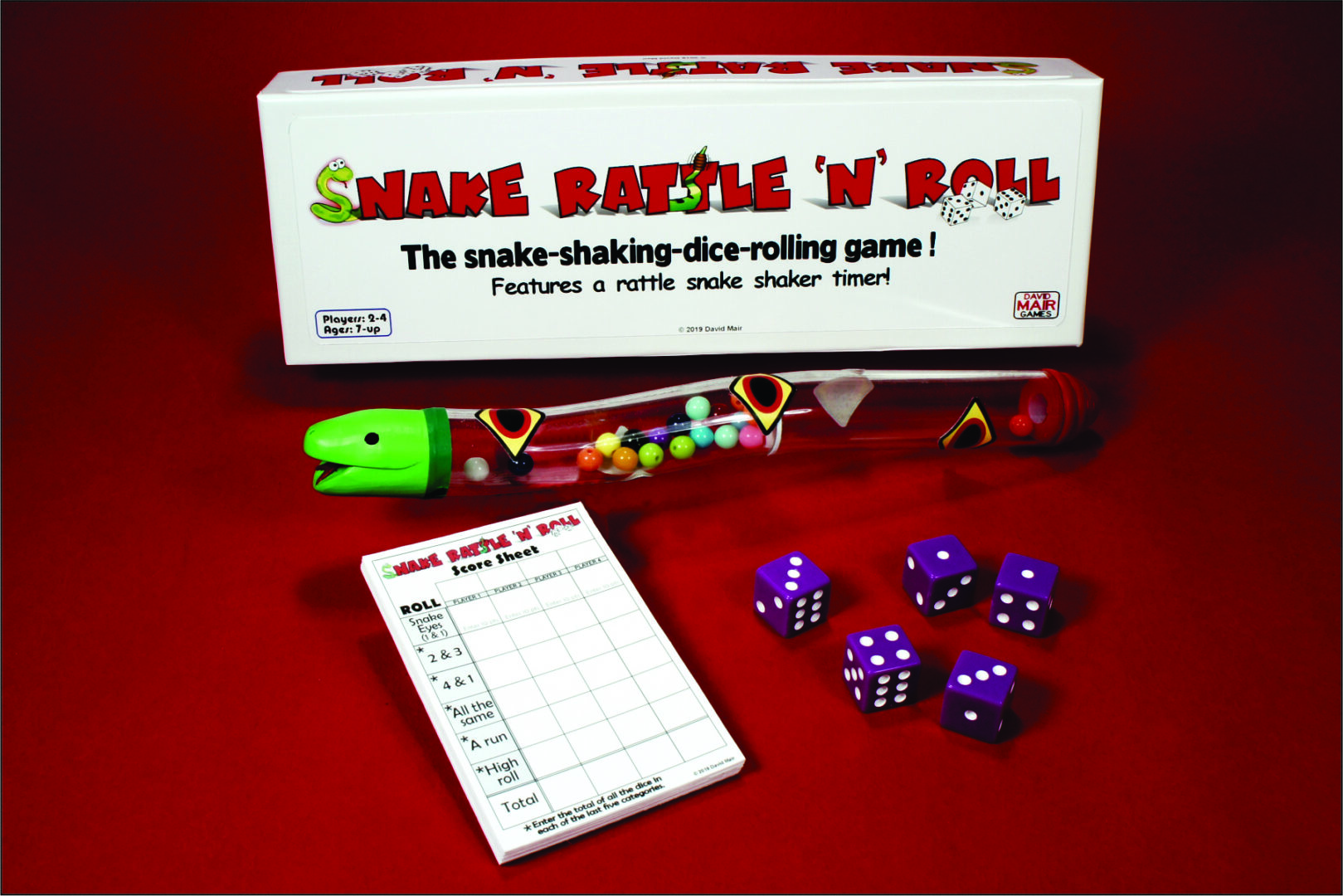
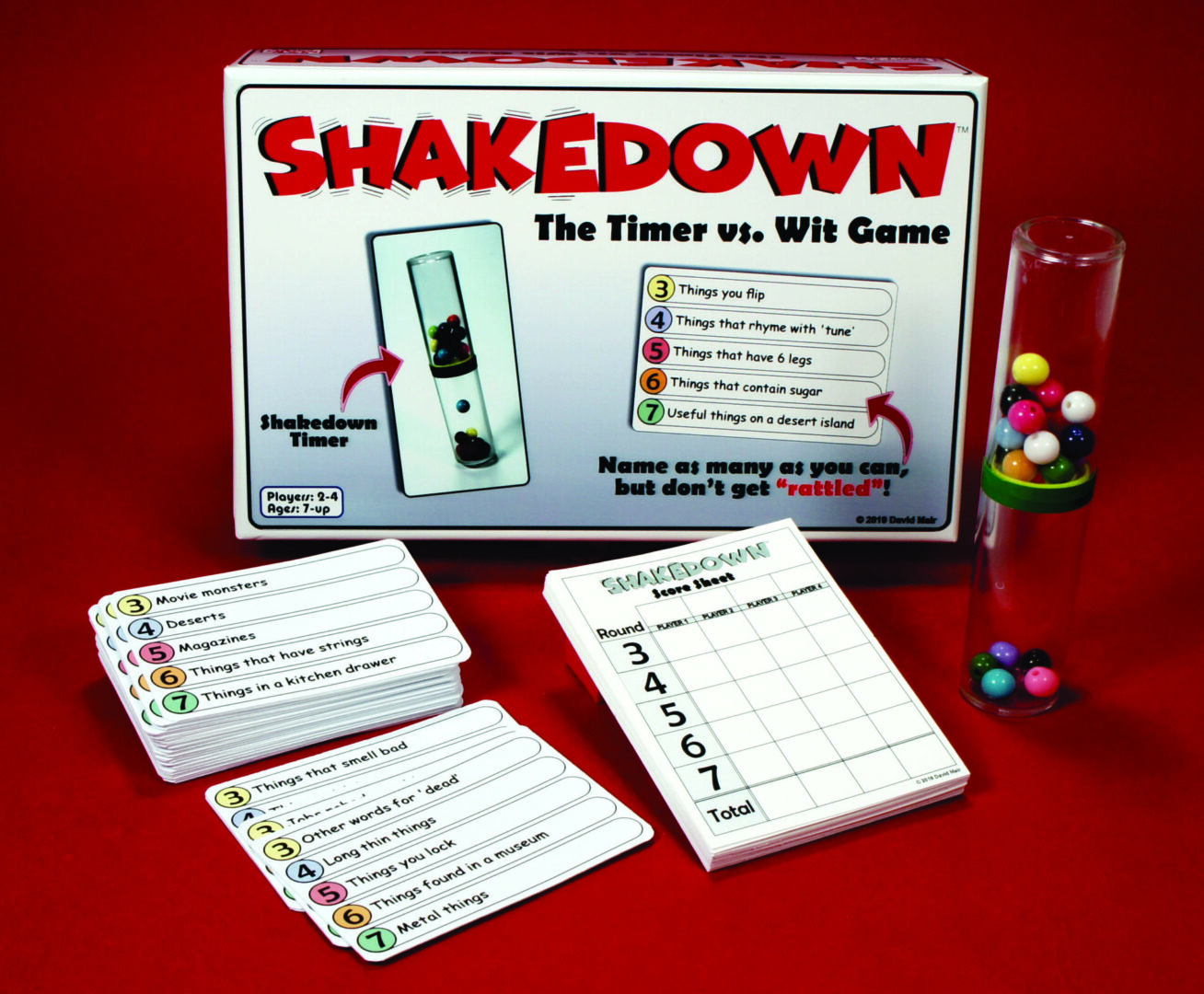
Shakedown 2019
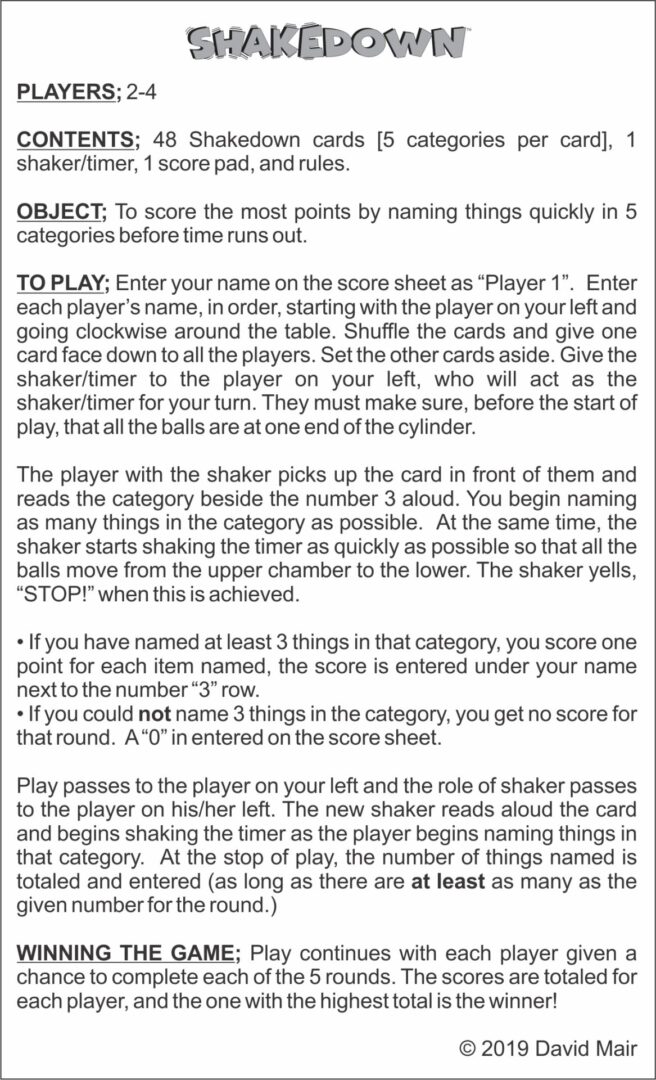
Shark Bite 2017
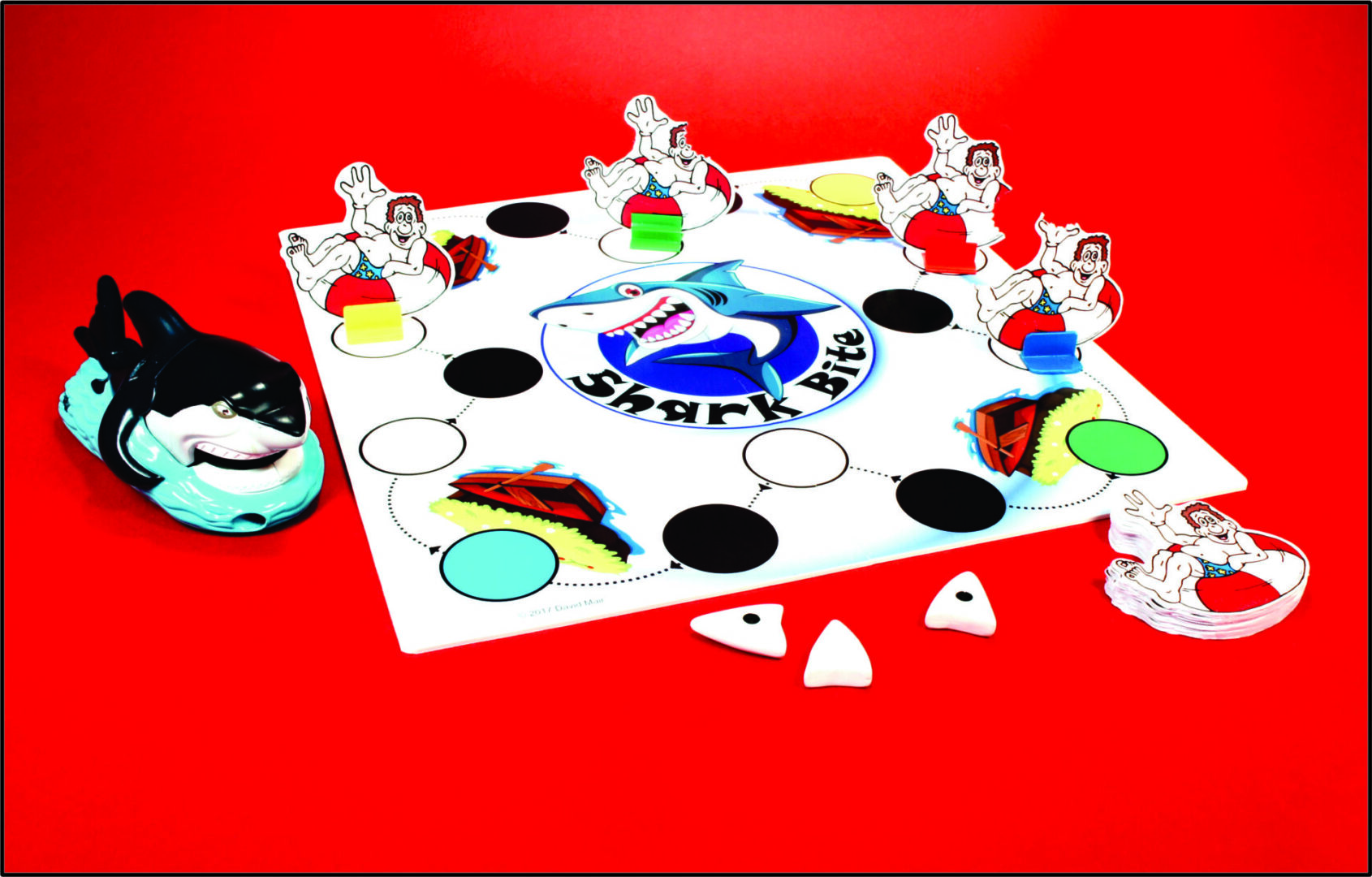
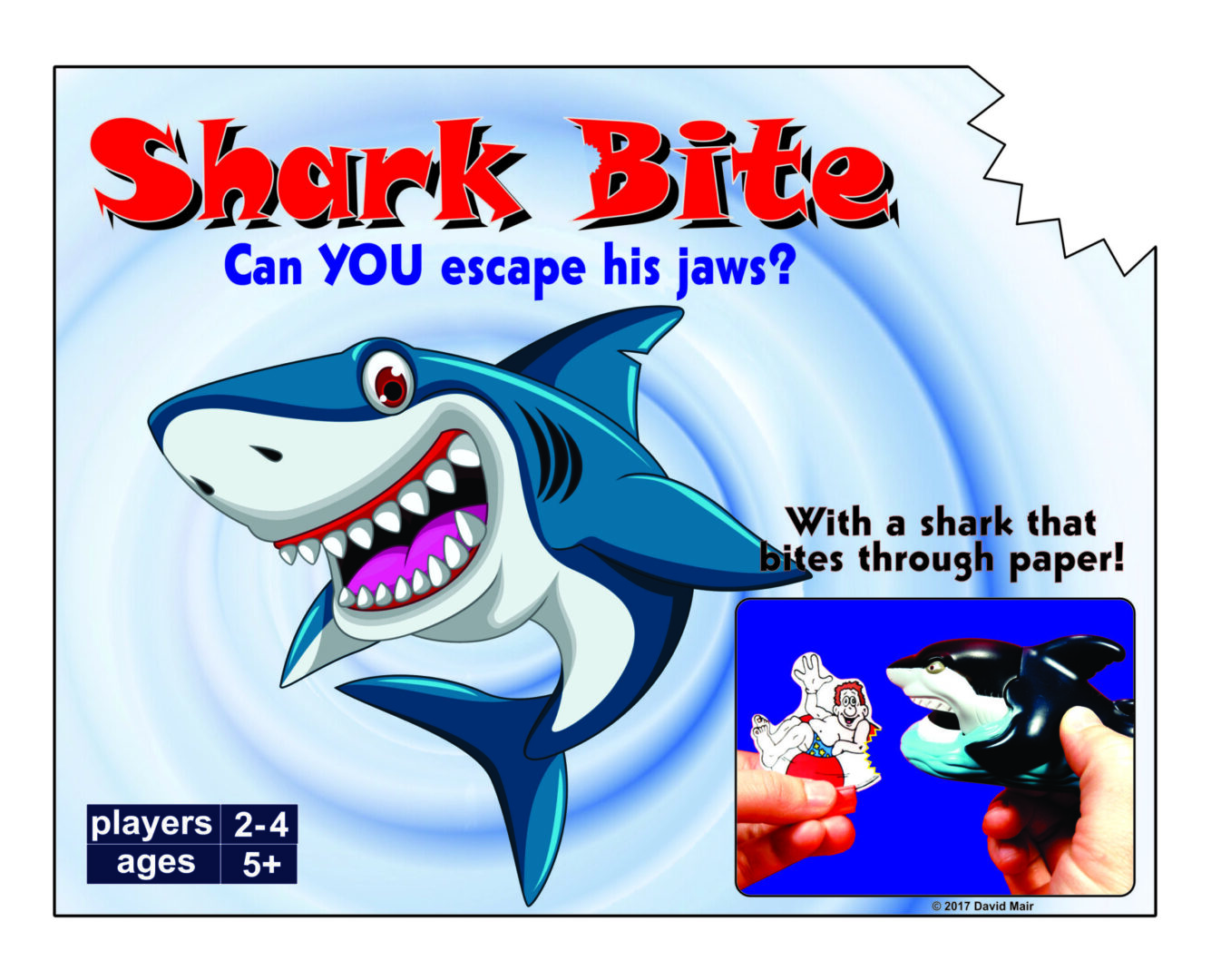
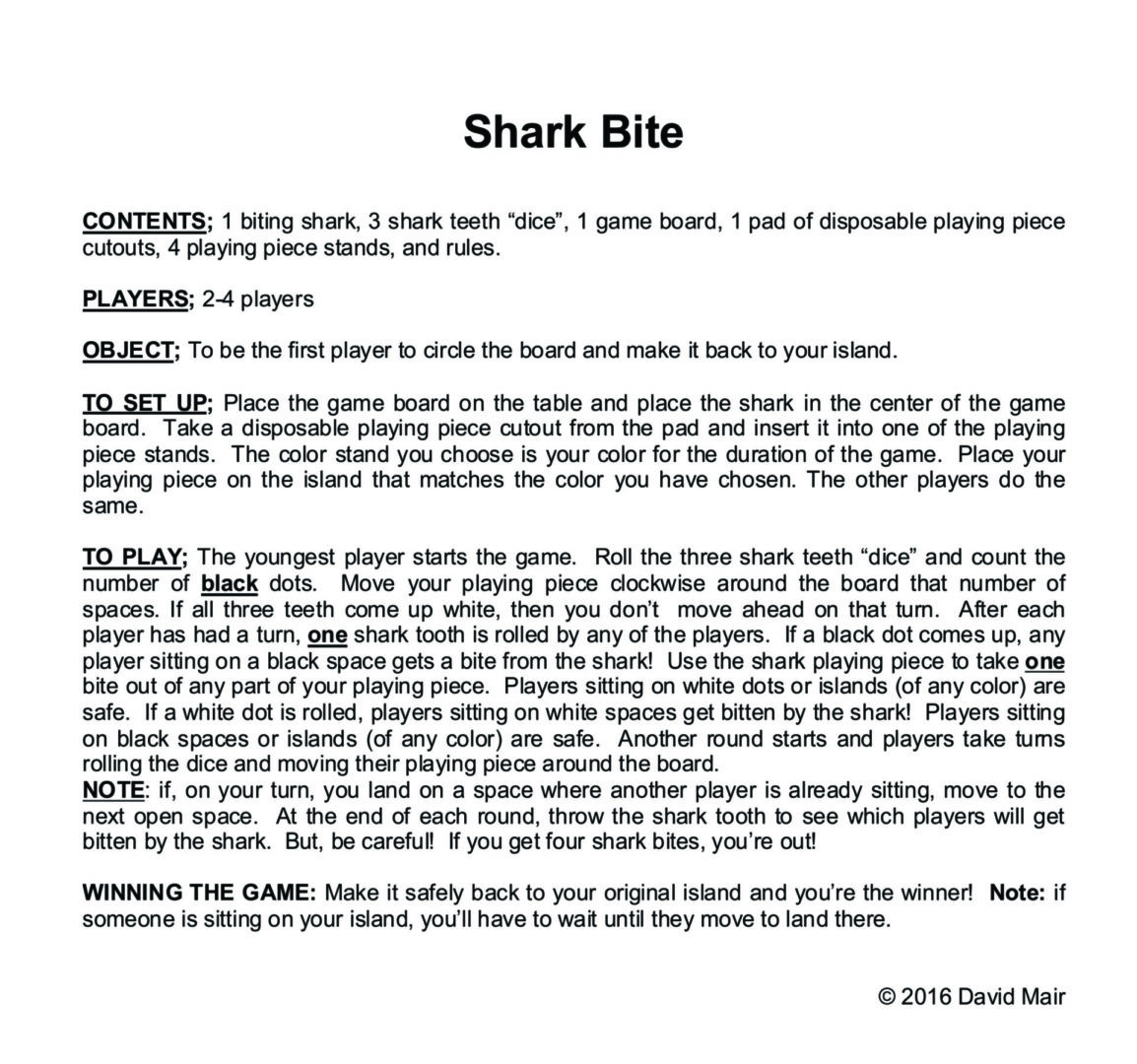

Shark Bite 2017
Shredded Puzzles
Slide Words
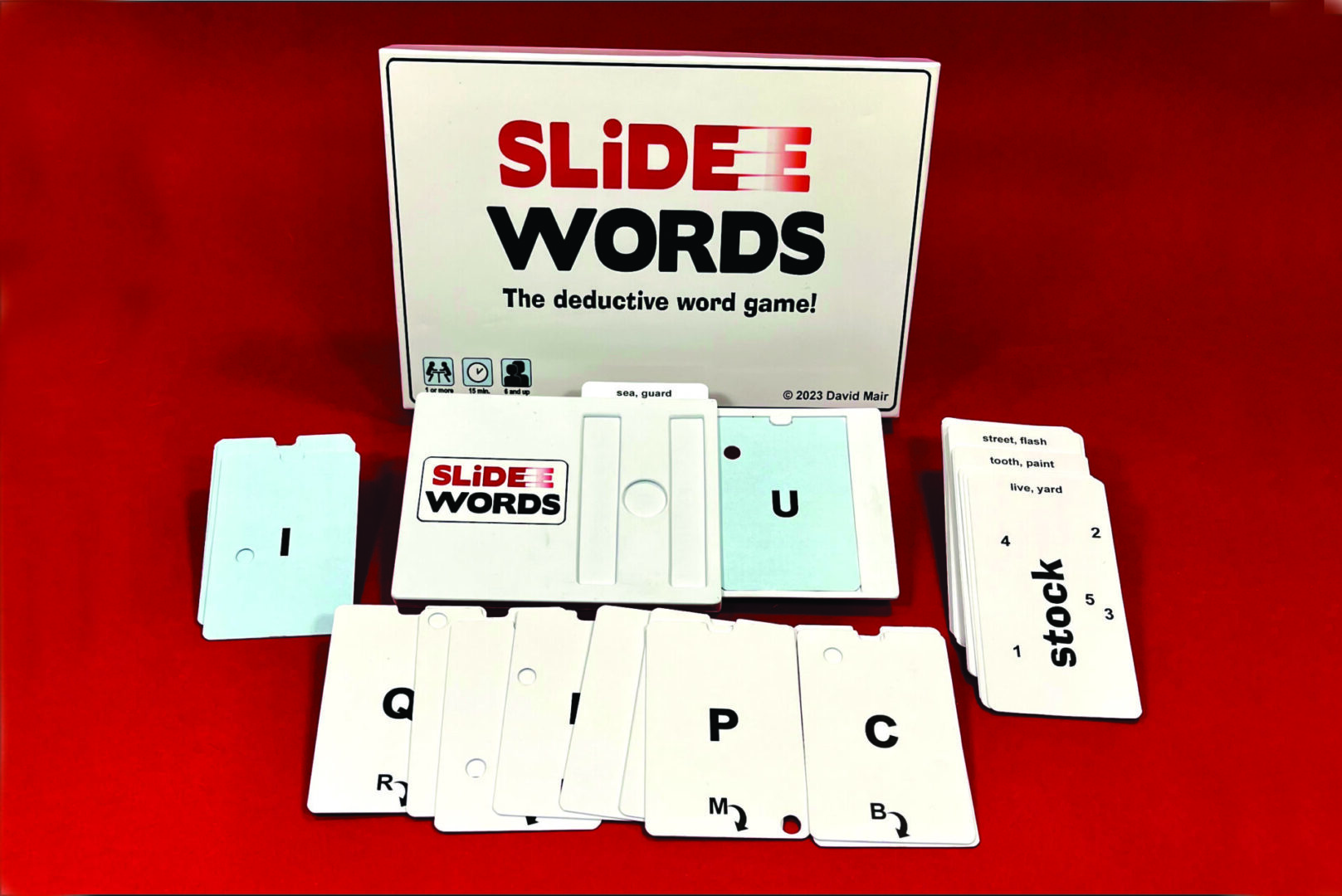
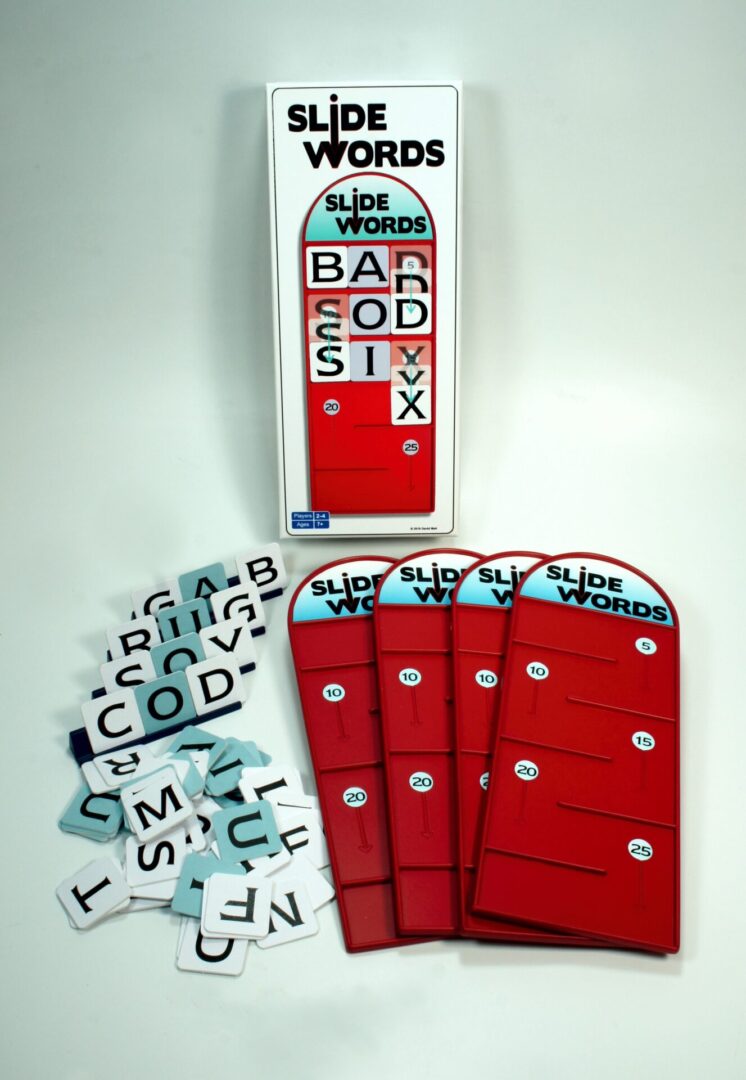
Slide Words 2018 Version
- Players: 2–4
- Contents: 4 “Slide Words” boards, 77 letter tiles, 4 tile holders, 1 score pad, and rules.
- Object: Form a series of six 3-letter words on the “Slide Words” board to score points.
-
To Play:
- Give each player a board and tile holder. Place all 77 tiles face down and mix them.
- The youngest player draws 2 white tiles and 1 red tile and places them in their holder.
- There are 25 red tiles (5 each of A, E, I, O, U). “Y” is treated as a consonant.
- White tiles are consonants only. (See Distribution.)
- Players to the left, in turn, also draw 2 white tiles and 1 red tile.
- The starting player draws 1 additional tile (white or red) and attempts to form a word.
-
Rules for Forming Words:
- The word must be exactly 3 letters.
- A red tile (vowel) must be in the center position only.
- The vowel cannot be in the 1st or 3rd position.
- “Y” cannot be used in the center position.
- The word must appear in the official 416-word Glossary.
-
Playing a Word:
- If a word is formed, place it in the top row (marked “5”) of the board.
- Slide the last tile down to begin the next word (it becomes the final letter of the second word).
- Draw tiles to return to 3 tiles total (must hold 2 white and 1 red).
- At no time may a player hold more than one red tile when holding three tiles.
- If unable to form a word, discard one tile face up in the center and maintain 2 white + 1 red tiles.
- Players may choose face-up tiles when drawing.
-
Scoring:
- Continue forming and sliding words until a player completes a word in the bottom row.
- That player earns 35 points for the round.
- Other players score the value shown on the row of their last completed word.
-
To Continue Play:
- Return all tiles to the pool, mix face down.
- The player to the left of the previous starting player begins the next round.
-
To Win:
- Play continues until one player reaches 100 points (or has the highest score if multiple players exceed 100 at round end).
- The player with the highest total wins.
-
Distribution:
A-5, B-3, C-3, D-3, E-5, F-3, G-3, H-3, I-5, J-1, K-2, L-3, M-3, N-3, O-5, P-3, R-3, S-3, T-3, U-5, V-2, W-3, X-1, Y-3, Z-1
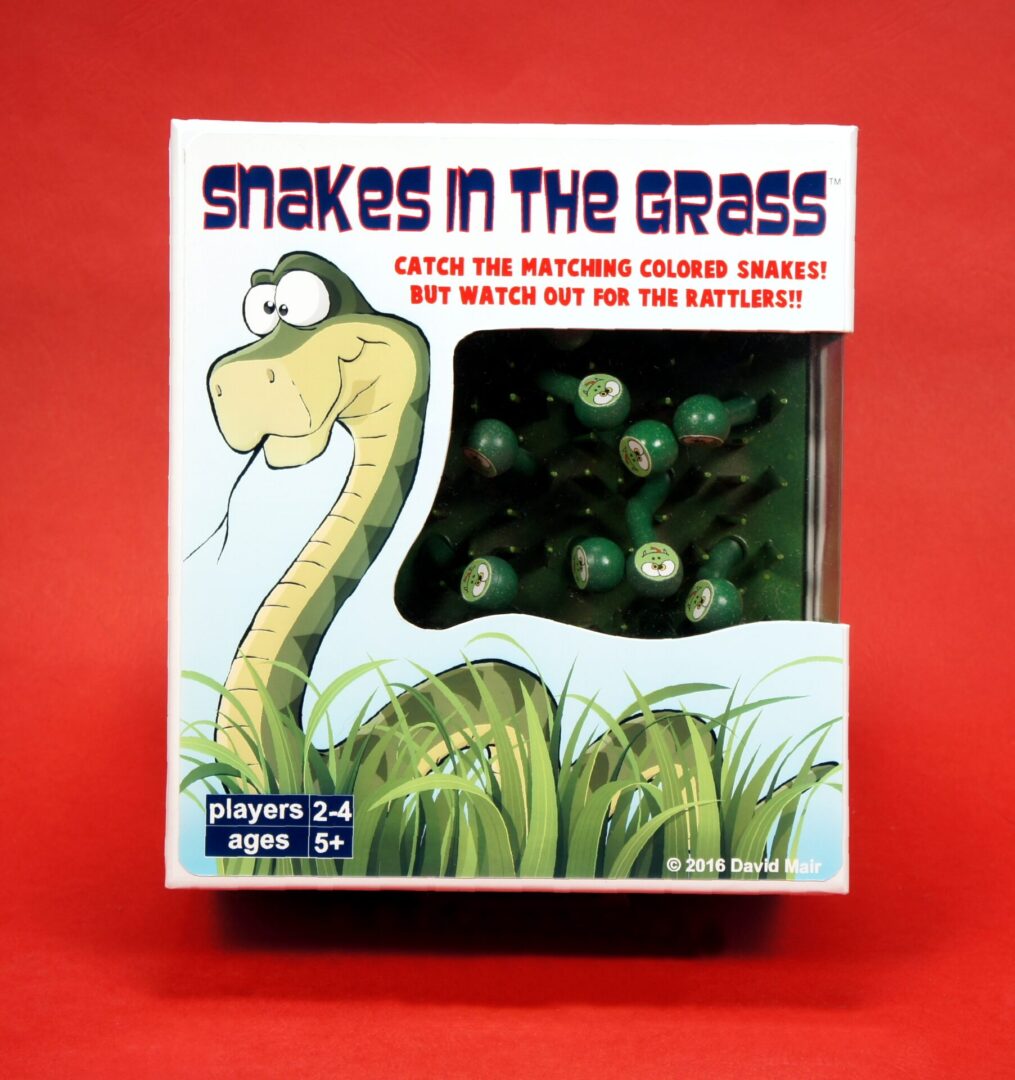
Snakes in the Grass
Rattler Game
-
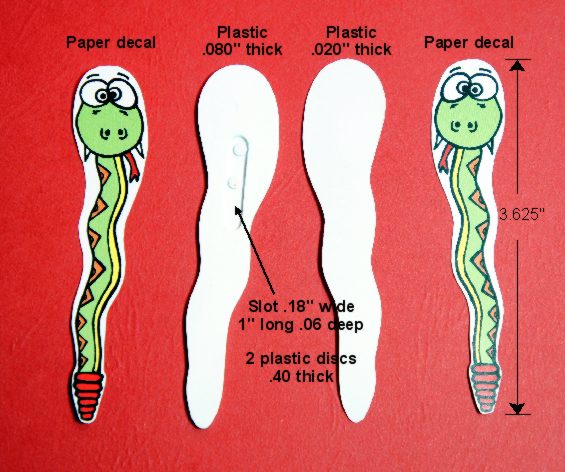
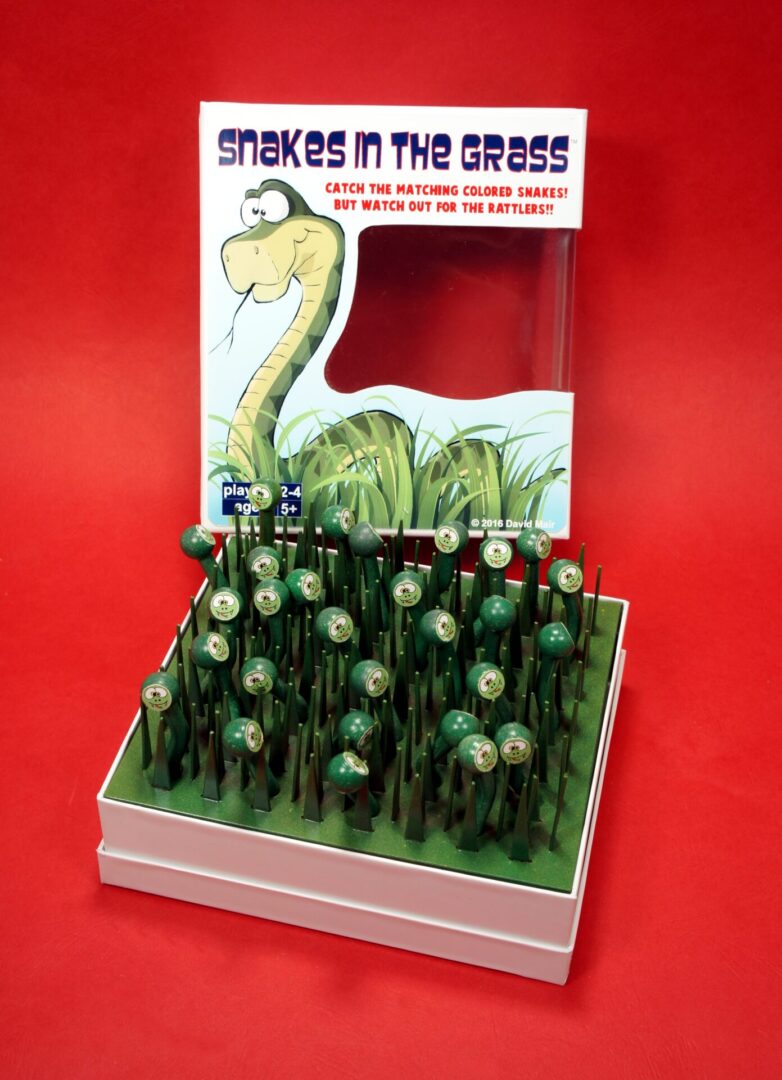
Contents: 1 (6” x 6”) square of artificial grass, 24 snakes with colored tail tips (5 each of yellow, green, blue, and red; 4 black), and rules.
Note: 8 snakes (2 of each color) rattle when shaken; 16 snakes do not rattle. - Players: 2–4
- Object: Collect snakes that do not rattle.
-
To Play:
- The youngest player begins by pulling out one snake and shaking it.
- If the snake does not rattle, place it on the table in front of you and decide whether to continue or stop.
- You may continue pulling snakes until you pull a rattler.
- If a rattler is pulled, return all snakes collected during that turn to the grass. Your turn ends.
- If you choose to stop before pulling a rattler, keep the snakes collected during that turn. They are safe from future loss.
- If you pull a black-tipped snake:
- Return any snakes collected during that turn to the grass, and
- Return one previously collected snake to the grass.
Your turn ends.
- All rattler snakes are returned to the grass after being pulled.
- Play passes to the left.
-
Winning the Game:
- First to collect 5 snakes (4 players) wins.
- First to collect 6 snakes (3 players) wins.
- First to collect 8 snakes (2 players) wins.
Sound Around 2021
Sound Around 2021
Sound Paddle -Mach 1
Squiggle 2016
Swarms 2021
Swiggle
Swiggle Puzzles 2021
Swing Shot
Switch (Racko Word)
Players
2 to 4
Content
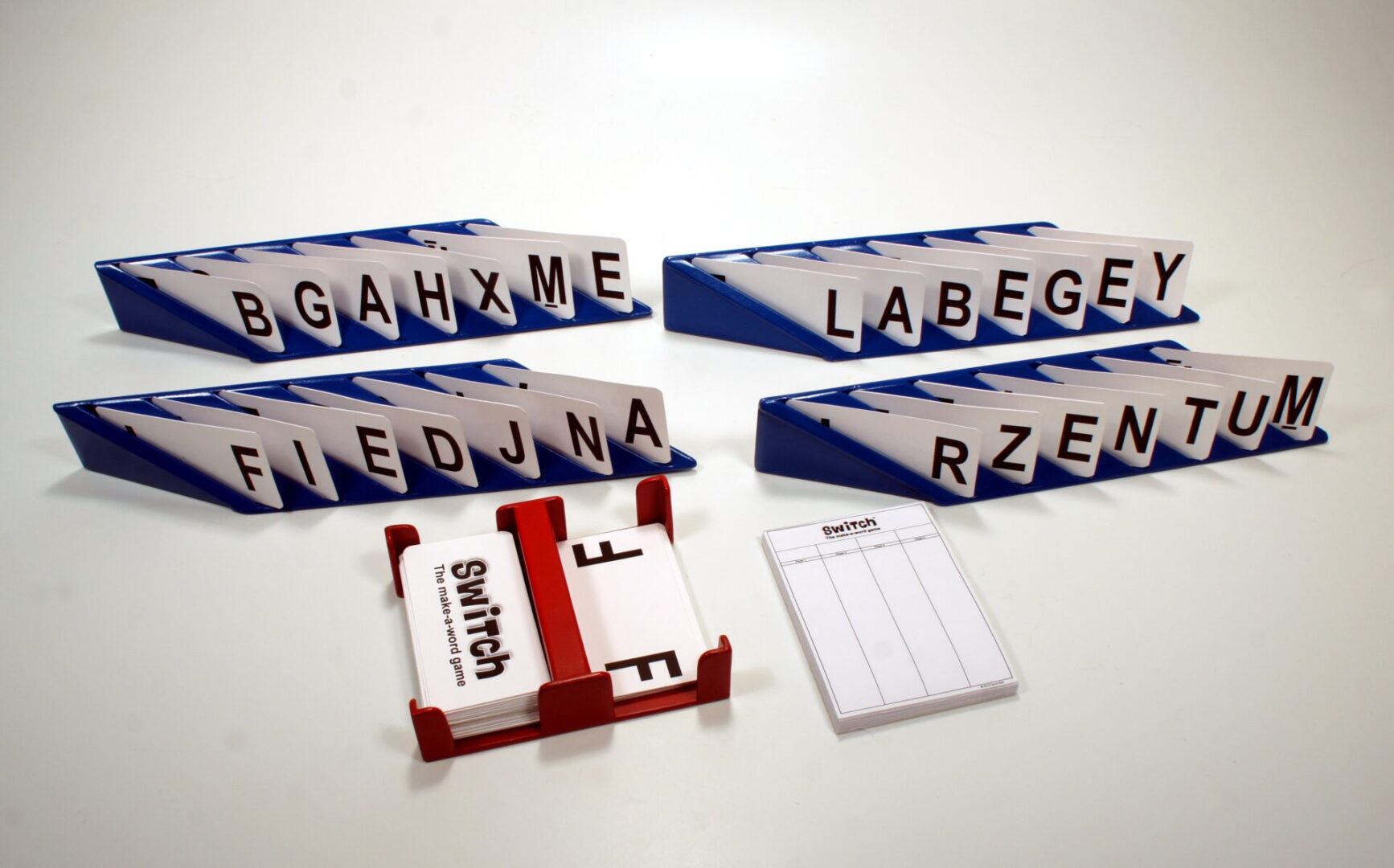
76 letter cards, 4 racks, 1 cardholder, 1 score pad, and rules.
Object
To be the first player to score 100 points.
To Play
- Setup: Give each player a rack. Shuffle the cards and deal seven (7) cards face down to each player. Place the remaining cards face down in the card holder to form the draw pile. Turn the top card over to start the discard pile.
- Arrange Cards: Each player places the seven (7) cards into the slots in their rack from left to right in the exact order dealt. Cards may not be rearranged while placing them into the rack.
-
Gameplay: The youngest player begins and may choose one of the following:
-
a) Draw a card from the draw pile and either:
- Exchange it with any one of the seven (7) cards in the rack by removing that card, discarding it, and placing the new card into the empty slot, or
- Discard the drawn card without exchanging it.
- b) Take the top card from the discard pile and exchange it with any one of the seven existing cards in the rack.
-
c) Play one or more words (three (3) letters or more) from the rack onto the table. Words must be read from left to right, with letters in correct order and no letters in between.
- Example (1): BATHXED – “BATH” may be played, but “BATHED” may not because the “X” interrupts the sequence.
- Example (2): RTALKER – “TALKER” may be played by leaving the “R” in the rack.
- Example (3): RATVPUT – Both “RAT” and “PUT” may be played in the same turn.
The player records their score on the score pad (see Scoring below). Cards used to form words are discarded (the player chooses which card goes on top). Replacement cards are drawn equal to the number of cards played and placed into empty slots from left to right in the order drawn.
-
a) Draw a card from the draw pile and either:
- End of Turn: After completing one of the above actions, the player’s turn ends. Play passes to the left, and subsequent players follow the same rules.
Rules for Forming Words
1. No proper nouns ie. names of persons or places etc.
2. No foreign words
3. No hyphenated words or abbreviationsScoring
The player scores by multiplying the number of letters used in the word times that same number.
LETTERS SCORE
3 X 3 = 9
4 X 4 = 16
5 X 5 = 25
6 X 6 = 36
7 X 7 = 49 + 51 (BONUS) = 100Winning the Game
Play continues until one player has scored 100 points (or more). He/She is the winner. NOTE; If there is no winner before the draw pile has been used up, then all but the top card of the discard pile are shuffled and placed face down to form a new draw pile.
Letter Distribution
A-6 G-3 M-3 S-3 Y-2
B-2 H-2 N-3 T-4 Z-1
C-2 I-6 O-6 U-3
D-3 J-1 P-2 V-1
E-8 K-1 Q-1 W-2
F-2 L-3 R-4 X-1
Tactile (2024 Paper Version)
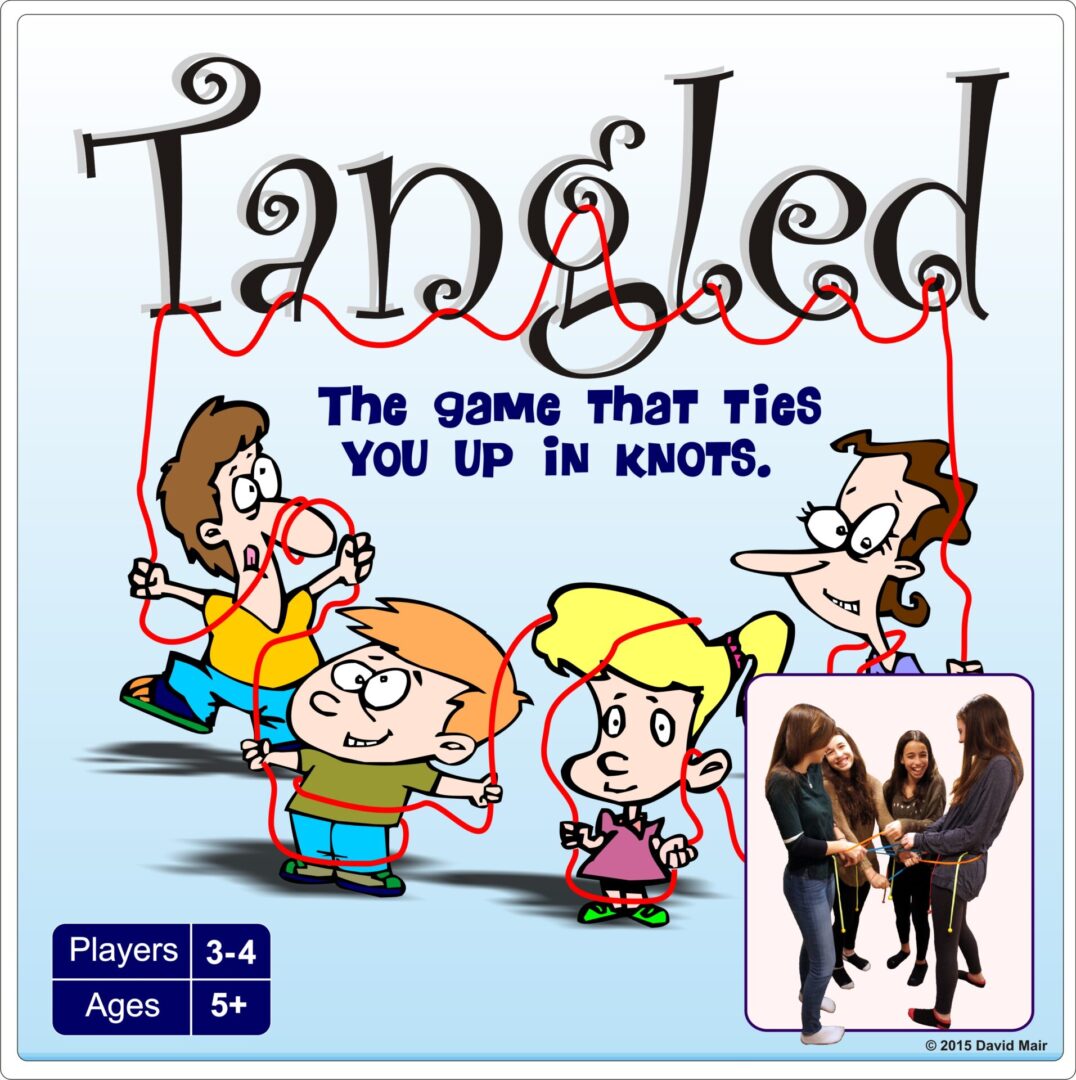
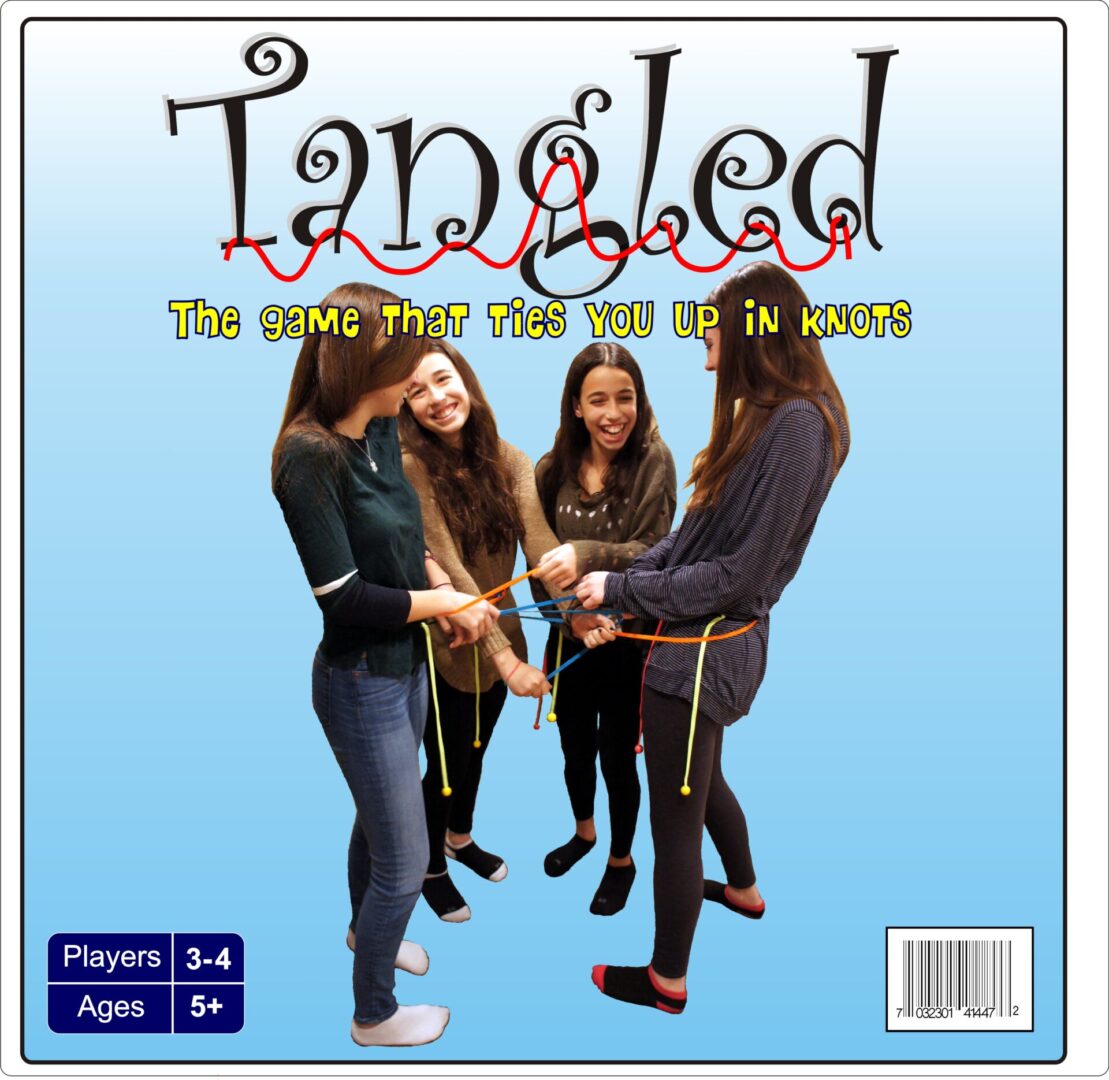
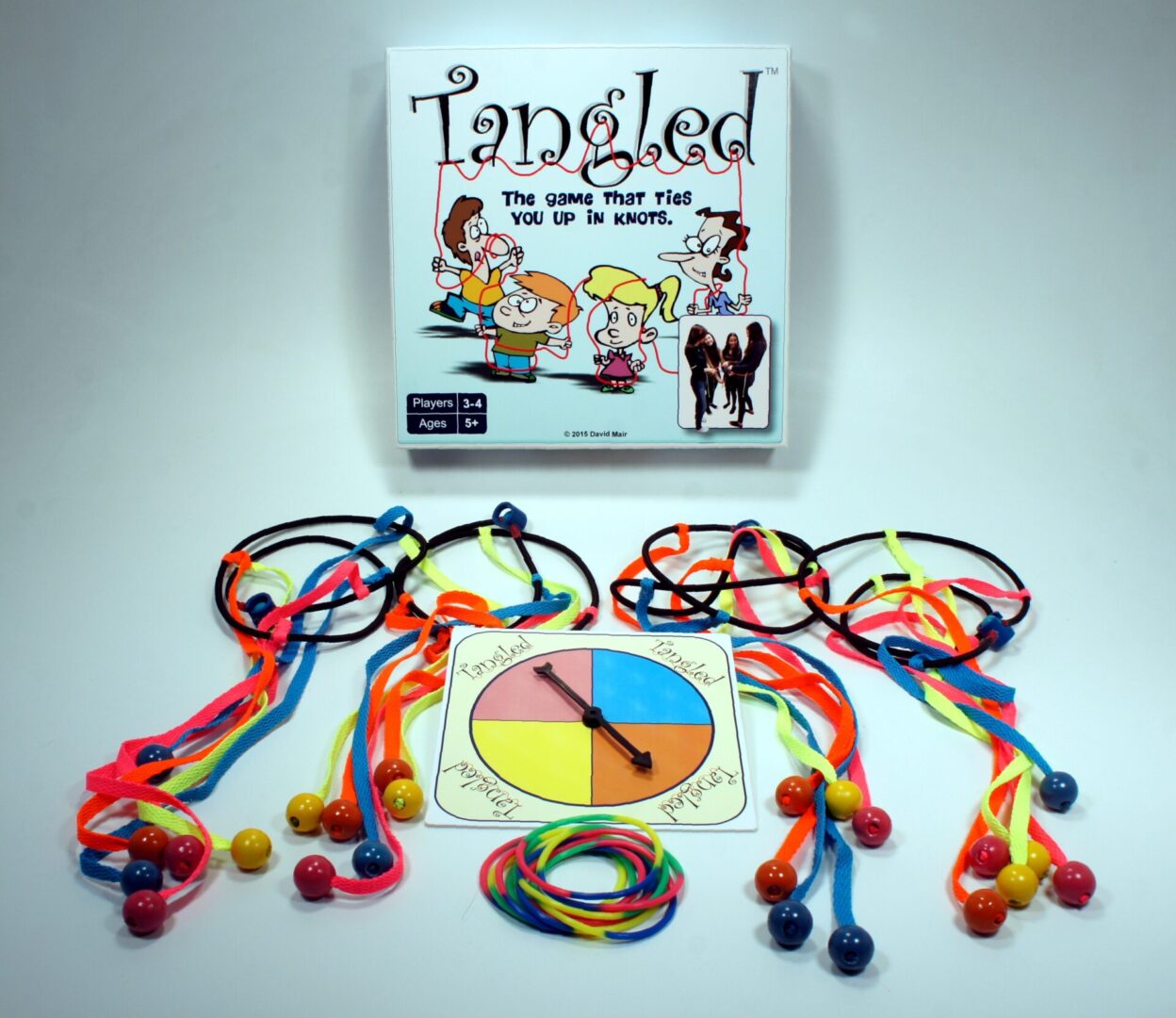
Tangled 2015
Content
72 Question-and-Answer cards in a card box, 1 score board, 6 different colored pawns, 6 different colored dice, 1 Category Die, and rules
Players
3-6 players
Object
To be the first player to reach the “FINISH” space
To Set Up
Place the box of questions and the Category Die within easy reach. Each player chooses a colored die and a matching colored pawn. The pawns are placed on the score board on the space marked “START”.
To Play
A player is chosen to go first. This player will be the “READER” for the current round. The READER rolls his/her colored die in view of all players and notes whether or not a dot has been rolled.
Team Creation
The remaining players roll their dice. A team is formed based on the resulting rolls, as follows: all players whose rolls match the READER’s (dot or not) are on the READER’s team; all other players are on the second team. Note: If all of the players’ rolls match the READER’s roll, all the dice are re-rolled to form the teams. It is therefore, possible to have a team with only one player.
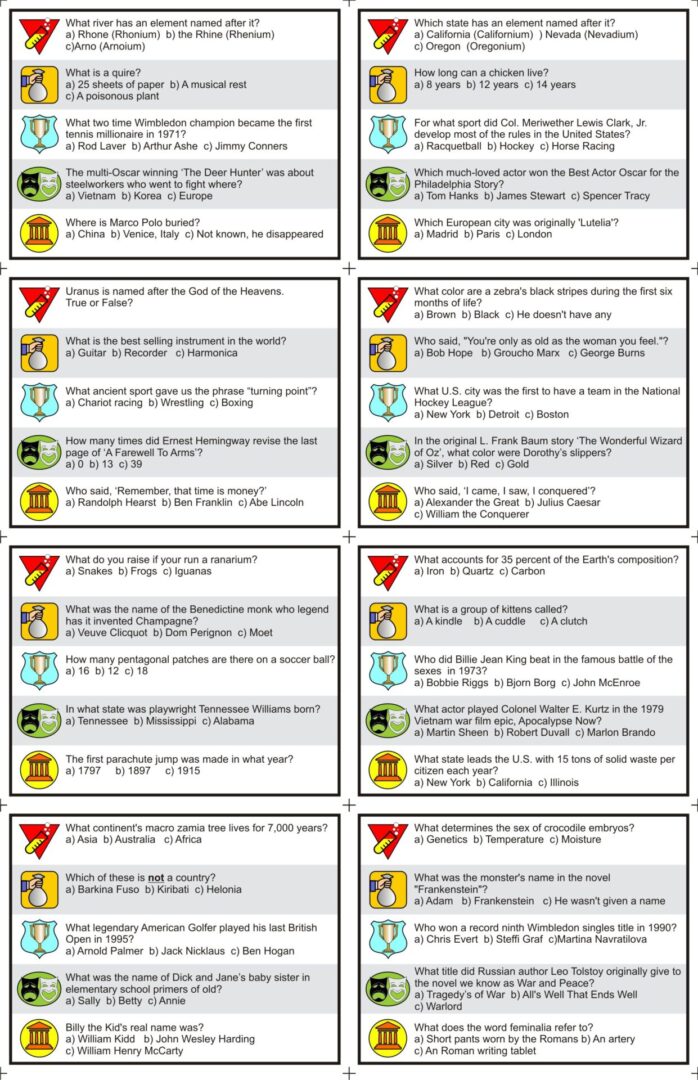
Once teams have been formed, the READER rolls the Category Die and draws a card from the card box. The READER reads the question and the possible answers next to the icon indicated by the Category Die (See the category list pictured at right.)
After the question and possible answers have been read aloud, the players on the READER’s team discuss and choose an answer. Note: the READER makes the final decision about which answer is chosen. Their choice is announced. The opposing team must then decide on its answer from the remaining choices of answers. Note: They cannot choose the same answer as the READER’s team. When both teams have chosen a different answer, the card is turned over. The READER reads aloud the answer that corresponds to the question’s category, based on the category icons pictured.
Scoring
If one of the teams has chosen the correct answer, all members of that team advance their pawns one space. If neither team is correct, no pawns advance on the board.
The next round continues as above, with the player to the left of the READER becoming the READER for the new round.
Winning the Game
Play continues, with a new READER and new teams being formed for each round, until one player reaches the “FINISH” space. This player is the winner.
Team of Rivals

Content
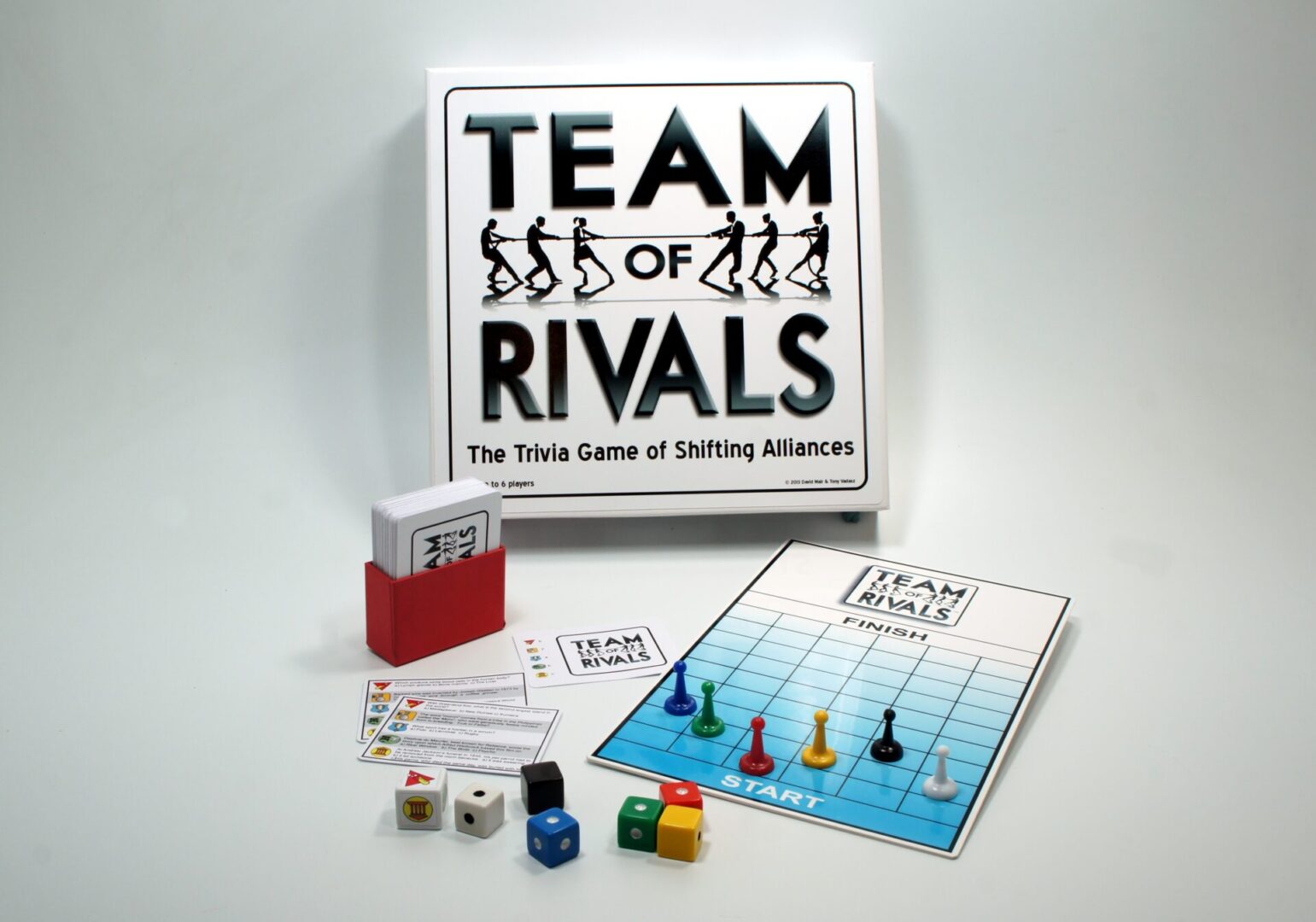
72 Question-and-Answer cards in a card box, 1 score board, 6 different colored pawns, 6 different colored dice, 1 Category Die, and rules
Players
3-6 players
Object
To be the first player to reach the “FINISH” space
To Set Up
Place the box of questions and the Category Die within easy reach. Each player chooses a colored die and a matching colored pawn. The pawns are placed on the score board on the space marked “START”.
To Play
A player is chosen to go first. This player will be the “READER” for the current round. The READER rolls his/her colored die in view of all players and notes whether or not a dot has been rolled.
Team Creation
The remaining players roll their dice. A team is formed based on the resulting rolls, as follows: all players whose rolls match the READER’s (dot or not) are on the READER’s team; all other players are on the second team. Note: If all of the players’ rolls match the READER’s roll, all the dice are re-rolled to form the teams. It is therefore, possible to have a team with only one player.
Once teams have been formed, the READER rolls the Category Die and draws a card from the card box. The READER reads the question and the possible answers next to the icon indicated by the Category Die (See the category list pictured at right.)
After the question and possible answers have been read aloud, the players on the READER’s team discuss and choose an answer. Note: the READER makes the final decision about which answer is chosen. Their choice is announced. The opposing team must then decide on its answer from the remaining choices of answers. Note: They cannot choose the same answer as the READER’s team. When both teams have chosen a different answer, the card is turned over. The READER reads aloud the answer that corresponds to the question’s category, based on the category icons pictured.
Scoring
If one of the teams has chosen the correct answer, all members of that team advance their pawns one space. If neither team is correct, no pawns advance on the board.
The next round continues as above, with the player to the left of the READER becoming the READER for the new round.
Winning the Game
Play continues, with a new READER and new teams being formed for each round, until one player reaches the “FINISH” space. This player is the winner.
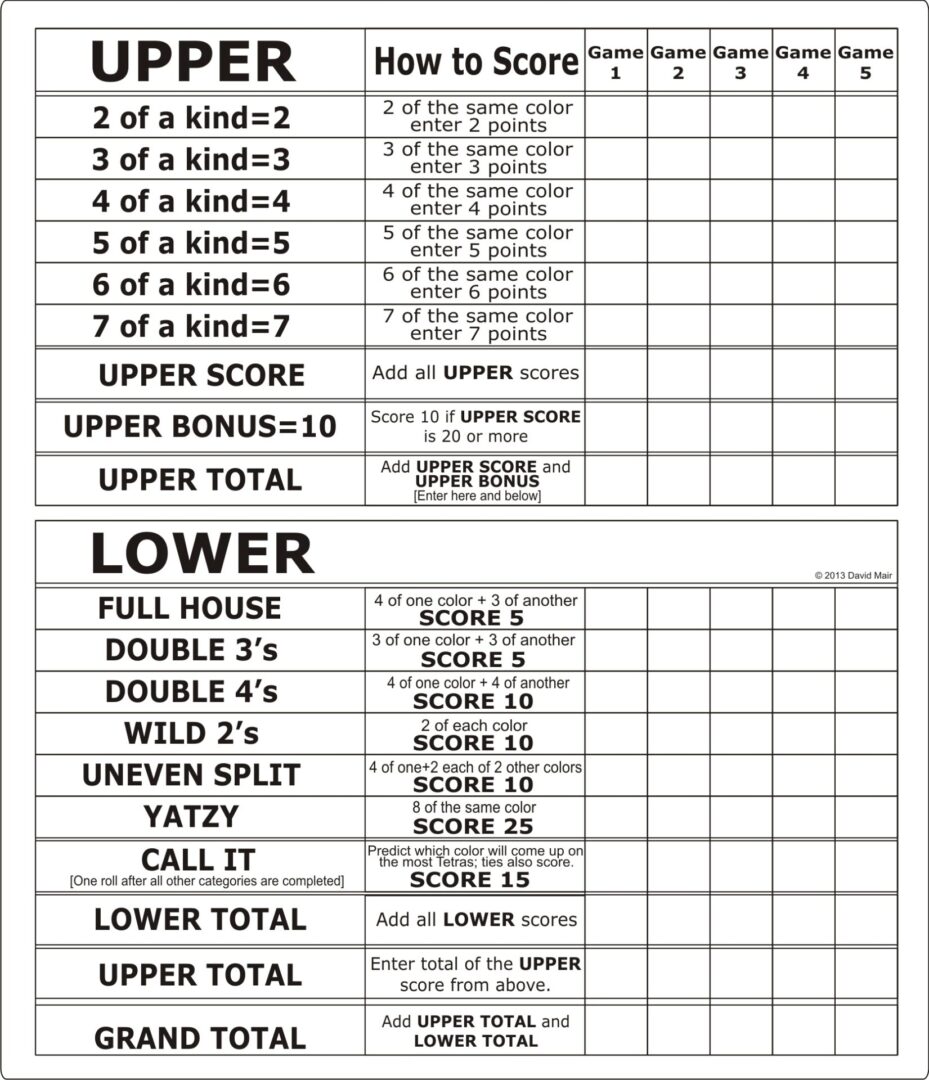
Tetra Yatzy
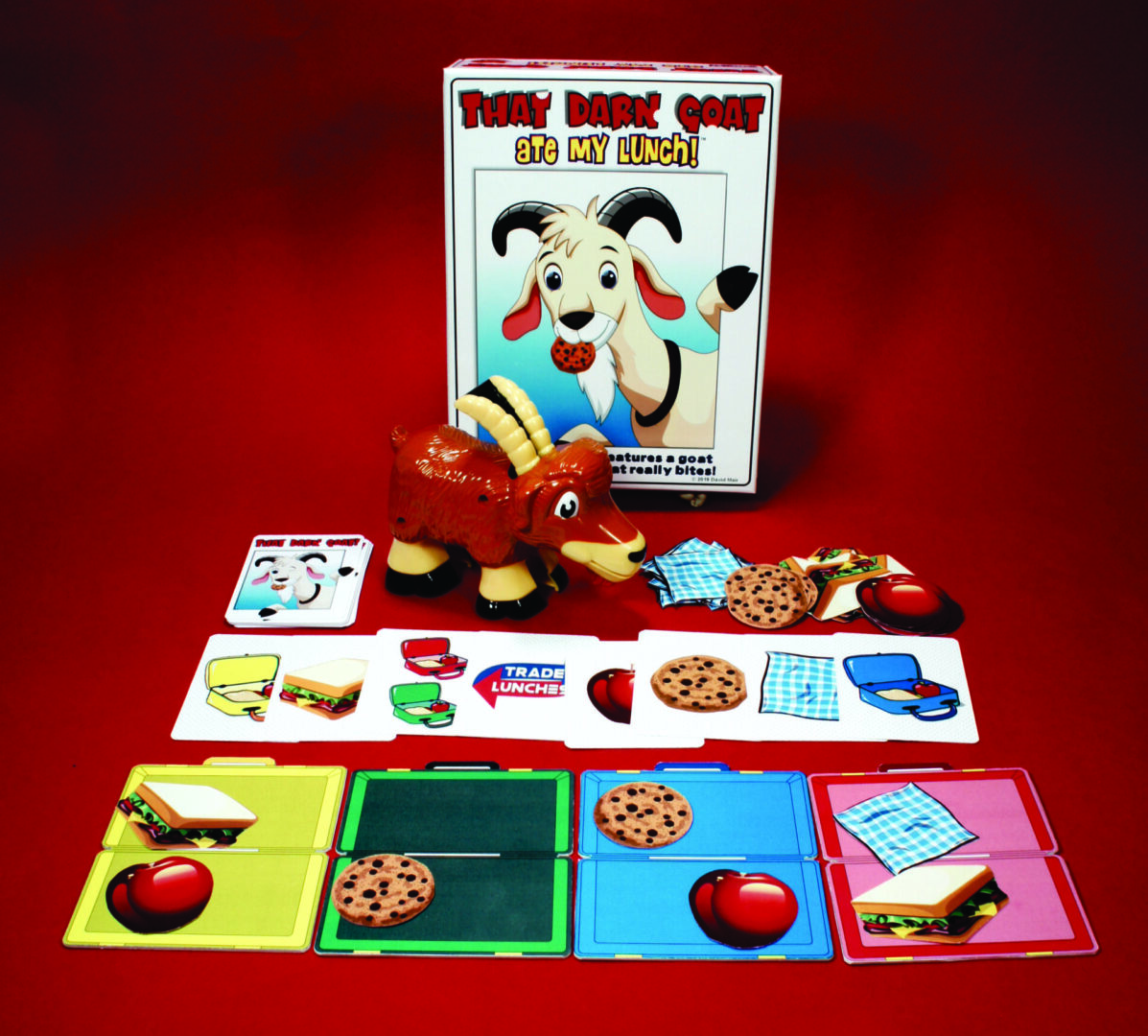
That Darn Goat 2019
Rules of the game
Content
1 biting goat, 4 open lunchboxes (red, blue, green, and yellow), 4 sheets of pop-out foods (sandwich, apple, cookie, and napkin), 18 direction cards
Players
2-4 players
Object
To be the last player left when all other players have gotten three bites taken out of each of the items in their lunchbox.
To Set Up
Give each player a lunchbox and 1 each of the contents of the lunchbox (sandwich, apple, cookie, and napkin.) The 4 items are placed on top of the open lunch box. Shuffle the cards and place them in the middle of the table.
To Play
- The youngest player begins by drawing the top card from the pile and turning it over for everyone to see.
- If a lunchbox card is drawn, the player chooses which item the goat will take a bite out of in the corresponding colored lunchbox.
- If a food/napkin card is drawn, the player chooses which item in their own lunchbox the goat will take a bite out of.
- If a card with two colored lunchboxes is drawn, the players with those colored lunchboxes each choose which item the goat will take a bite out of.
- If a “trade” card is drawn, the player must trade lunchboxes with any other player.
- If a “choose” card is drawn, the player selects another player who must take a bite out of any item in their lunchbox.
Each player, in turn, draws a card and follows the above rules. When the cards are used up, they are reshuffled and placed back down on the table. If a player gets 3 bites taken out of each item, that player is out of the game.
Winning the Game
The winner is the player who is left after all other players are out of the game.
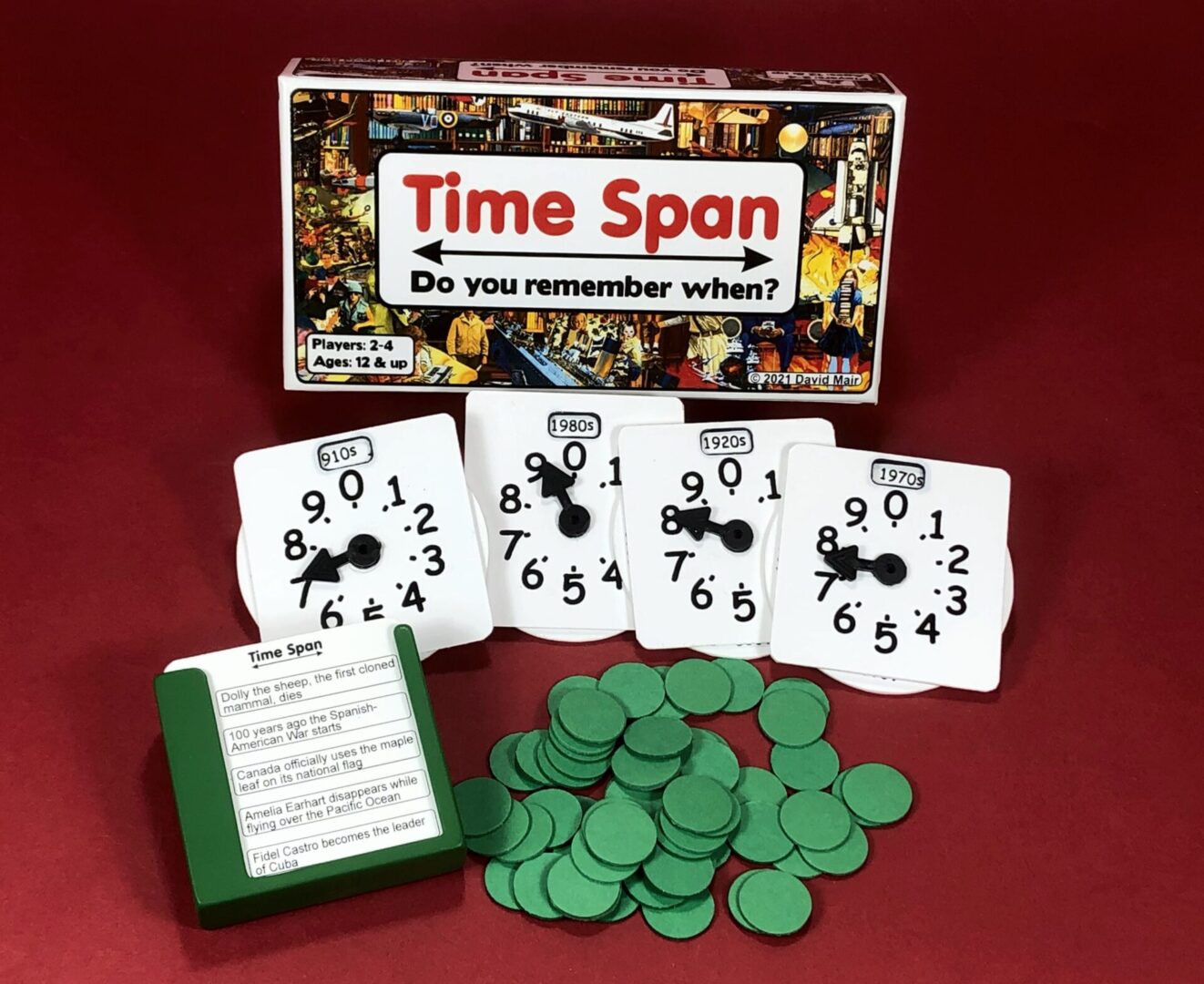
Time Span- Clock Version
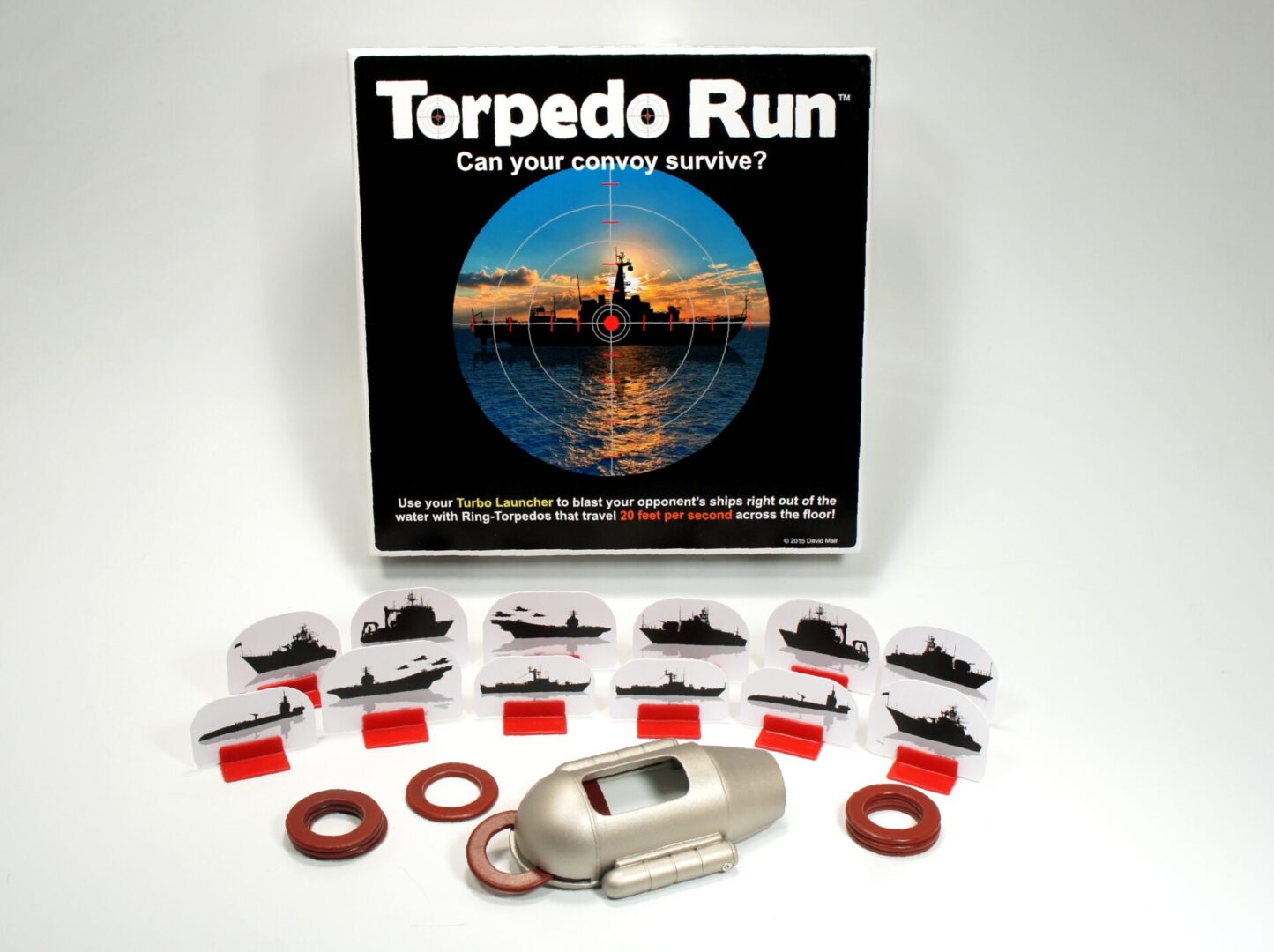
Torpedo Run
Rules of the Game
Players
2 or 2 teams
Content
1 sub launcher*, 6 plastic “torpedo rings”, 12 plastic stands, 12 die-cut card board ships, and rules.
Object
To knock down your opponent’s convoy of ships before your opponent can knockdown your convoy.
To Play
- Place all 12 ships into the plastic stands and give 6 ships to each player or team.
- Choose and clear floor space for your battle. On a hard floor surface, set up your convoy about 10–15 feet apart from your opponent’s convoy. On carpet, the torpedoes may travel a shorter distance, so position the ships closer together.
- Arrange each convoy across opposite ends of the play area facing one another. Space the ships 2 to 3 inches apart in a straight line.
- Give each player 3 torpedoes and a sub launcher. Players sit on the floor next to their line of ships.
- Select a starting player. Players take turns loading a torpedo into the front of the sub launcher, pulling it back, and releasing it quickly so it skims across the floor toward the opponent’s convoy.
- Players alternate turns shooting throughout the game. Any ships that are knocked over are removed from play.
- If a ship is hit but lands upright on its stand, it remains in play in its current position.
Winning the Game
Play continues following the rules above, until one player has knocked over all of the opponent’s ships. That player is the winner. The game ends in a tie if each player has been successful on every shot.
Team Play
When there are two teams of 2 players playing, the players on the same team alternate shooting, and once all 6 ships have been knocked over, they are reset for a second round. The winning team is the first to knock over the 12 ships.
* 2 sub launchers would normally be included in the game
Trace
Players
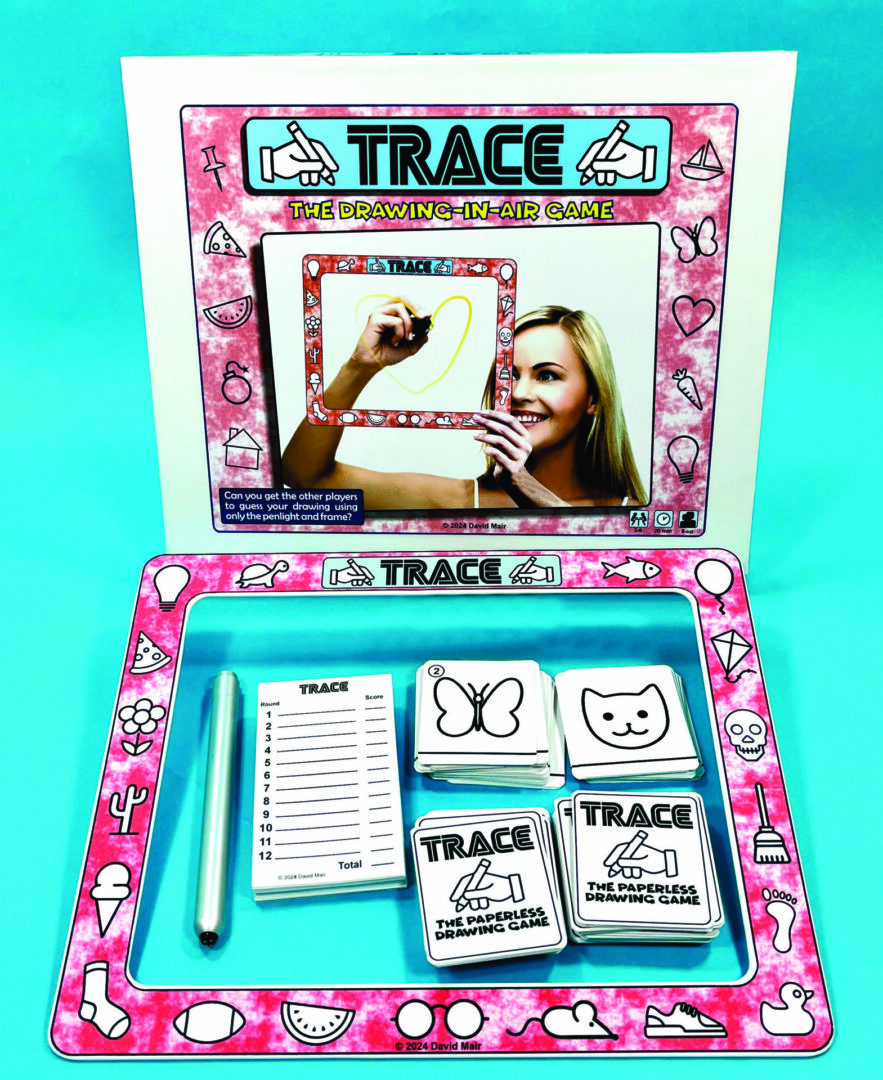
1 plastic frame (9” x 11”), 1 light pen, 144 cards, 1 score pad, and rules.
Object
To score the most points by guessing the images that are being “traced”” in the air by the light pen.
To Play
- Give each player a pencil and a score sheet.
- The starting player is given the frame and the light pen.
- The starting player draws a Trace card and inserts it into the slot at the top of the frame so the image faces them. Announce whether the card is worth one (1) point or, for more complex images, two (2) points.
- Stand facing the other players and hold the frame in front of you. Draw the image within the frame using the light pen so it points toward the other players. The tracing may be repeated as many times as desired.
- The other players write their guesses on their score sheet next to Round 1.
Scoring
- After all players have recorded their guesses on their score sheets, reveal the answer by showing the image on the card.
- If a player guesses correctly, they record 1 point for basic images or 2 points for more challenging images next to Round 1 on their score sheet.
- The drawer earns 1 point (or 2 points for more challenging cards) for each player who guesses correctly and records the total for Round 1.
Winning the Game
Play passes to left, where each player takes a turn as drawer until 12 rounds have been completed. Each player adds up the total number of points for all 12 rounds. The player with the highest total wins the game.
Tumbles
Vector (All Versions)
Contents
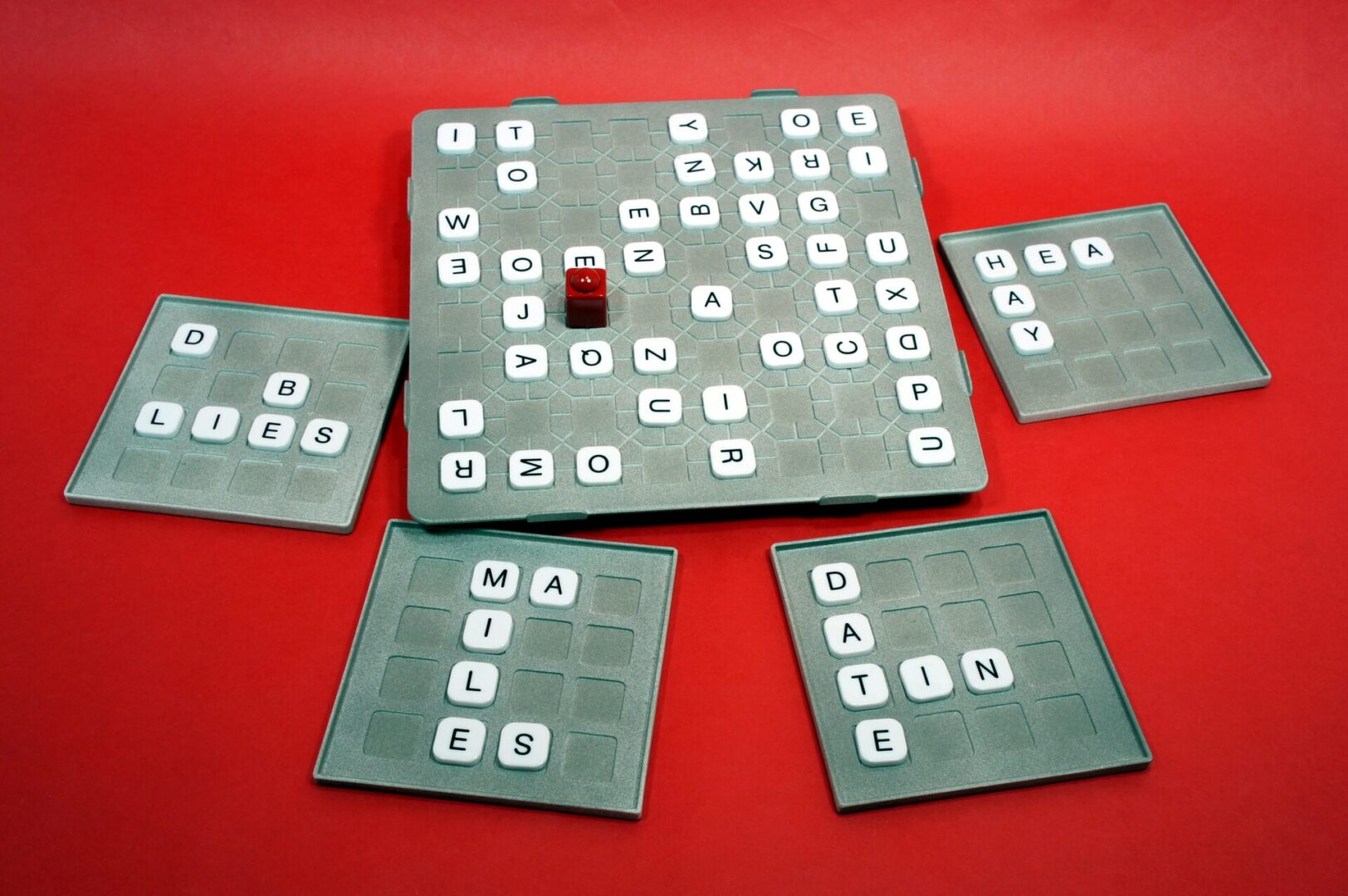
1 Vector game board, 4 collection boards, 64 letter tiles [printed on two sides], 1 playing piece, and rules
Players
2-4 players
Object
To score the most points by collecting letters from the Vector board to form words on your collecting board
To Set Up
Randomly place all 64 letter tiles into the square spaces on the Vector board. The tiles can face in any direction. Give each player a collection board.
To Play
[NOTE: The youngest player starts the game.] Remove any letter tile from the Vector board and place the playing piece in the vacated square. Then place the chosen tile on your collection board in any one of the empty square spaces. Keep in mind that you are trying to form 2, 3 or 4 letter words on the collection board. The words are formed from top to bottom and left to right, but not diagonally.
Play passes to the left. Each subsequent player chooses any letter tile that is along one of the rows –vertically, horizontally, or diagonally – starting from wherever the playing piece has been placed from the previous player’s turn. [See example to the right.]
The chosen letter tile is removed and replaced by the playing piece. The letter tile is then placed on that player’s collection board, and play passes to the player on the left.NOTE:
(1) A player must take a letter tile if one is available in any direction.
(2) If there are no letter tiles available in any direction, the player can jump to any available tile on the vector board.Scoring
When each player has completely filled his/her 16-space collection board with letter tiles, the words formed on the boards are tallied for each player. Only words that read from left to right or top to bottom are scored. The player receives 1 point for each letter in the word. Therefore, a 4 letter word would score 4 points, a three letter word 3 points, etc. The player can score points for 2 or 3 letter words that are formed by using some of the letters of a 4 letter word. For Example: If the player has formed the word “HEAR”, he/she would get credit for the word “HEAR” for 4 points, the word “EAR” for 3 points and the word “HE” for 2 points. No points are awarded for 1 letter words. The total for each player is recorded.
Winning the Game
Once all the players have totaled up their word scores, the player with the highest score wins the game.
SONY DSC
Watch Your Step!
Contents
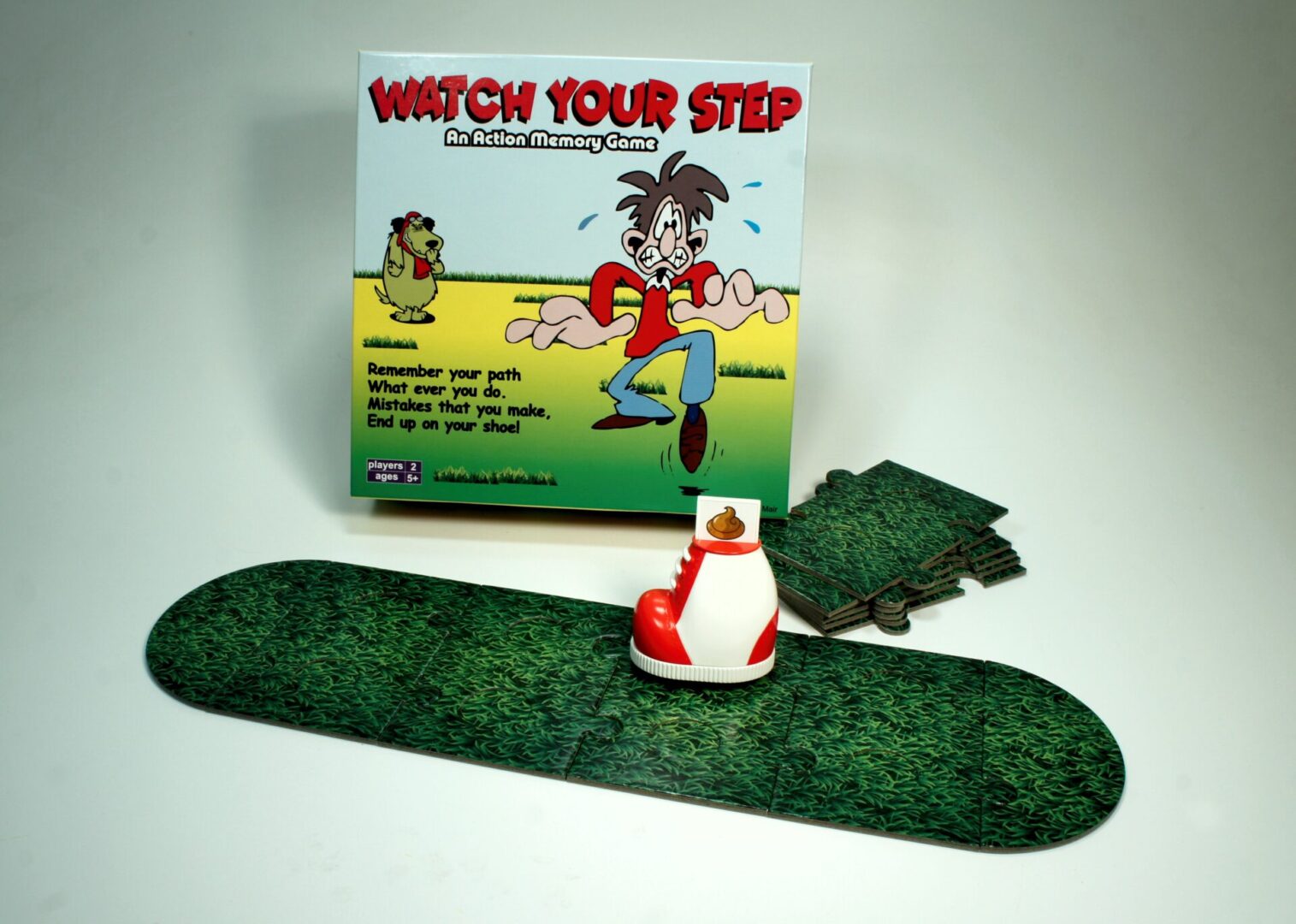
10 “grass” tiles, 1 shoe playing piece, 1 game board, and rules
Players
2 players
Object
To be the first player to move across the “grass” without stepping in the “poop”.
To Set Up
Mix up the 10 “grass” tiles and place them together to form on the game board. Attach the semi-circle end pieces of grass to the rectangular game tiles. The players should sit at either end of the game board.
To Play
The youngest player starts the game by moving the “shoe”, one tile at a time, from one side of the game board to the other. They have the choice of two circles per tile. One of the circles is always free and the other will pop the poop! If the player lands on the “poop” (when the poop icon pops up on top of the “shoe”), that player’s turn is over. The next player begins his/her turn by starting the shoe on his/her end of the game board and moving, one tile at a time, to the other end of the game board. Each player should pay close attention to when the other player fails, so that he/she can keep track of the circles where he/she should not step. (Note: on each turn, the player must begin at the end of the board.)
Winning the Game
Play continues until one player has moved from one side of the game board to the other without stepping in the “poop”. That player is the winner.
Note: for shorter games for younger players, fewer tiles can be used. The players can decide upon a number of tiles to use.
What %
Contents
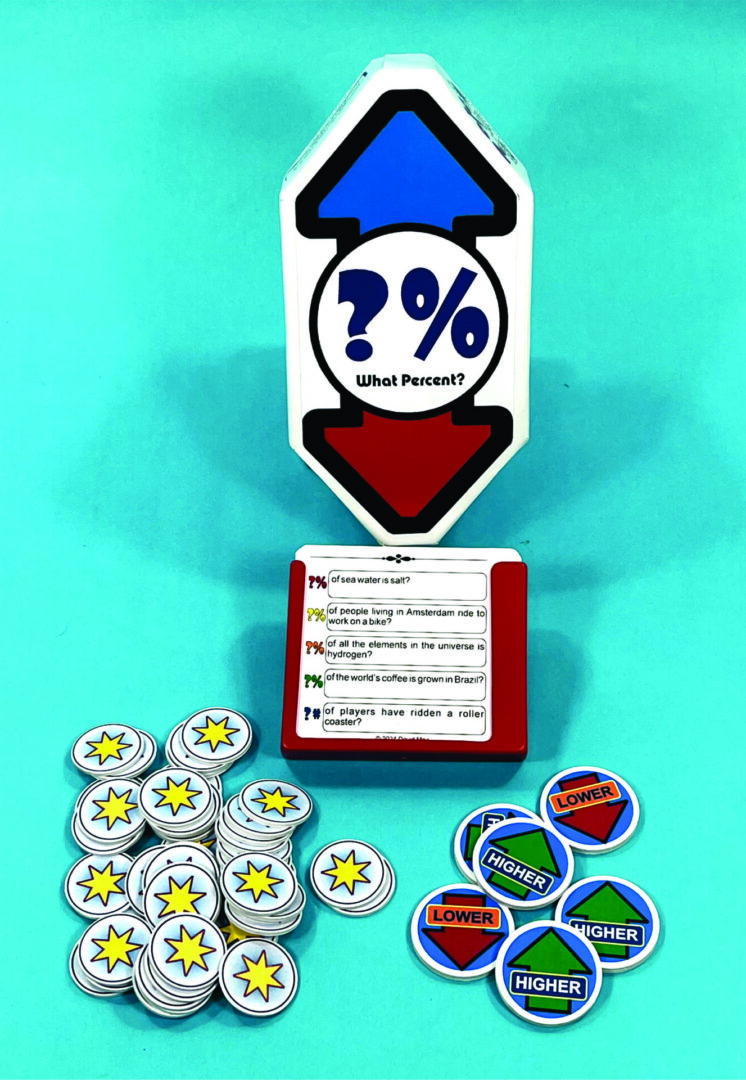
36 cards, 1 card holder, 40 scoring chips, 6 playing pieces, 1 erasable marker, 1 white board, and rules.
Object
To collect the most scoring chips by correctly predicting whether the real answer is higher or lower than the guessing player’s written response.
To Set Up
Place all 36 cards in the card holder so that the printed side is facing out, and the answers are covered by the edge of the holder. Give each player a playing piece. Place the scoring chips within easy reach. Give the starting player the erasable pen and the “2%” board.
To Play
The top question is read aloud for all to hear. The starting player writes their guess with the erasable marker on the board in the center space. The other players place their playing piece on the board on either the “Higher (blue)” arrow if they think the percentage is higher than what the starting player has written or on the “Lower (red)” arrow if they think the answer is a lower percentage. They can also choose the center space where the answer is written if they think it is correct.
The answer is revealed by lifting the card out of the holder just enough to reveal the answer. Each player who has correctly predicted the outcome receives a scoring chip. The board is erased and play passes to the left.
The next player and all subsequent players guess “What Percent” of each new question as they are slowly revealed from the card holder.
The “2%” Question
The last question on each card asks all the players playing the game a personal question, whether they can do something, have done something, or know the answer to something. The guessing player writes their answer as a number from zero to one hundred percent on the board. The other players are placed on the board as before, predicting whether the correct answer is higher, lower, or the same as the guessing player’s prediction. Each player then reveals their answer. The total number of correct responses is compared to the prediction, and those players who predicted correctly get a scoring chip.
Winning the Game
Play continues following the above rules until all the scoring chips have been used. The player with the most chips is the winner.
What Are the Odds
What Comes to Mind
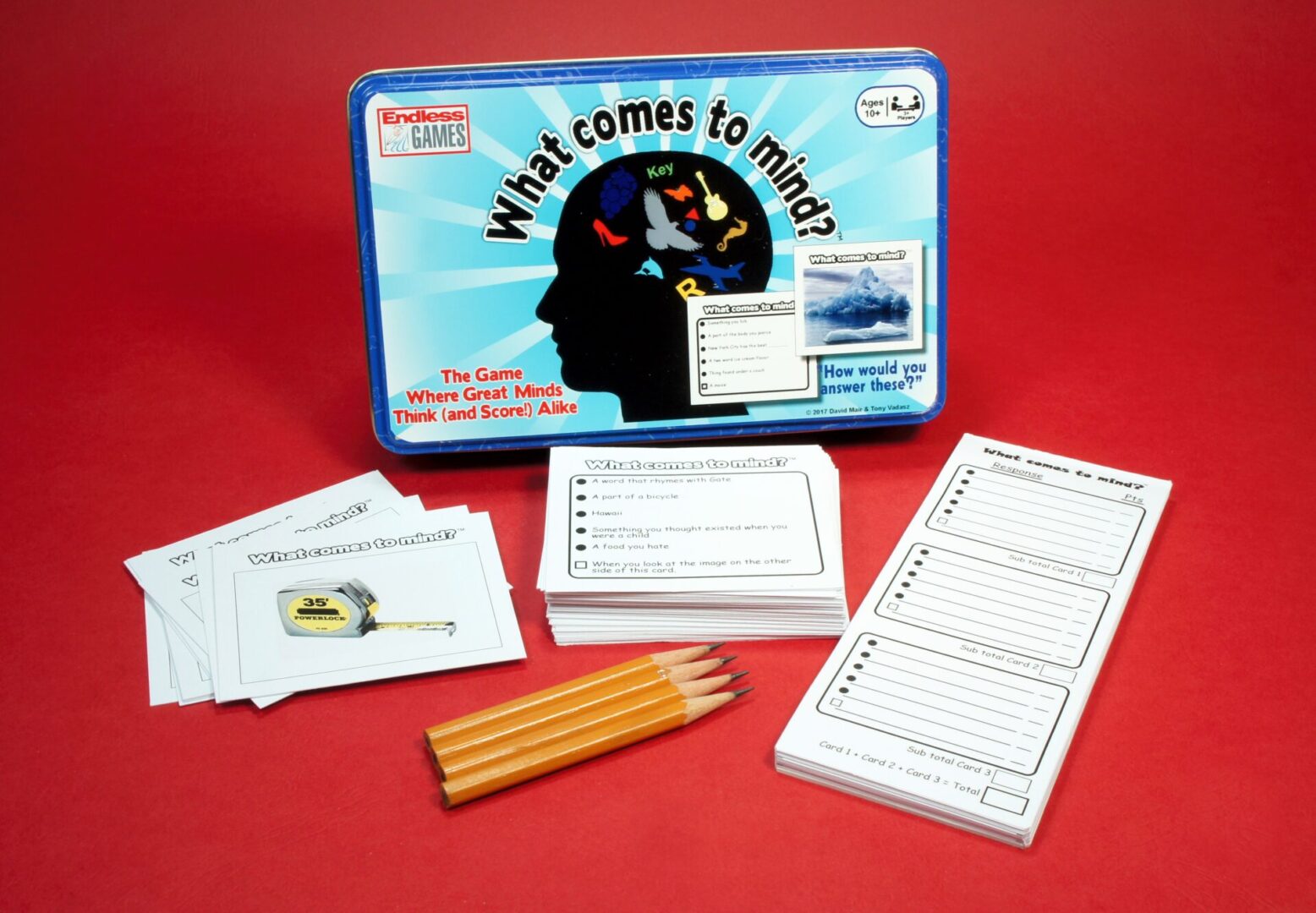
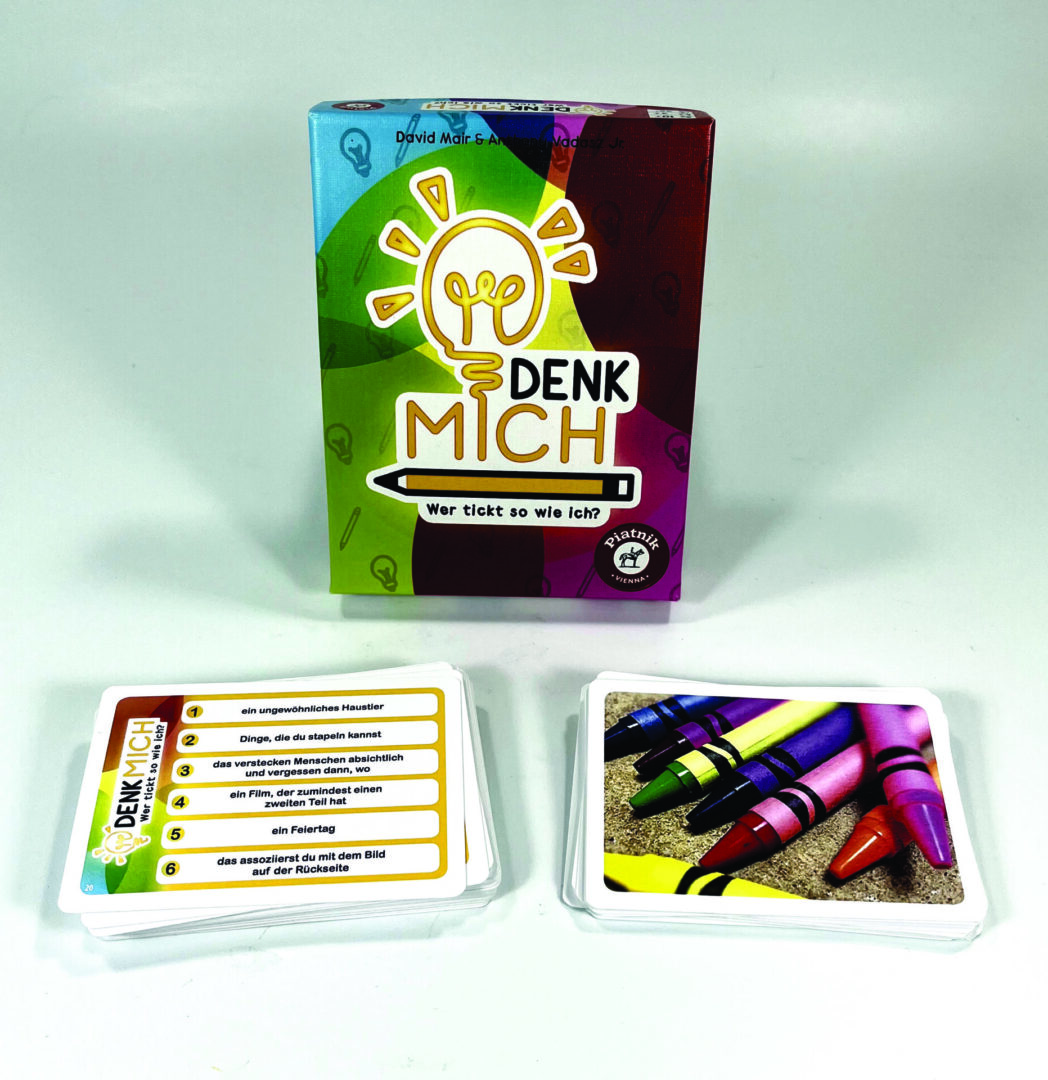
Woodpecker Bug Hunt
Tippi-Tap Woodpecker
Bug Hunt Game
Contents
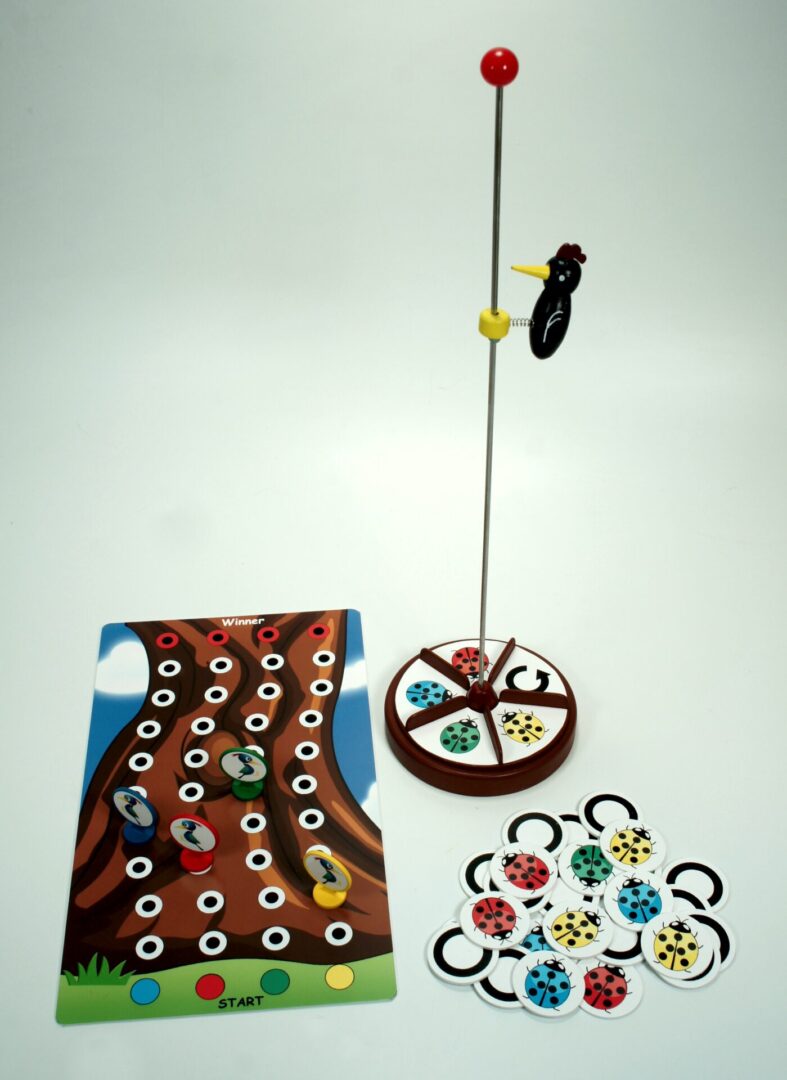
1 base, 1 spinner, 1 pole (with attached woodpecker), 4 woodpecker playing pieces, 1 game board, 24 discs (3 each of 4 colors, and 12 discs with a circle symbol) and rules.
Players
2-4 players
Object
To be the first player to move their woodpecker to the top of the tree on the game board by finding the matching colored bugs as quickly as possible.
To Set Up
Place the base unit on the table. Place the 4-section spinner on top of the base and insert the pole through the hole in the spinner into the base. Give each player a woodpecker playing piece, which is placed on the matching colored start circle on the game board. Spread all 24 discs face down on the table, and mix them around. If there are 2 or 3 players playing, remove one bug disc of each color from play. When 2 are playing, the first player to find the matching colored bug advances up the tree.
To Play
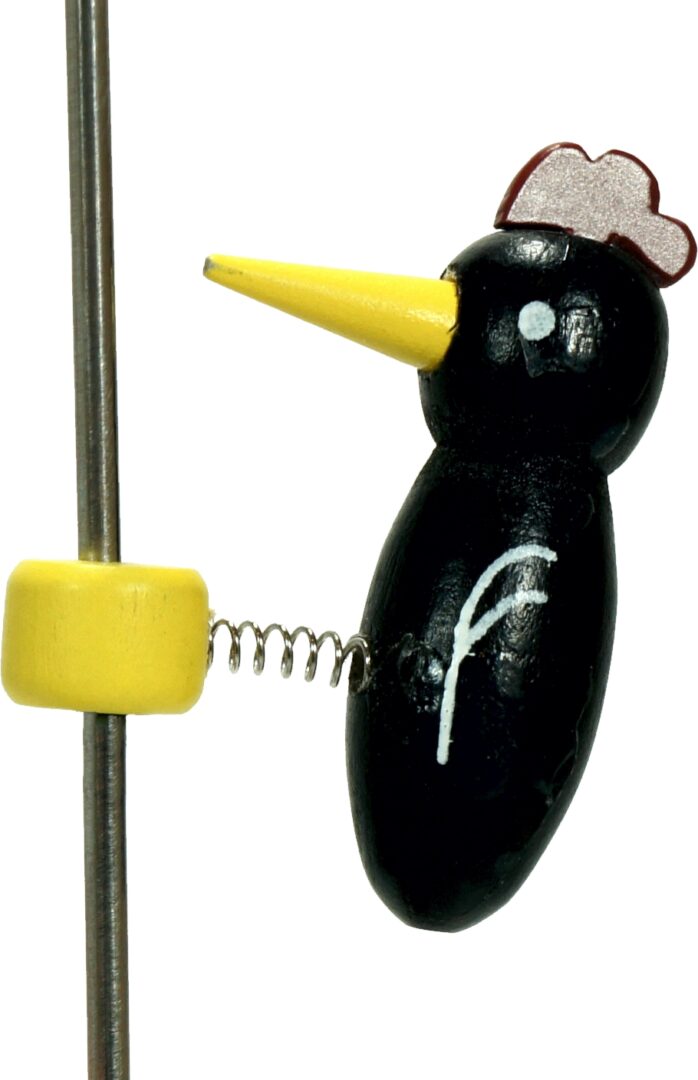
Start the game by bringing the woodpecker to the top of the pole. Pull back on his head and then let go. He will start pecking his way down the pole. (Players can take turns doing this, or one player can be in charge of the woodpecker throughout the game.) To make the selection completely random, spin the spinner each time before the woodpecker is released. The colored bug in the section on the spinner where the woodpecker lands, indicates the colored bug the players must find as quickly as possible. The players who have found the correct bugs advance their playing pieces up the tree one circle. If the woodpecker lands on the same section as a previous turn, the discs on the table must be mixed around before the hunt begins.
Winning the Game
Play continues following the above rules until one player has reached the top of the tree on the game board. That player is the winner.
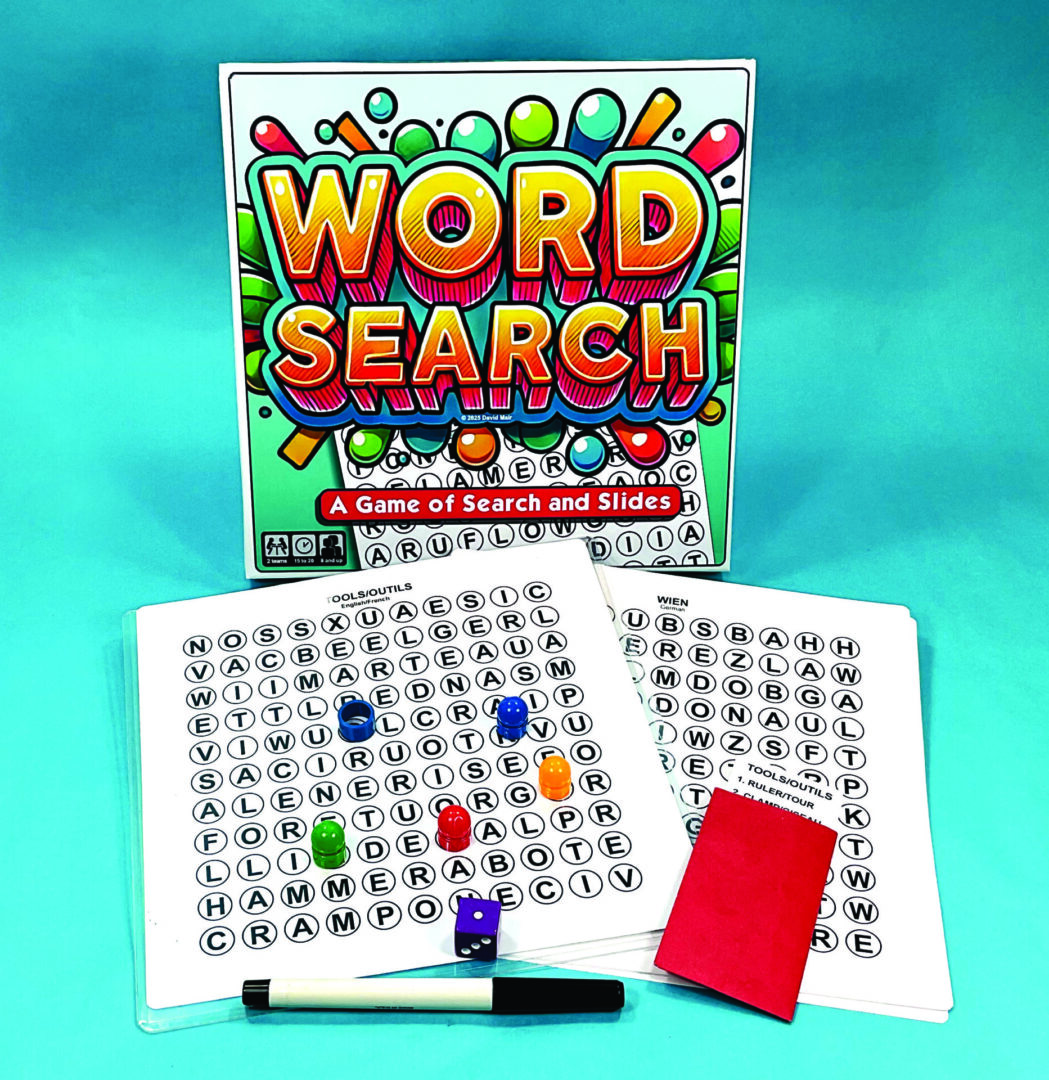
Word Search
You Decide