Innovative Gaming Creations Since 1978 - Over 700 Inventions
-
23 Across
-
Achoo Igloo (with Bill Van Orden)
-
Addit-2017
-
Aha! (Betcha)
-
Aha!
-
And They're Off (with Jay Levinson)
-
Beehive Alive
-
Bent Outta Shape
-
Best to Wurst 2023
-
Big Dice
-
Bow Wow Bingo (Diggers)
-
Brain Ache 2019
-
Click-it
-
Condo-money-um (with Bob Fuhrer)
-
Crafty Owl (Mr. Crafts)
-
Crazy Creatures
-
Cross Over
-
Daddy Long Legs
-
Diggity Dog (with Bill Van Orden)
-
Don't Drop the Meatball
-
Don't Panic
-
Dot 2 Dot
-
Dot Candy Kit - 2024
-
Duck Duck Goose 2018
-
Erasable Bingo
-
Erasable Boxes
-
Eye Opener 2022
-
Fairytale Charms
-
Fashion Fingers
-
Flick-it
-
Frantic
-
Frog Prince (1st version)
-
Frog Prince (2nd version)
-
Galactic Games 2019
-
Gobbledy Goat
-
Goin' Nuts (With Bill Van Orden)
-
The Great Gumball Game
-
Hoo-Dee-Nee
-
Hop Shots
-
Illusion Show
-
Insomnia
-
Itsy Bitsy Spider (with Bill Van Orden)
-
Judge For Yourself
-
Jump-A-Ton
-
Kaleidoscope Craft
-
Las Vegas Coin Game (with Jay Levinson)
-
Later Mater
-
Loopit
-
Lost For Words
-
Magic Game
-
Magic Hats
-
Magic Man
-
Manic Mechanic (with Bill Van Orden)
-
Matcha Games
-
Memory Book
-
Monster Domines
-
Mr. Game
-
Mr. Puzzle
-
No Exit
-
One Man Band
-
Picnic (with Bob Fuhrer)
-
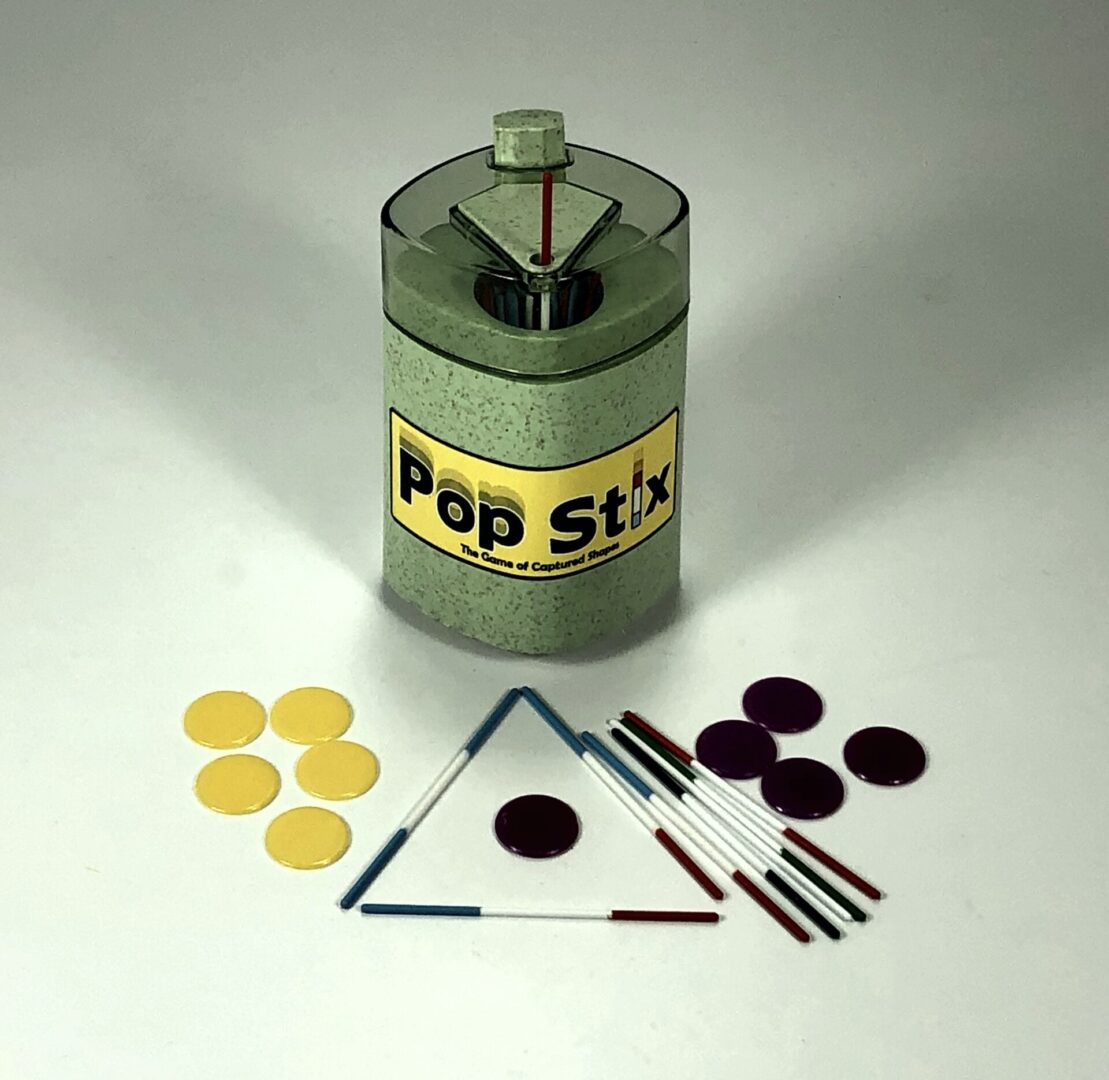
Pop Stix - 2021
-
Pile Up 2017
-
Pop-Up Watch
-
Puke
-
Pull Out Books
-
Puke 2019
-
Questillo
-
Quick Draw (Picture Panic)
-
Quick Sound
-
Rebus (Scrabble Rebus)
-
Rebus for Juniors
-
Red Light Green Light 2016
-
Restaurant Games
-
Rock Paper Scissors
-
Scratch “N” Play 2022
-
Sealed With A Kiss
-
Snot 2019
-
Soft Puzzle
-
Sound and Seek
-
Spin Ball Games 2017
-
Spin-O-Matic (with Jim Winslow)
-
Super Jax
-
Talk About
-
Team of Rivals (with Tony Vadasz)
-
Tetra Yatzy
-
Texting, Texting, 1, 2, 3 (with Tony Vadasz)
-
The Numbers Game 2023
-
Thumb Sucker
-
Time Flies
-
Timer Games
-
Tomb of Doom
-
Tooth Fairy
-
Total Panic
-
Trap Door Checkers
-
Turbo Panic
-
Vampire Diaries (with Bill Van Orden)
-
What Comes to Mind?
-
Word Search
-
Wormy Apples
-
Wrecking Ball
23 Across
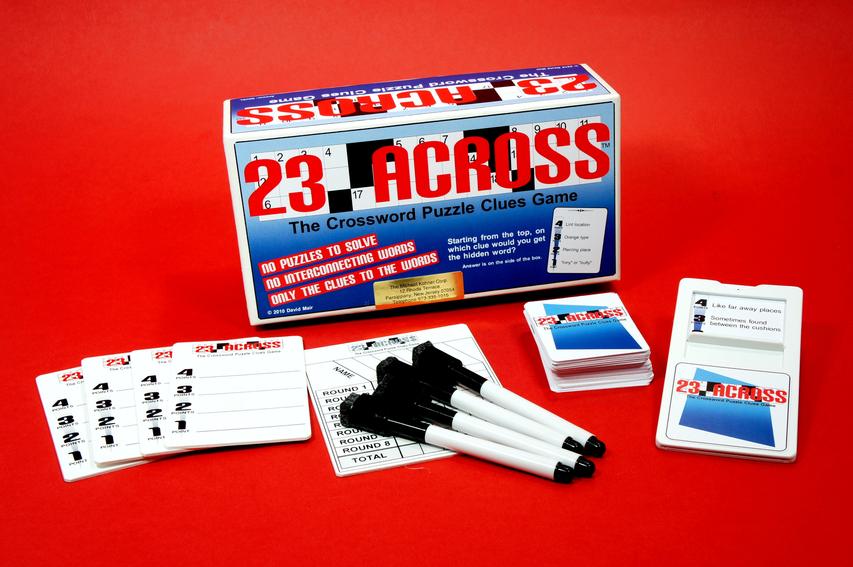
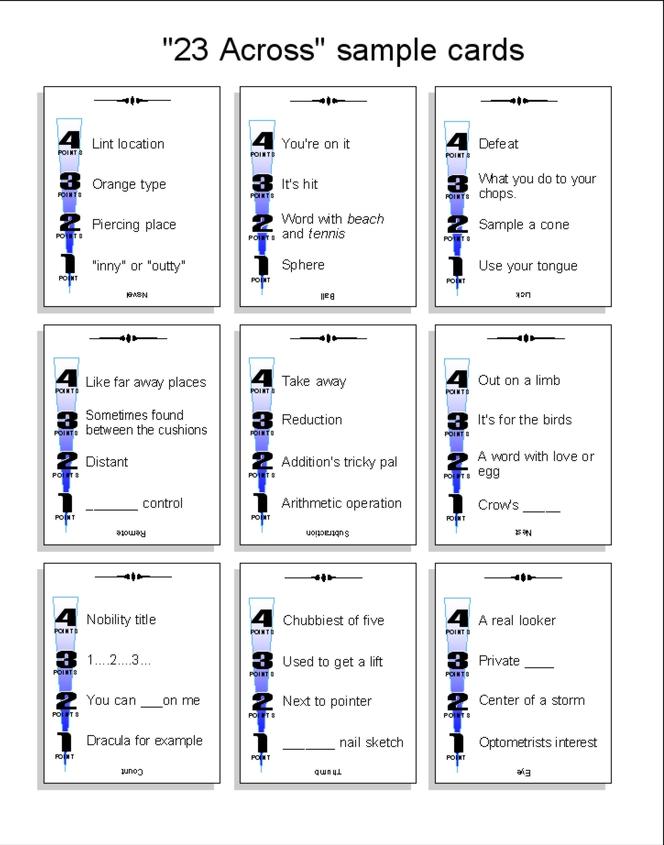
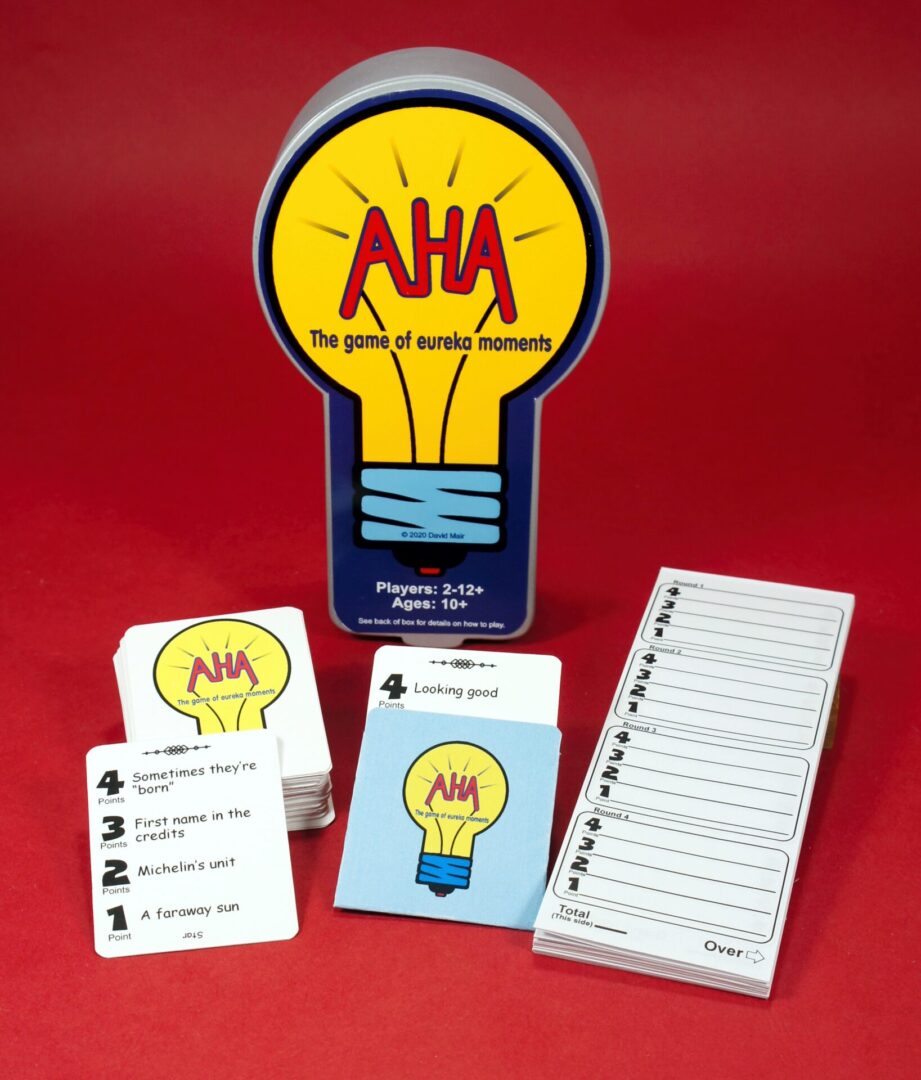
23 Across (2010) is based on crossword puzzles, but there is no grid or interlocking words. The clues to the key word are given to everyone at the same time. The first clue is worth 4 points, second clue 3 point, third clue 2 points and the last clue is worth one point. The clues are given one at a time and the players write down their guess on their erasable boards. Each clue gets easier, but less valuable. Once all the clues have been given, the answer is revealed to all. The players make note after which clue they wrote in the correct answer. The scores for each player are recorded for round 1. The player with the highest score after 8 rounds is the winner.
Achoo Igloo
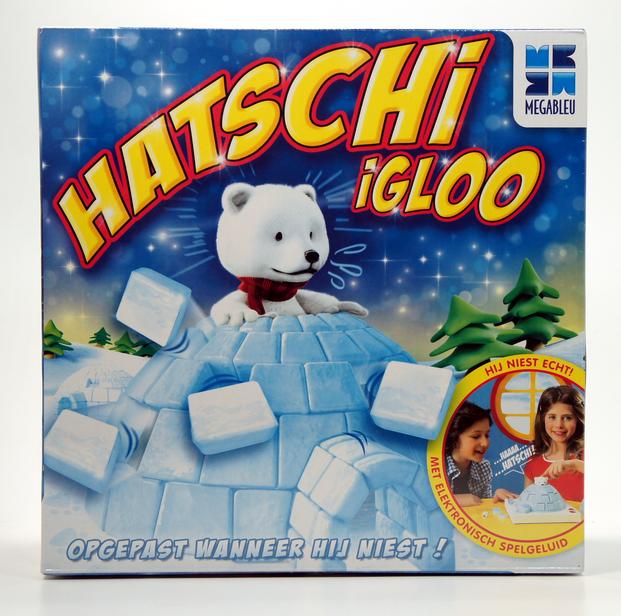
Achoo Igloo [12-2005] was invented with Bill Van Orden, longtime friend and cartoonist. The concept of the game is a polar bear with cold, blowing apart an igloo every time he sneezes. There is a sound chip of a sneeze inside the igloo as ice blocks fly off in all directions. A player wins when you place all your ice blocks into the igloo.
Addit- 2017
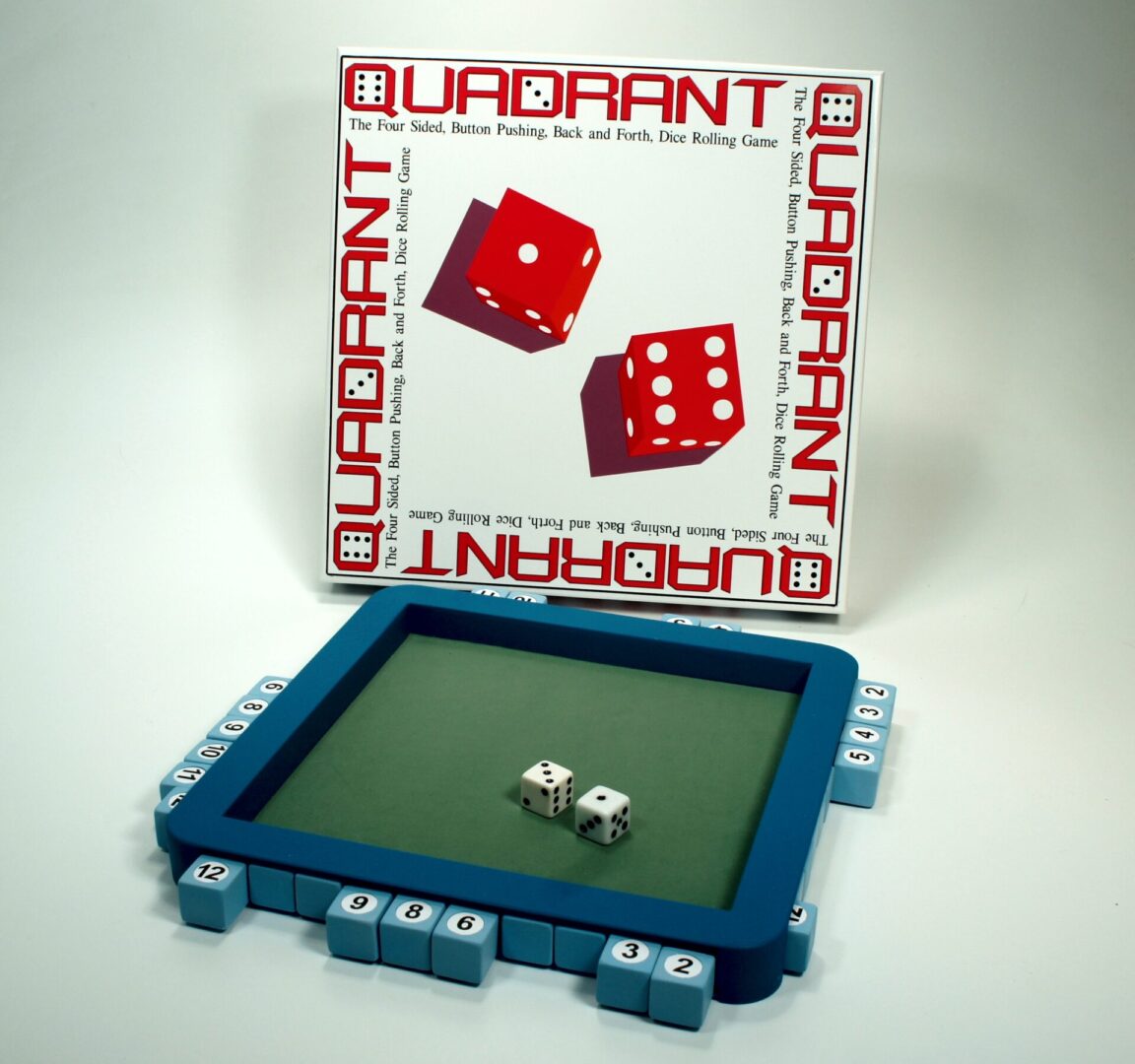
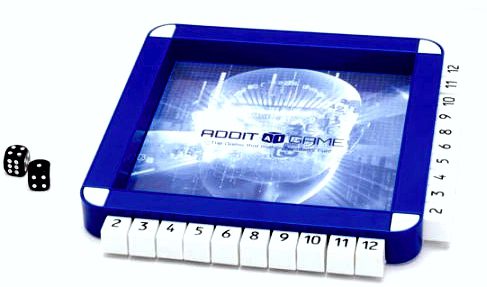
Sold to Intex in HK. This is a four player “shut the box” game. As the player is able to push in the matching numbers from the role on a dice, those numbers come out on the other side where that player, on his turn, must try to push them all in to win the game.
Aha! (Betcha)
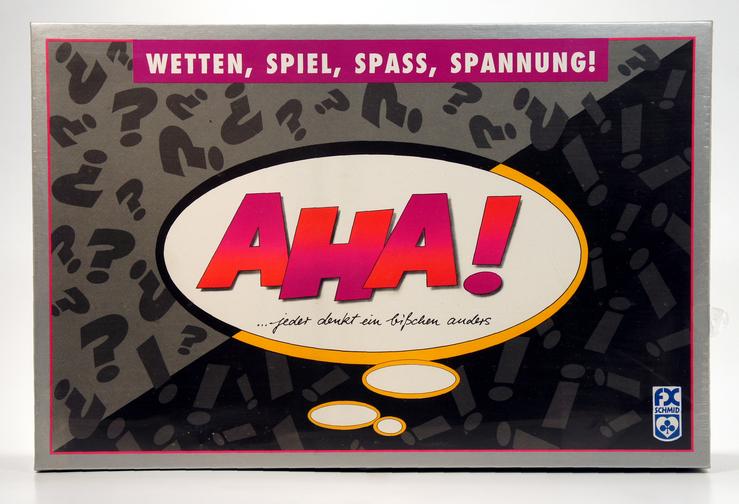
Aha! (Betcha) [10-1984] is based on an idea that my father gave me. He dreamed about betting on whether people would know the answer to questions. Betcha was the original name of the game, in which personal questions like "Have you ever been in a helicopter?" etc., were answered by one player, after the other players secretly voted Yes or No, and placed their bets, as to how the first player would answer.
Aha!
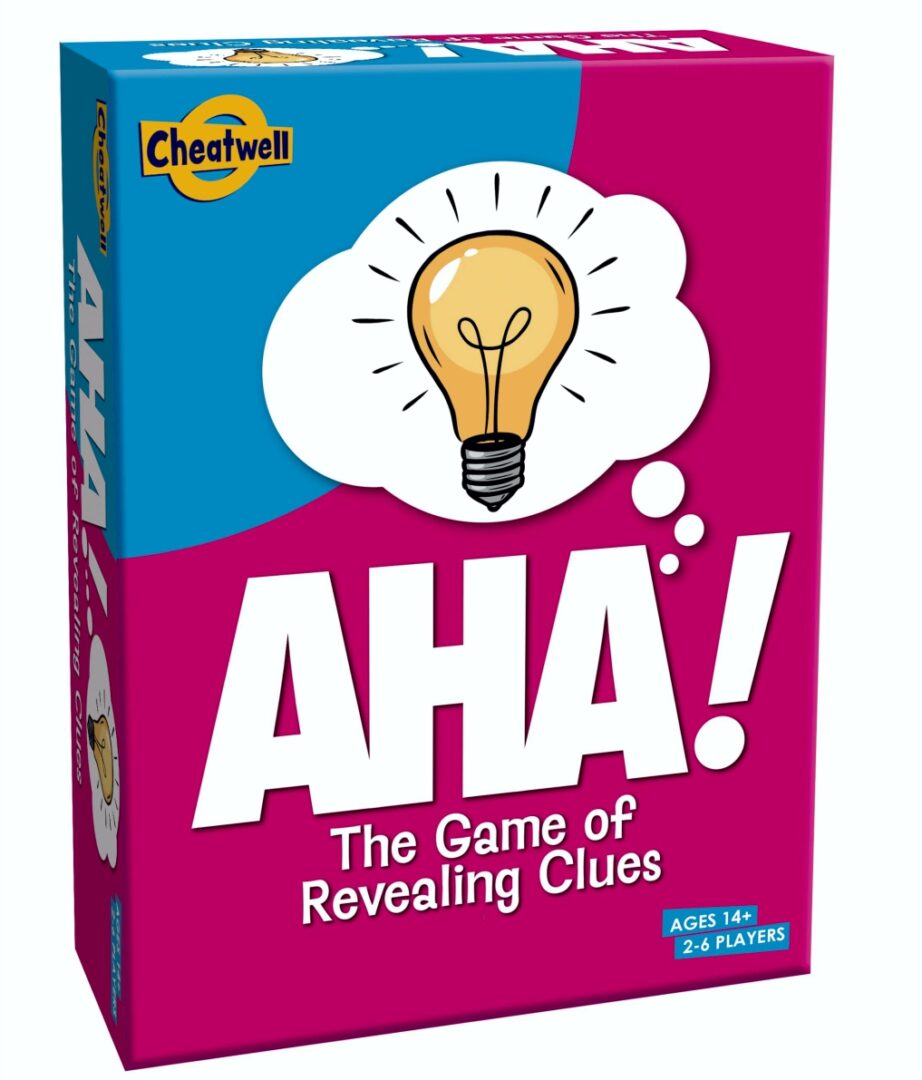
Invented in 2020 and sold to Cheatwell Games in the UK and Outset Press in Canada. I originally called this game 23 Across because of the crossword puzzle like clues. There are four clues that are slowly revealed to the same word. You score more points when you get the word on the fewer clues.
All Rise! 2022
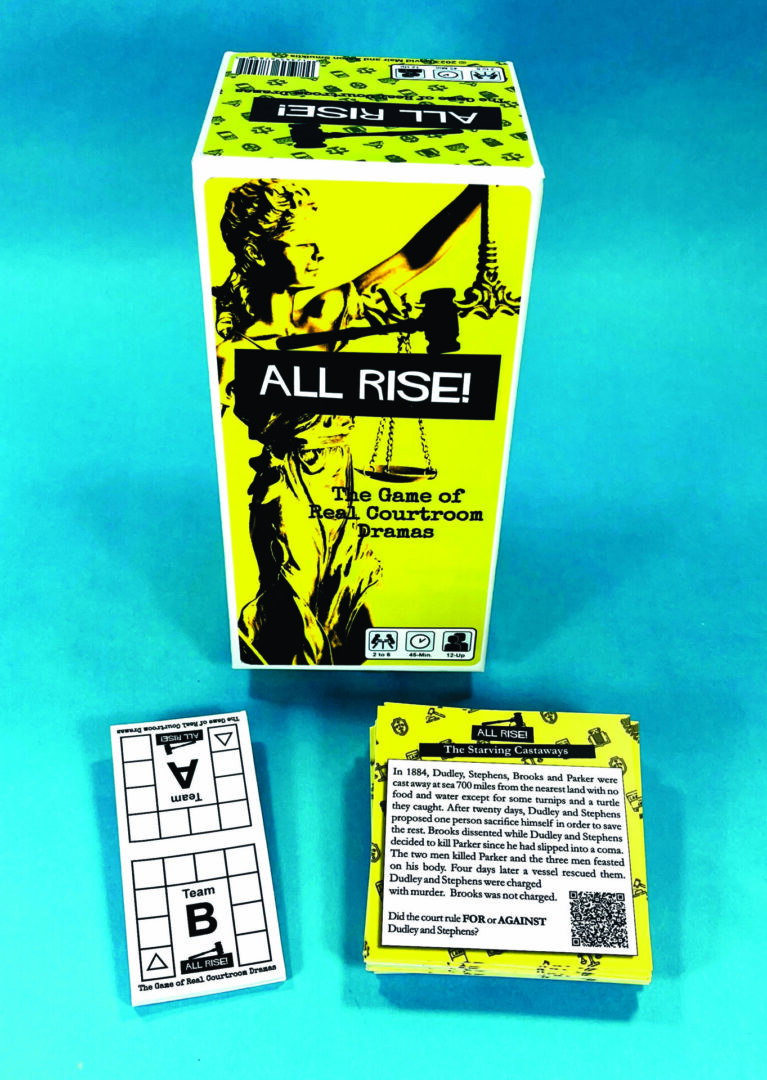
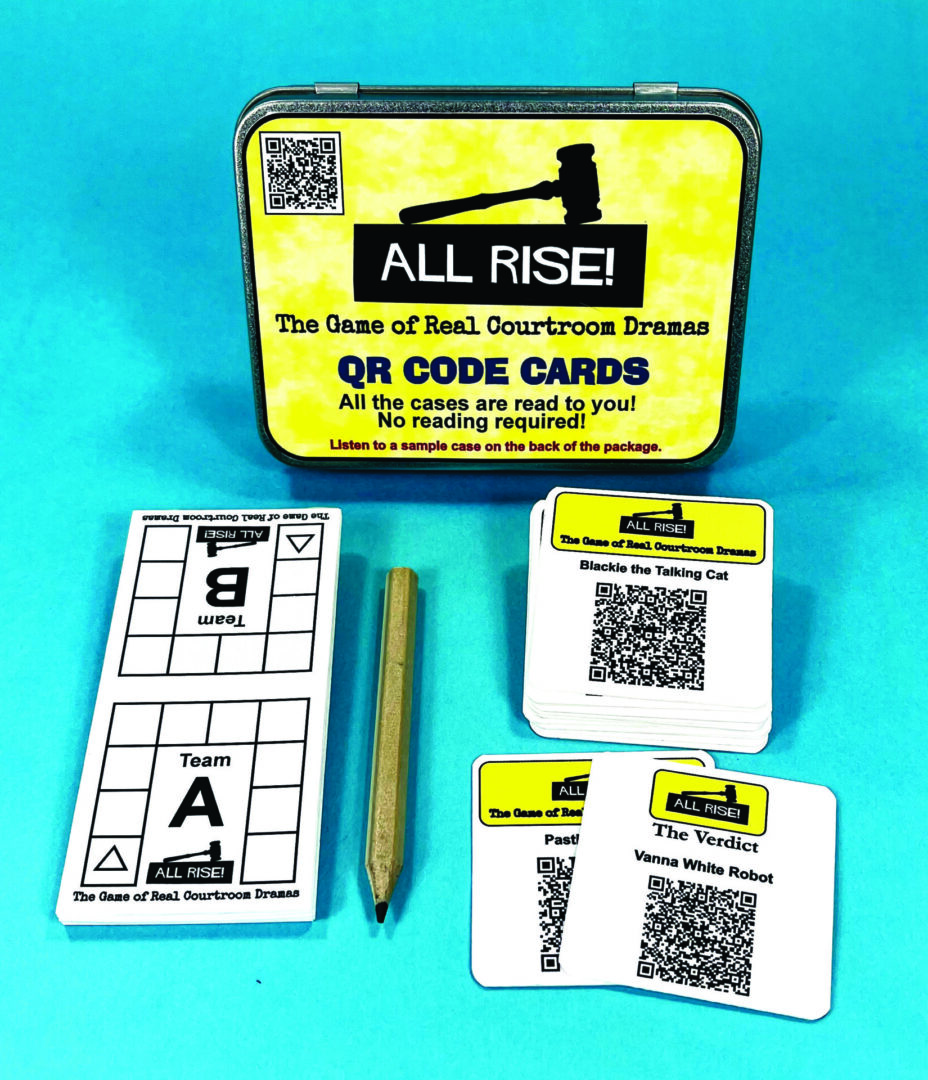
Aaron Smulktis approached me, asking if he could redo my old You be the Judge game and bring it out digitally as an app. It is currently available for downloading. We’re working on bringing out a tabletop version, using only QR codes to have the cases read to the players. In this game, people try to decide how the real life case was decided by the courts.
And They're Off
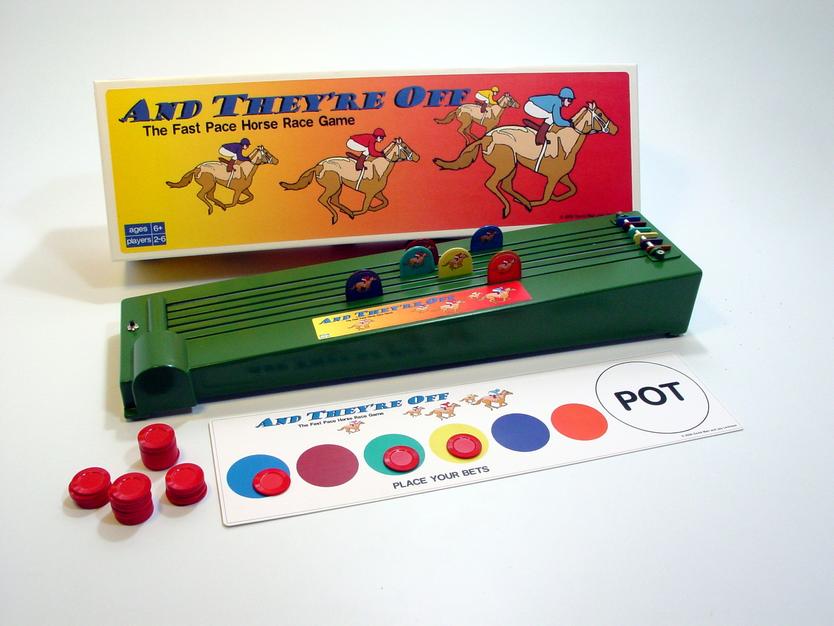
And They're Off (7-2009) was co-invented with Jay Levinson, and was based on an antique horse racing-game that Jay had found. The principle of the game was that metal balls in each of 6 tracks would be driven up the track by a spinning motor that drove a triangular shaped rod. The ball would strike the rod, fly up the track, and hit the back of a little plastic race horse. That would drive it forward up the track and the ball would run back down the incline to strike the spinning rod again where it would be driven up the track. In the end, one horse would be driven across the finish line first where a flag would raise up to indicate the winner. Paul Lamond bought the rights in 2009, but after modeling began it was discovered that a very similar product called Desk Top Derby was already out on the market.
Beehive Alive
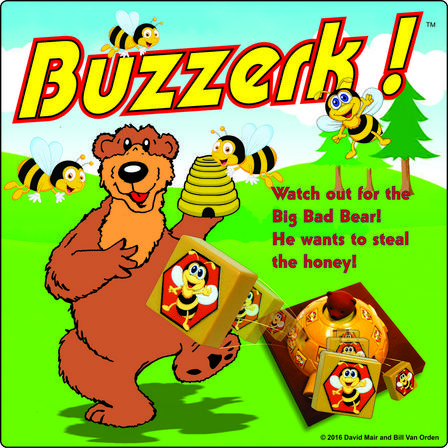
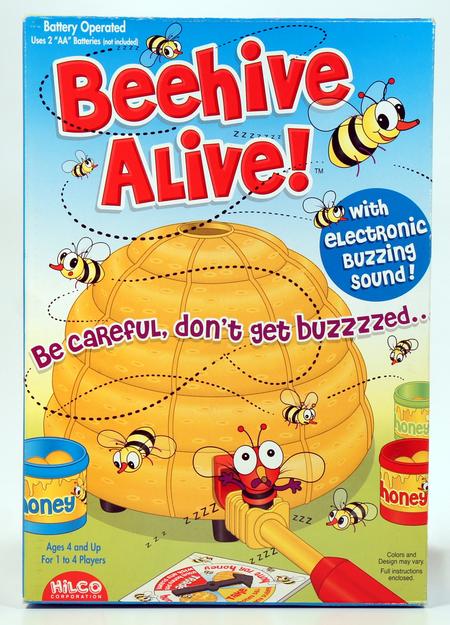
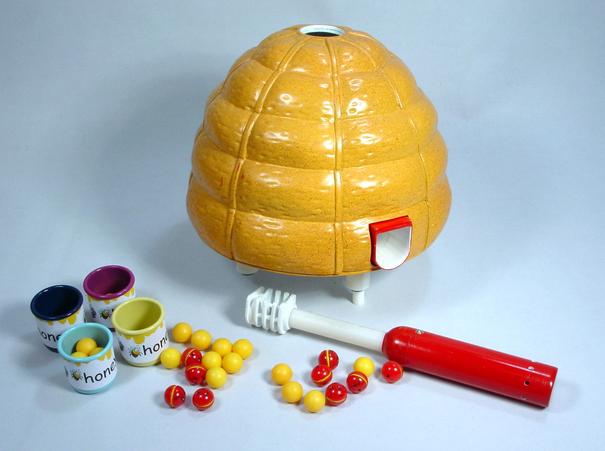
Beehive Alive (Feb-2005) was originally called Honey Hunt. The players would take turns inserting a honey dipper into the hive looking for honey balls, which were spilled into the top of the hive before the start of play. Mixed in with the yellow honey balls were red bee balls that had a small metal washer inside. When the player dipped into the hive and got a bee ball, it activated a magnetic switch and the whole honey dipper would buzz like a bee. The original dipper had a small motor with a concentric weight attached that both made the buzzing sound and caused the dipper to vibrate.
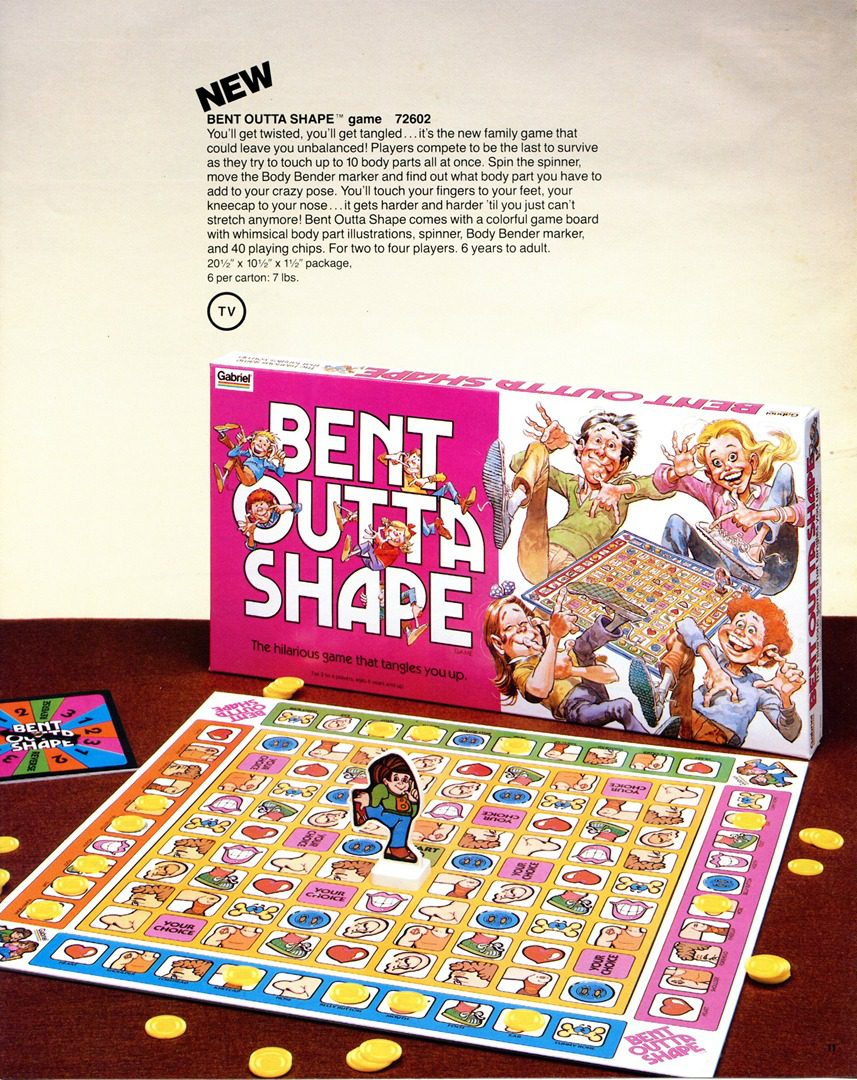
Bent Outta Shape
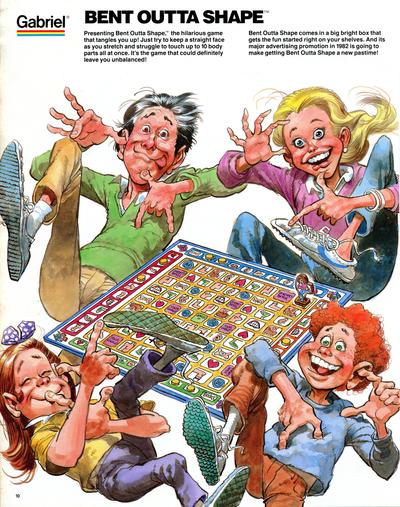
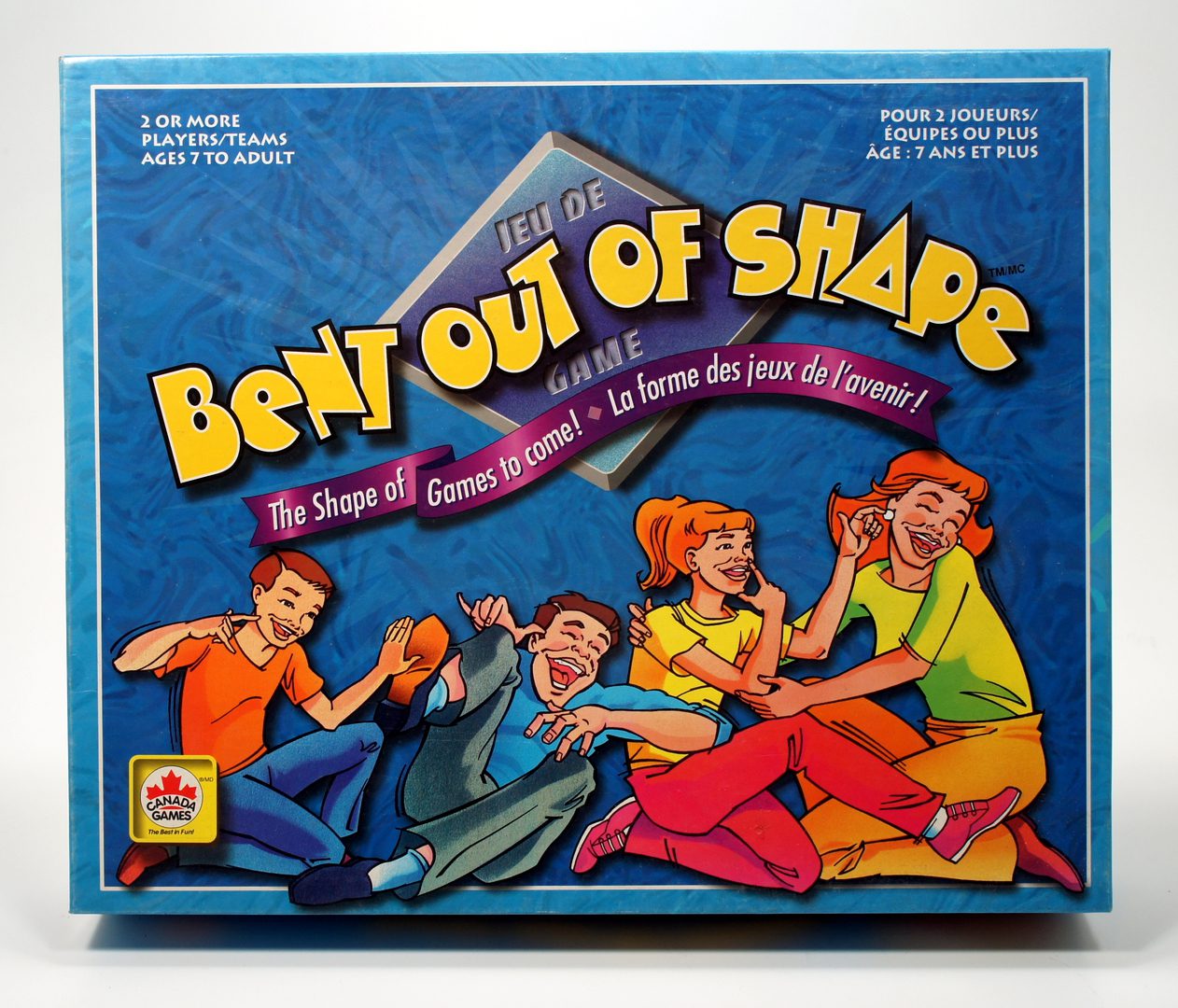
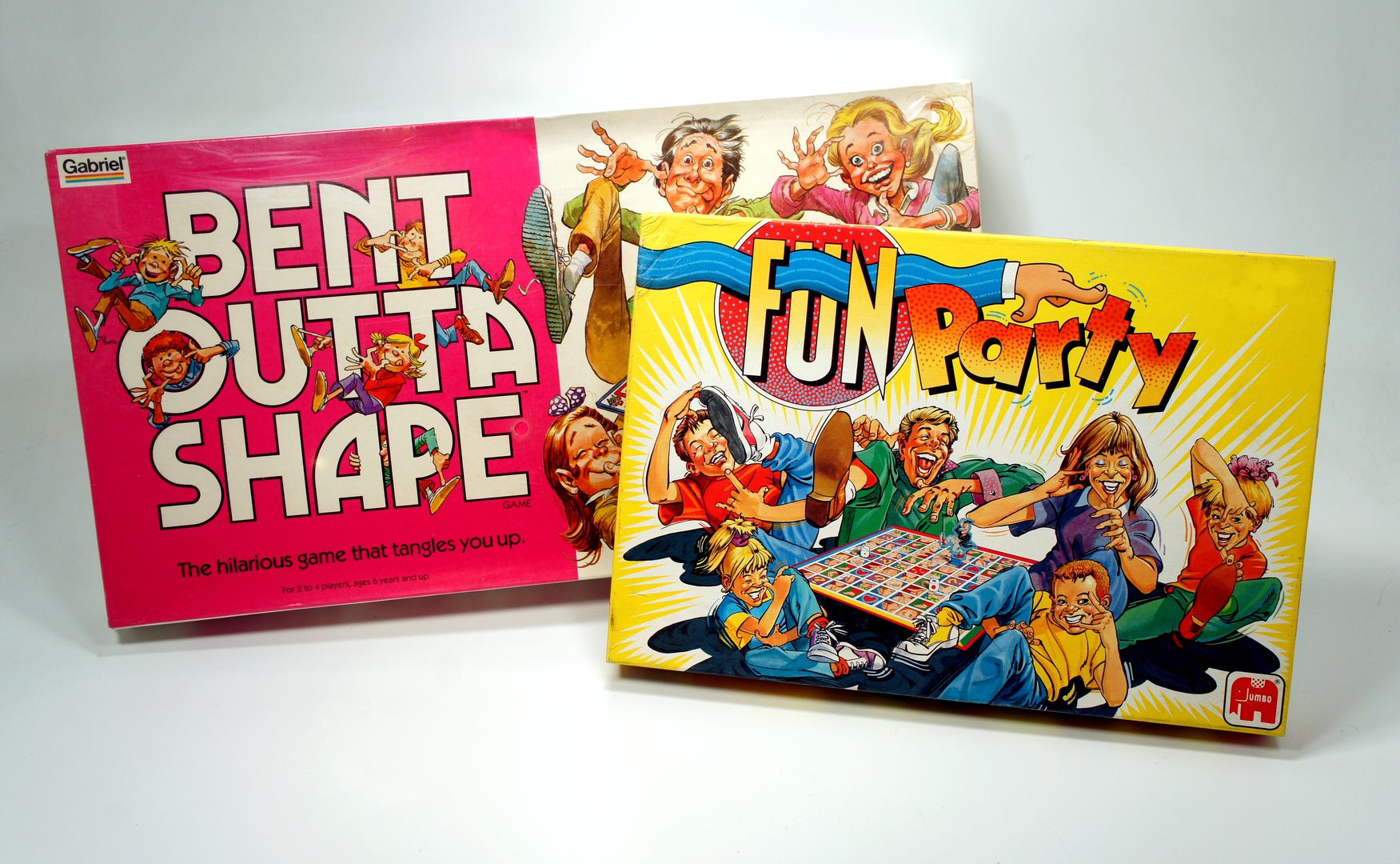
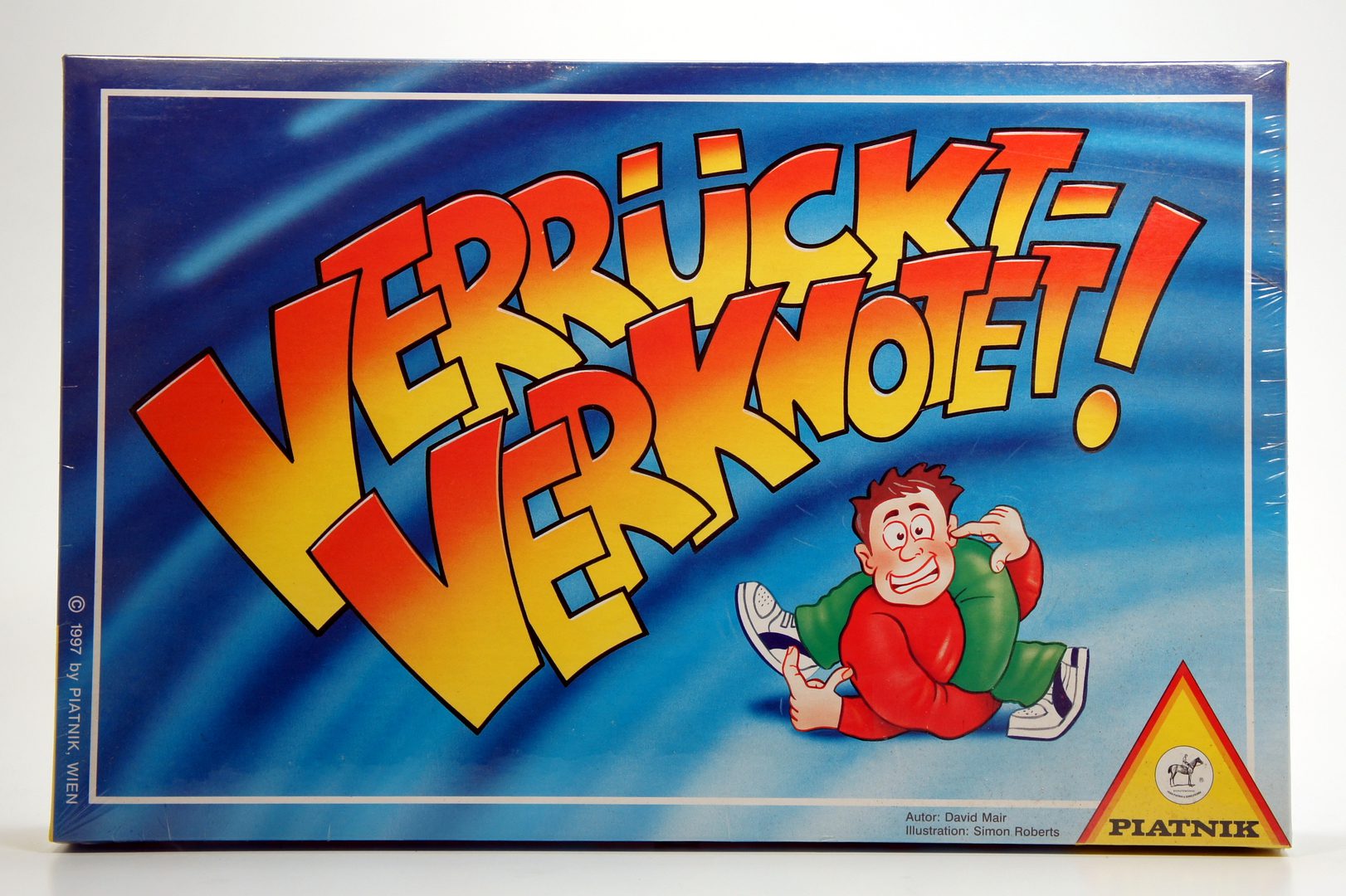
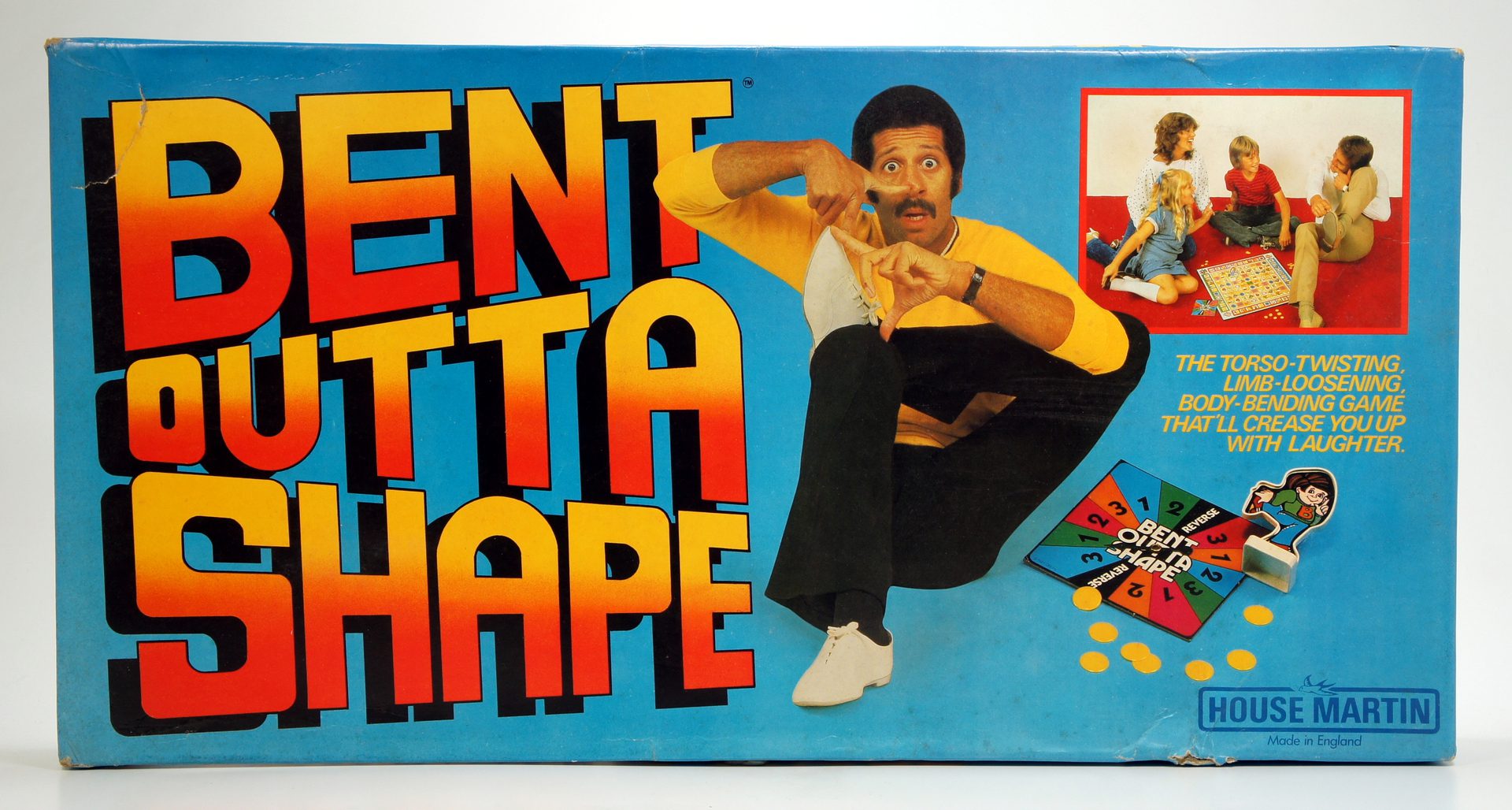
Bent Outta Shape was created in March of 1980. Originally called "Busy Body", it was inspired by watching the PBS TV show, Mr. Rodgers Neighborhood. Mr. Rodgers asked "Can you touch your nose boys and girls?" I joking added "and your ear and your foot etc." This was my first game that made it to market.
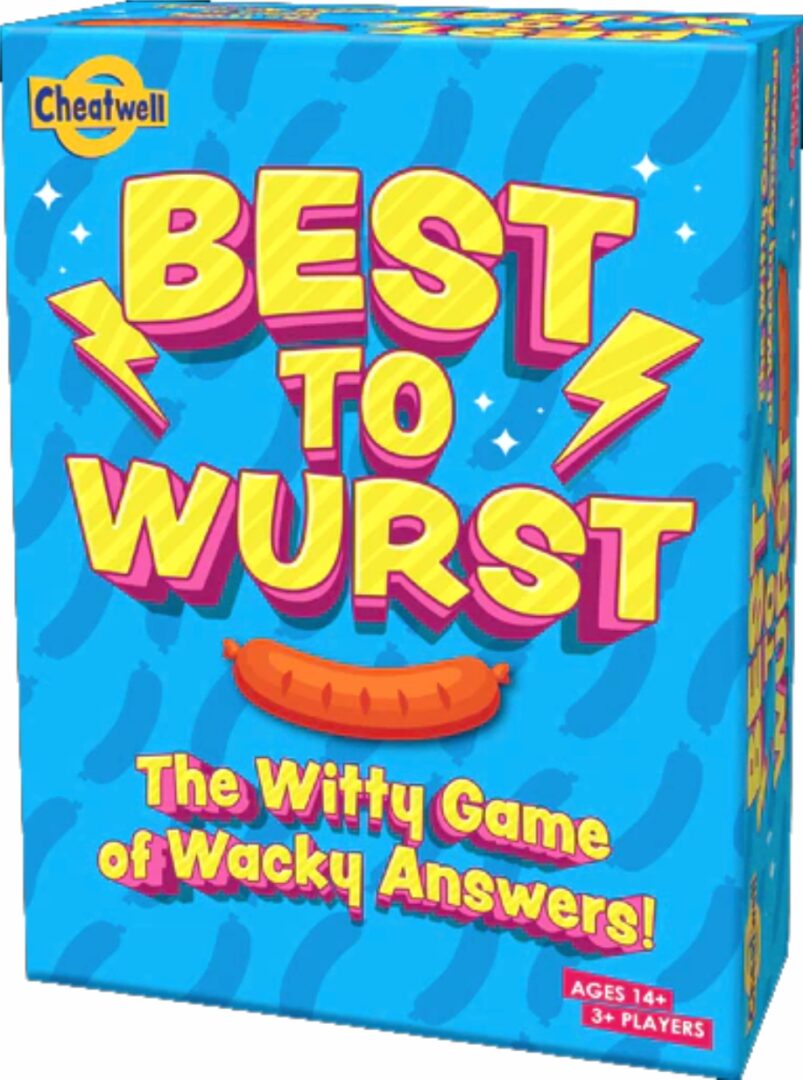
Best to Wurst 2023
Sold to Cheatwell Games in the UK and by Outset Press in Canada. A card is drawn and everyone is asked to fill in a blank or create a name for something that’s on the card. The best (funniest usually) is rewarded as is the worst answer.
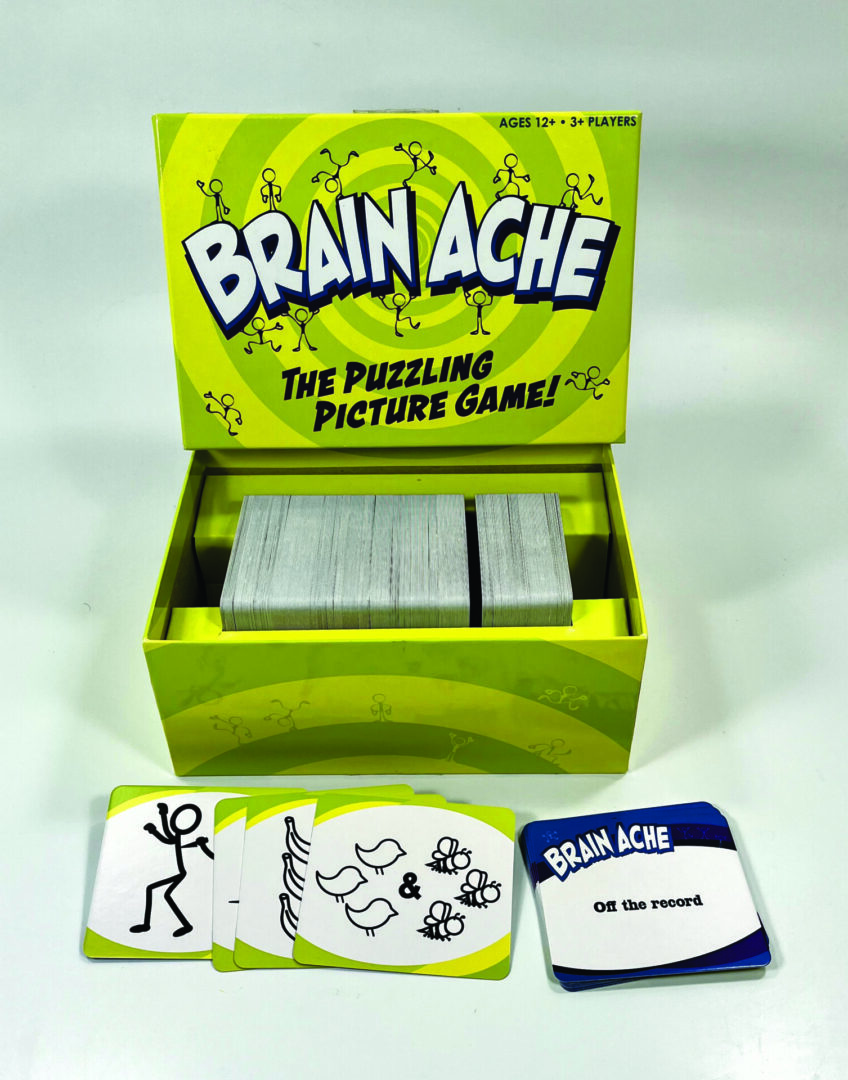
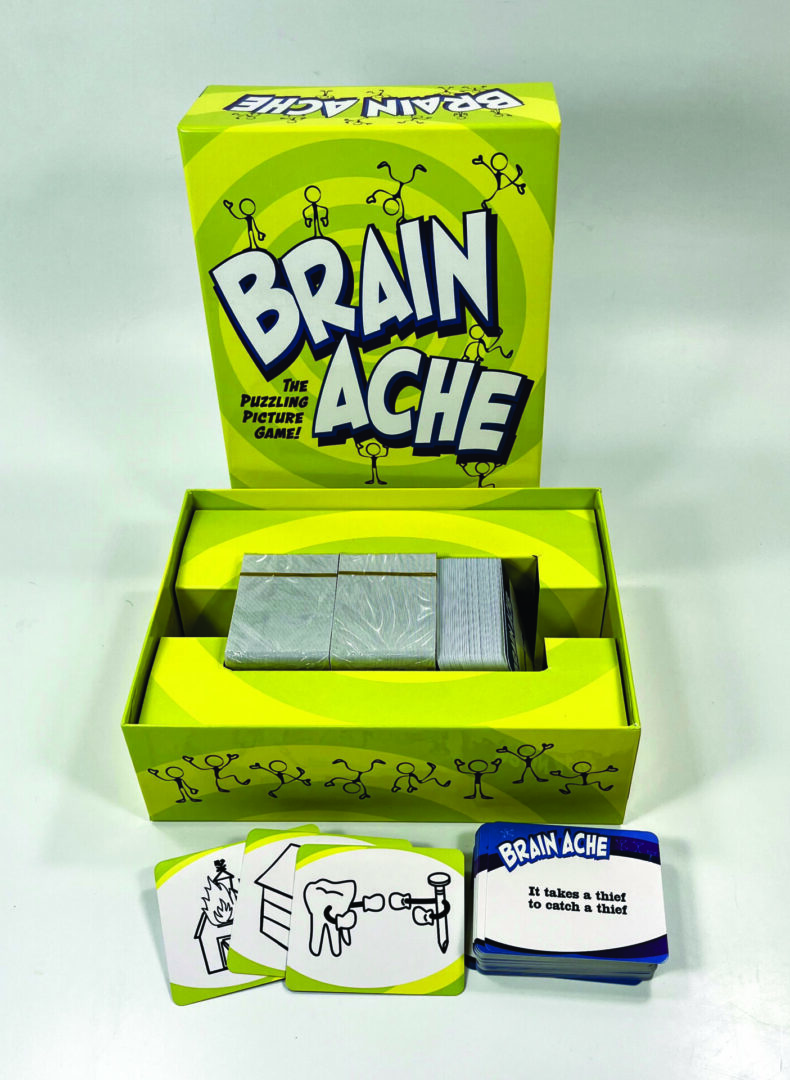
Brain Ache 2019
I first called it Stix because it used stick figures mostly. My grandson, Luke Mitchell, who was 7 at the time, was drawing various expressions and asking us to guess what they were. That was the start of the idea and I hand drew 360 individual drawing for the final game. It was published by Cheatwell Games in the UK and by Outset Press in Canada.
The Big Dice Games
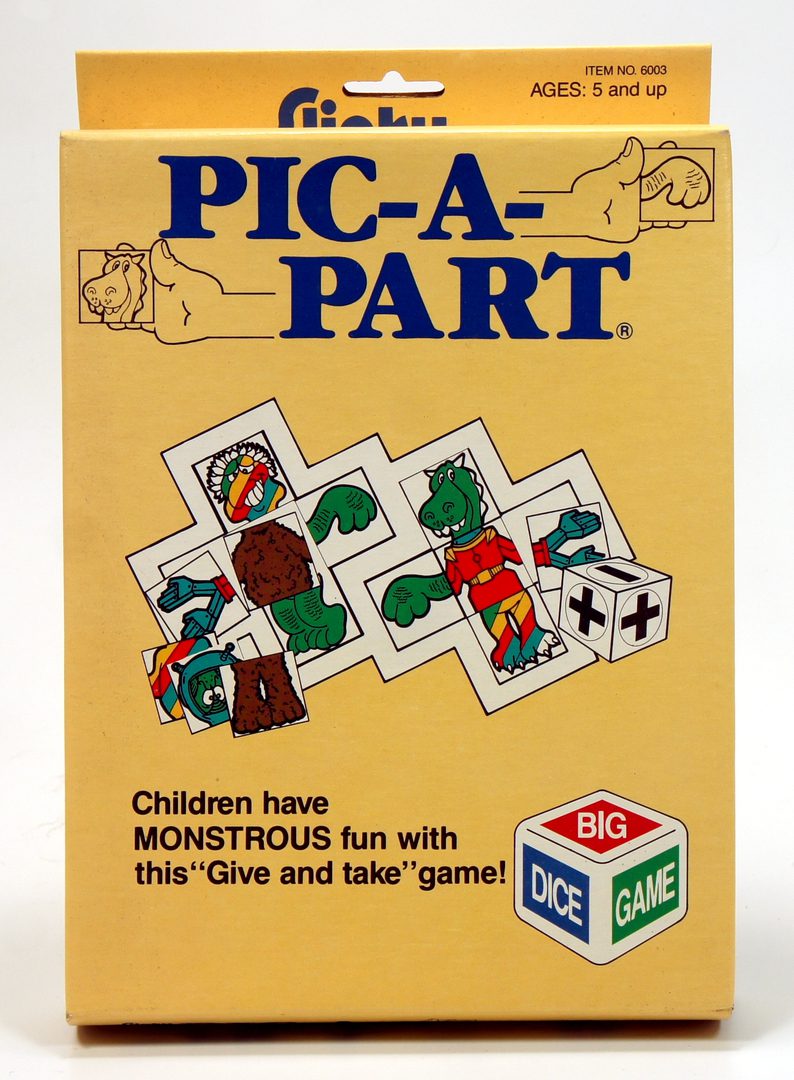
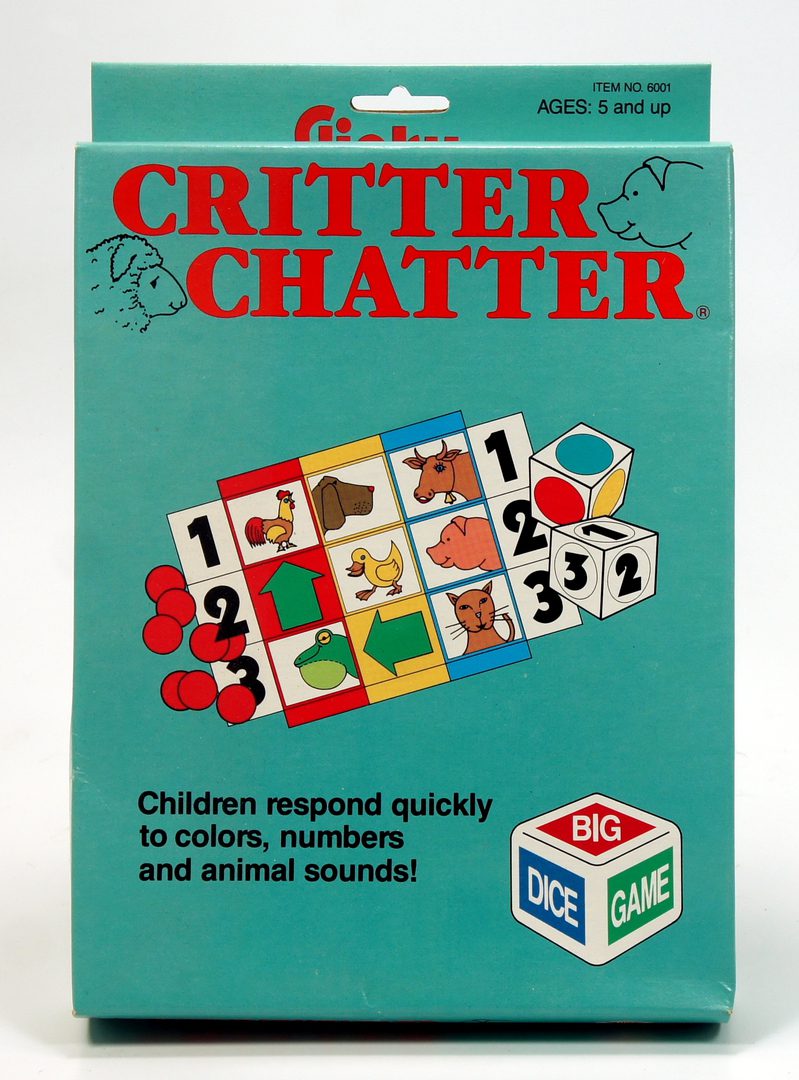
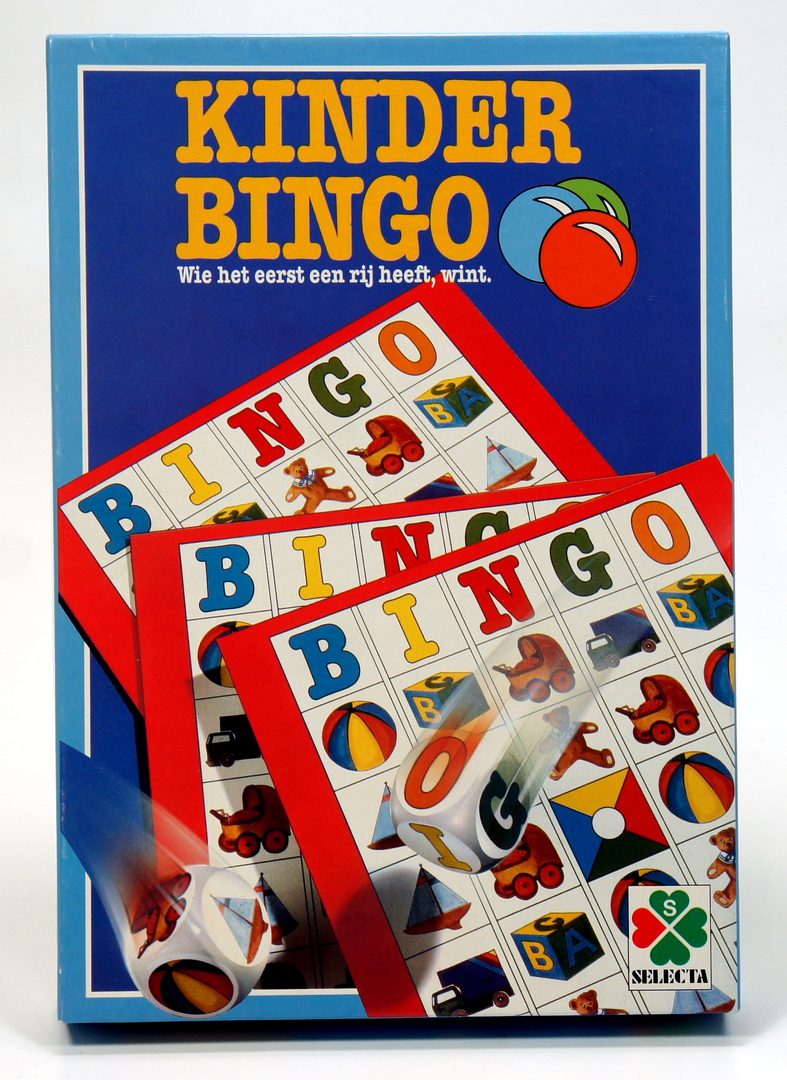
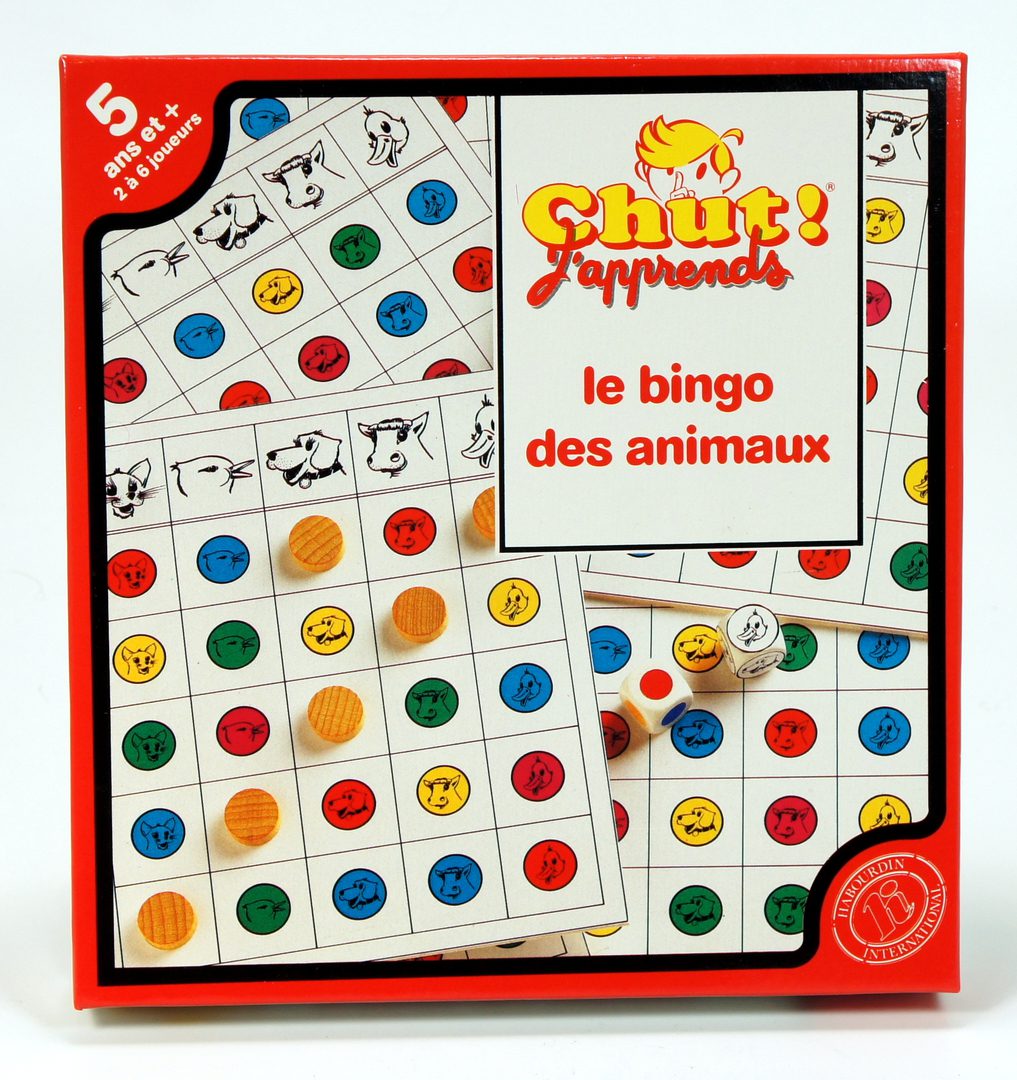
The Big Dice Games (Feb. 1987), started out being called "Tumblers". There were four basic games designed for the concept; Bingo, Match Four, Critter Chatter, and Monster Match (Pic-A-Part). The last three were part of James Industries', (the makers of Slinky's), attempt to move into the game area. The graphics and design were, at best, amateurish.
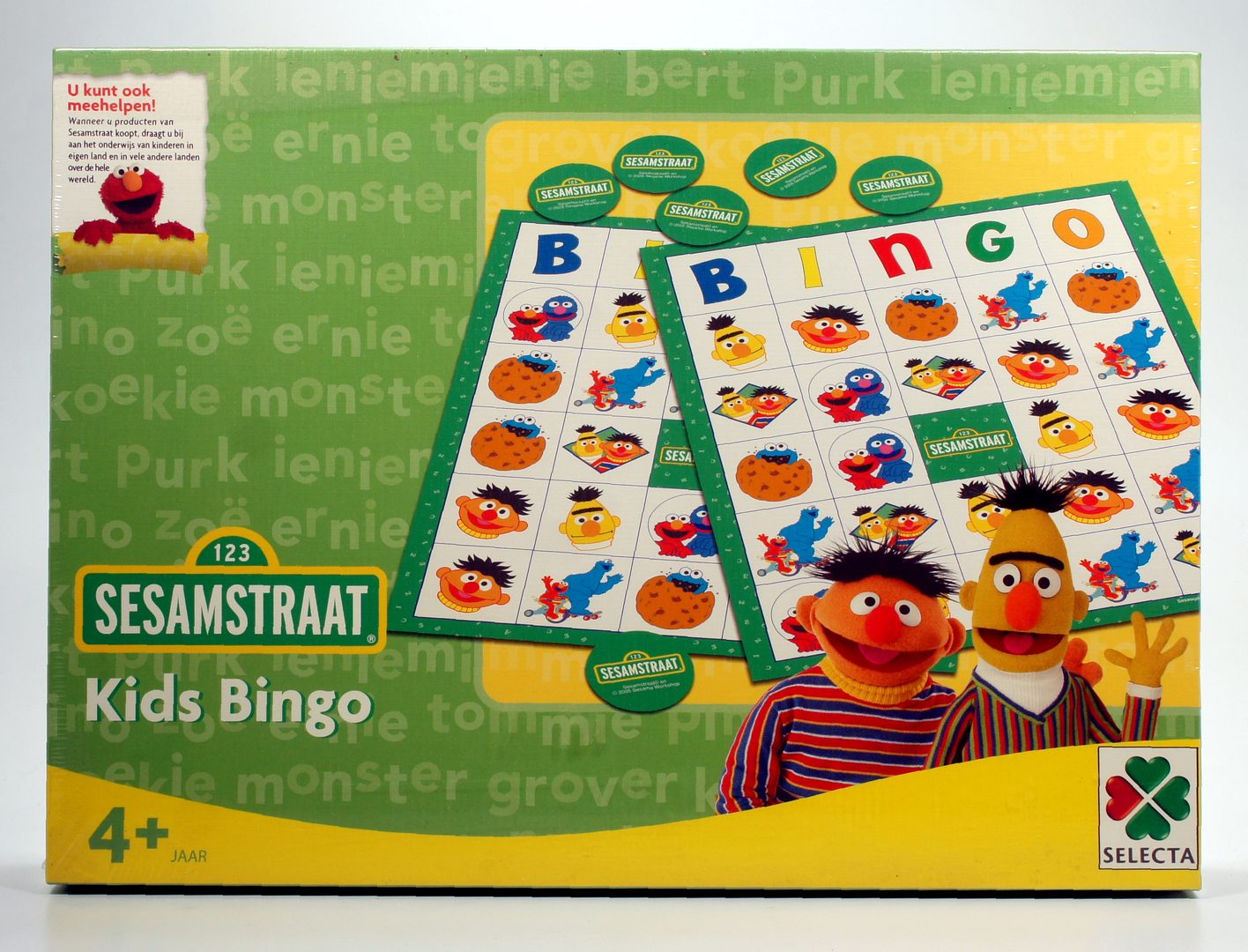
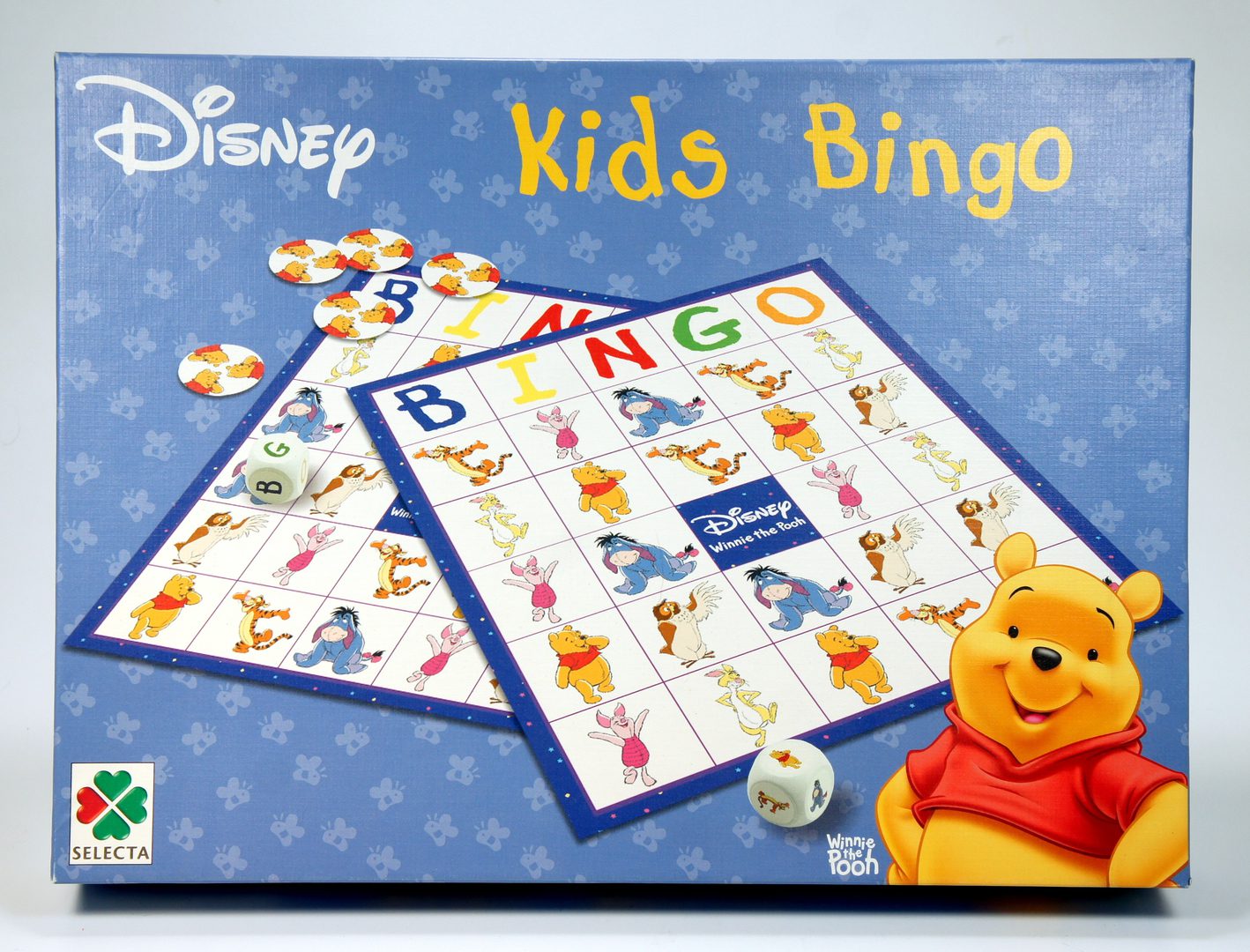
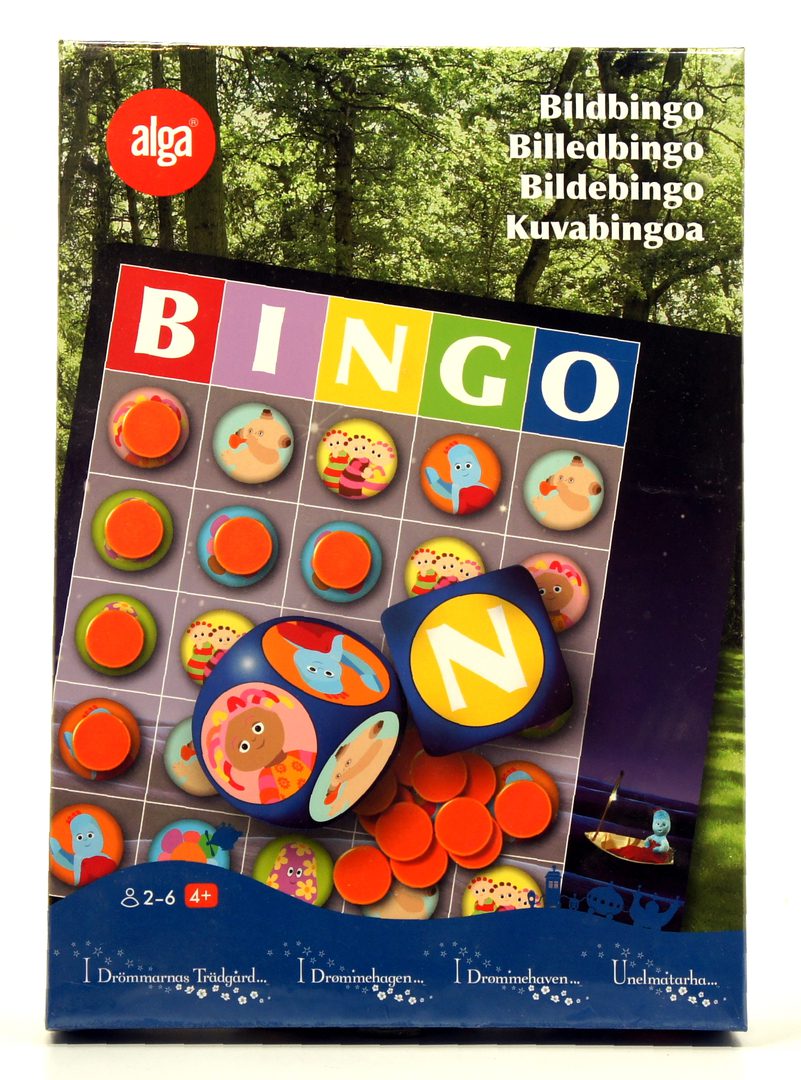
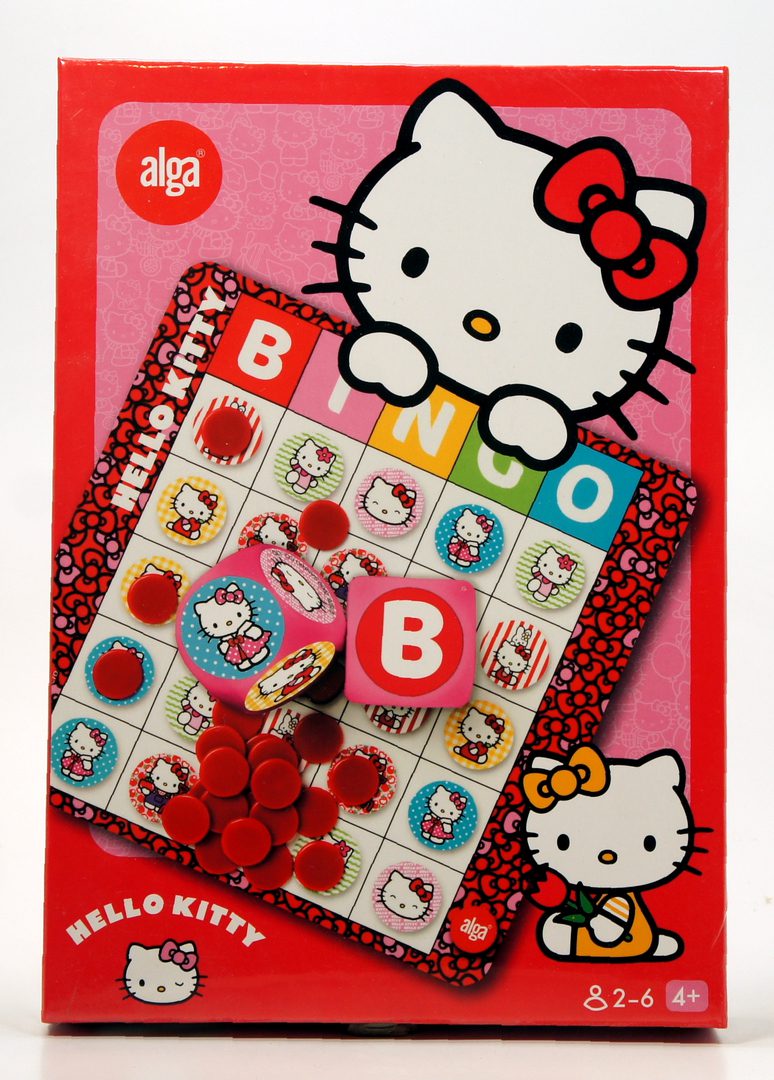
Bow Wow Bingo
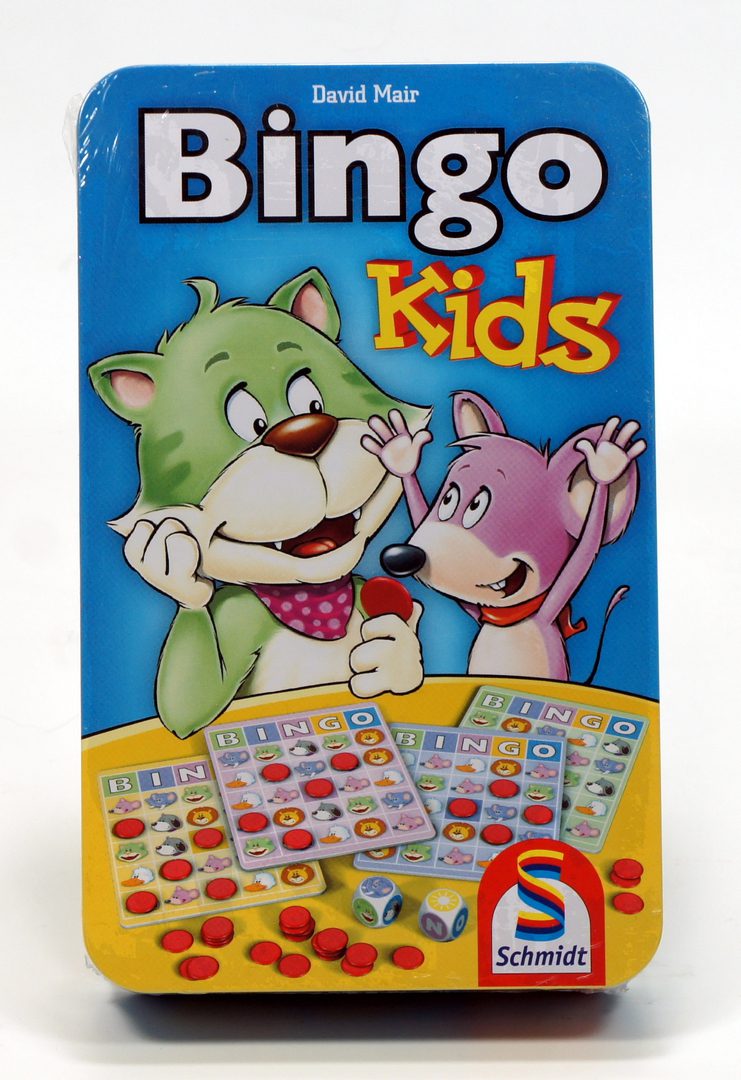
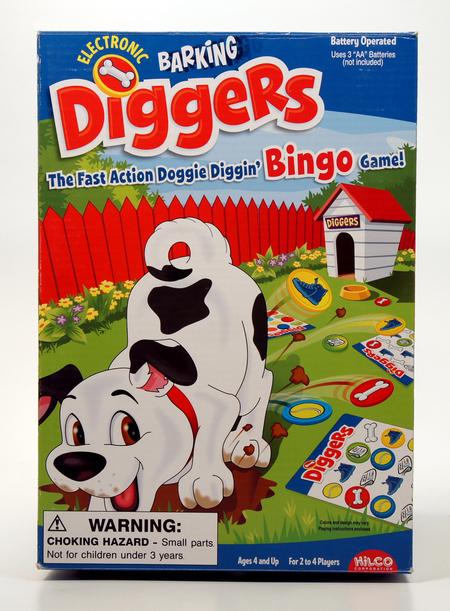
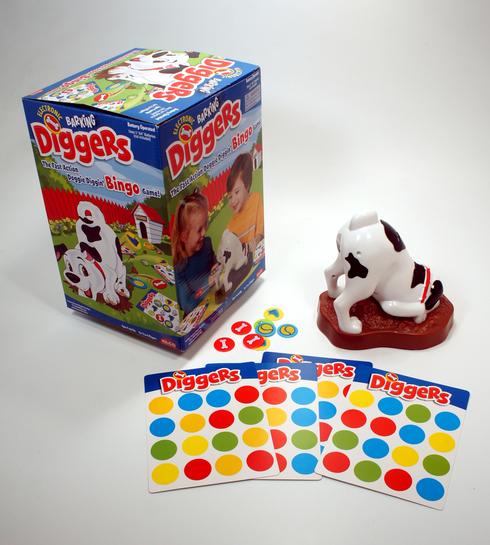
Bow Wow Bingo (2011) is a game that features a dog digging up the items that the players use to cover their bingo cards. When the dog's tail is pressed, either a disc will come flying out from between the dog's legs or he barks, indicating the player's turn is over, and any discs that were collected must be put back into the dog. The object of the game is to not be too greedy and to know when to stop.
Click-it
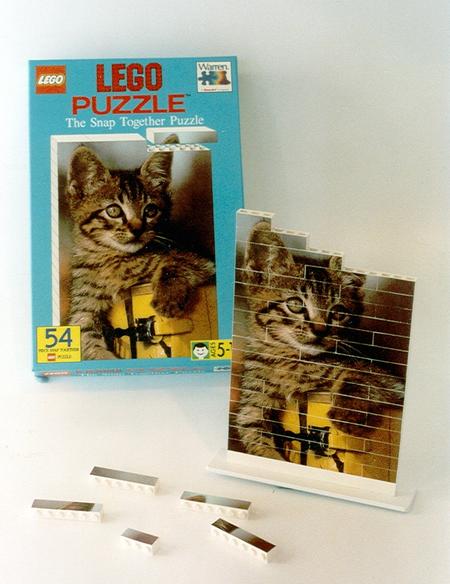
Click-it (created in 2006) and sold to Jumbo (2010) is a vertical puzzle using click together Lego blocks. The puzzle would be assembled on its side and placed in the stand when completed. Despite many attempts to get a quality print on the puzzle pieces, Jumbo gave up on the project before it was ever introduced.
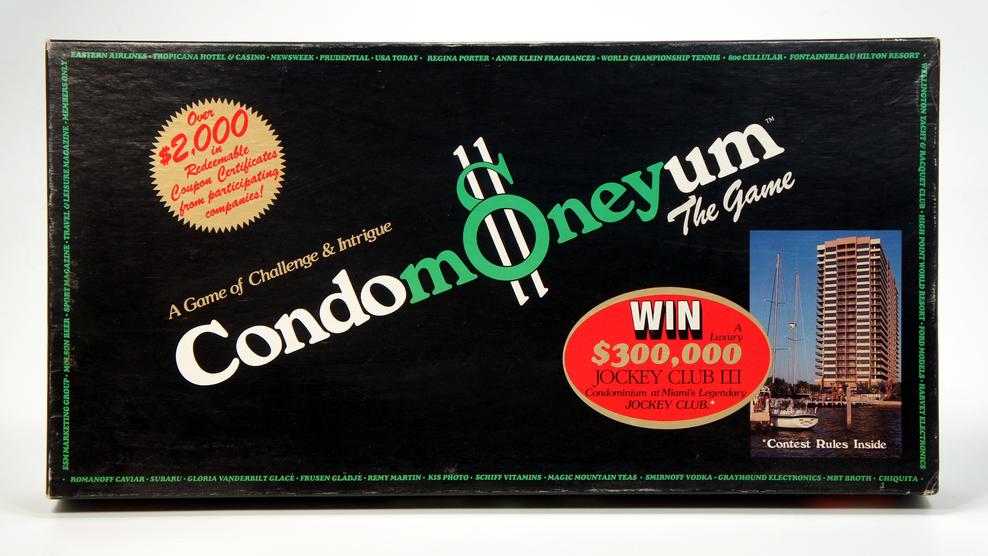
Condo-money-um
Condo-money-um (1987) was invented with Bob Fuhrer for ESM marketing's Eric Medney. The game was designed to sell ad space on the game board, which Eric did. The players moved around town in taxis going from business to business earning money enough to buy their own condo. It was a very complicated game with many sub-games. The player who bought the game had a chance to win a condo in Miami. Eric actually appeared on the Today show to demonstrate the game.
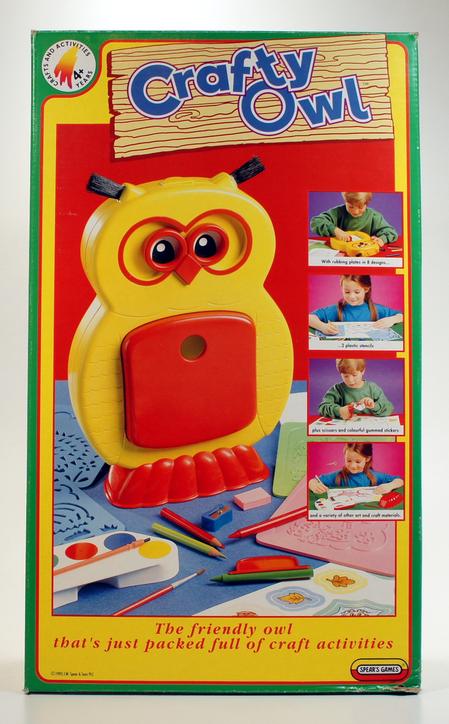
Crafty Owl
Crafty Owl (2-1991) was created as part of the Mister series which included, Mr. Game, Mr. Magic, and Mr. Toy. Spears decided to us an owl as the theme rather than a man. All the parts of the unit were used to store or create crafts. The owl's glasses turned into scissors and the ears were paintbrushes.
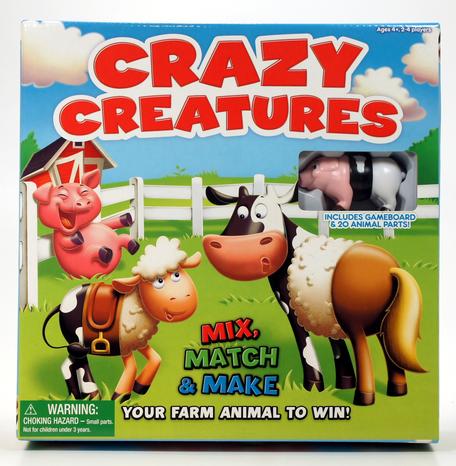
Crazy Creatures
Crazy Creatures (June 2004) was inspired, in part, by Damien Hirst's controversial art pieces of sliced animals in formaldehyde, which included sharks and cows, that I saw at the Brooklyn Museum in 1999. The players each get a different center to their animal, then place a front or back of another animal onto it based the animal sound they hear. The creatures that are created may include multiple heads and the head or tail of a horse, sheep, cow, or pig.” The first player to complete an animal with all of the correct body partsis the winner.
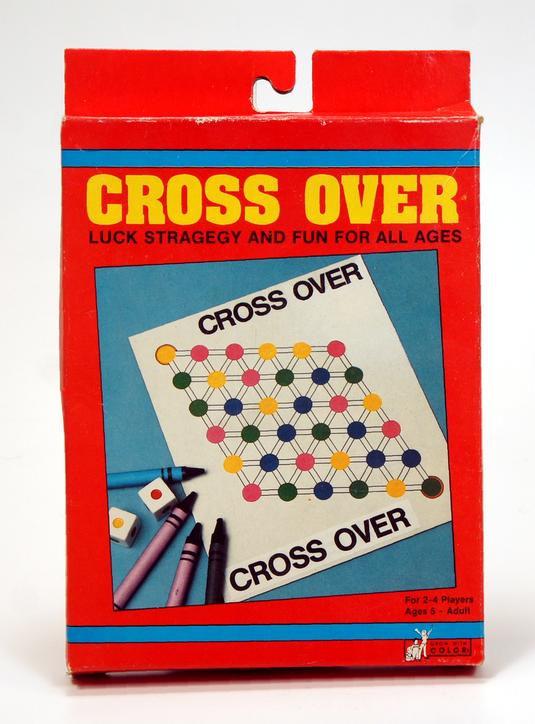
Cross Over
Cross Over was invented in December of 1985. Each player tries to be the first to complete a line from one side of their erasable game board to the other. Players connect colored dots which are chosen by the throw of the dice.
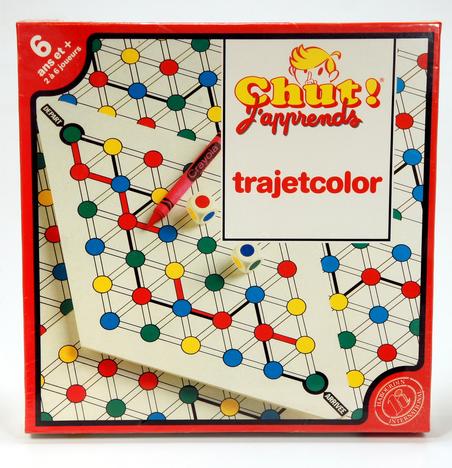
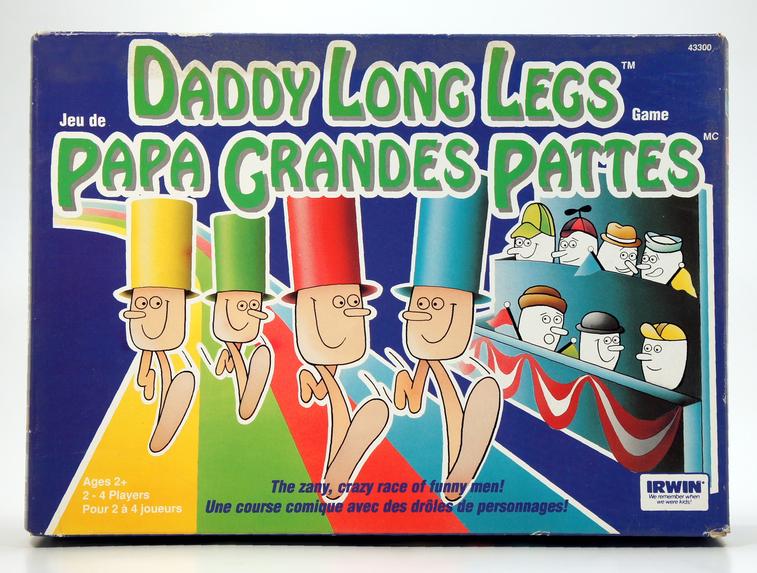
Daddy Long Legs
Daddy Long Legs (1988) The game play was based on a drawing compass shaped character that walked up a game board taking steps that match the color of the holes on the board. The pieces moved up the board by moving one leg or the other to a new hole that matched the color that was spun. Irwin's version did not work as the holes did not line up correctly with the legs.
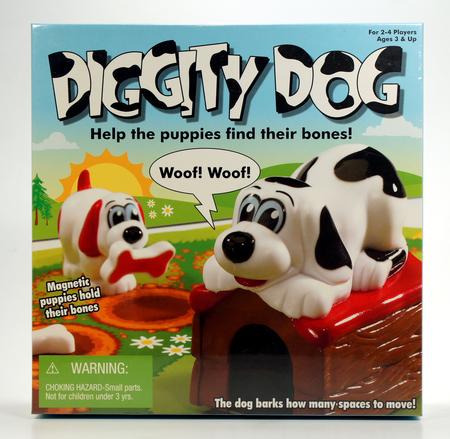
Diggity Dog
Diggity Dog (7-1998) was co-invented with Bill Van Orden. The players take turns first pressing down on the top of a dog house that randomly creates a barking dog sound either 1, 2, or 3 times. The player then moves his puppy along the circular path that has a dog bone placed by each step. The player uses the nose of the dog, which has a hidden magnet, to pick up the bone. If the hidden side of the bone has a color matching the color of the puppy's spots, then the player keeps the bone. The winner is the player to collect all 3 of his/her bones.
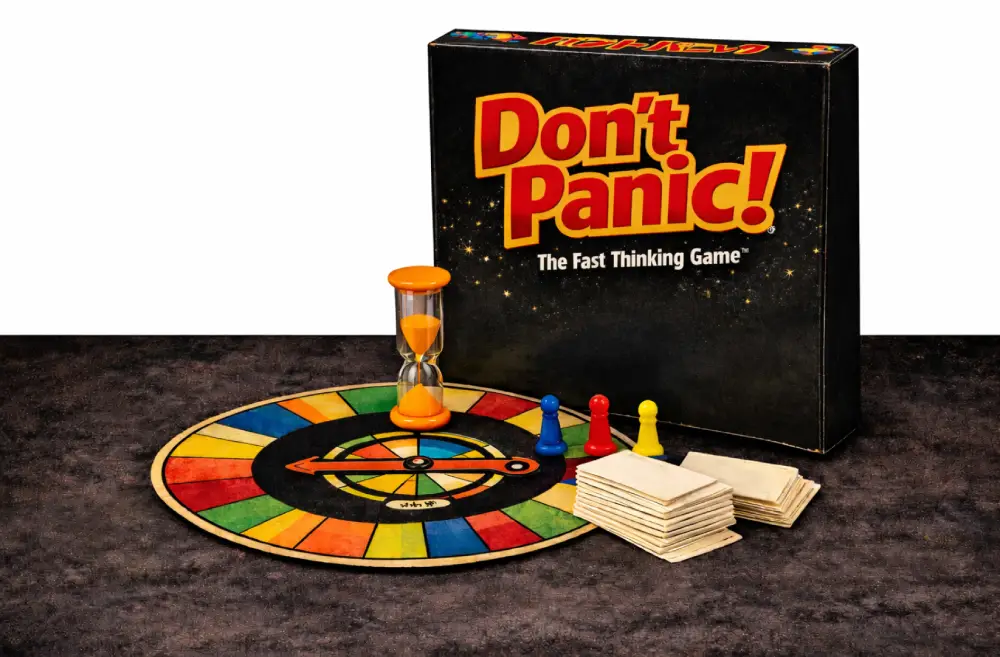
Don't Panic
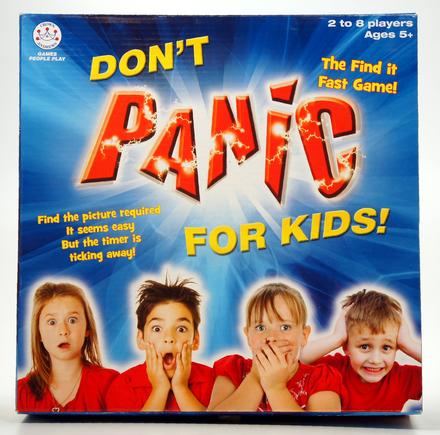
Don't Panic (1985) got it's start when, many years before I actually started working on games as a profession, I took a stopwatch to a party and timed how long it took people to name things in various categories. The idea resurfaced in the early 80's. I built a working prototype and Jumbo's Aad Obens liked it and ran with it. Since then it's been published all over the world with more than 2 million copies sold. New ways to play, including a board game version, are still available today.
Dot 2 Dot
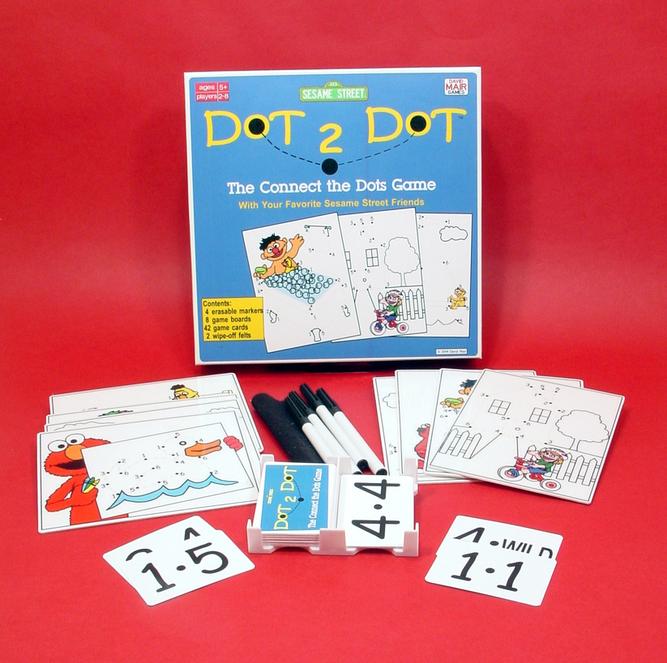
Dot 2 Dot (February 2009) was sold to MJM in Australia that same year. The game was never manufactured. The players each get a different erasable card with an incomplete dot-to-dot picture printed on it. Players then draw cards that have two numbers on them. If they have those two numbers on their dot-to-dot picture, they draw lines between them. The numbers are connected with dotted lines so the players know which ones can be connected. First player to complete their picture is the winner.
Dot Candy Kit- 2024
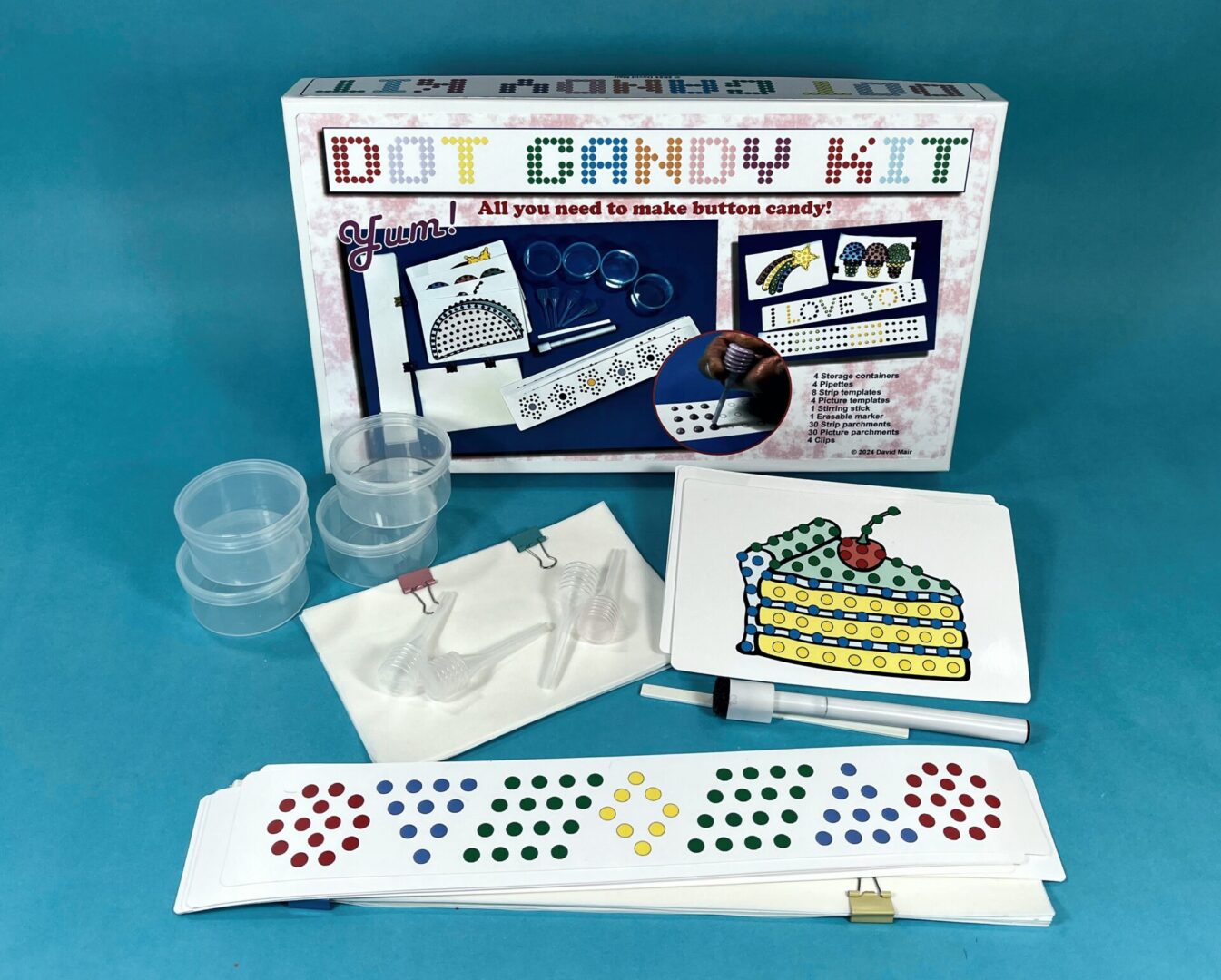
This is a craft kit for making candy dots on paper strips. It was sold to Mindware, but because of the destructive tariffs, they are still waiting to produce this as of October 2025
Don't Drop the Meatball
Don't Drop the Meatball (2013) [available at TRU] is twist on pick-up sticks. The 20 soft strands of spaghetti and 5 meatballs are placed on the table. Players take turns pulling strands of spaghetti off the pile trying not to have a meatball drop on their turn. If one drops, they keep it until the end of the game. The winner is the player with the fewest meatballs.
Duck Duck Goose 2018
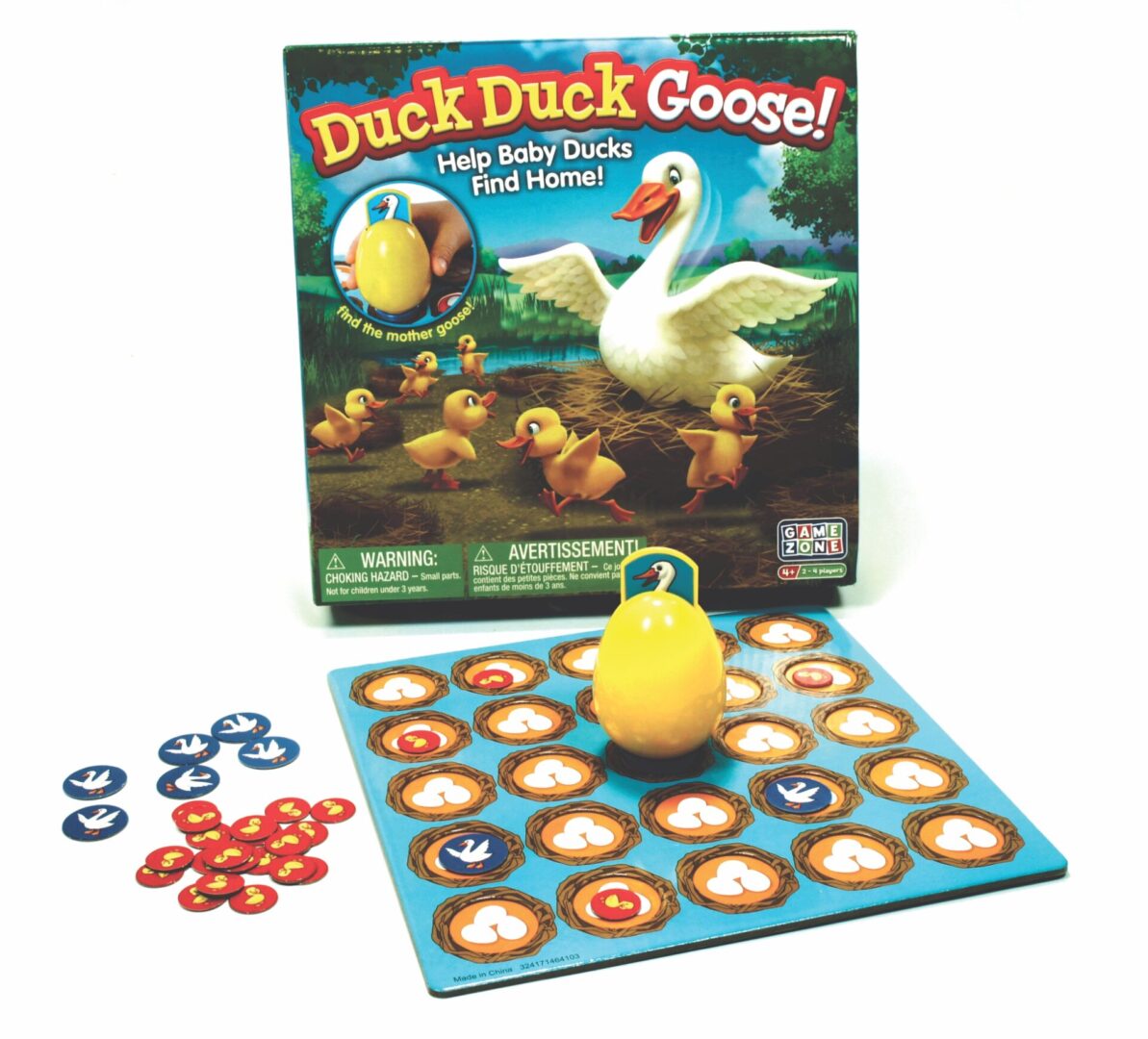
This game was sold to International Playthings. The basic game play uses a playing piece shaped like an egg. You jump from card to card, saying “duck, duck, and goose”. If a goose pops out of the egg when the player says “goose”, they win the goose disc. The goose will pop out of the egg because a magnet trapped.
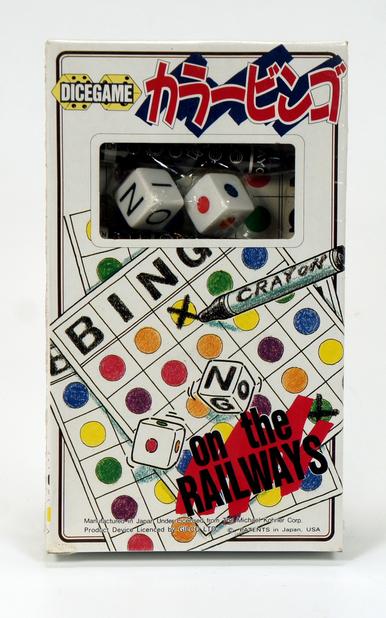
Erasable Bingo
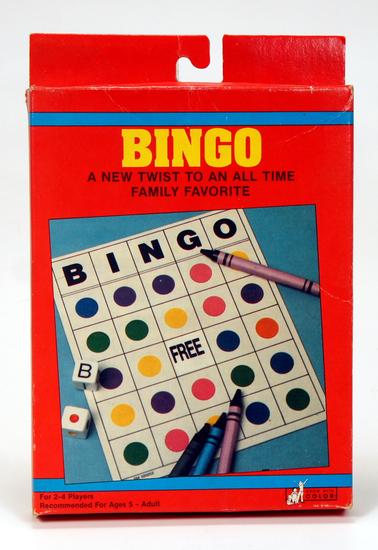
Erasable Bingo (1985) was part of the series that include Erasbable Boxes and Cross Over.
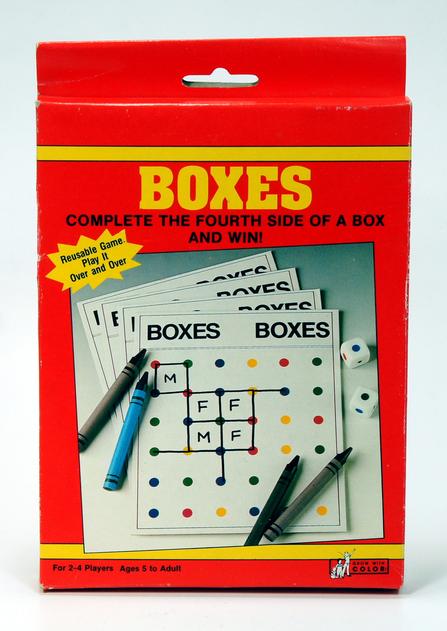
Erasable Boxes
Boxes (1985) was part of the erasable series that included Bingo and Cross Over. [see below]
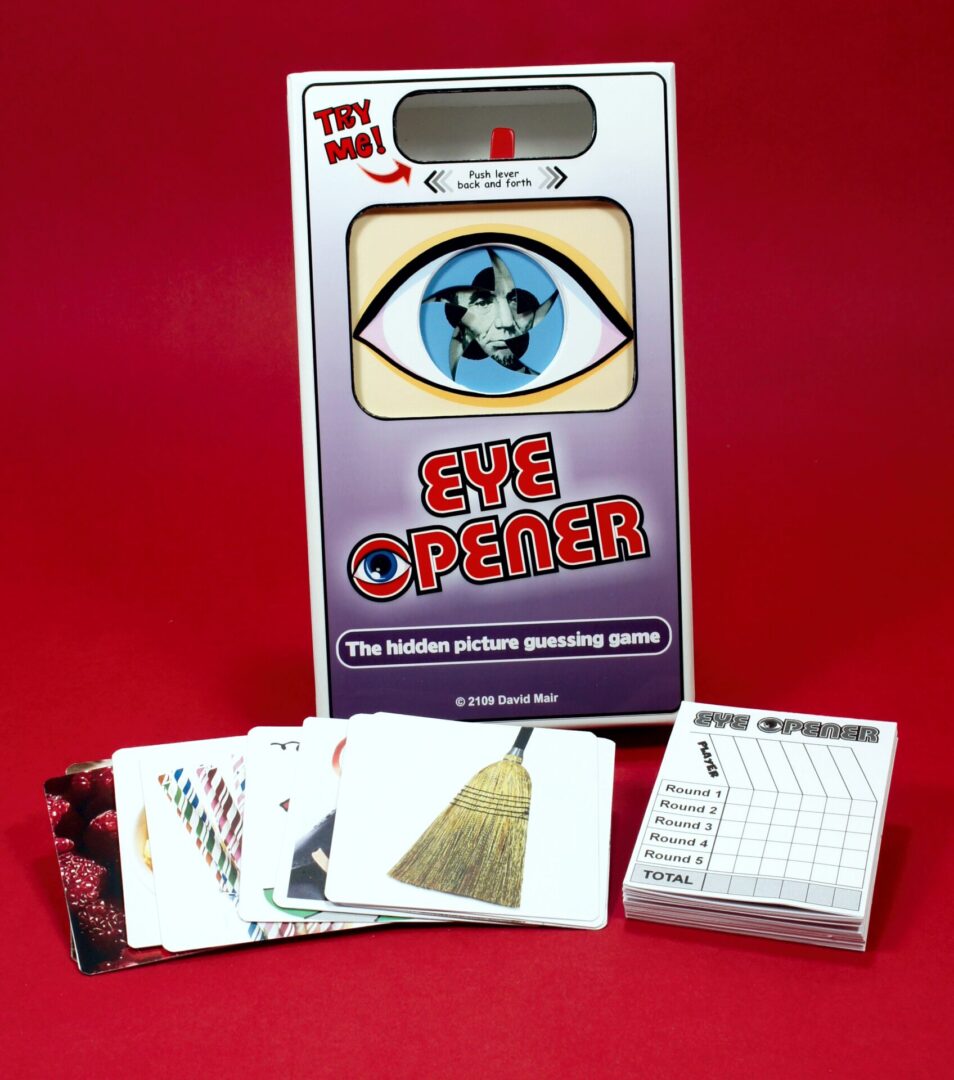
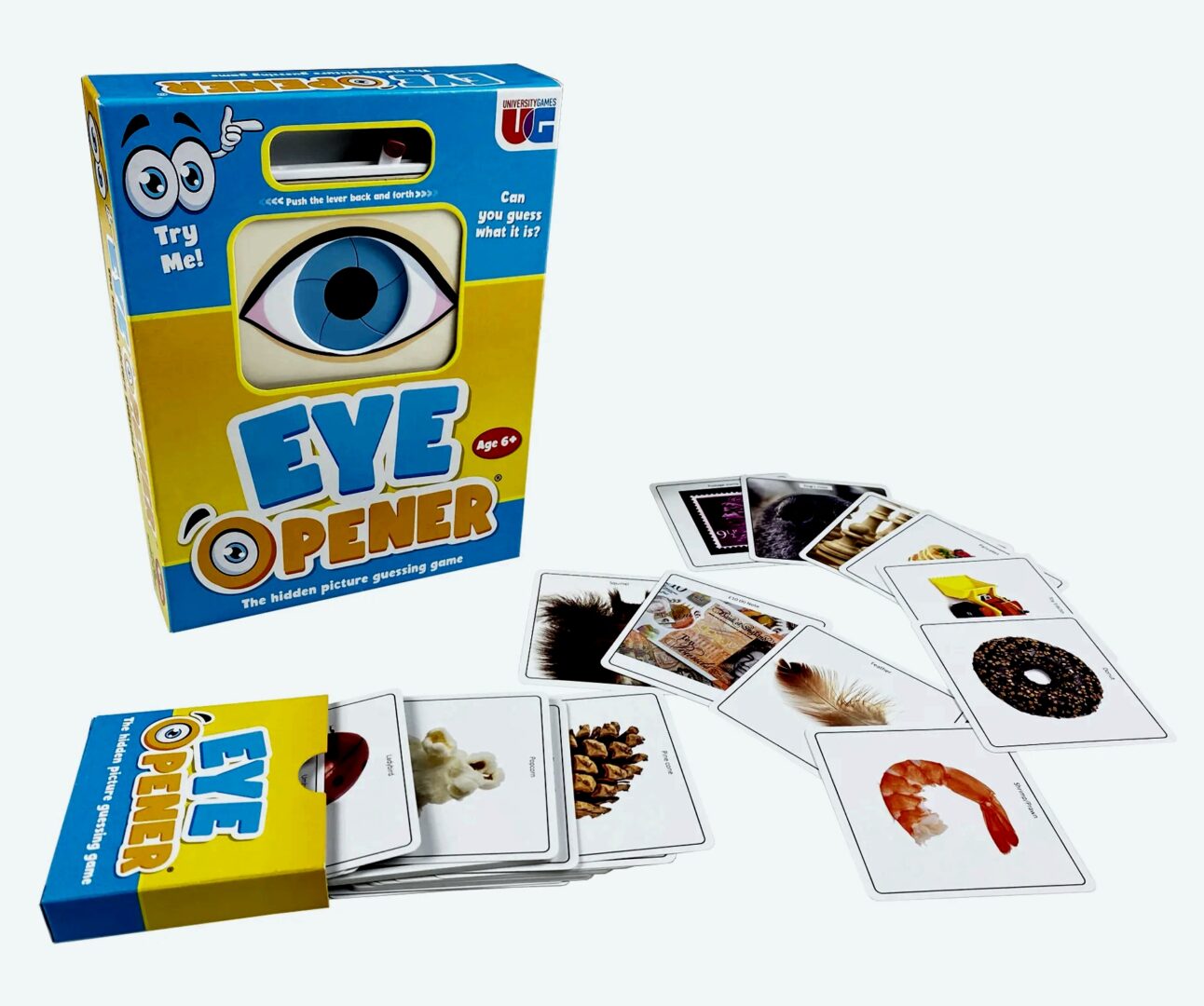
Eye Opener 2022
Sold to University Games in the UK. In this game, a camera-like diaphragm slowly opens to reveal a hidden picture. If you can guess it when it is less open, you score more points.
Fairytale Charms
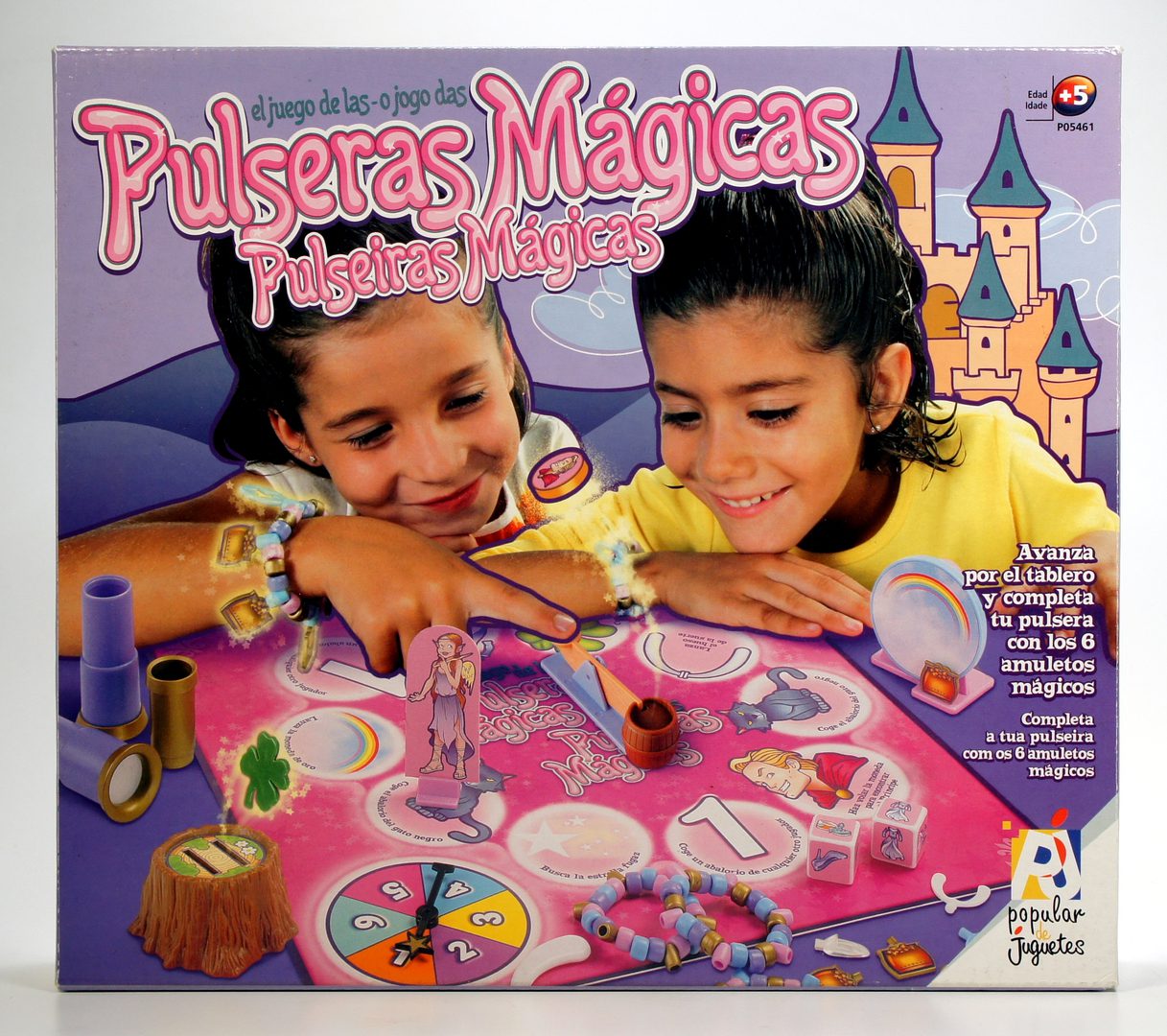
Fairytale Charms (11-2001) started out as Lucky Charms. In the game the players try to be the first to collect 6 lucky charms for a charm bracelet by playing 6 different luck related smaller games. Some of the games involve 4-leaf clovers, horseshoes, and the number 7 etc., while avoiding the black cat charm.
Fashion Fingers
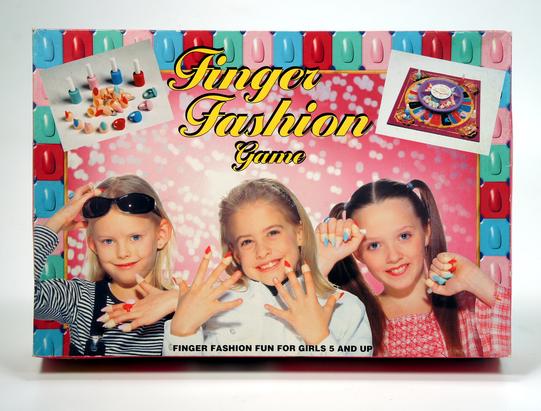
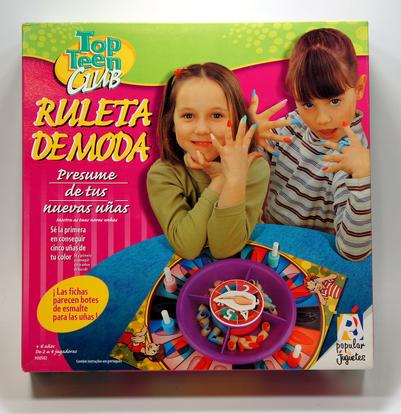
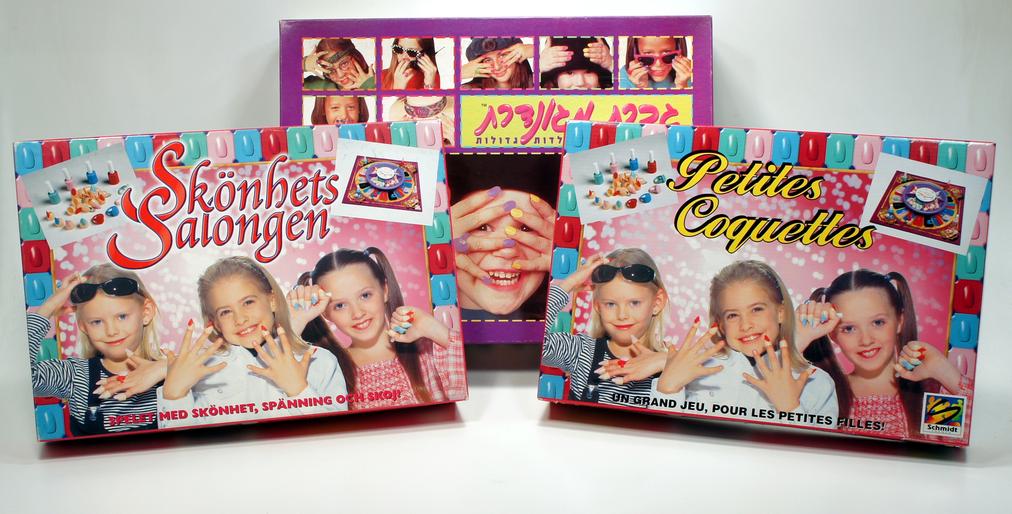
Fashion Fingers (January 1993) started with using clip on fake nails as a theme. The players moved around a board collecting and "stealing" nails from other players until they had a complete set of 10 nails in their color. Several years after its introduction and run with Rose Art, Hasbro introduced the identical game at Toy Fair. They denied "borrowing" the idea. It was a idea from another inventor, and a case of "great minds think alike".
Flick-It
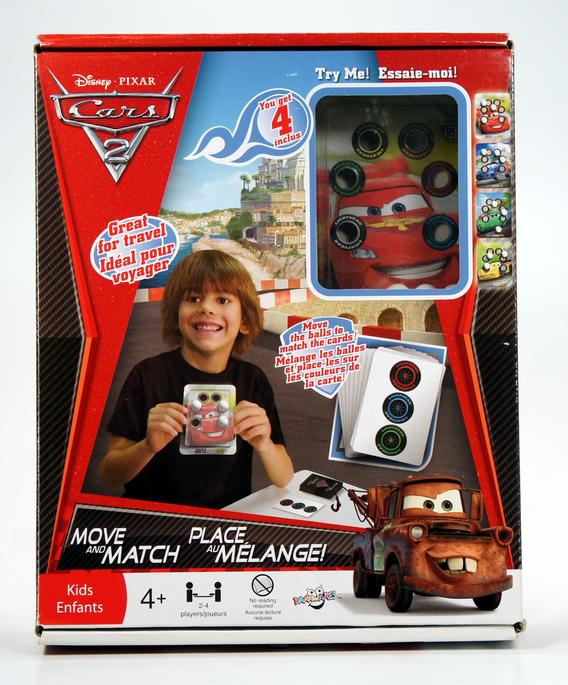
Flick-It (1-2010) currently called Move and Match, is played with small clear plastic dome covered boards. Each player holds the unit in their hands and tries to manipulate the plastic balls, trapped inside, into a pattern that matches the pattern on one of the cards. This is done by using the finger tips in the holes in the back of the unit.
Frantic
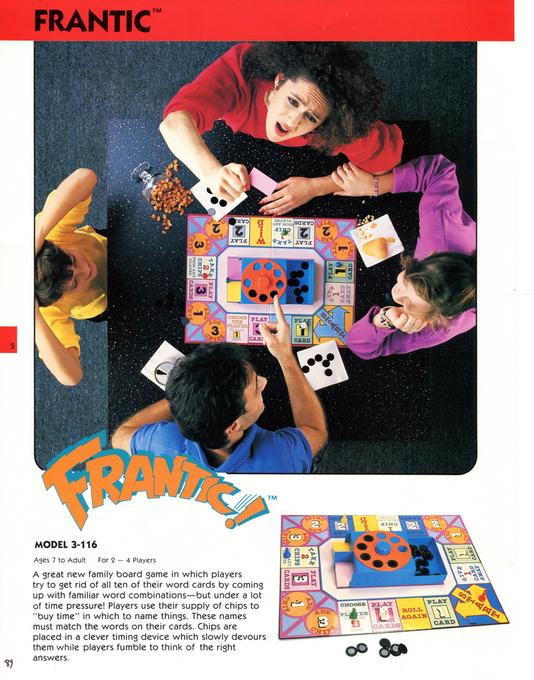
Frantic (1989) is a game where the players "buy time" to make word combinations suggested by the key word on the card drawn. The player first decides how many chips he/she will place in the holes in the timer dial. The more chips, the more time, because he/she has until the last chip drops to complete his/her task. The card with a word and a blank (such as “Door ___”) is drawn. The player then has to say words like "knob", "mat", and "man", that would fill in the blank. If he/she answers the correct number for that card, then the player can discard the card. The first player to complete 10 cards is the winner. The game never actually went into production after the Toy Fair.
Frantic Find-it-Fast
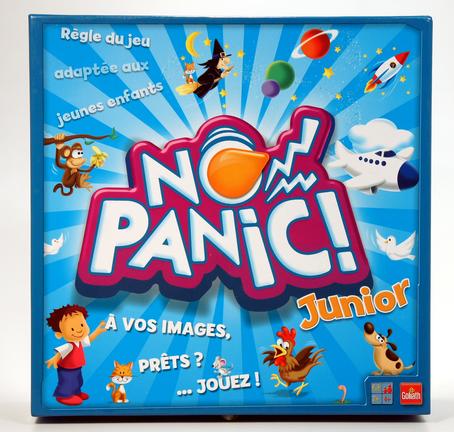
Frantic Find-it-Fast Game (2008) is more often known as Don't Panic Junior. Instead of naming things in a category as fast thay can, the players try and find the related images on the cards spread out on the table as fast as they can. "Find 3 things what have feet!" for example. The winner is the player with the highest score after three rounds.
The Frog Prince Game
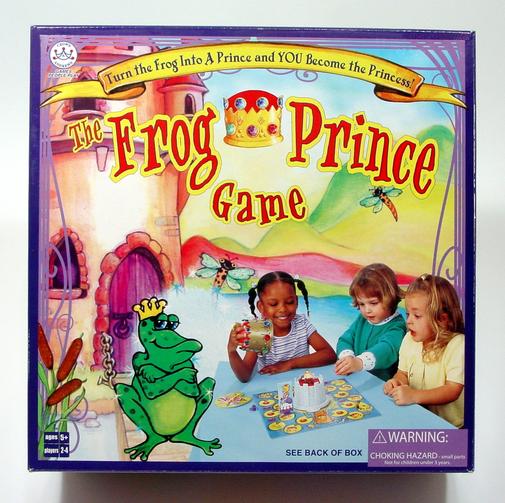
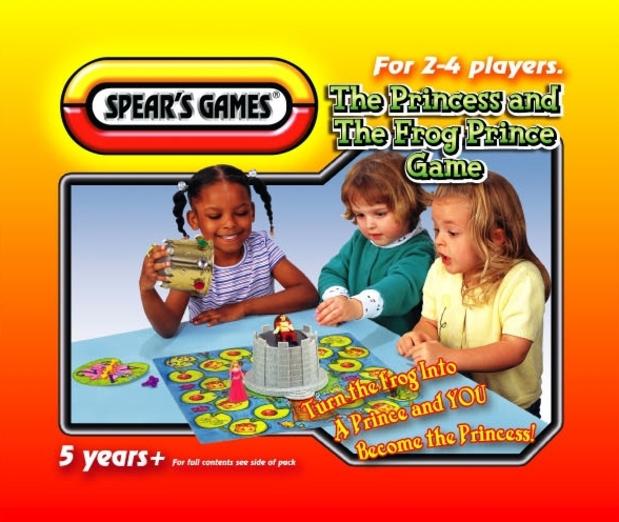
The Frog Prince Game (2000) is based on the fairy tale of the same name and features a castle that is covered with a crown. Before the start of play, the castle is set so that a frog appears on top of the castle on a revolving circular plate. The crown is put in place over the frog and castle. Throughout the game, the players win a chance to first collect a jewel for their ring, and then later to place their collected jewel in the crown. Placing it on the crown in the correct place (out of 8 possible places) and pressing on it, causes the castle to release the spring-loaded plate to flip over so the prince is now sitting on a throne on top of the castle under the crown. The crown is lifted to reveal the magic change.
The Frog Prince
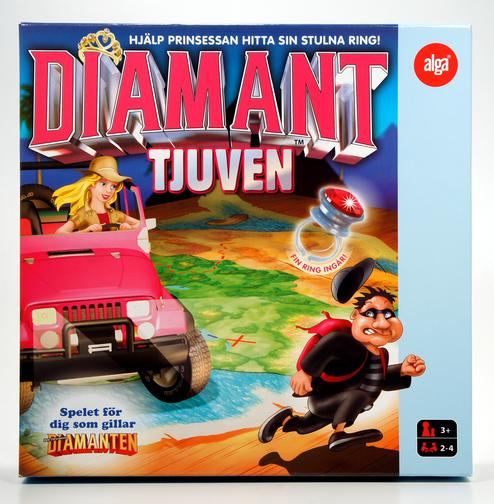
The Frog Prince (Feb -2010) is the 2nd version of the Frog Prince game that was released in 2000. The game uses magnets. One magnet is located in each of the cardboard lily pads and another is in a prince/frog disc under a clear plastic dome. At the start of play, the dome is placed on the castle, which causes the disc to be flipped so that the frog side is facing up. During the play of the game, the players earn the right to place the frog on one of the 9 lily pads. If placed on the one with the magnet, it will flip to reveal the prince, and they are the winner. Picture (below right) is a version produced by Alga in Sweden that uses the same mechanisms, but changes the theme to catching a diamond thief.
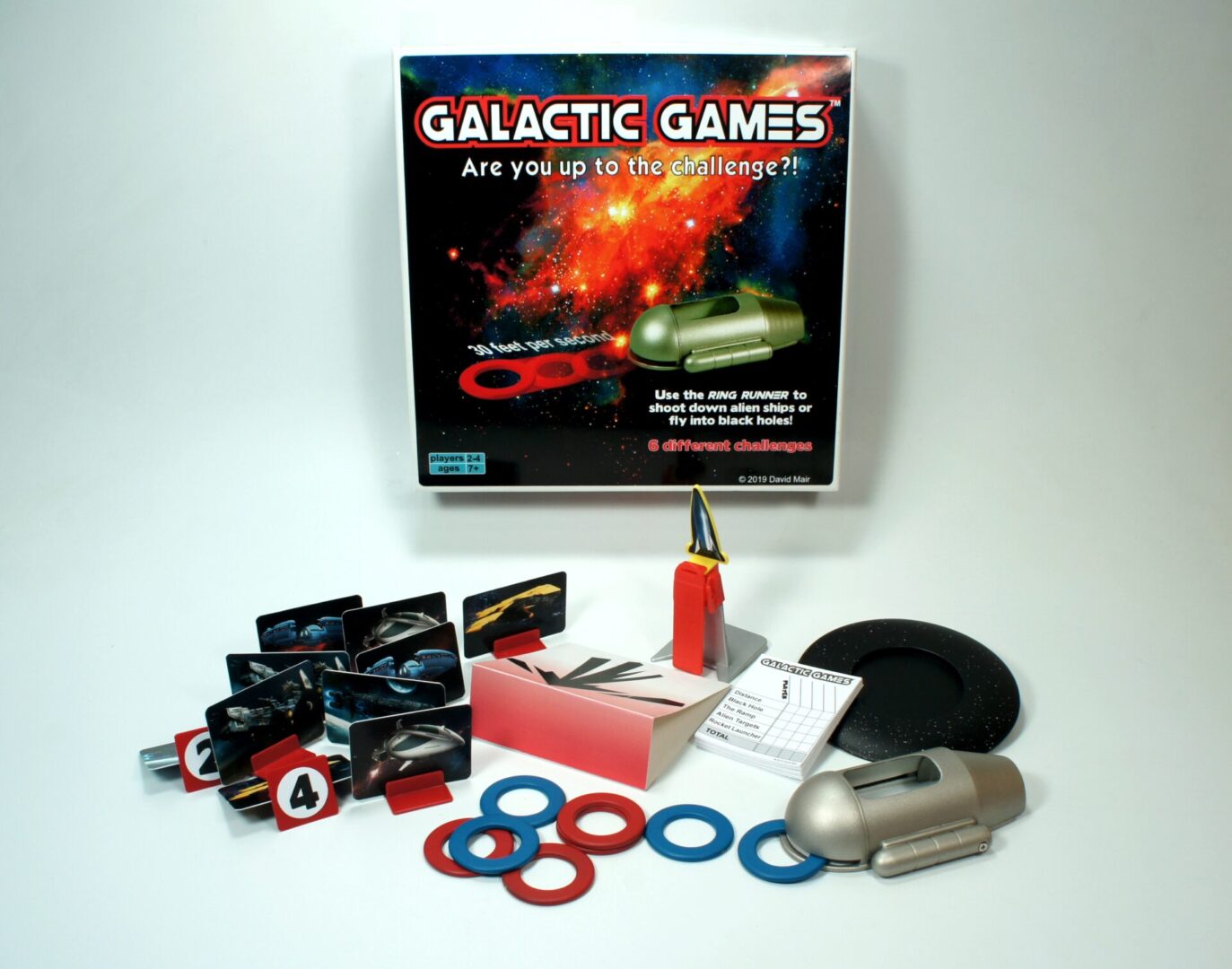
Galactic Games 2019
Sold to Martinex in Finland. This is a floor game where a shooter shoots plastic rings at various targets that all have an outer space type theme.
Gobbeldy Goat
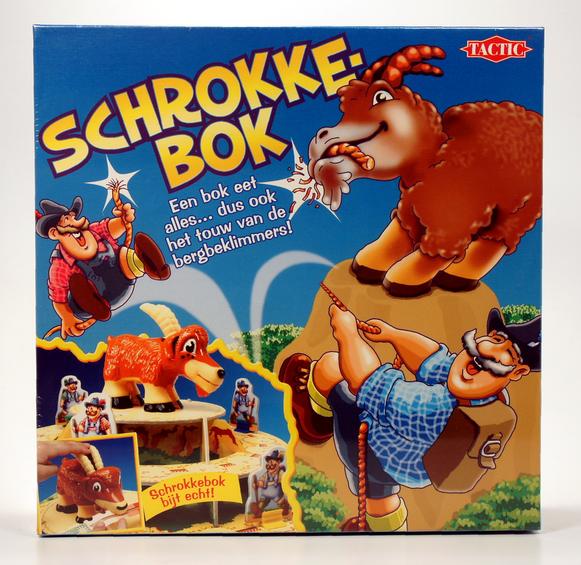
Gobbeldy Goat (11-2001) was a game that started out with the idea of using a hole punch as part of a game play. The original game had the goat taking bites out of pieces of trash; a tire, an old shoe and a can. The first to get 5 bites out of each was the winner. When Tactic bought the rights, they changed the game to mountain climbers climbing to the top of a cardboard mountain. The goat would bite into their paper climbing rope so they would "fall" back to start. The whole set must have weighed 4 pounds from the double thickness cardboard they used.
Goin' Nuts
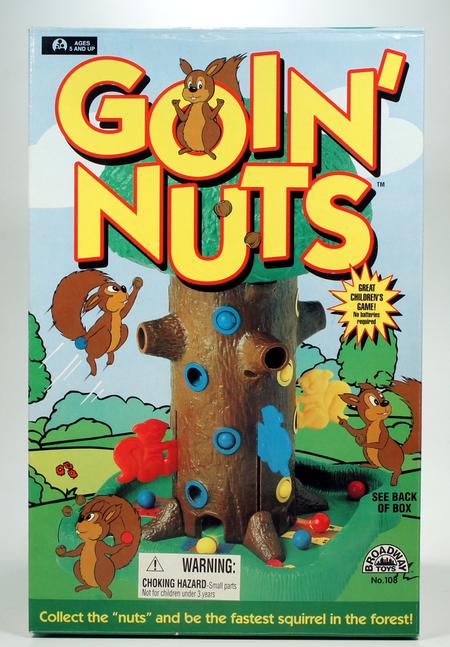
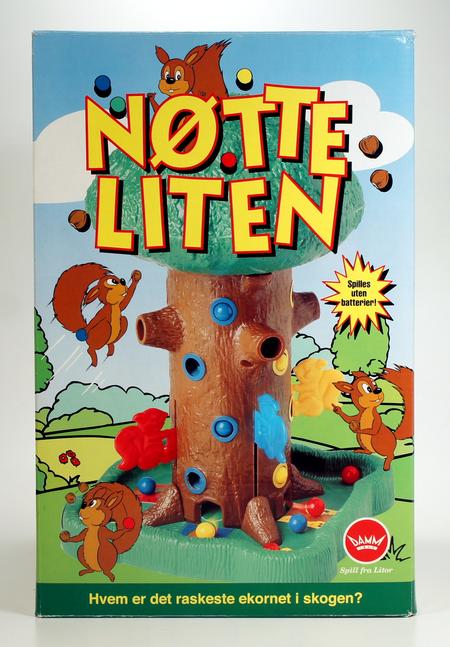
Goin' Nuts (January-1997) The original idea, presented by Bill Van Orden, involved squirrel puppets, nuts, and a tree stump. From there, the idea evolved into a plastic tree where squirrels shot nuts up into the treetop. The nuts would then cascade down the inside of the tree and stick out through colored knots on the tree. If the ball color matched the color around the tree knot, the player left it in place. If the ball didn’t match, then the player pressed it back into the tree where it would fall down to another knot hole or out the bottom. Once the ball came out the bottom, it could then be picked up by a player, put into the branch holes on the side of the tree, and shot back up into the treetop. The first player to fill all four of his/her colored knots was the winner.
The Great Gumball Game
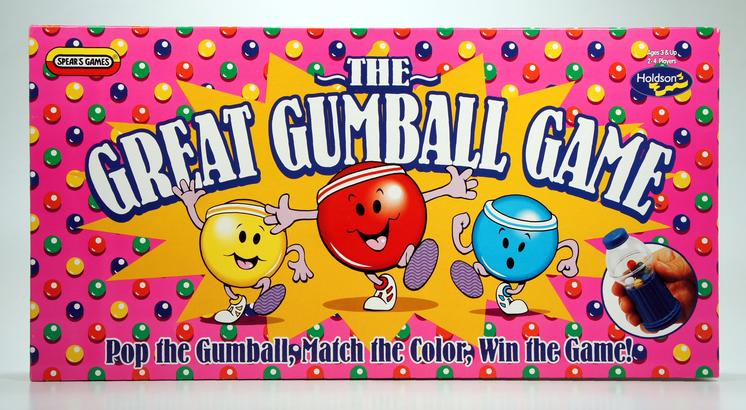
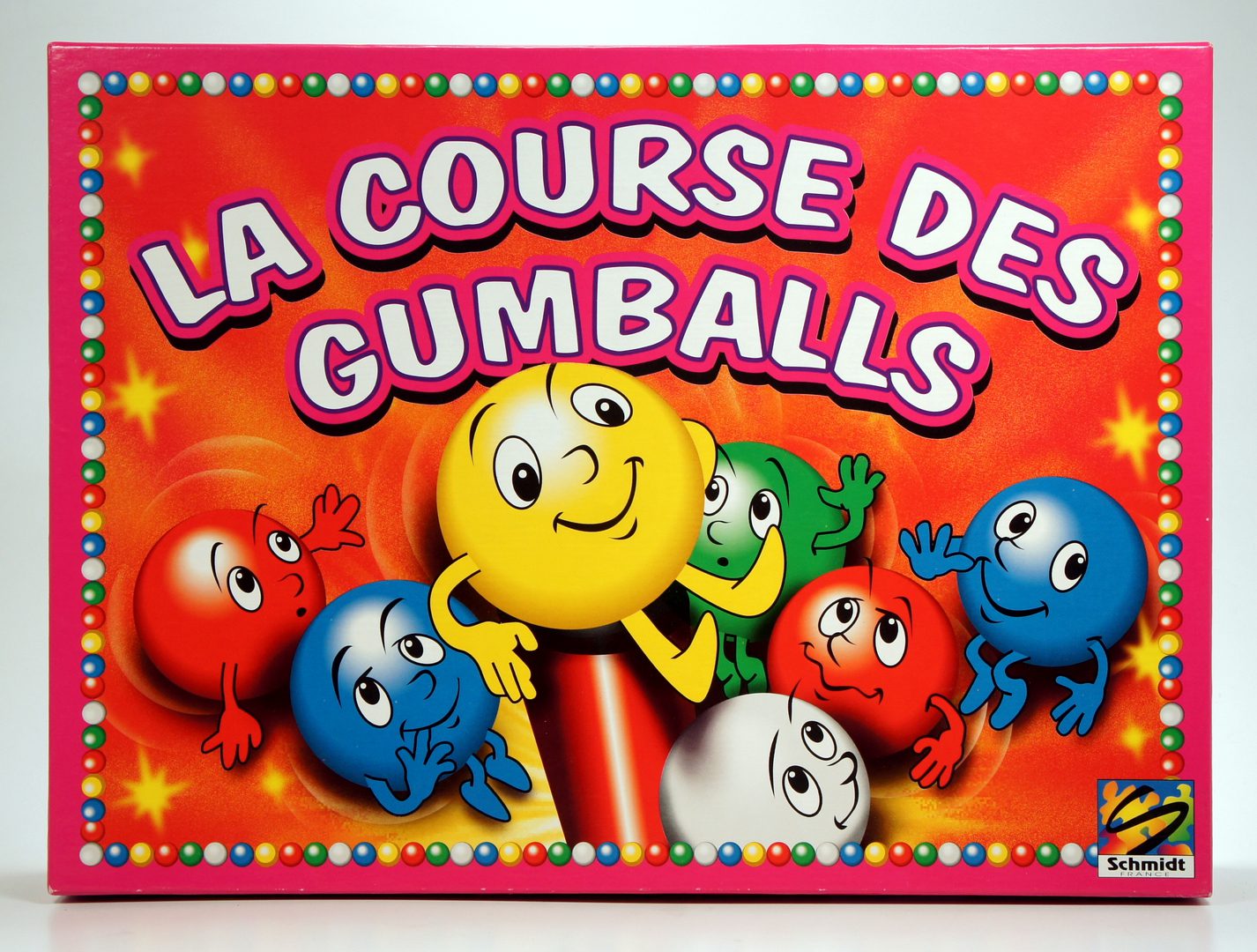
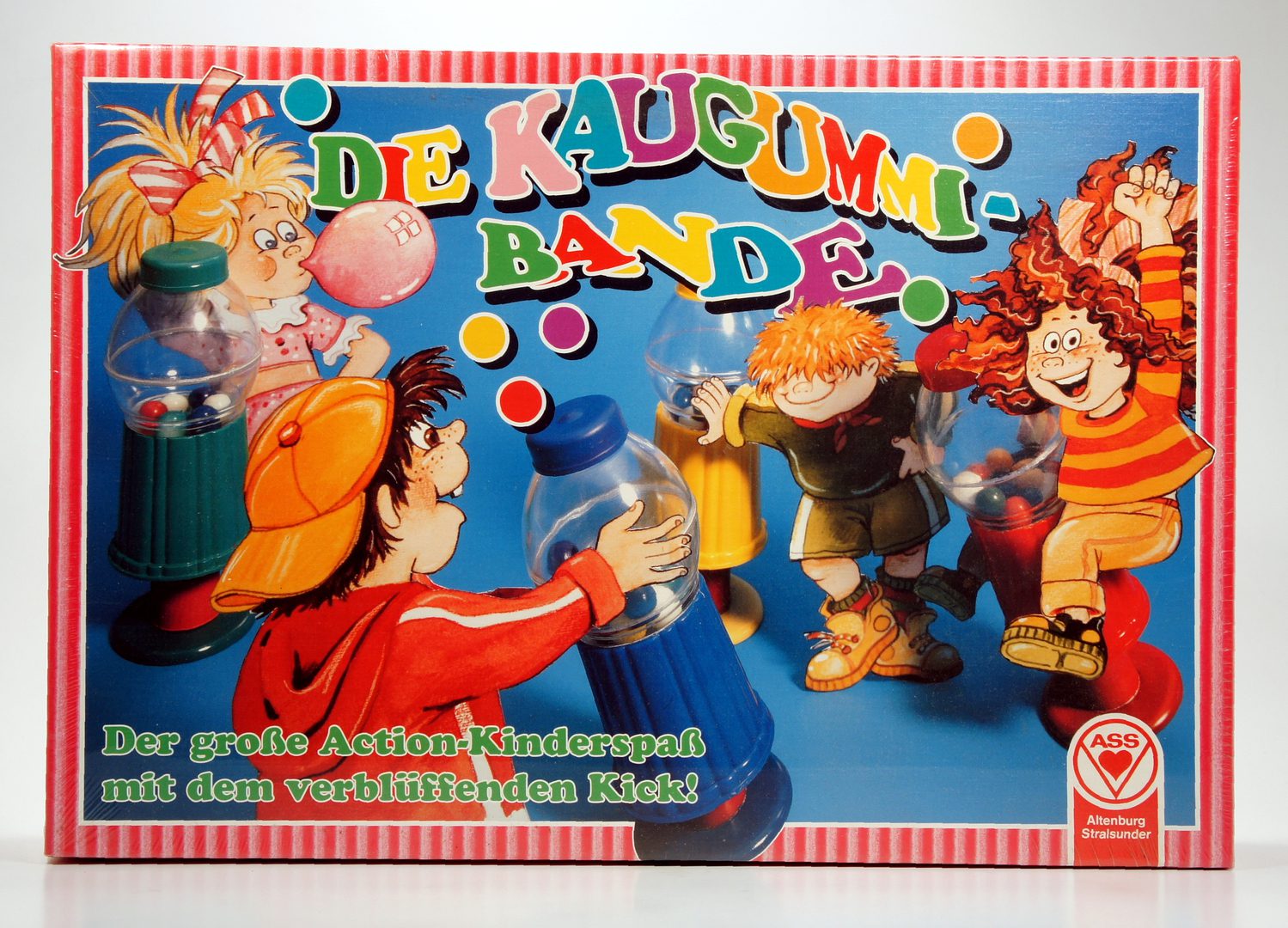
The Great Gumball Game (4-1990) started with Q-tip dispenser I saw. In the game, the players advance along a colorful gumball trail using their own gumball machine as their playing piece and randomizer. The color of the "gumball" that rises above the others inside the clear bowl when the upper gumball machine is pressed down shows the color of the next space to be reached along the path. The first to reach home is the winner.
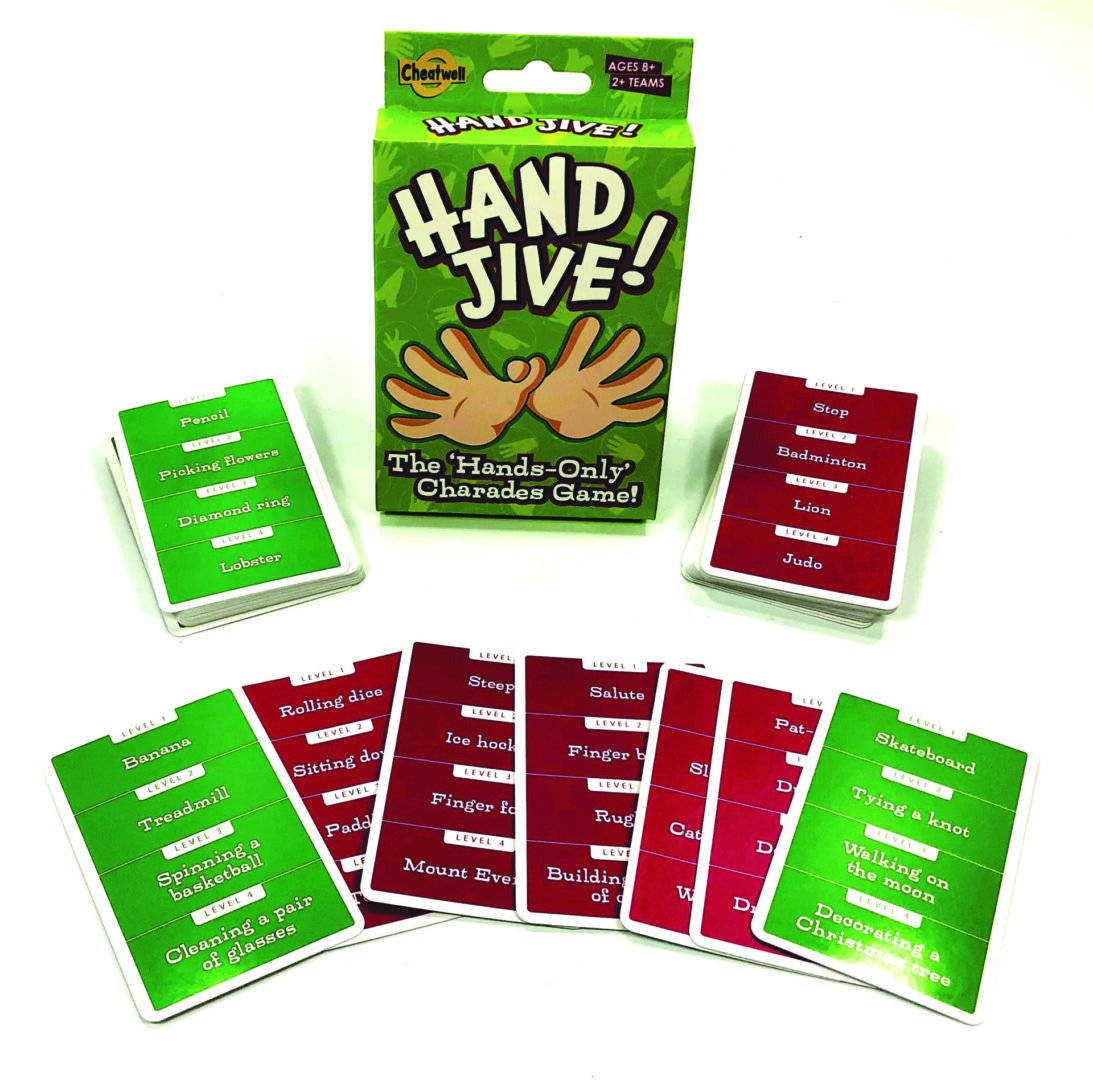
Hand Jive 2020
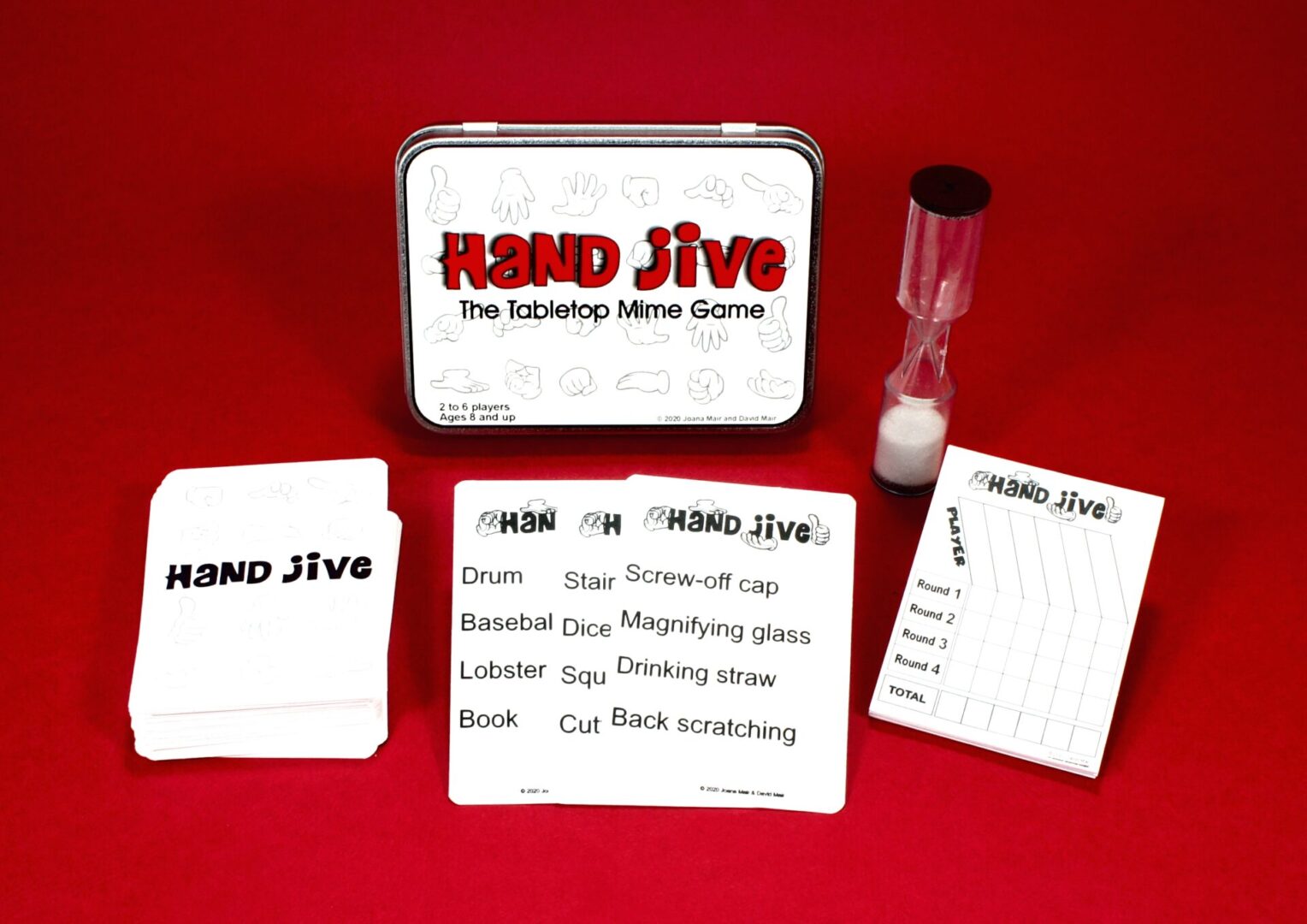
Sold to Cheatwell Games in the UK and Outset Games in Canada. This is a charades game where you can only use your hands to get people to guess the topic on the cards. My daughter Joana invented a version of this game on a bus on a trip to Morocco.
Hoo-Dee-Nee
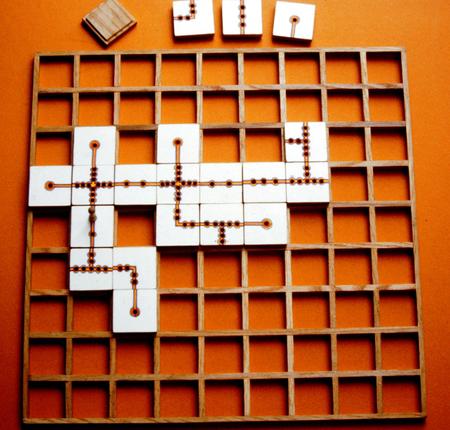
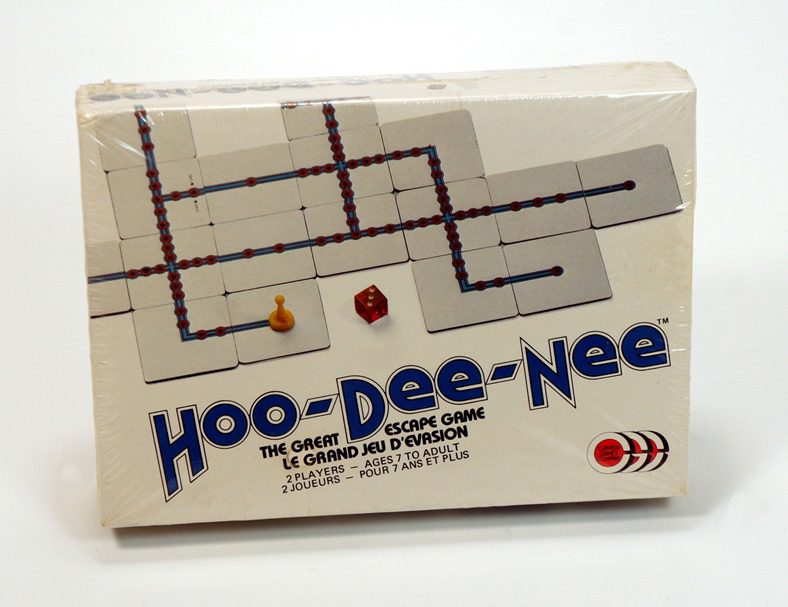
Hoo-Dee-Nee, invented in November of 1981, was the first game that was sold by my new agent, Michael Kohner. It was originally called Rally, as in a car rally, and made in a wooden grid version. [See below] Pressman took it in 2011 and turned it into No Exit, with a car theme. To play the game, one player places cards down (one per turn), while the other player rolls the die and tries to move the playing piece off the edge. This game is also influenced Loopit and my app Swiggle.
Hop Shots
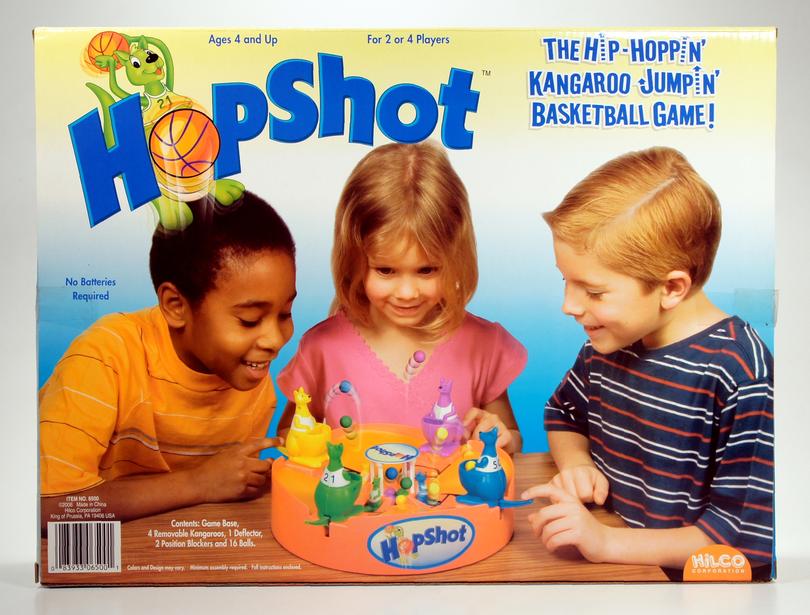
Hop Shots (11-2000) is a 2-3 or 4 player game where players all at the same time, try and get their little "joey" to kick as many balls as they can into mother kangeroo's pouch. The action is created by flicking a lever that is her tail.
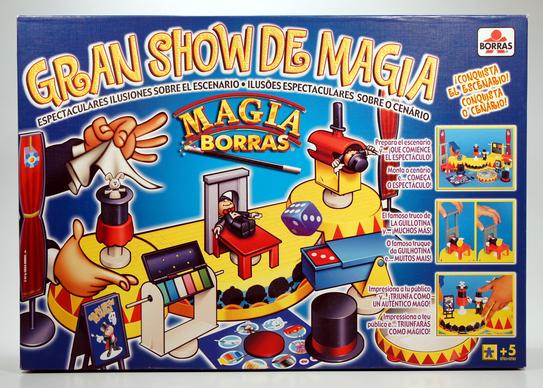
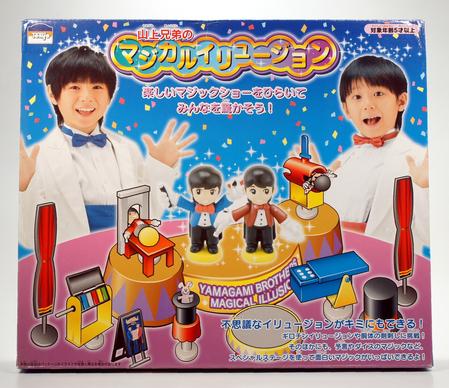
The Illusion Show
The Illusion Show (2003) is a set of magic illusions that anyone can do by just following the directions. There are no sleight of hand tricks. There are “trapdoor in the stage” and “swords through the body” illusions. It required a lot of plastic and molds so I don't think it will ever be reproduced again.
Insomnia
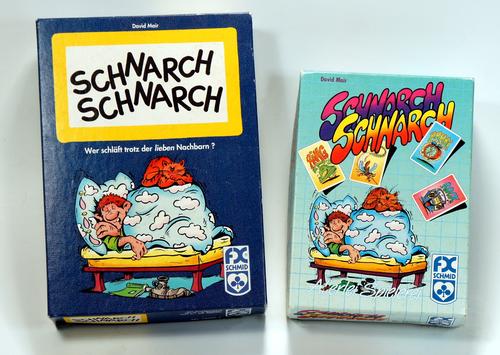
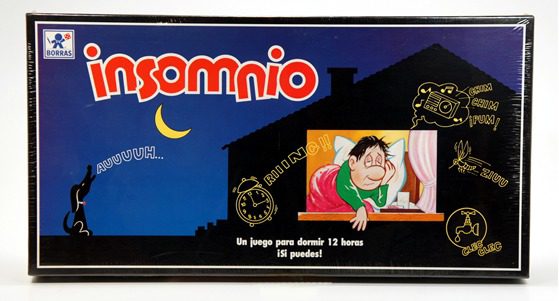
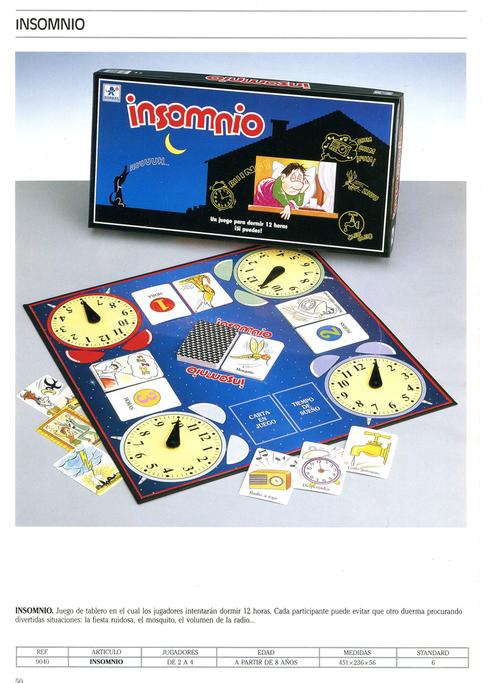
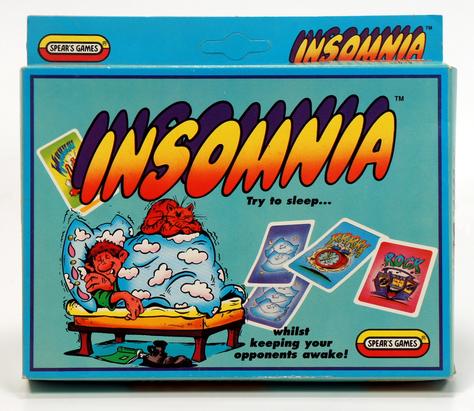
Insomnia was invented in 1989. In this game, players try to collect hours of sleep while the other players try to play cards with things that would keep you from sleeping, like dripping faucets, or loud music. Note (in the "Schnarch Schnarch" photo below) the German custom of putting the inventor's name on the front of the box in large type.
Itsy Bitsy Spider
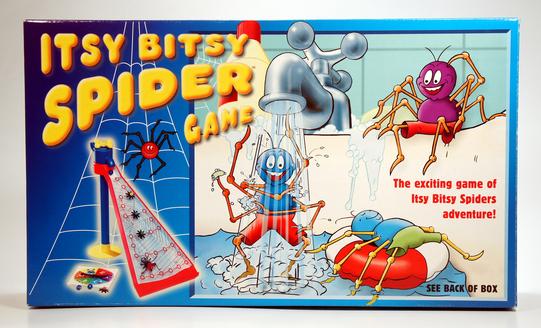
Itsy Bitsy Spider (2002) Itsy Bitsy Spider, based on the children’s song, came from an idea by Bill Van Orden. The game has holes in a clear plastic outer layer that acts as the game playing surface. Underneath is another layer where the water balls travel down the maze-like incline. At the top of the diagonal, pie-shaped game unit is a water tap. The balls are released one at a time as the water tap is turned. The balls travel down and hit the underside of the playing pieces (little spiders) that fly off the game board to be reentered again starting at the bottom. The first player to get his/her spider up to the water spout, is the winner.
Judge for Yourself
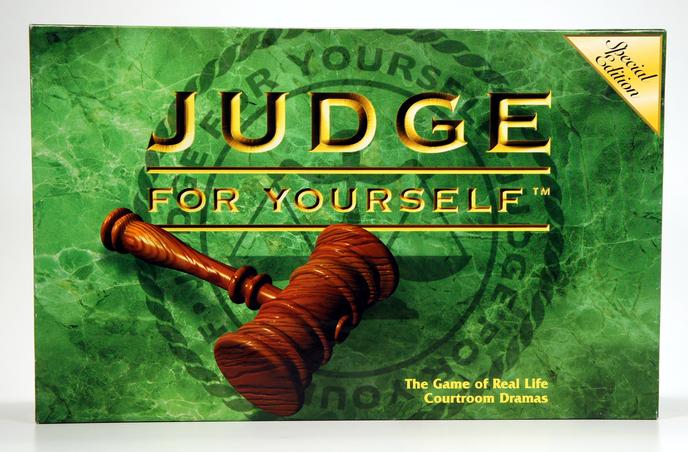
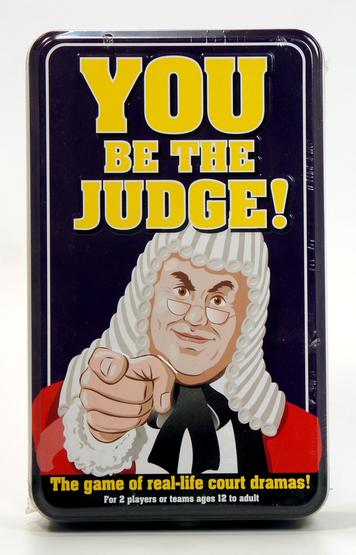
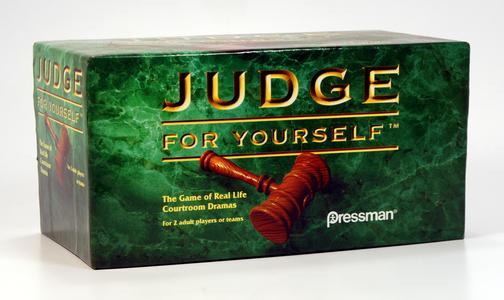
Judge for Yourself (US version) and You Be the Judge (UK version) was invented in 1993. When Spears UK was reluctant to buy the rights to the game because of the high cost of legal research, my daughter Ilana, and I spent many hours in the Newark Law Library looking up the 500 cases needed for the game. Pressman produced a board game version (1998), where constantly changing teams (juries) voted "For" or "Against" the outcome of the case. Paul Lamond currently produces a version with 200 cases that comes in a tin box. (available in the UK on Amazon)
Jump-A-Ton
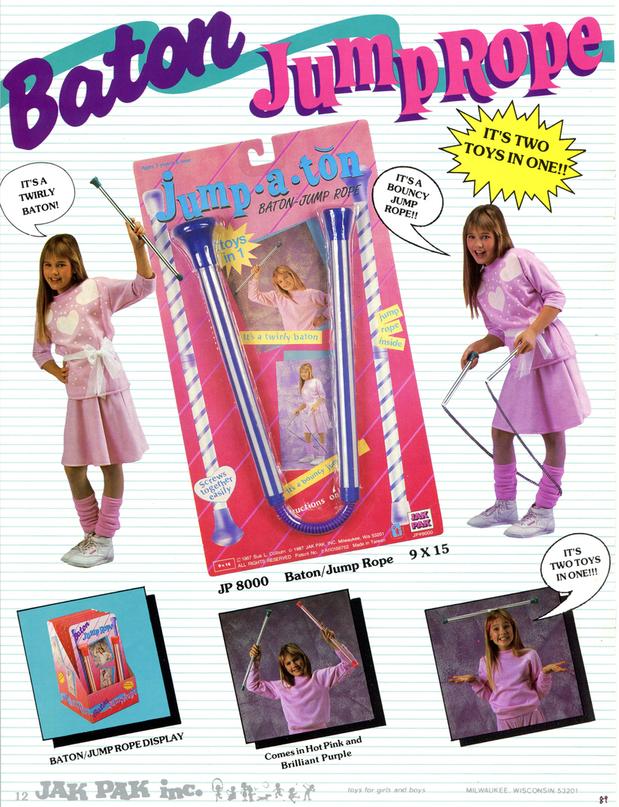
Jump-A-Ton (1989) came from the idea of having two toys in one: a jump rope and a baton. The original model used a telephone cord for the stretchable jump rope.
Kaleidoscope Crafts
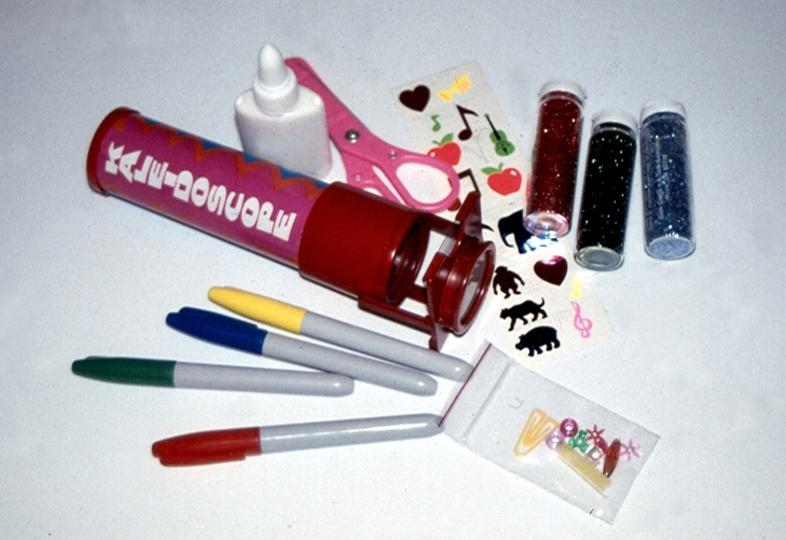
Kaleidoscope Crafts (January 1994) was sold to Pic Toys but was never produced. The idea was to draw, stick, or glue things to a clear slide, which was then inserted into the kaleidoscope viewer. It was then held up to the eye and rotated, creating a kaleidoscope effect.
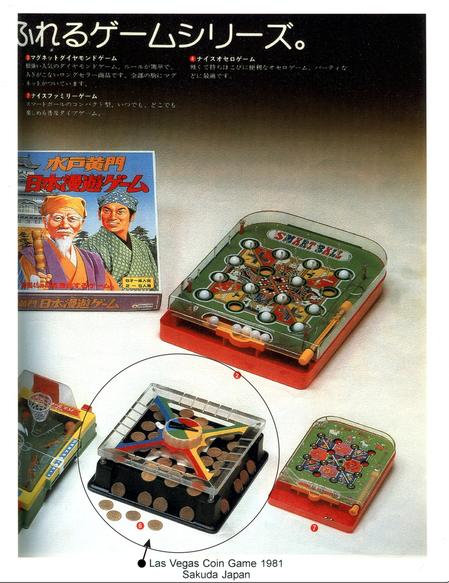
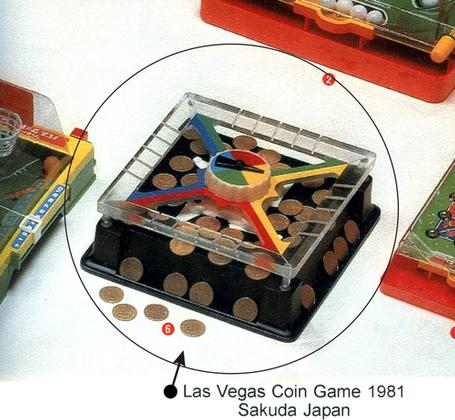
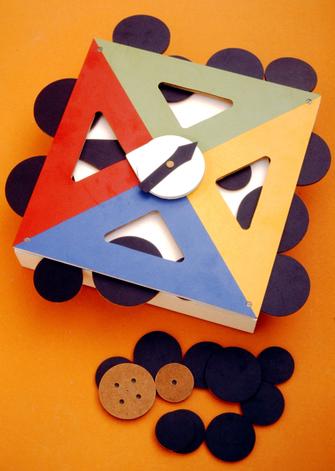
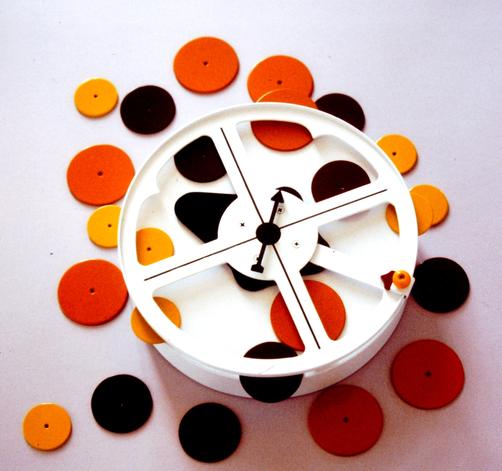
The Las Vegas Coin
The Las Vegas Coin Game was created in 1980, and was my second game that was sold. It was originally called "Over the Edge", and co-invented with Jay Levinson. The idea came from his observation of the pieces of wood he was cutting with a band saw. When he placed the pieces on a crowded table it caused other pieces of cut wood to be pushed off the ends and the opposite side of the table. As far as I know, the game never went into production in Japan. FYI- The original model was made out of formica!
Lidzy 2022
Sold to Fat Brain. I originally designed it in 2014 as a bottle cap shaped sorter where the toy looked like a very large bottle with many caps coming off in many directions. They said it was impossible to mold that shape and came up with the current shape. A bit underwhelming!
Later Mater
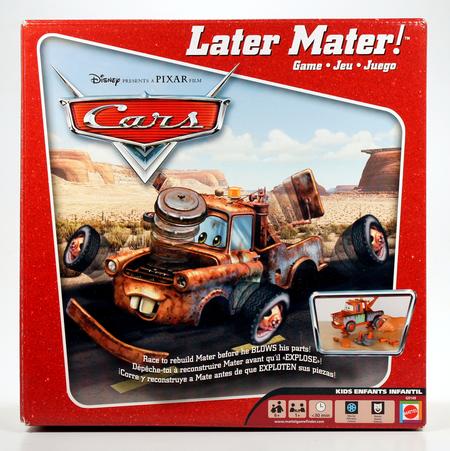
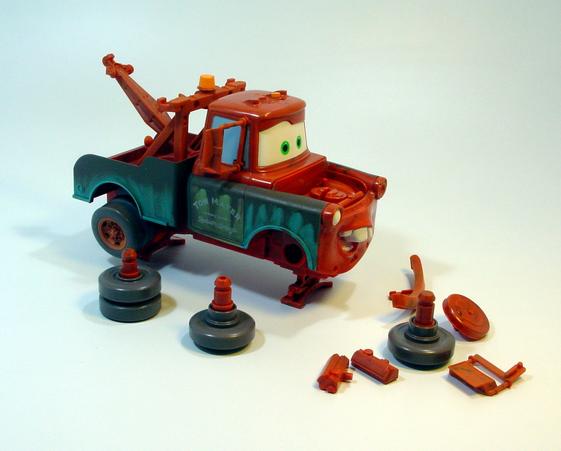
Later Mater (2005-2009) is a version of Manic Mechanic put out by Mattel. In this version, one large truck, Mater from the Cars movie, has to be put back together before the timer goes off and the parts explode off the truck.
Loopit
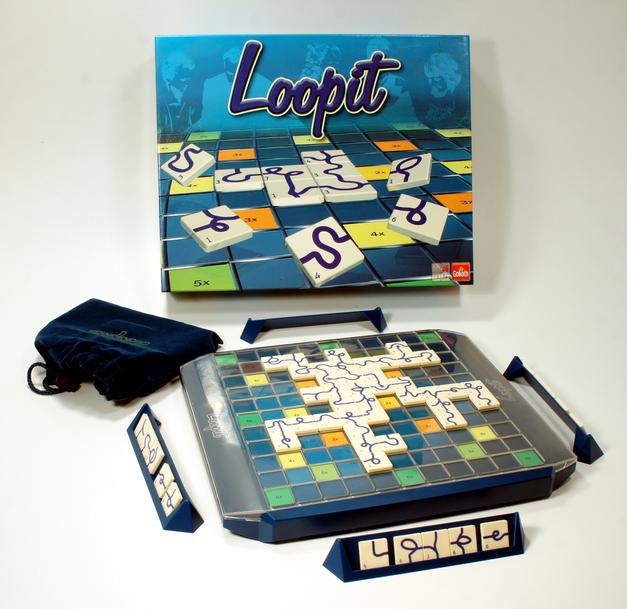
Loopit (2005) was first presented to Hasbro in 2006 as Scribble Scrabble. They bought the world rights, but a conflict within the company about using the name "Scrabble" with a non-word game, caused the project to be dropped. Goliath then picked up the rights that same year and produced the game as Loopit. In 2013, I, along with partners, Michael Kohner, and Steve Curtin created Swiggle, the electronic version.
Lost For Words
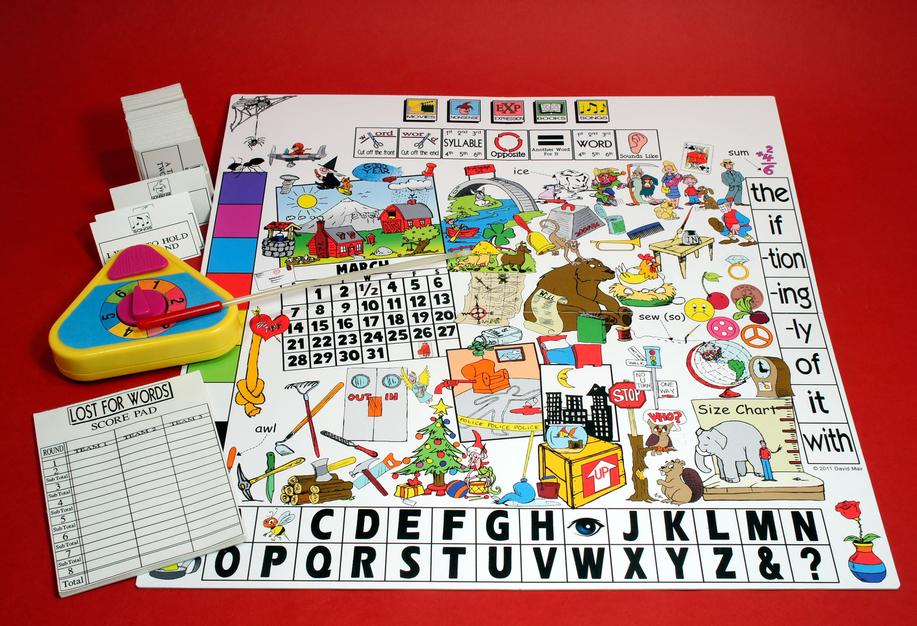
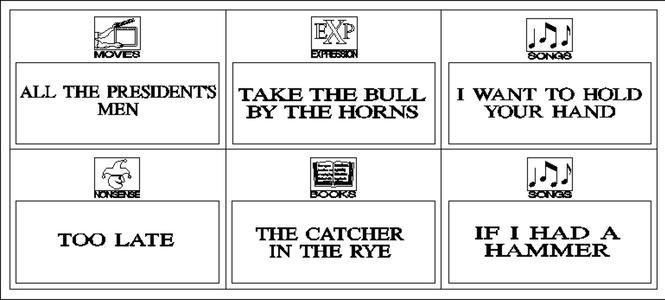
Lost For Words (September 1995) is basically a charades game without the acting. Players take turns drawing a card, starting the timer, and then pointing to images on the board to get their partners to say the expression, or movie, book, or song title as fast as possible. The game was sold to Tomy UK but it was never produced.
The Magic Game
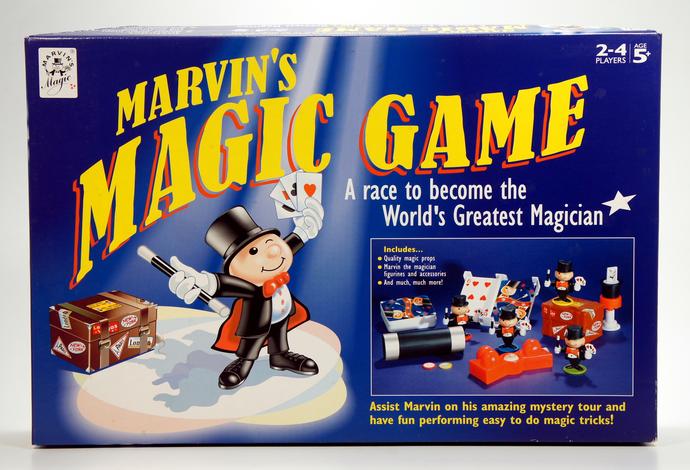
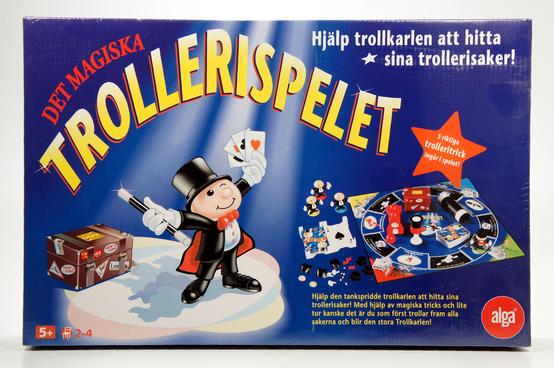
The Magic Game (2000) uses magic tricks as part of the game play. The tricks are all based on real illusions but the player has to predict the outcome; for example, whether the coin will appear or not, or the rabbit will pop out of the hat or not. Each trick relates to a part of your little magician, so when you are successful at guessing the hat trick you can add the hat to your magician. The first player to complete his/her magician, is the winner.
Magic Hats
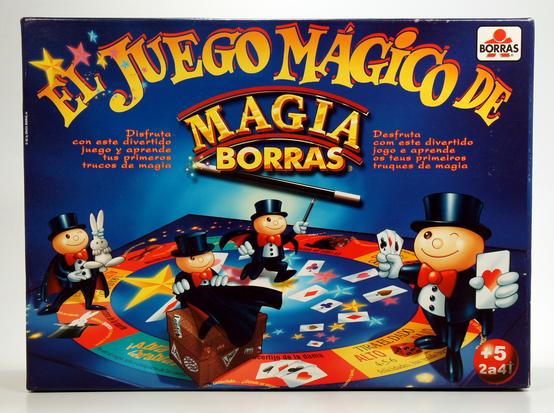
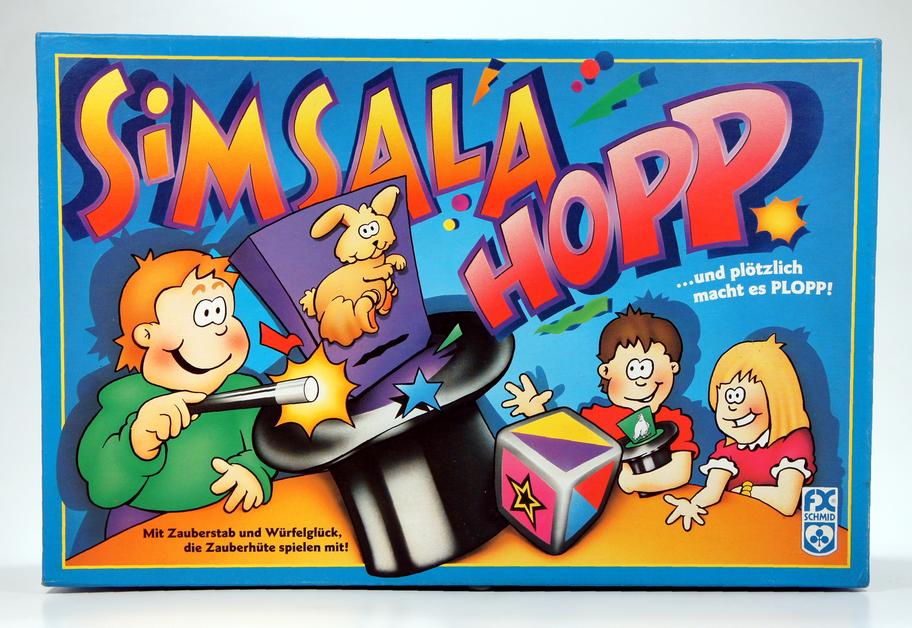
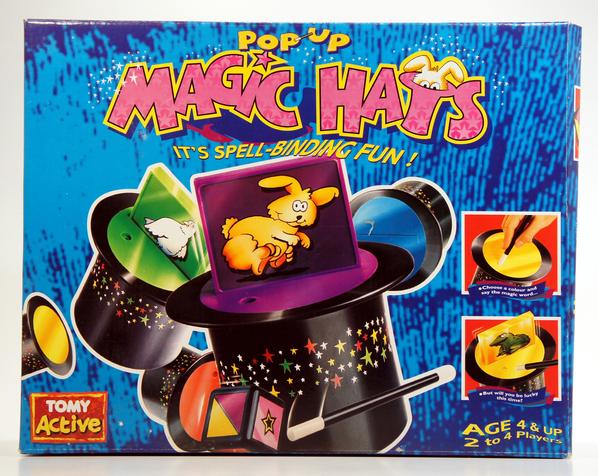
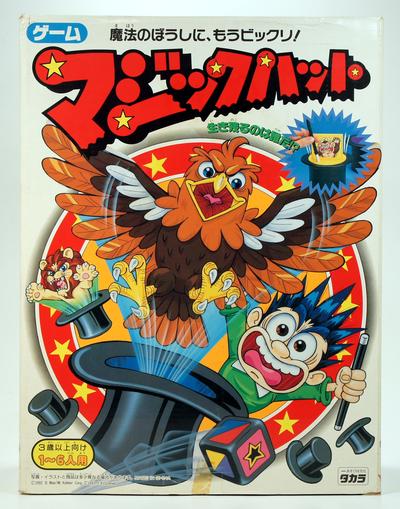
Magic Hats (1992) started out as a game called Flower Pops. The original idea was that after a random number of "waterings" (sticking the watering can spout into a hole in the top of the flower pot), a spring loaded flower would pop out. The first player to get two flowers was the winner. F X Schmid changed the concept to magic hats with a rabbit popping out using a magic wand.
Magic Man
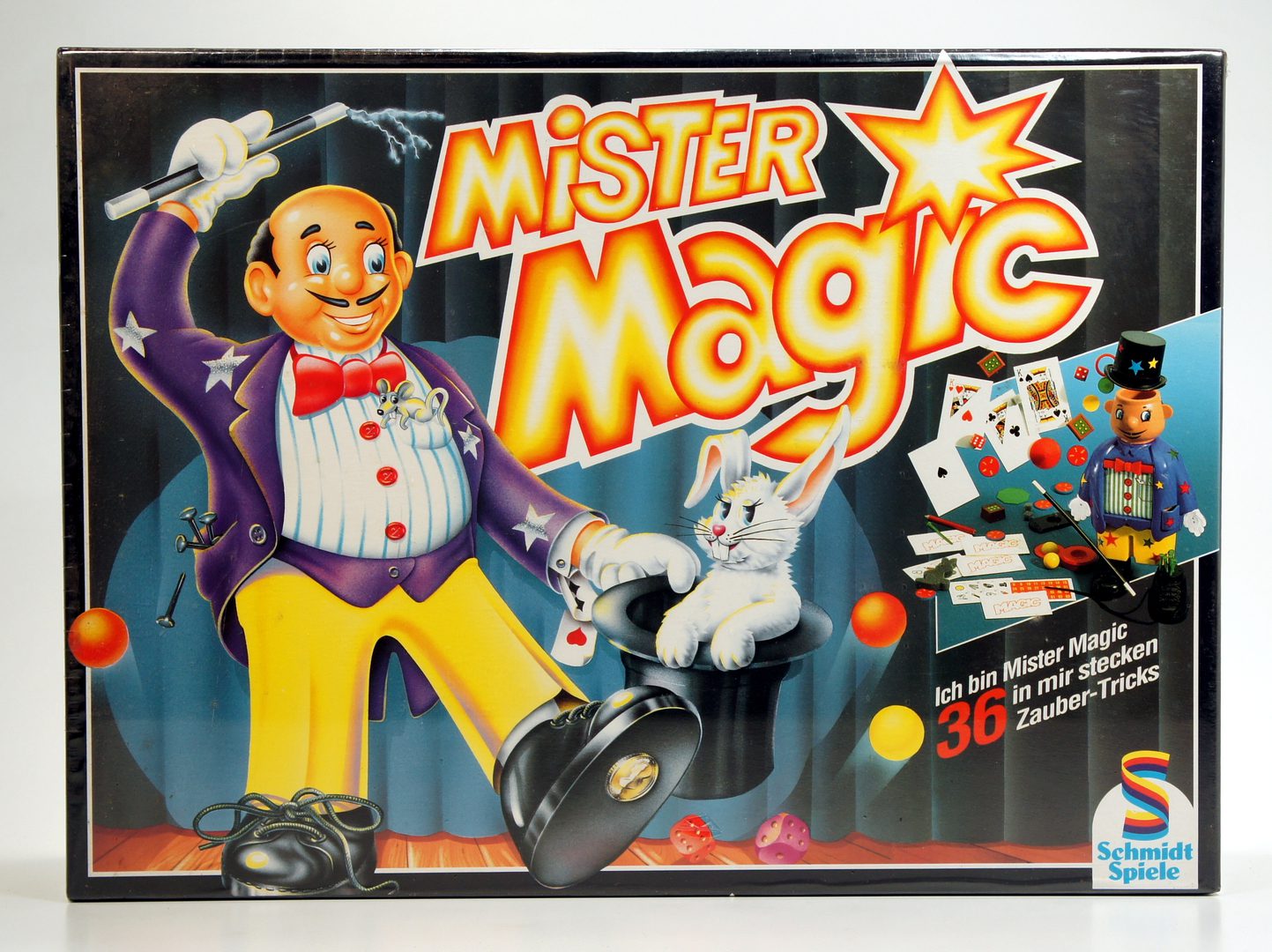
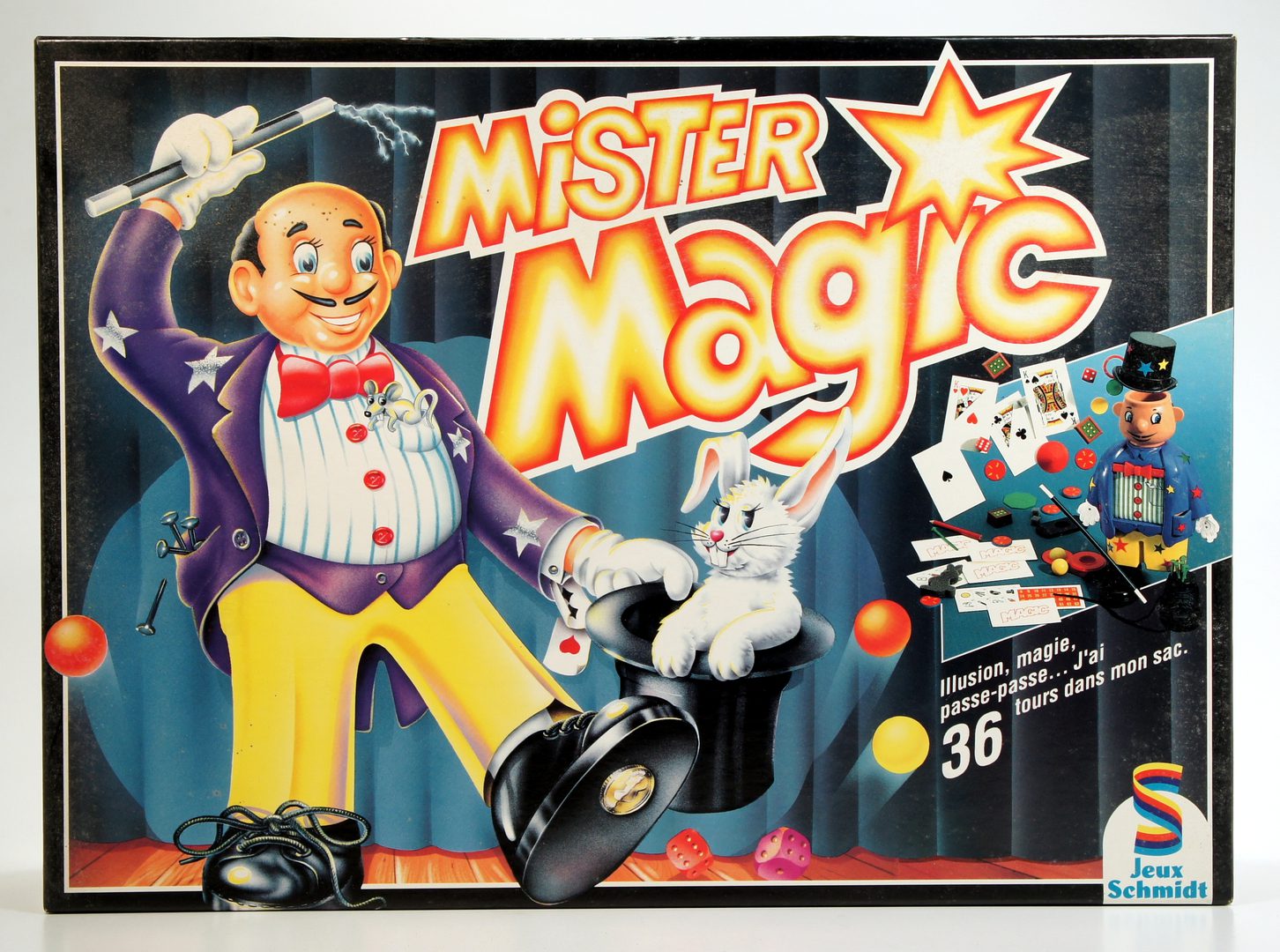
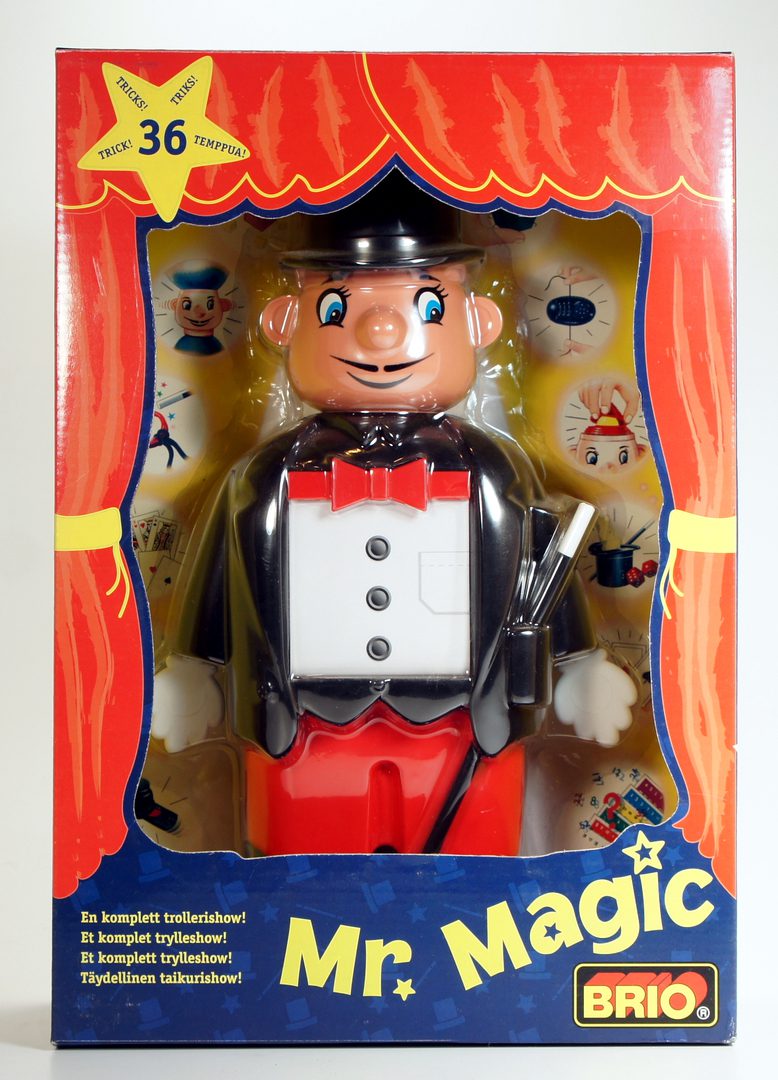
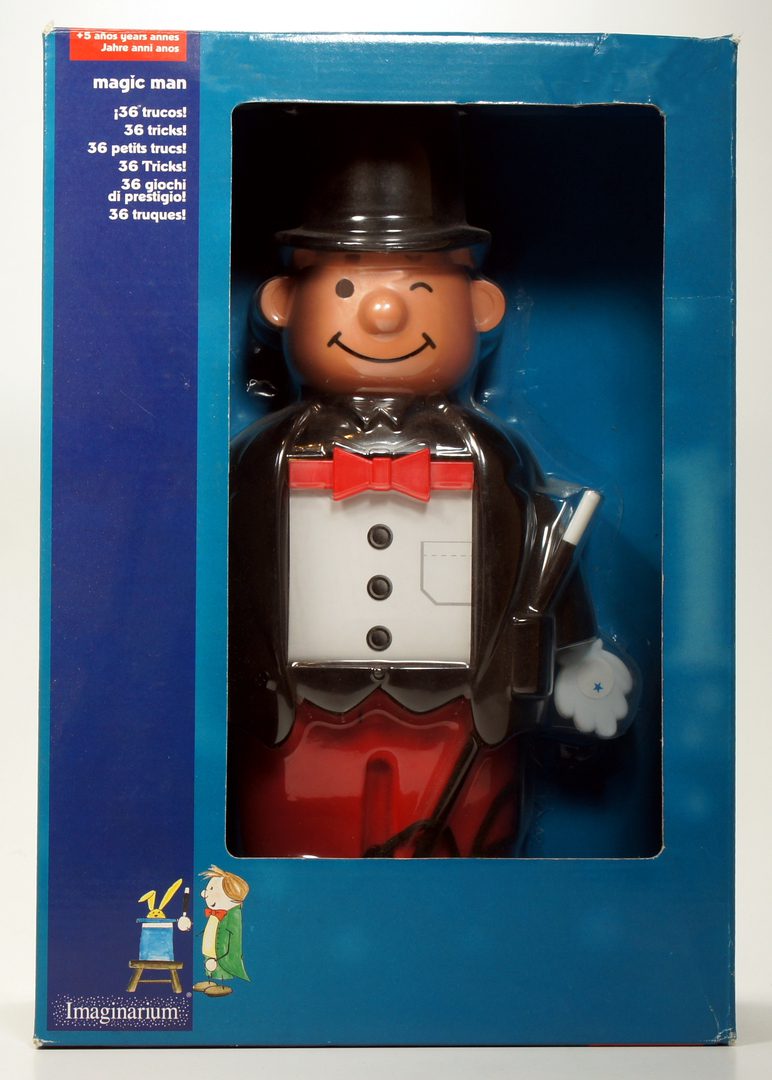
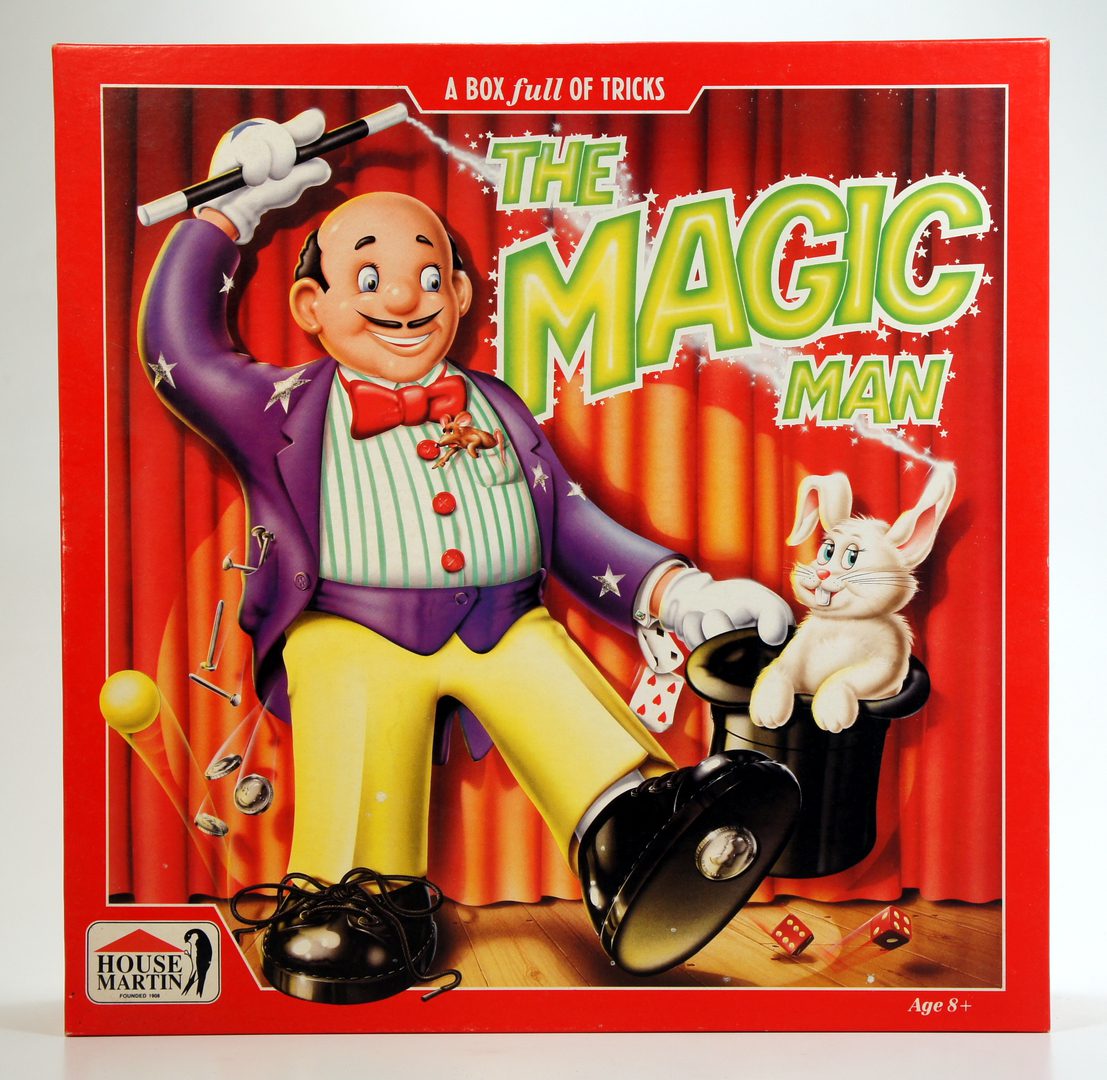
Magic Man or Mr. Magic (6-1991) was another member of the "Mr." series. Each part of the unit held or were used in performing magic tricks. There were several different versions, but they all used the basic Magic Man.
Manic Mechanic
Manic Mechanic (12-1999) is based on an idea by Bill Van Orden, which came from the old Perfection game. Players race to assemble their own cars as fast as they can. The first to slide their driver in place will cause all the others' cars to pop up and fly apart. The newest version, modified for cost purposes, removed the timer so that players race each other to complete the task. Goliath also made a travel version of the game.
Matcha Games
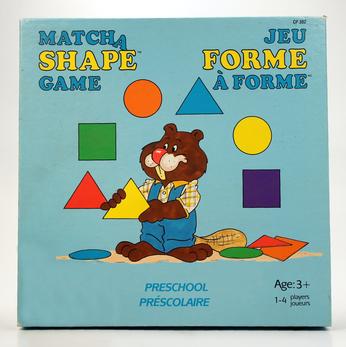
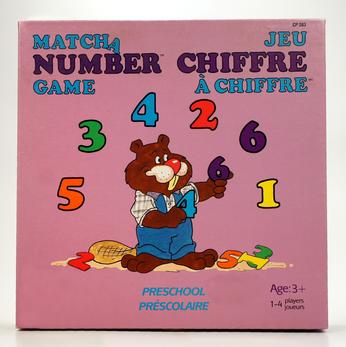
Matcha Games (December 1987) was a series of circular board games involving matching with shapes, numbers, and colors. The players moved the one playing piece around the board to land on a shape, color or number that matched one of the cards they had in front of them. The first to get rid of all their cards was the winner. Rot-Eins-Rund was the German version that combined all three games into one game, with one game board.
Memory Book
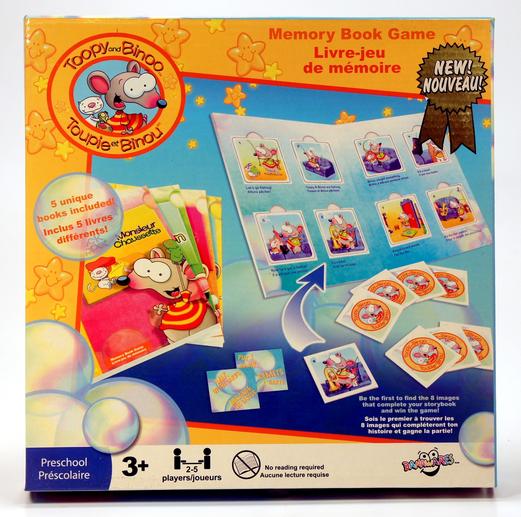
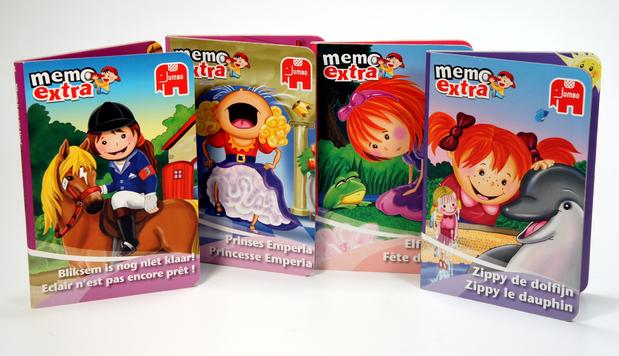
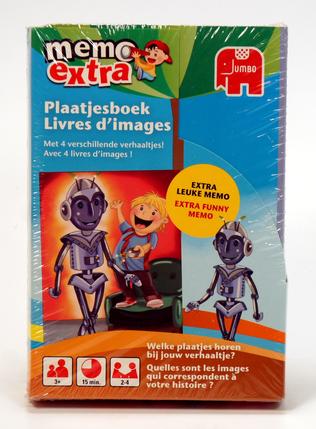
The Memory Book Game (12-2007) is a combination puzzle, book, and memory game. Each player gets a book with the story told in 8 pictures. The pieces that will complete the story within the book are spread face down on the table with the pictures from the other player's books. The first player to collect the correct pieces and complete his/her book is the winner.
Monster Dominoes
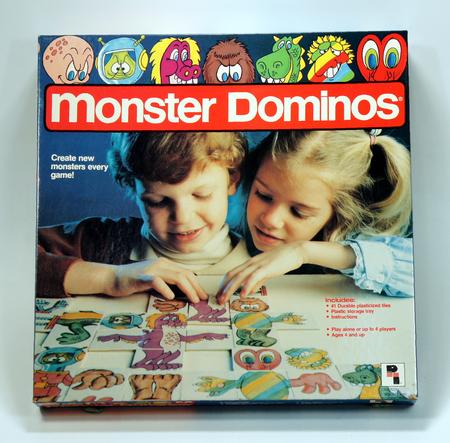
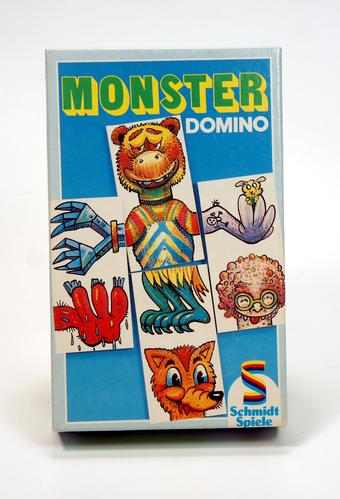
Monster Dominoes invented in September of 1981 and then redone two years later. The players played a domino game where various monsters were put together during the game. Look at the original pen and ink drawings. [see below] A little too scare for children.
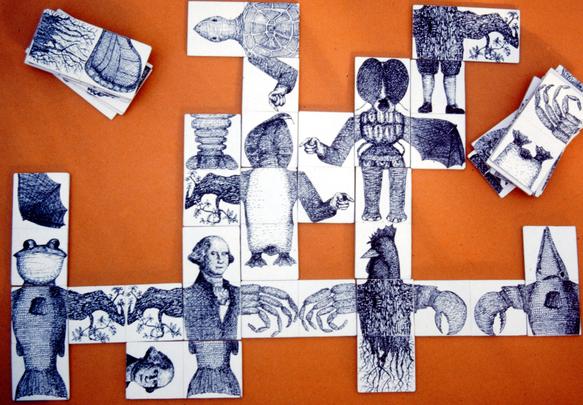
My beautiful picture
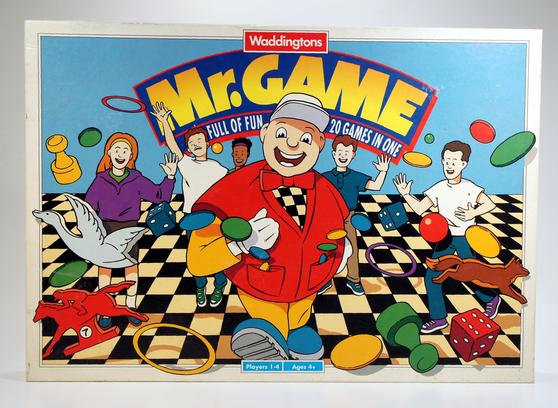
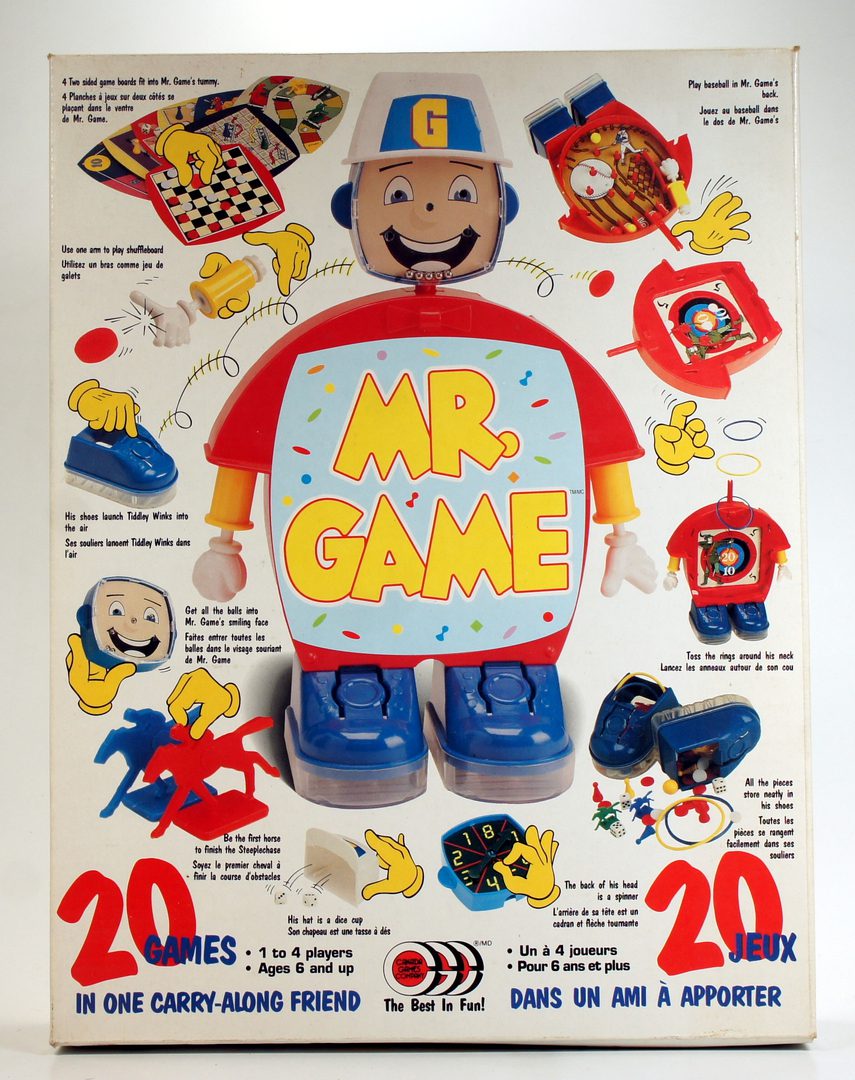
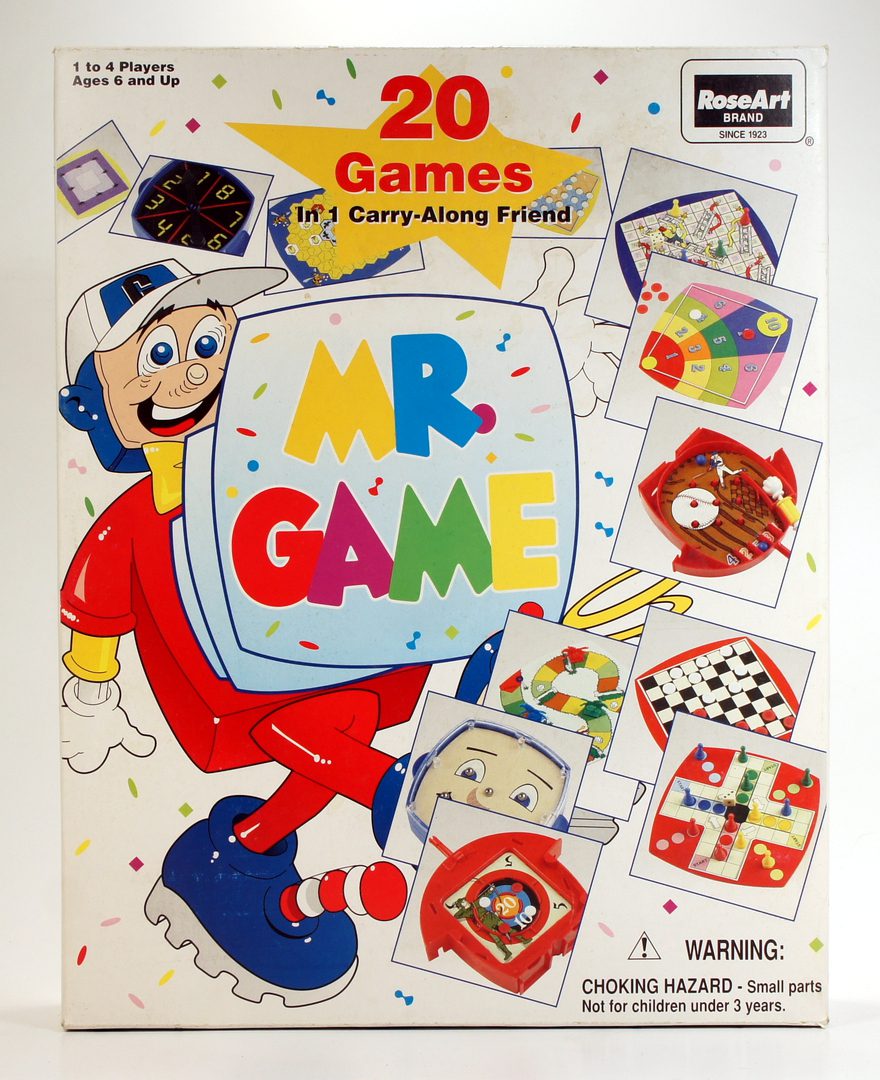
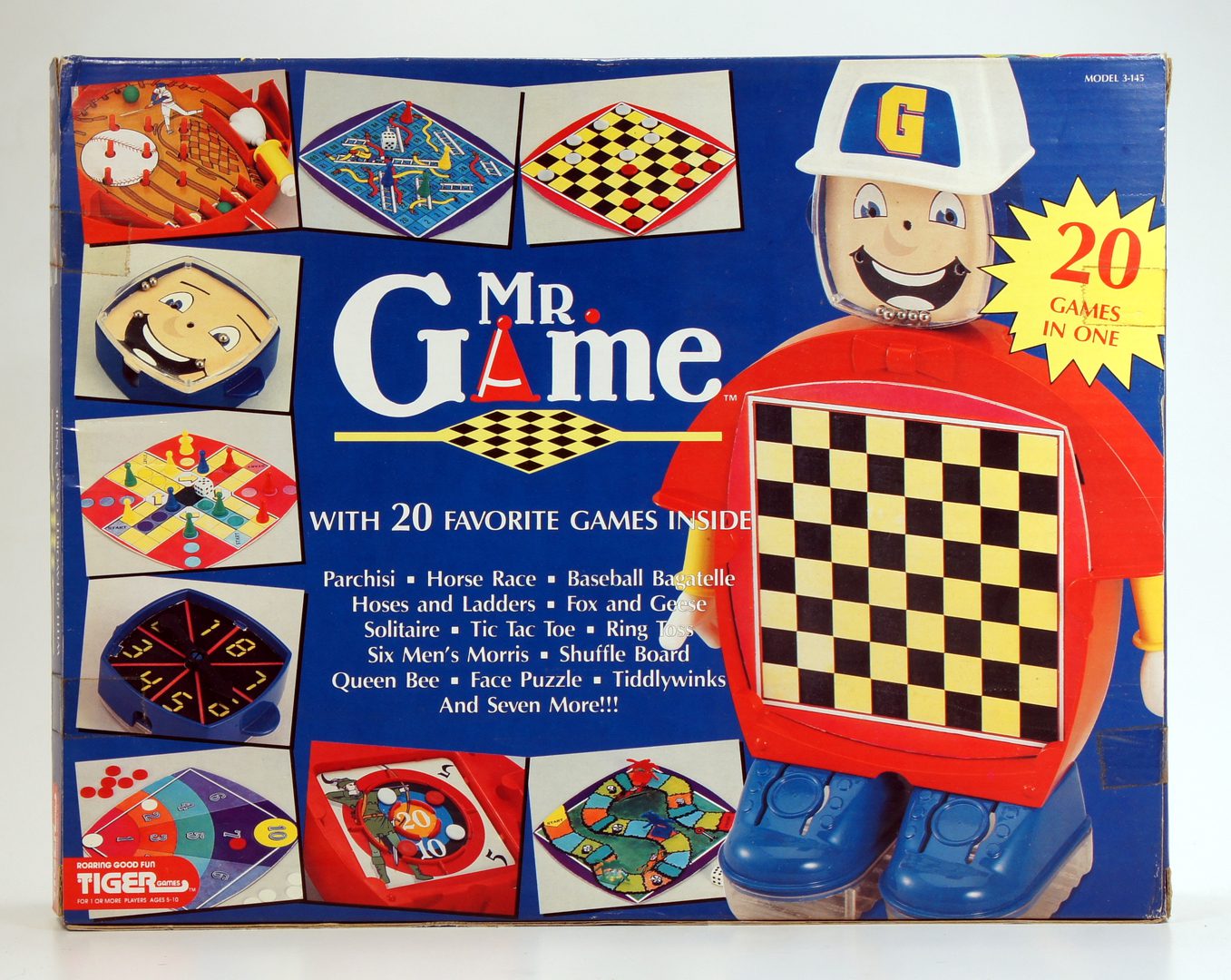
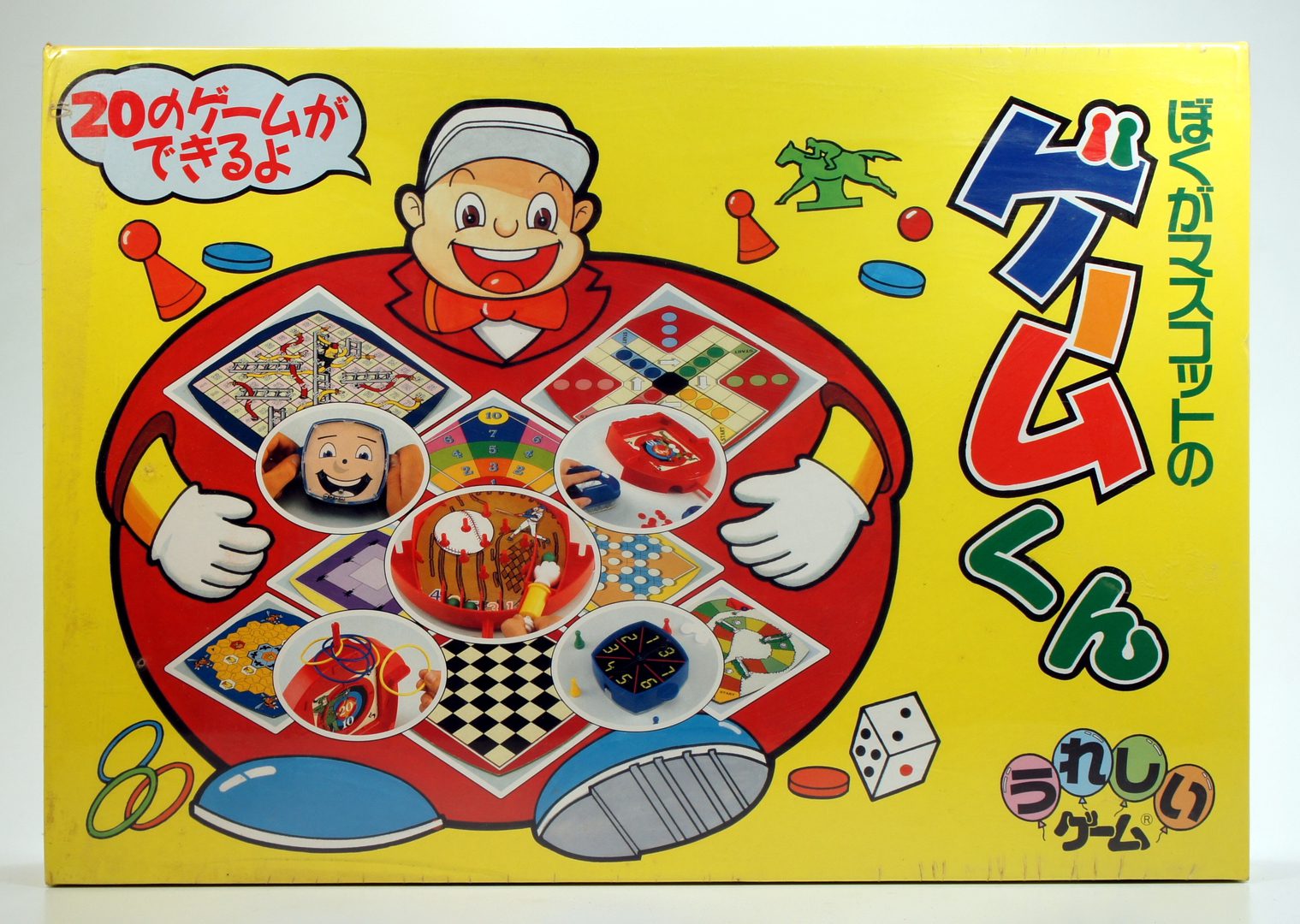
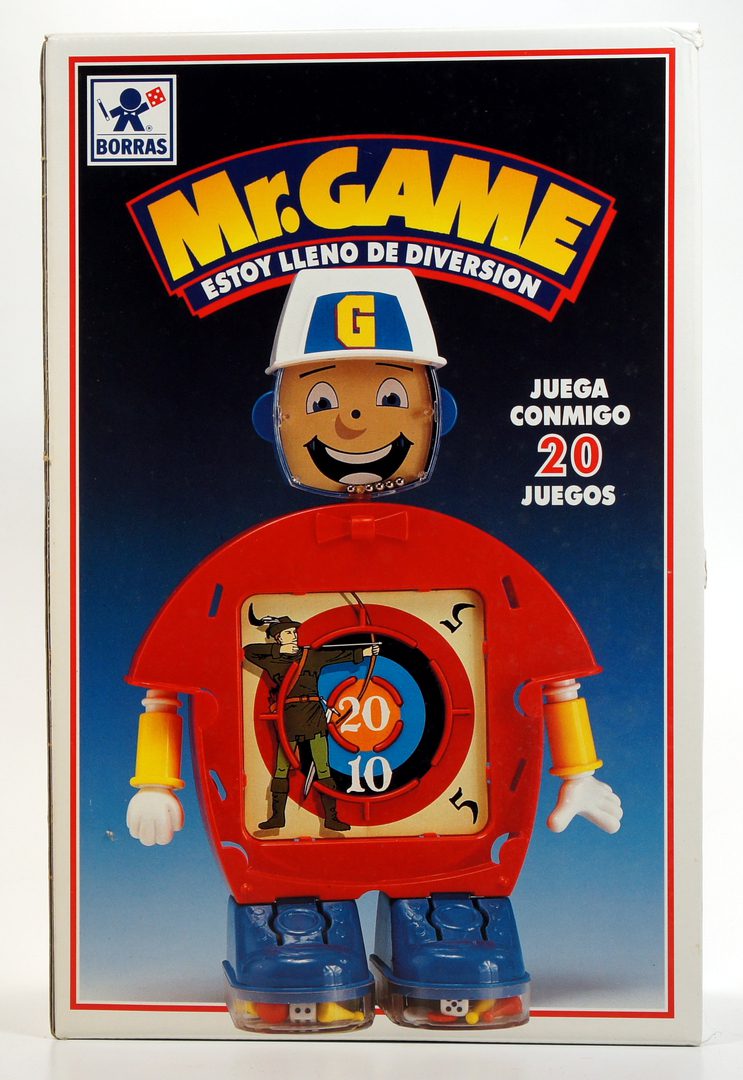
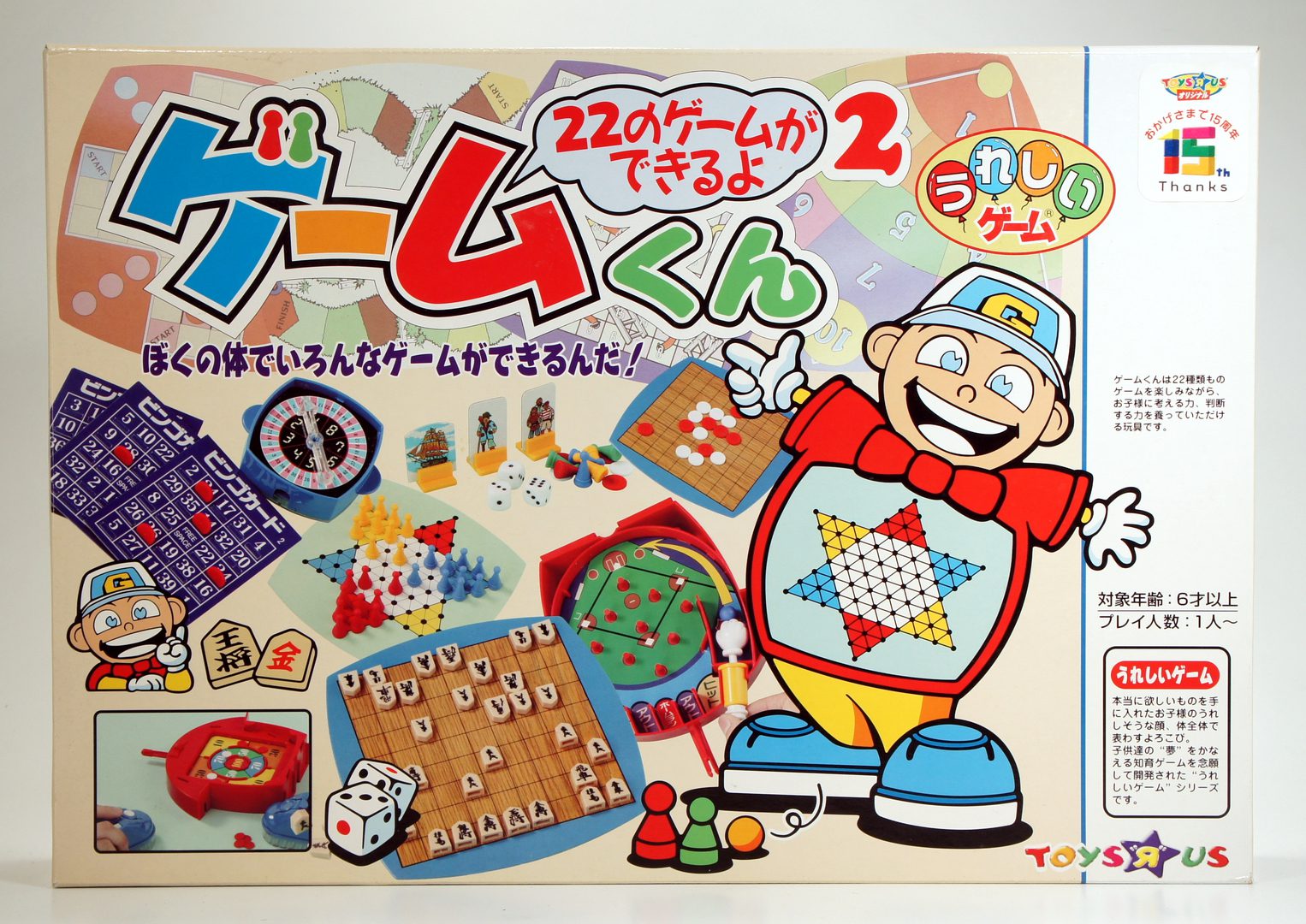
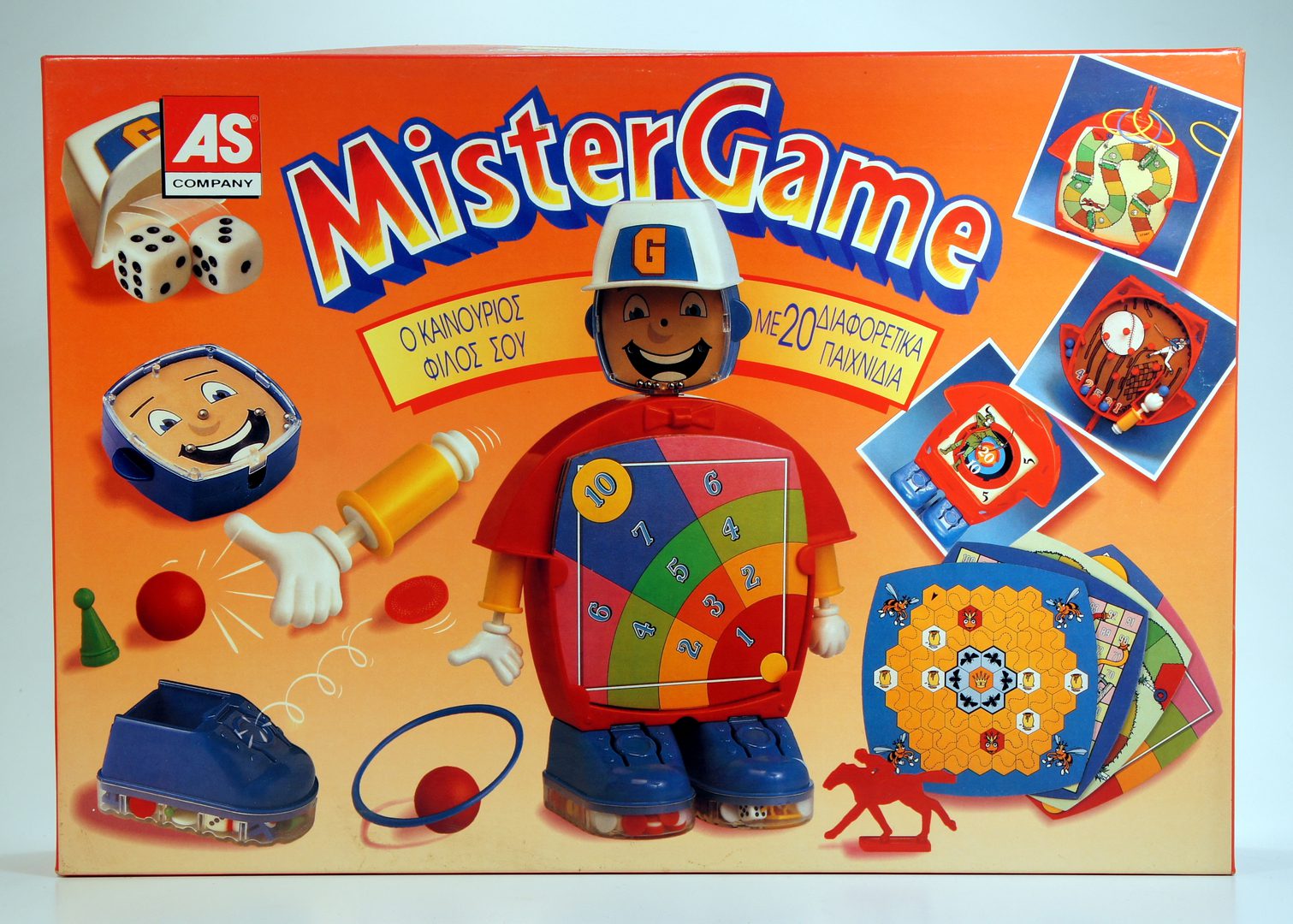
Mr. Game
Mr. Game (1989) was the first in the "Mr." series. Along with Mr. Toy, Mr. Magic, Mr. Puzzle, and Mr. Craft. It's a collection of games that use parts of the character for either storage or that are used in the game. The shoes, for example, can be used as flippers that shoot small plastic chips.
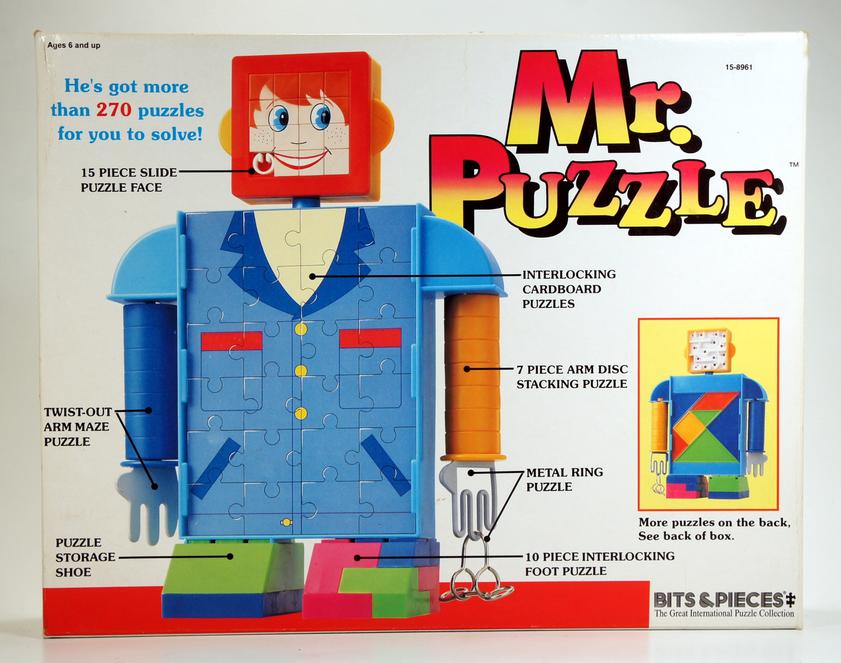
Mr. Puzzle
Mr. Puzzle (11-1992) was another in the Mr. series of games. Each of his parts was either a part of a puzzle or a place to store puzzles.
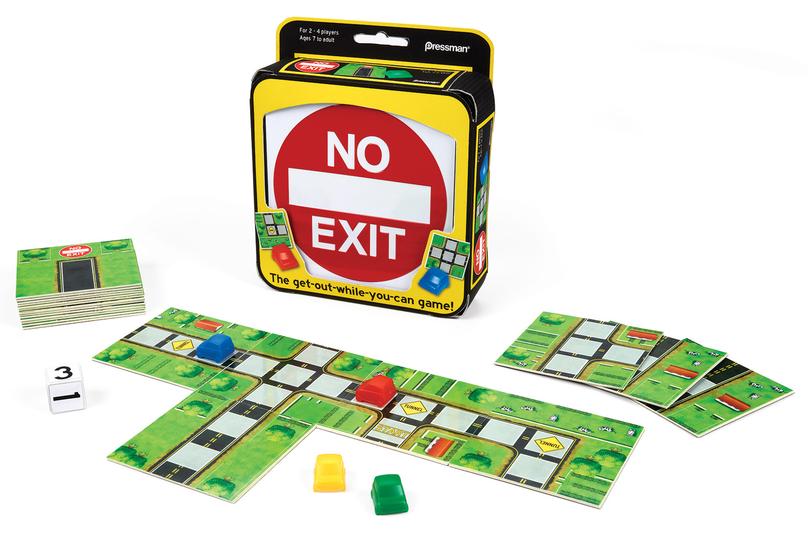
No Exit
No Exit (2012) is a new variation on Hoo Dee Nee. In this version, the players drive their cars through the street maze trying to get off the end of the cards, while the opponent tries to play more cards extending the roadway.
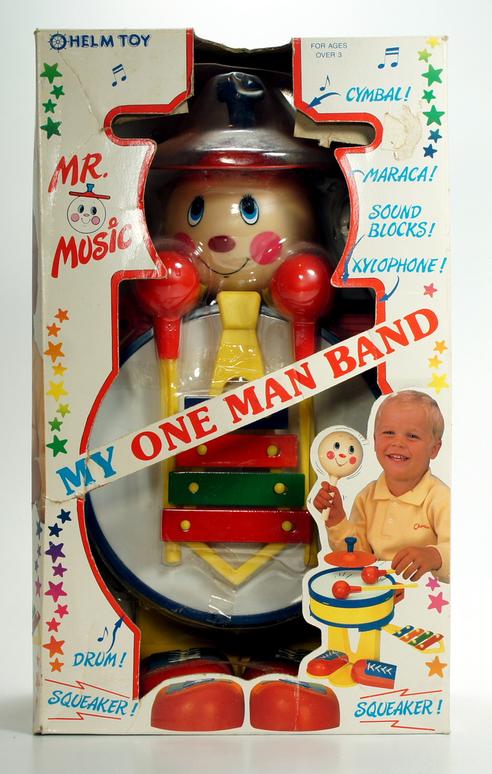
One Man Band
One Man Band (1985) was the forerunner to the Mr. series. I was just starting to learn how to work with styrene plastic, and I made a plastic model for the One Man Band including vacu-forming his face.
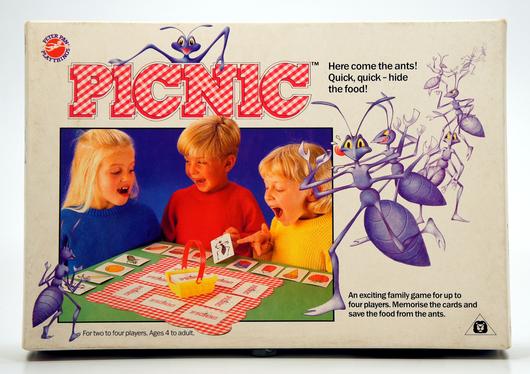
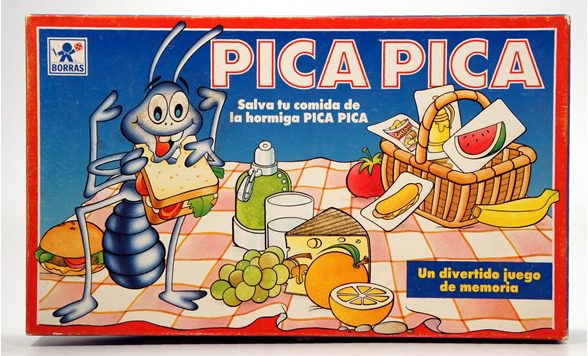
Picnic
Picnic (March-1986) was invented based on a suggestion from Bob Fuhrer. It's a simple memory card game where the players, in turn, try to collect the most food items from the picnic cloth by correctly identifying the face down food item. The ant cards act as the trigger for the play.
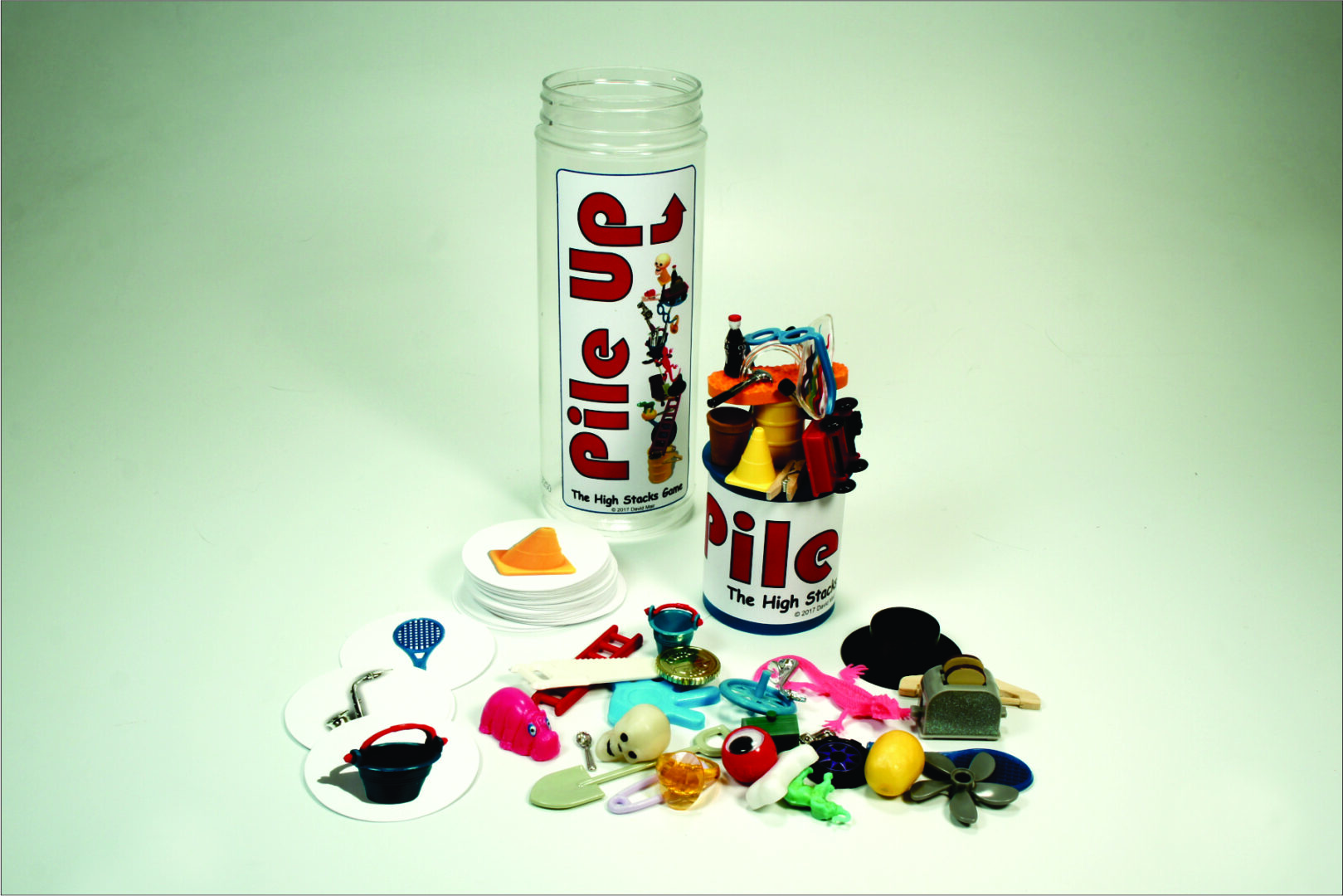
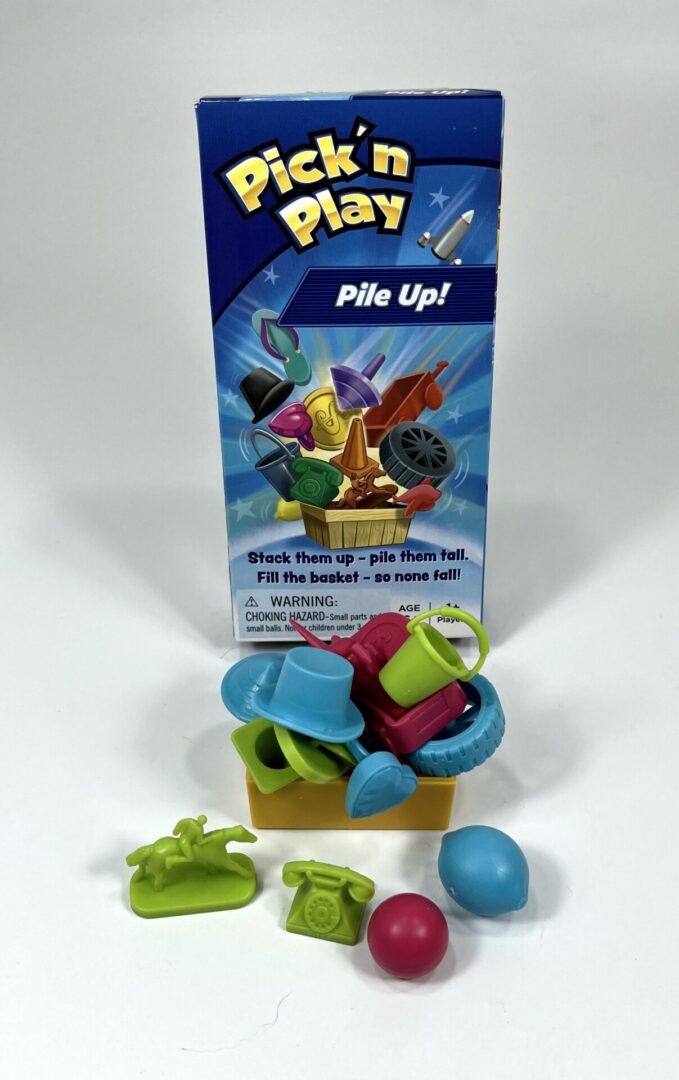
Pile Up 2017
Sold it to Intex Games in China. Basically, you stack random objects in a pile on top of a basket hoping that nothing falls off it. My original version came in a cylinder and was much larger.
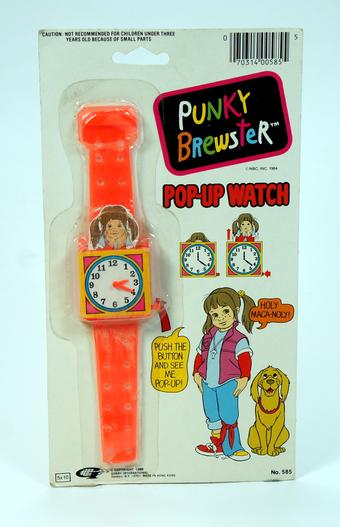
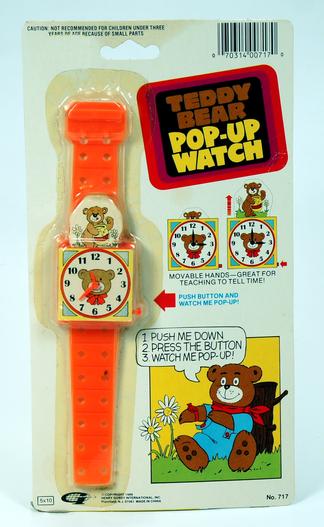
Pop-Up Watches
Pop-Up Watches, invented in April of 1985, came from a Michael Kohner idea. I refined and built a prototype.
Puke
Puke was invented in 2019 and sold to Cheatwell games in the UK. It was one of two "gross" card games I produced. The other game was Snot. The object was to collect 10 food cards. The player had to stop collecting before turning over a "puke" card in order to keep the ones collected.
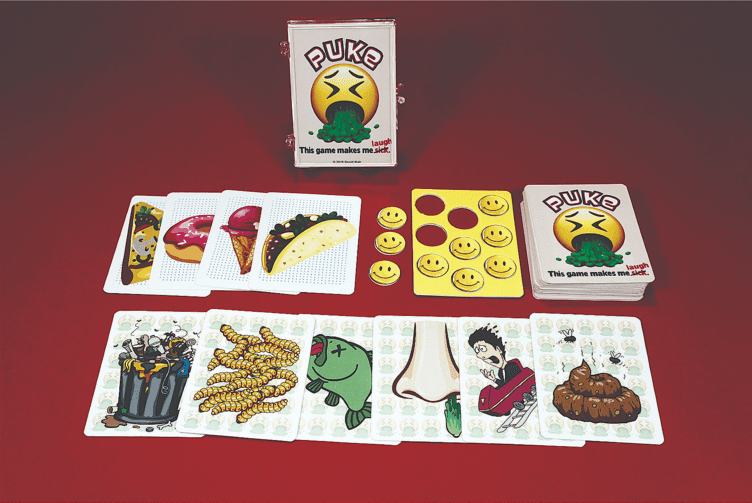
Puke 2019
Sold to Cheatwell in the UK and Outset Games in Canada. Puke is a press-your-luck type of game. You try to collect 10 food items, while trying to avoid any of the disgusting things that would make you puke.
Pull-Out Books
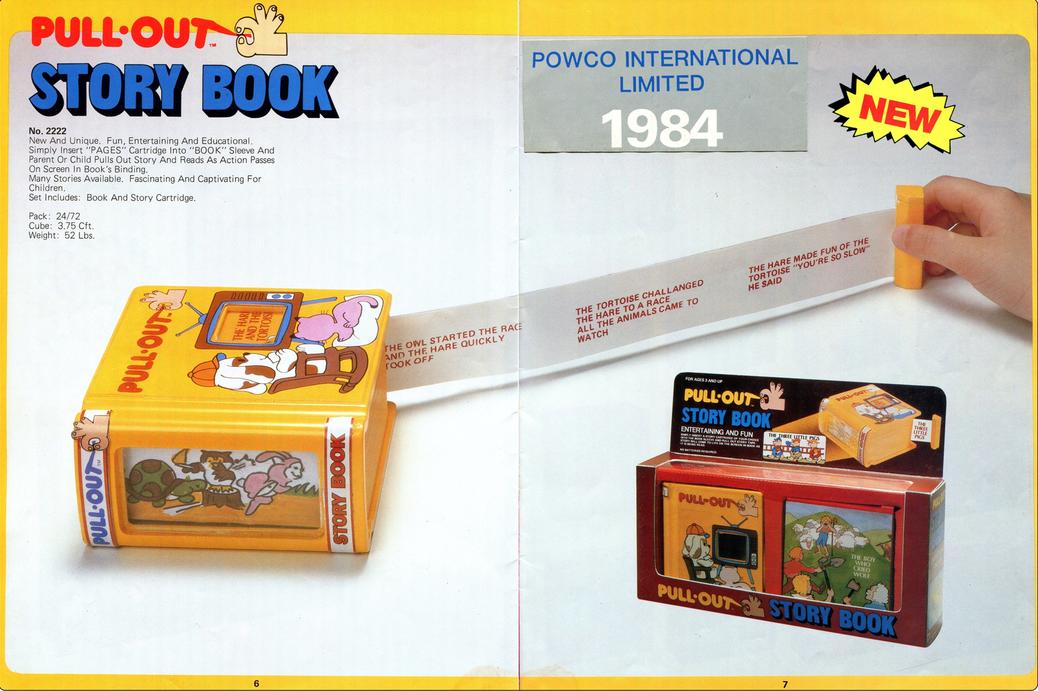
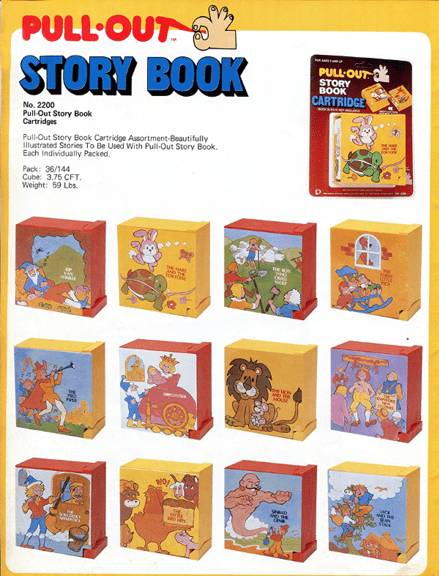
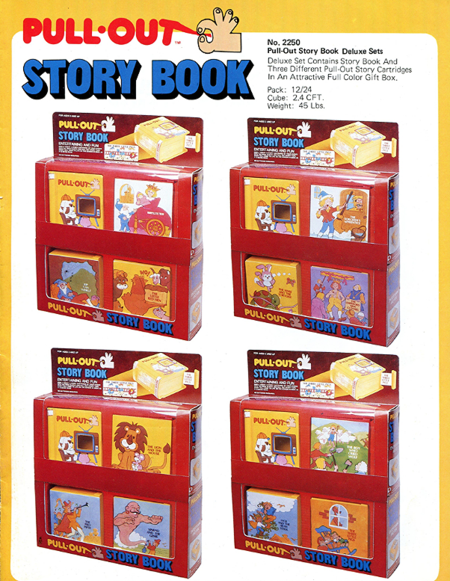
Pull-Out Books was invented in 1983. The idea came from a combination of retractable ruler and book. The pictures show up in the window on the spine of the book and the words are on the opposite side of the tape. The tape retracts back into the book when you are finished reading. They planned to sell story cartridges [see below]. Powco ran into financial trouble and never produced the item.
Questillo
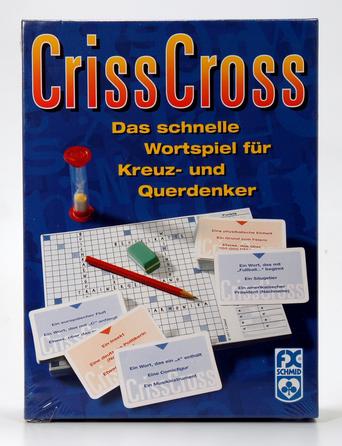
Questillo by Tomy (10-1994) [still available on Amazon] started out as a game called Connections. It was a crossword game where everyone worked on their own grid. Clues, like "an animal", were given and the players had the choice of any animal as long as they connected it to words entered from previous clues.
Quick Draw (Picture Panic)
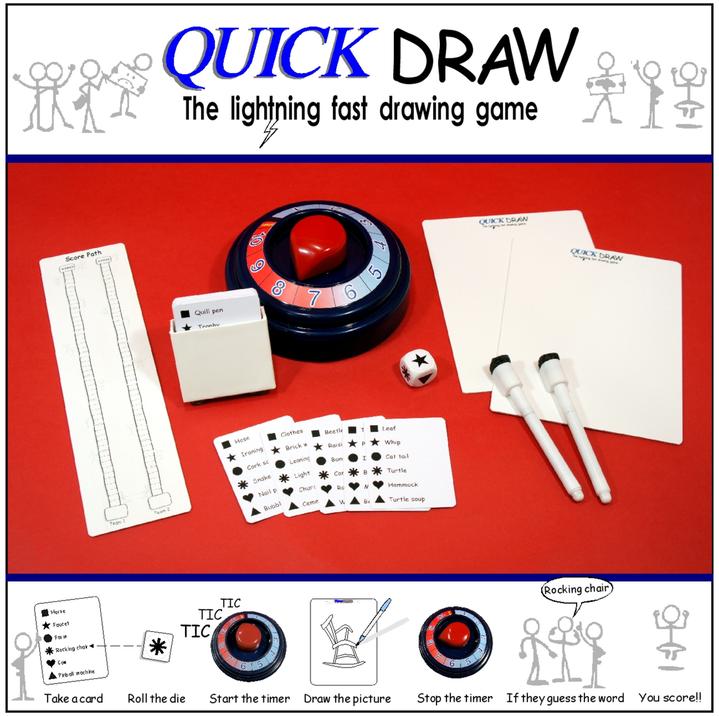
Quick Draw (Picture Panic) (2010) was sold to Scanitoy in 2011 but never produced. During the game, players from two different teams draw a card with a list of images. They roll a die and the word next to the matching shape is what they both have to draw. The timer is started, and secretly they draw as fast as they can, an image that will get memebers of their own team to say the word. When either player feels he/she has drawn enough, he/she stops the timer. That player then shows his drawing to his team. If the teammate guesses the word, the team scores the points indicated on the timer. If the teammate does not guess correctly, the other team has the option of starting the timer back up and continuing his/her drawing or just showing his/her drawing to the team. The team that reaches the finish line first is the winner.
The idea for Quick Draw came from my frustration with how ordinary Pictionary games were played. A team might overhear answers shouted out by the opposing team and correctly guess the answer, even if their team’s drawing was unclear.
Quick Sound
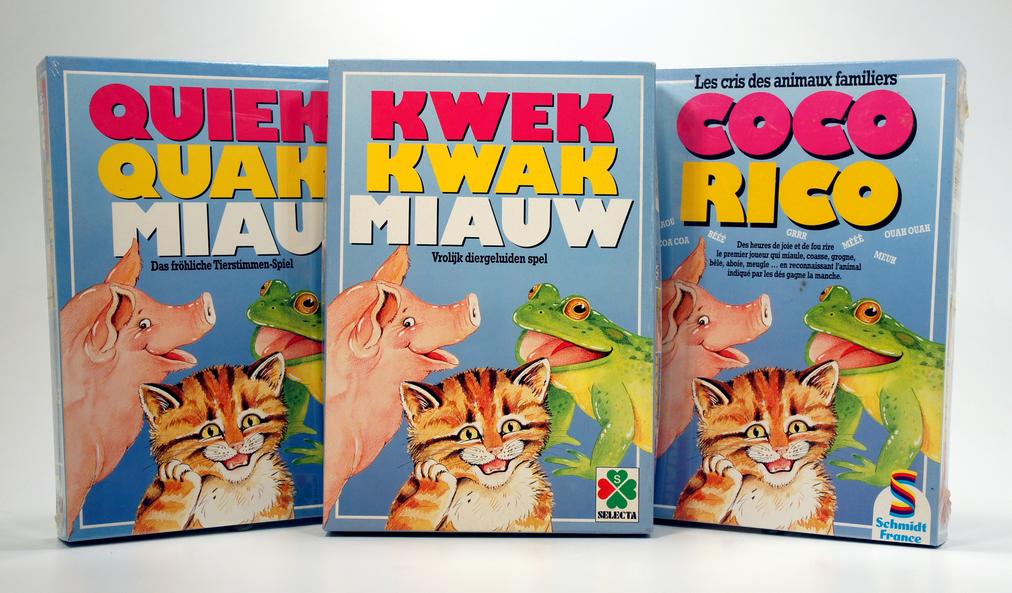
Quick Sound (1986) had 6 different cardboard 3 X 3 grids with either a picture of an animal or an arrow pointing to one of the other squares in the grid that did have an animal pictured. The grid was labeled with three colors across the top and three numbers down the side, so when two dice were rolled the combination pointed to one square on that player's board. The first player to make the animal sound for the square indicated got a chip. The first player with 10 chips was the winner.
Rebus
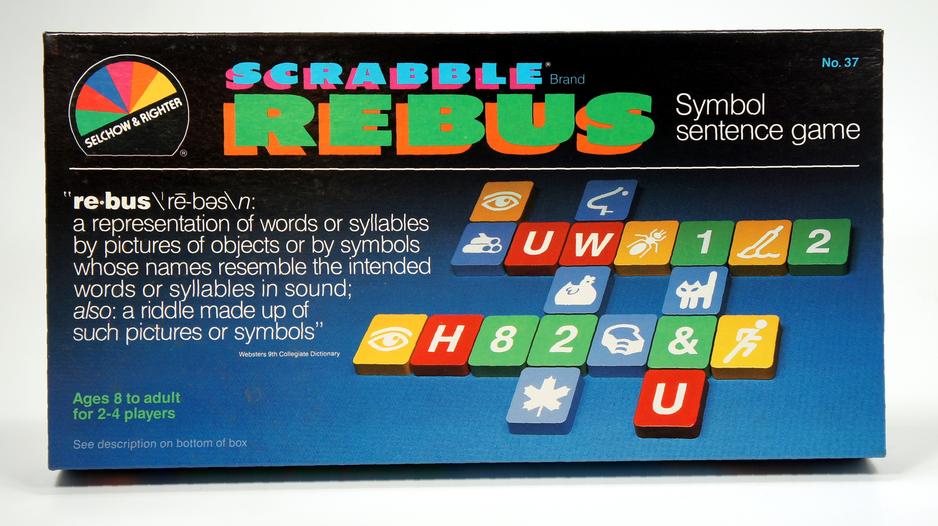
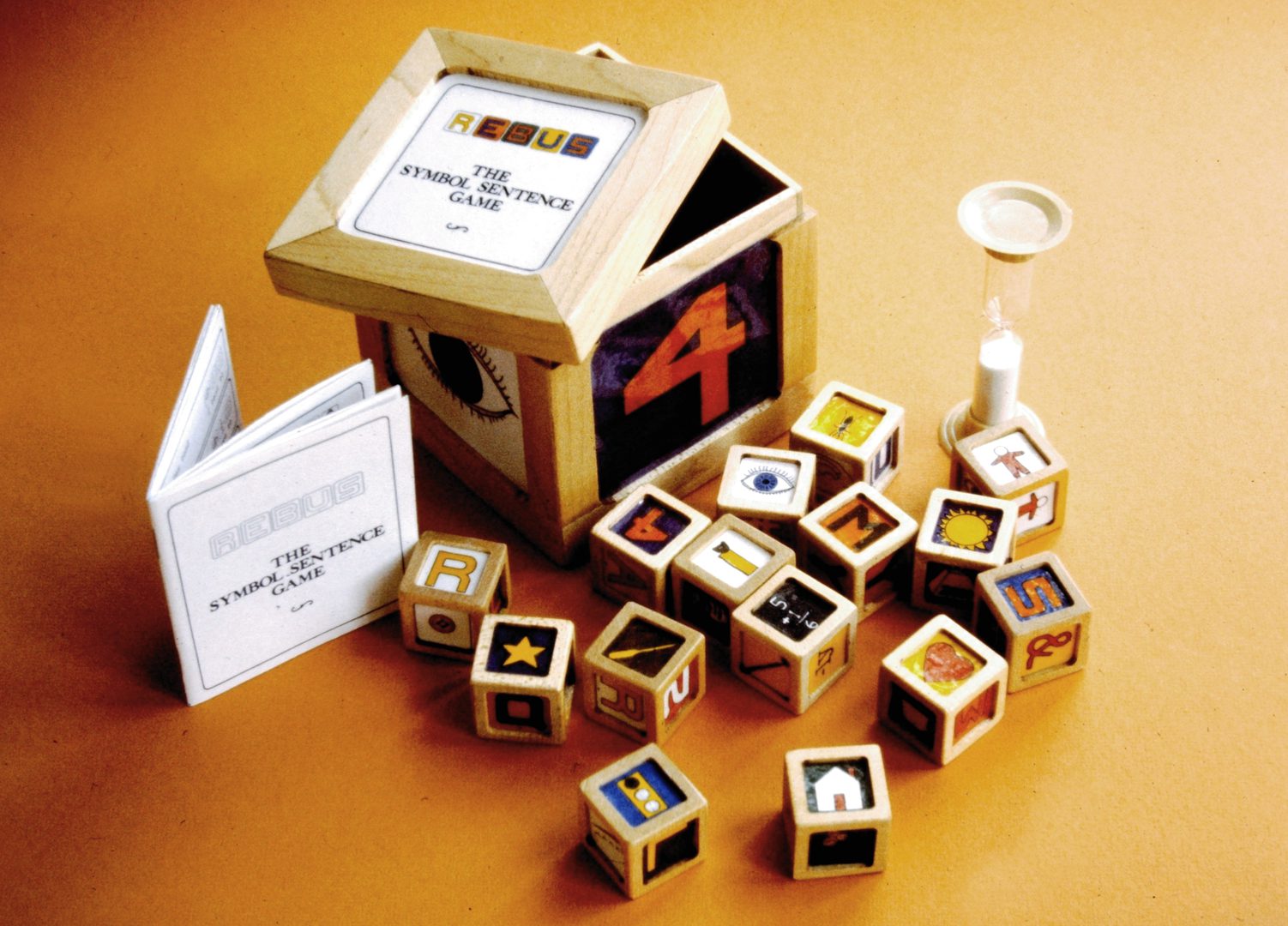
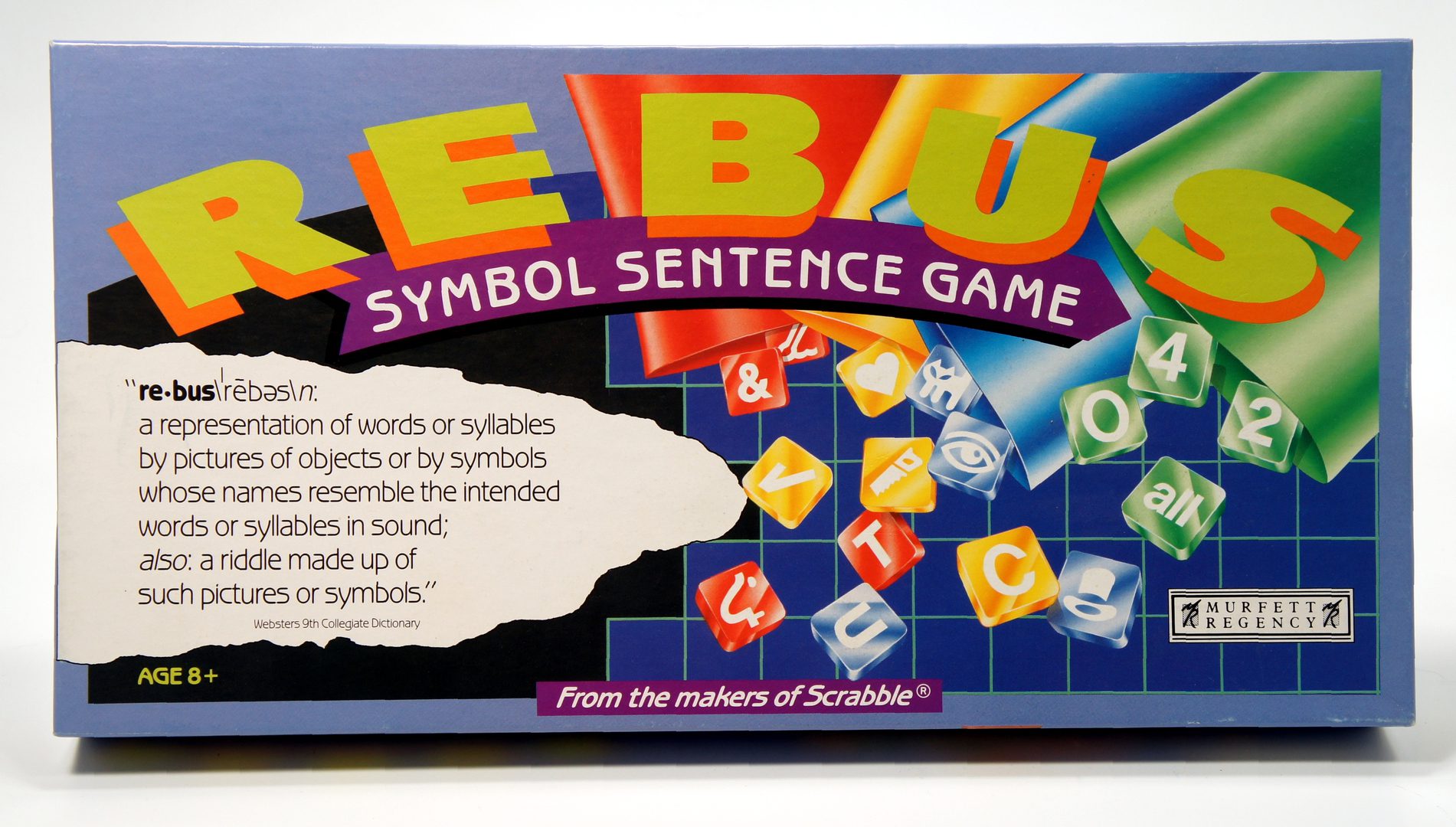
Rebus was invented in September of 1981. It started out as a cube game [see the photo], which was made out of wood, including the storage box. The idea of making it into a tile game was stalled until the solution of drawing different colored tiles from 3 different bags made the game playable. This meant the player would get a mix of nouns and verbs to more easily form sentence rebuses.
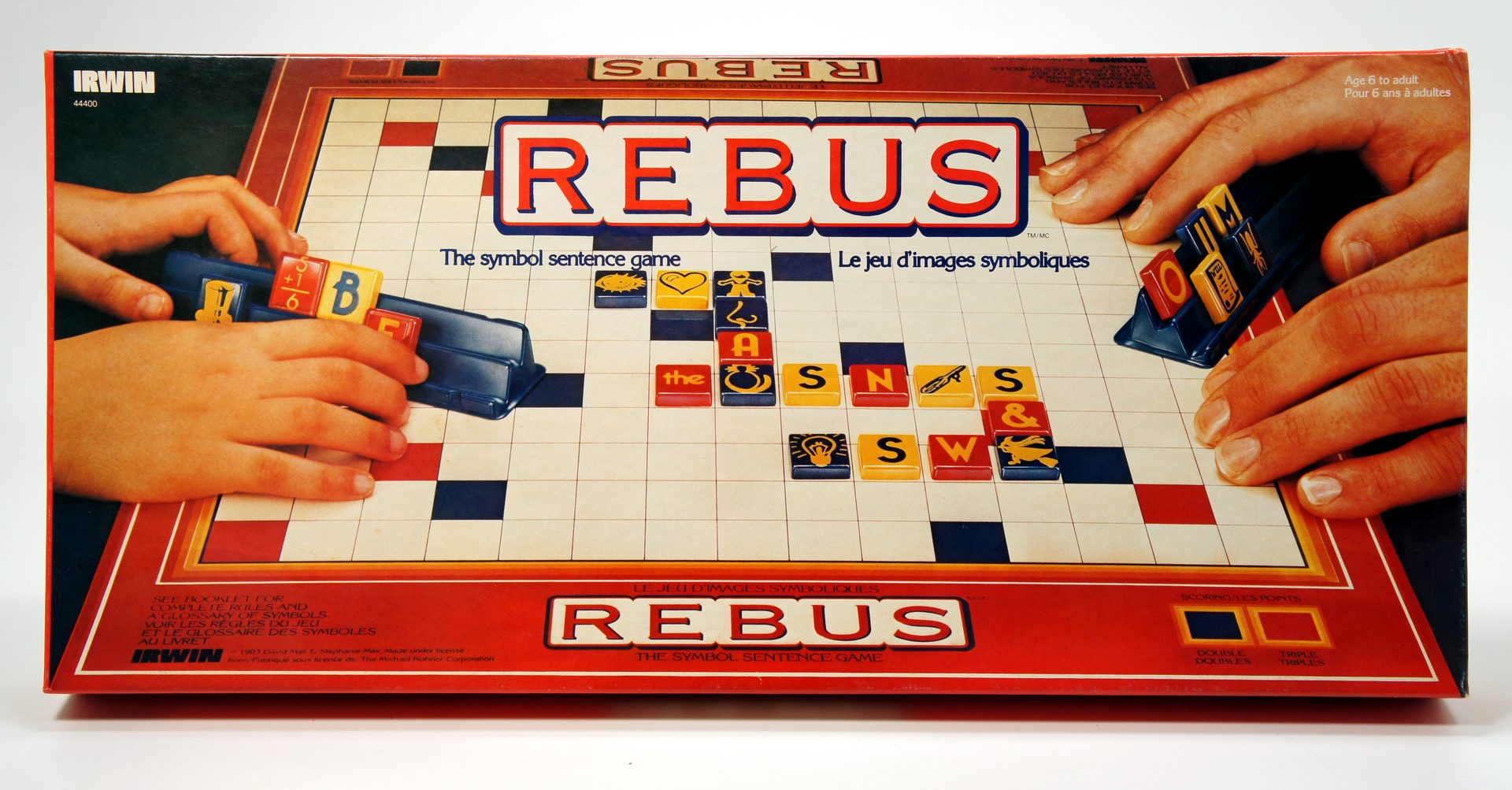
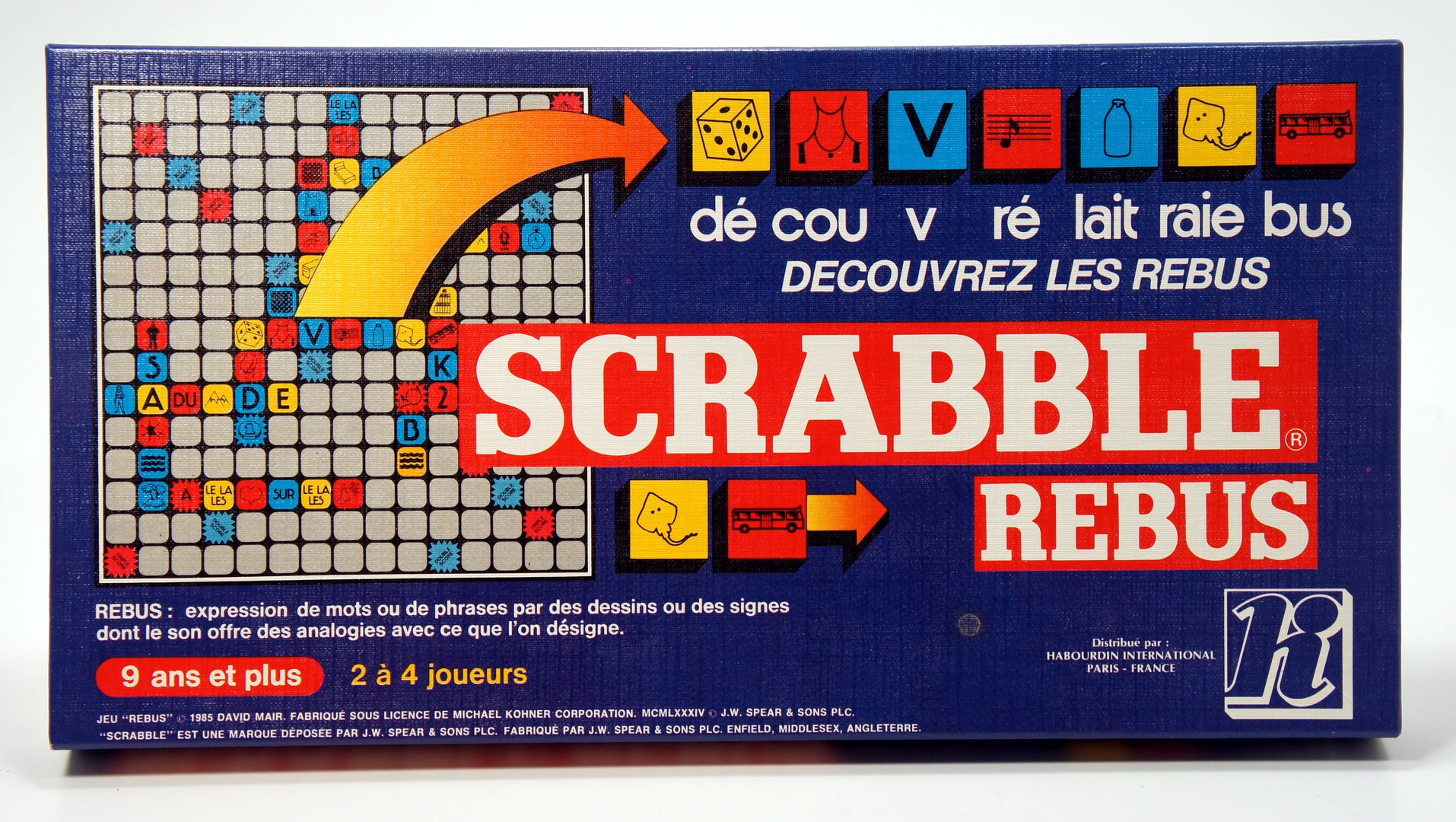
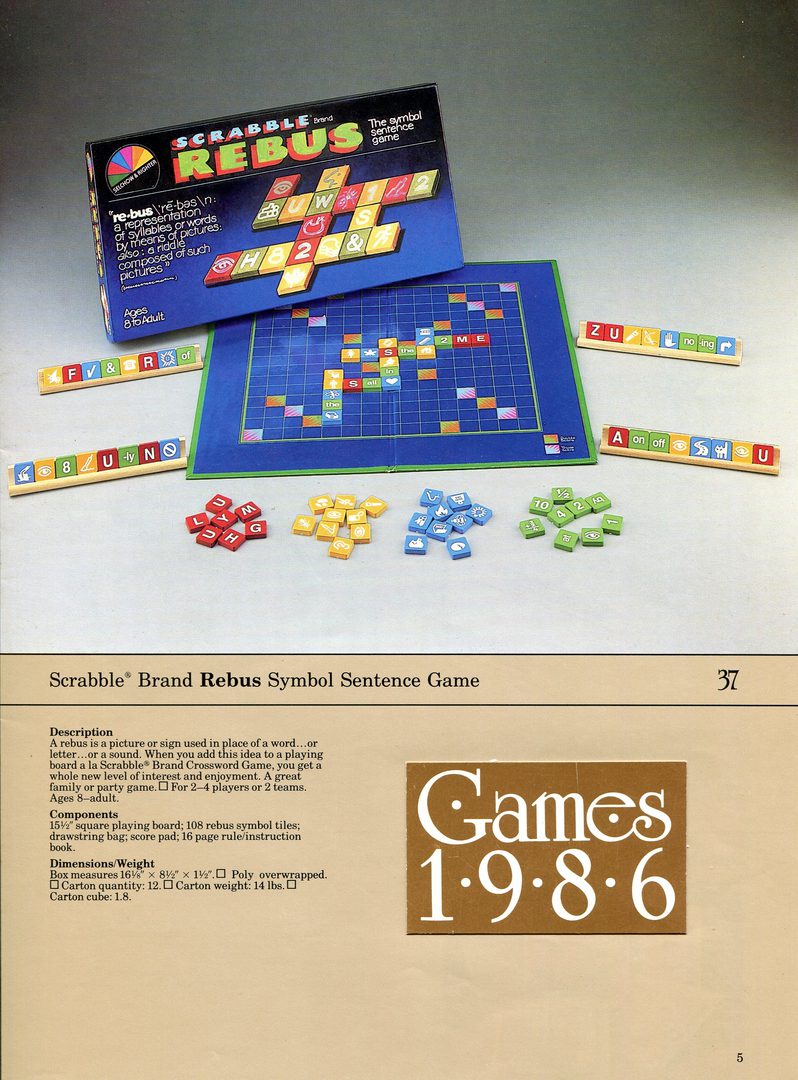
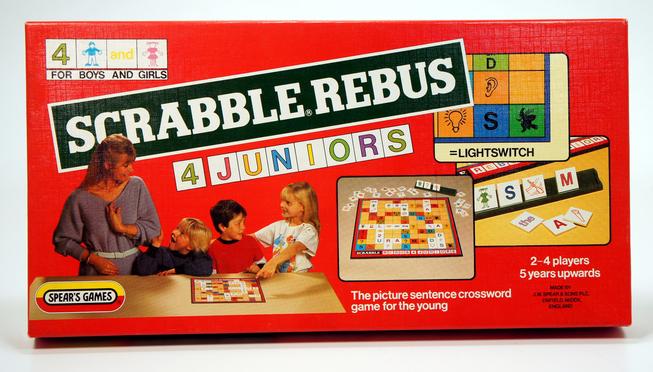
Scrabble Rebus 4 Juniors
Scrabble Rebus 4 Juniors (1984) was the son of Scrabble Rebus. Like Scrabble for Juniors, it was a simple game of matching cardboard tiles to the pre-printed rebuses on the board.
The Restaurant Games
The Restaurant Games (1998) was sold to Irwin Toys in Canada with the idea of using them as games that could be sold to various restaurants and fast food chains. The customers, while waiting for their food, would play with them at the tables, and could purchase them too. Models were made and the project was dropped, and a short time later Irwin went out of business. The series had four different items:
1. a slide puzzle that could be changed to 3 different sides making 3 different puzzles.
2. a Food Flip game where a dial was turned to indicate what meals on a plate went in what location, and then the player would flip the discs with his/her finger tips to make that happen.
3. a kaleidoscope game where one of two images on a slide (foods or desserts) was slid in place and the barrel was turned to one of 3 color coded areas in an attempt to match an image printed on the back of the card.
4. a Finger Foods game where the player would try to find the matching images without looking and using only the finger tips.
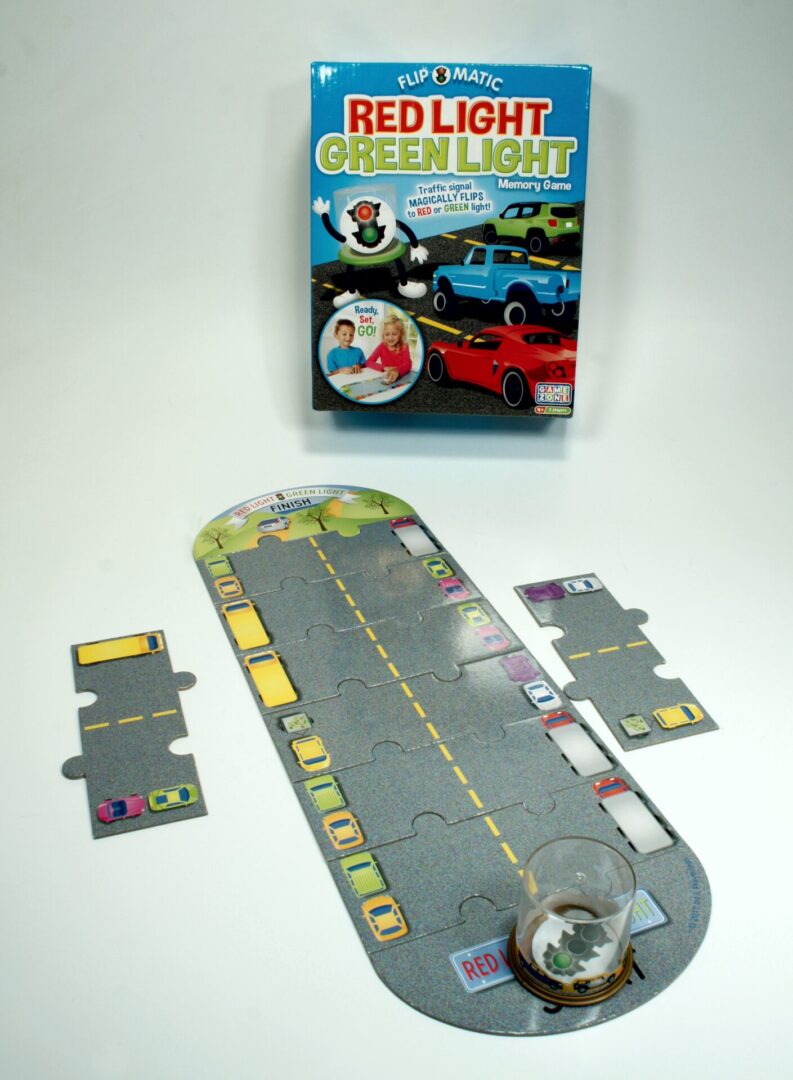
Red Light Green Light 2016
Sold to International Playthings. In this game, the players try to advance the domed playing piece across a board where each card has a hidden magnet on one side. When the playing piece crosses over a hidden magnet, a disc flips over inside the dome, stopping the play for that player.
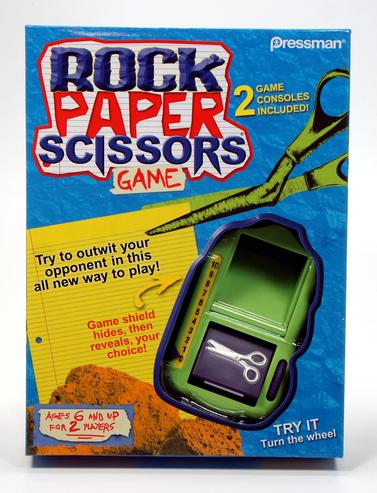
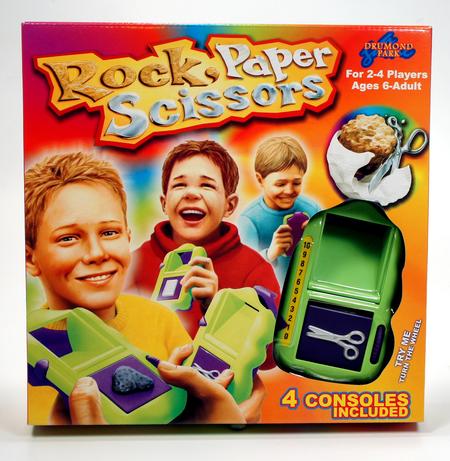
Rock, Paper, Scissors
Rock, Paper, Scissors (Jan- 2004) was based on the popular hand signs game. There were 2 and 4 unit games sold. Players choose rock, paper, or scissors behind a plastic dome, and then reveal their choices at the same time. The results are compared and players slide the scoring arrow up 1, 2, or 3 places depending on how many players were beaten.
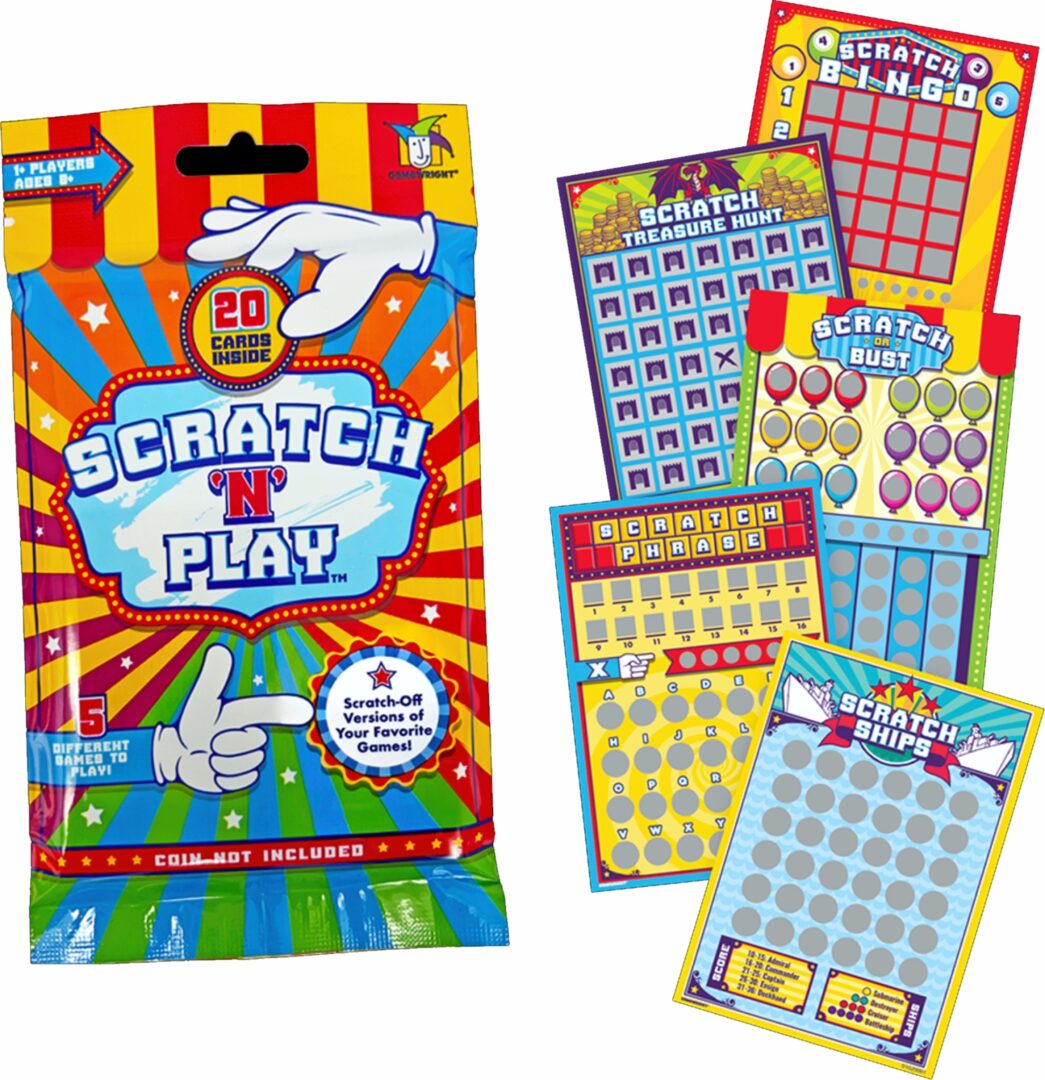
Scratch “N” Play 2022
Sold to Gamewright in the US. It’s a series of five different scratch off lottery-like games that can be played by an individual. There’s a battleship-like game, a treasure hunt, a bingo game, a game like 21, and a word phrase guessing game included in each package of 20 cards.
Sealed With a Kiss
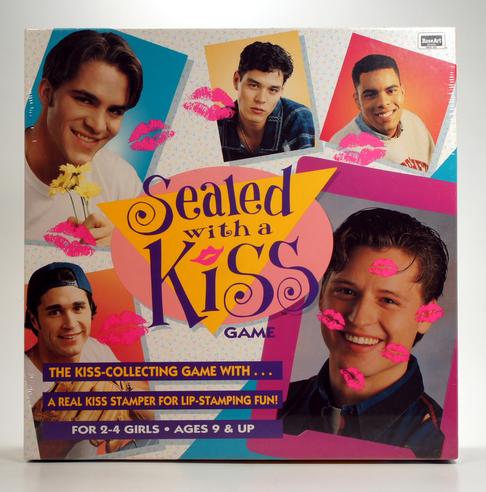
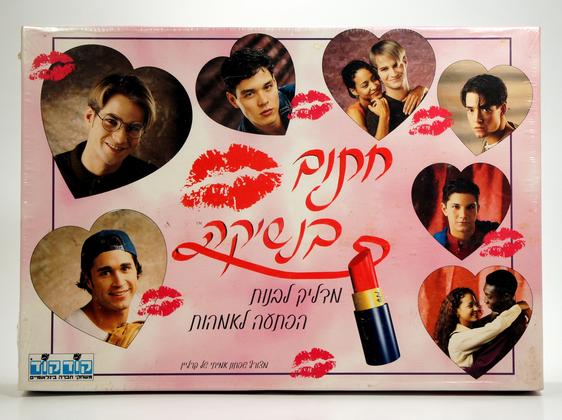
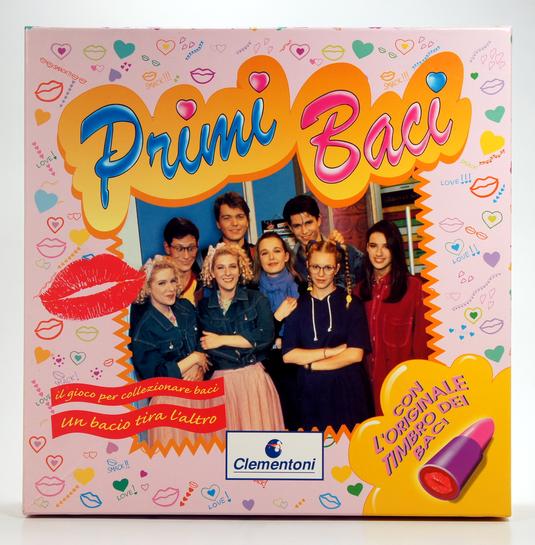
Sealed With a Kiss (Feb-1993) is a game that uses a rubber stamp of a kiss imprint. During the play of the game, the players collect kisses on their “boyfriend’s” picture. Depending on what a player spins, kisses can be wiped off or a player must trade pictures with another player. The first player to collect 5 kisses wins the game.
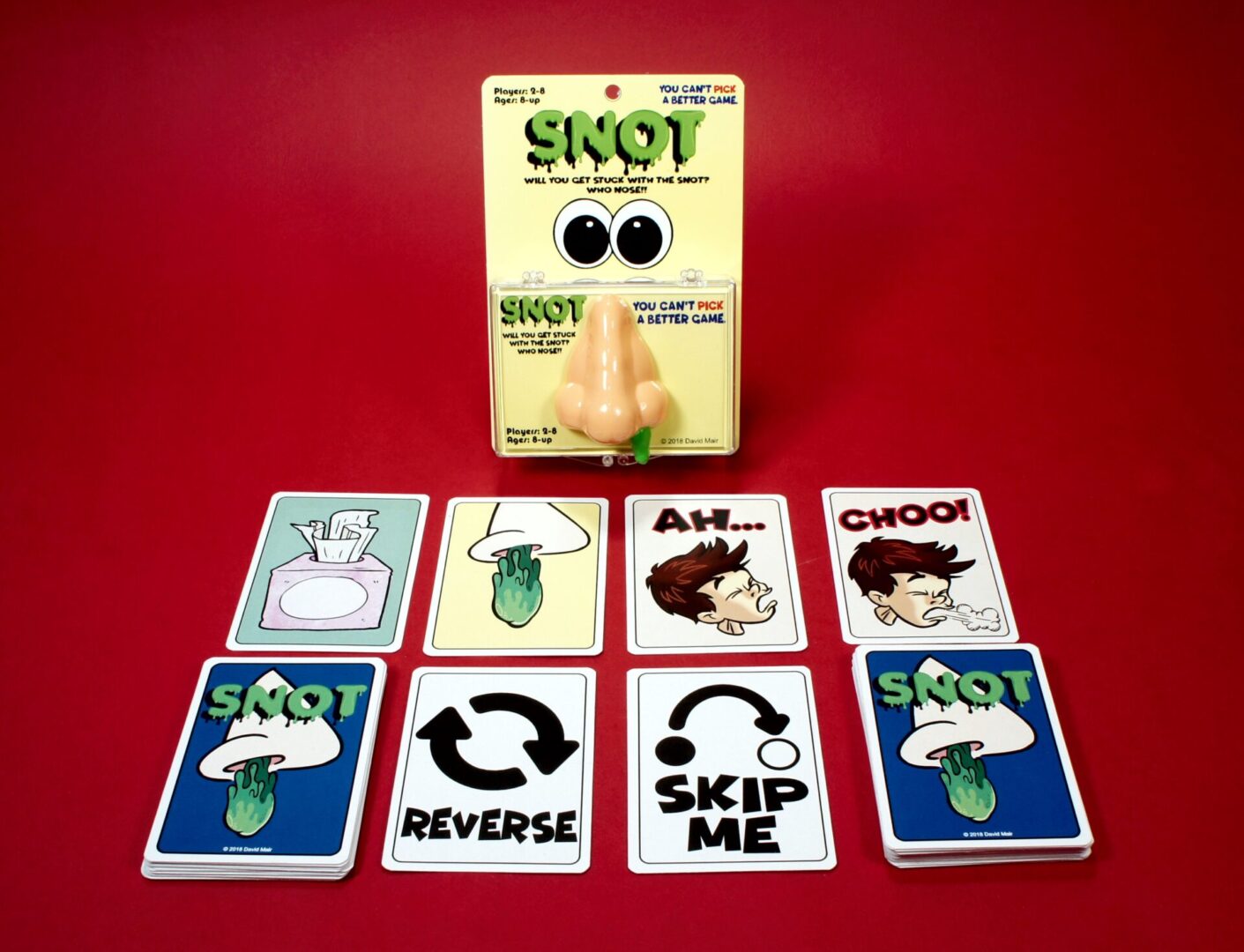
Snot 2019
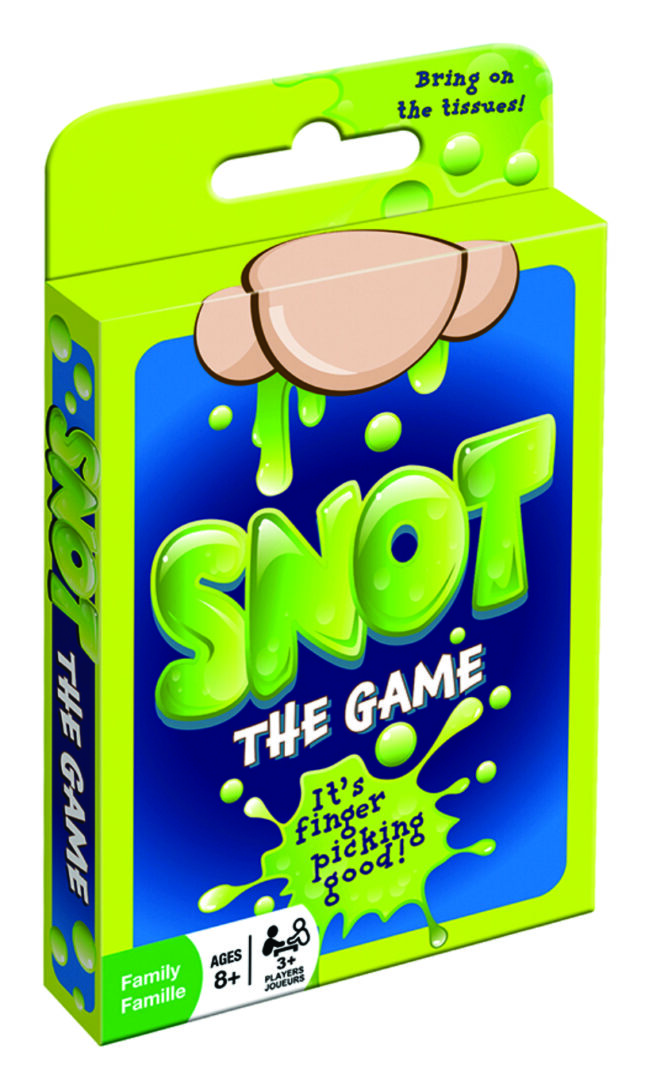
Sold to Cheatwell in the UK and Outset Games in Canada. The game play involves playing out sequences of cards. You play Aha!, then a Choo, then a Snot and then a Tissue, in that order. First player to get rid of all their cards in their hand wins the game.
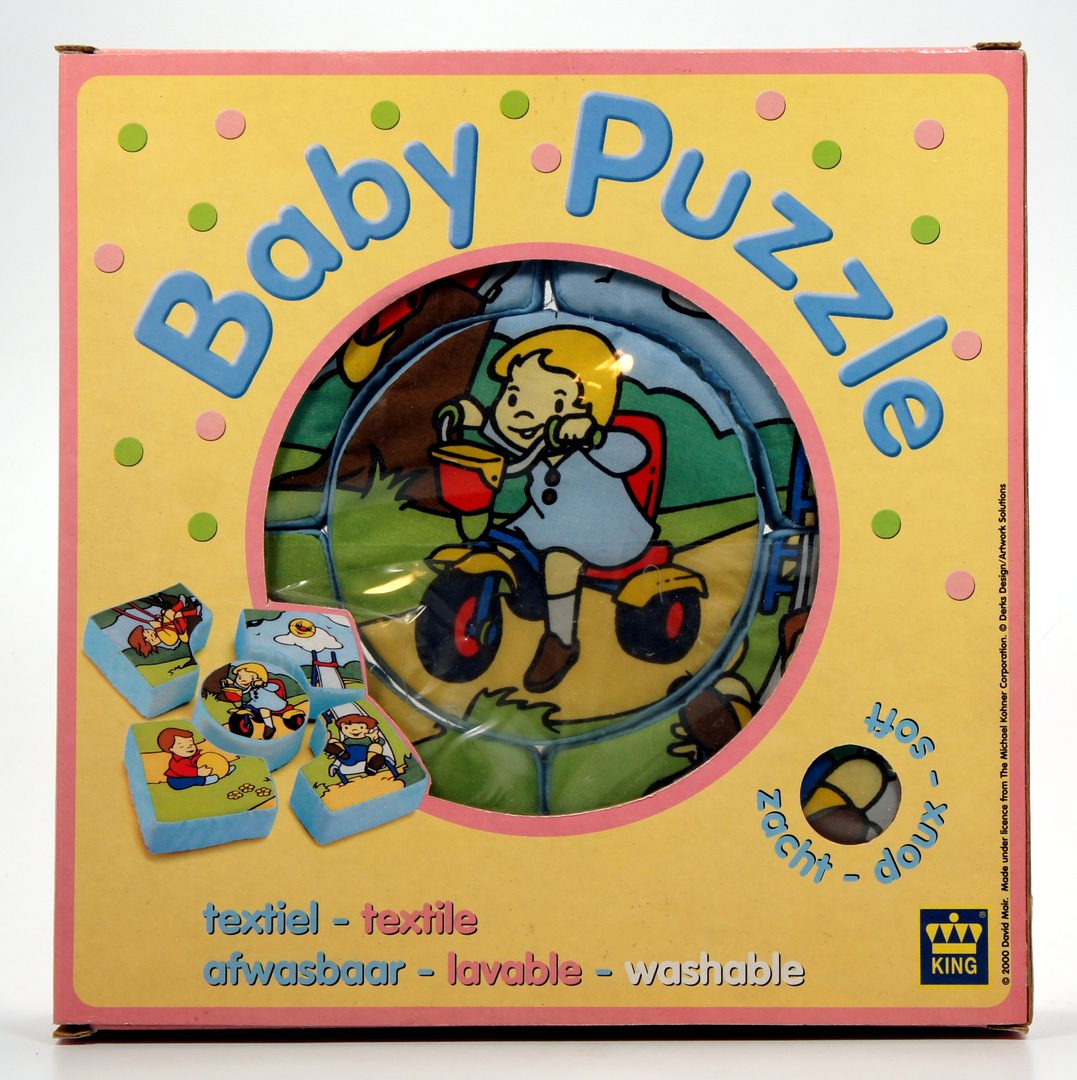
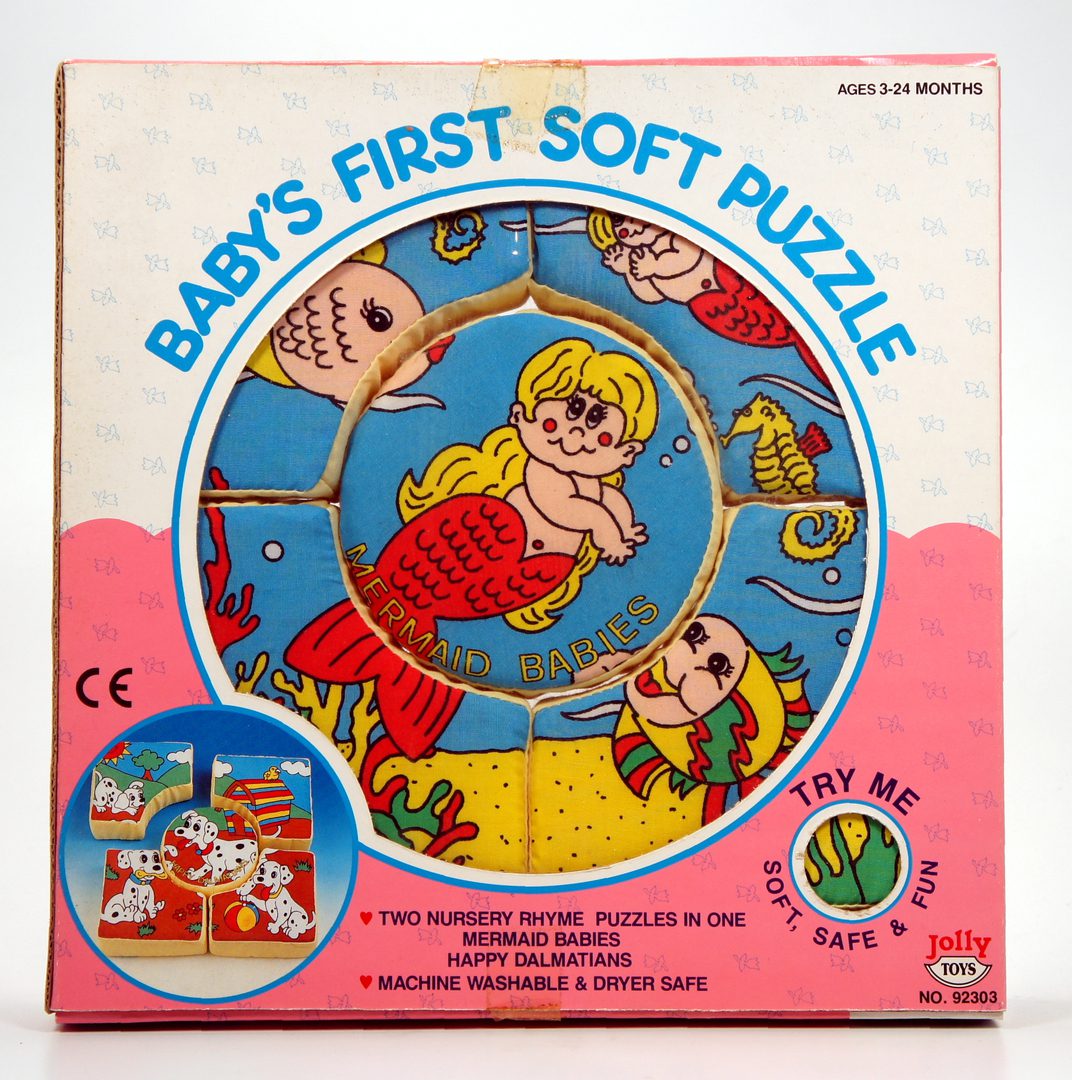
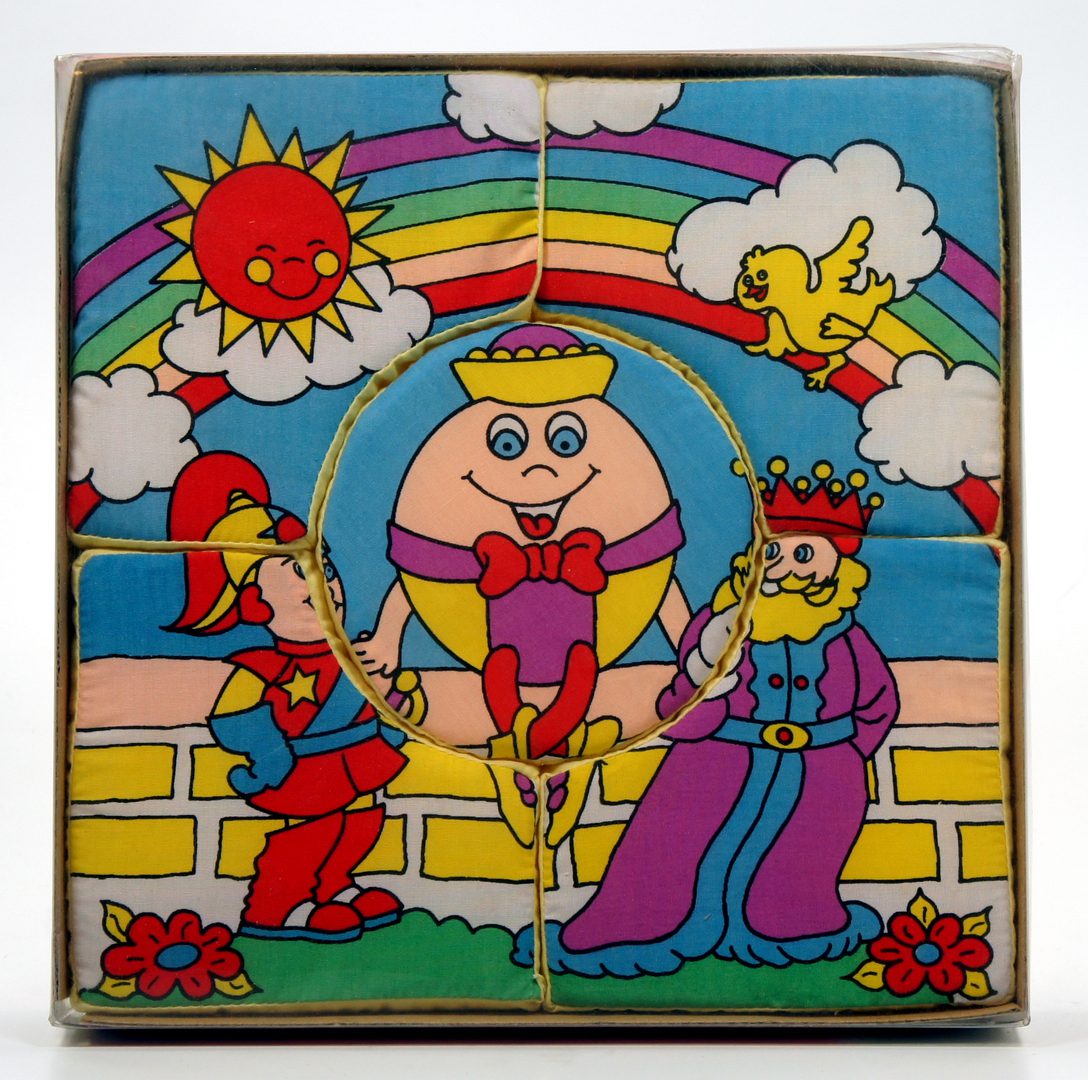
Soft Puzzles
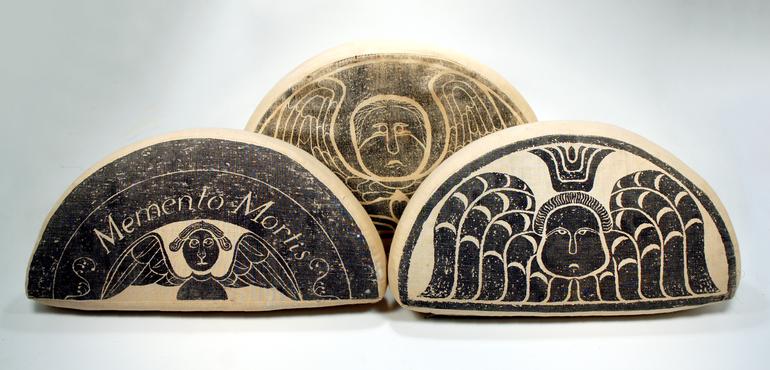
Soft Puzzles (1991) was, in part, based on an idea I had and executed in the early 70's. I had produced silk screens of grave stone rubbings that I had done and printed them onto fabric. I then took the printed fabric to a pillow maker in Passaic, NJ and had dozens of these grave stones pillows made, under the company name, "Graven Images". Soft puzzles were a version adapted for children.
Sound and Seek
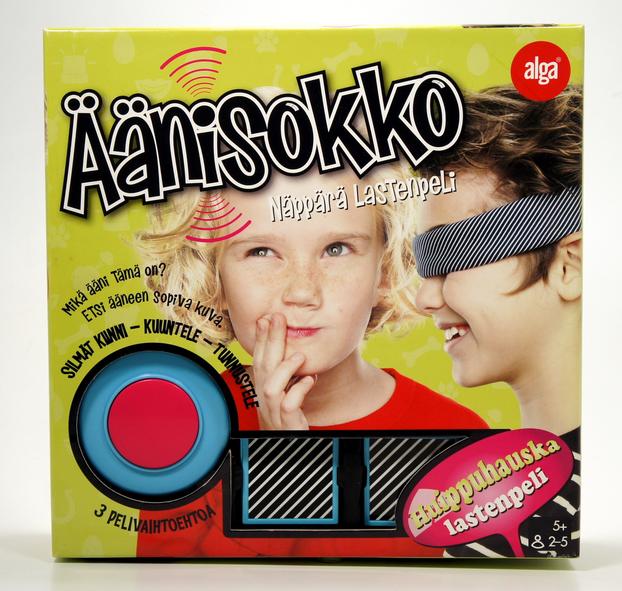
Sound and Seek (Feb 2009) used three of the senses: sound, touch, and sight. The players listen to a random sound, then try and find a matching picture by using their finger tips on raised images on the underside of the tiles. Alga's version, against my protest, included a "whoopee cushion" sound and image. The image on their box has the boy blindfolded, which has nothing to do with the play.
Spin-O-Matic
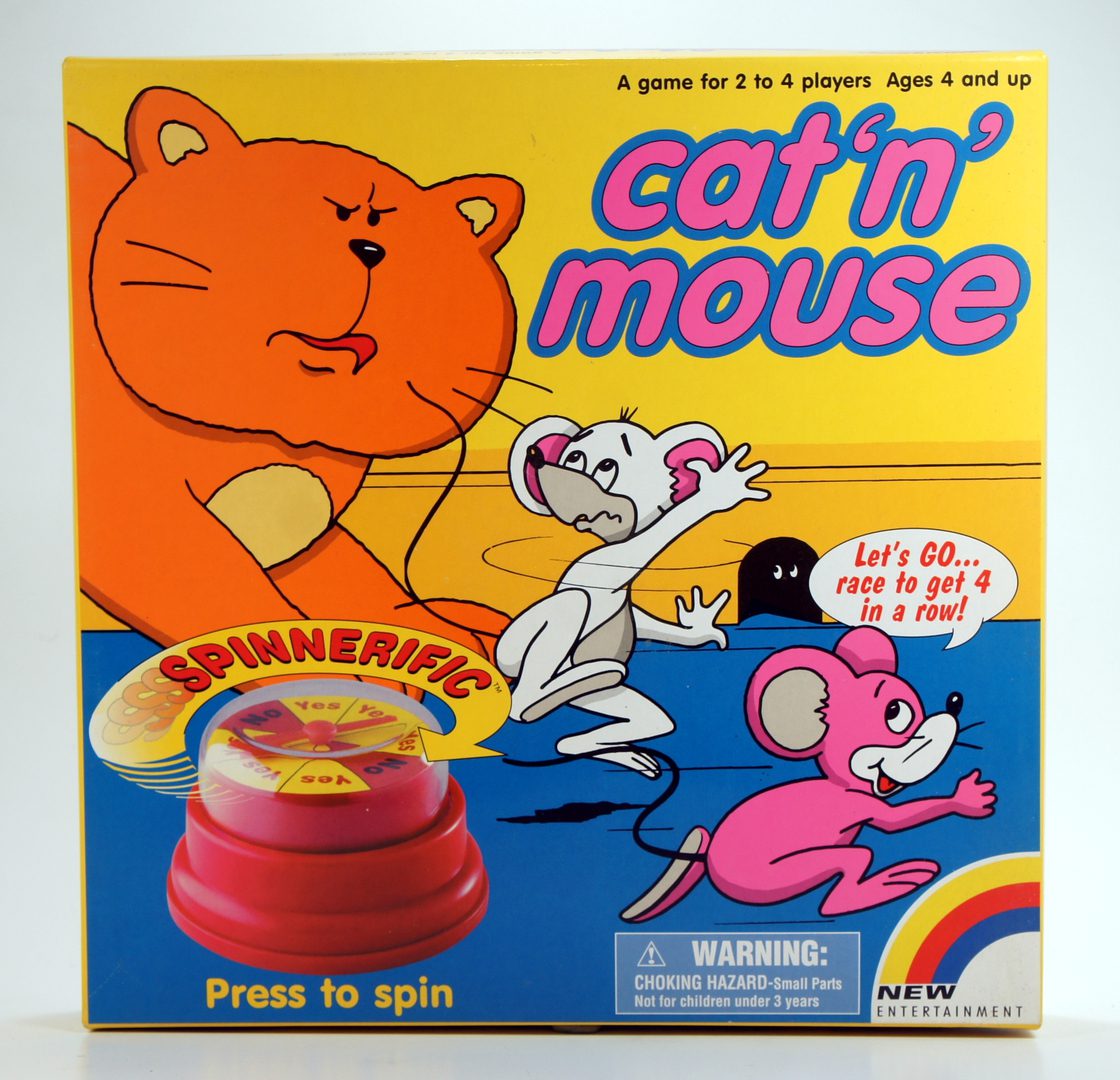
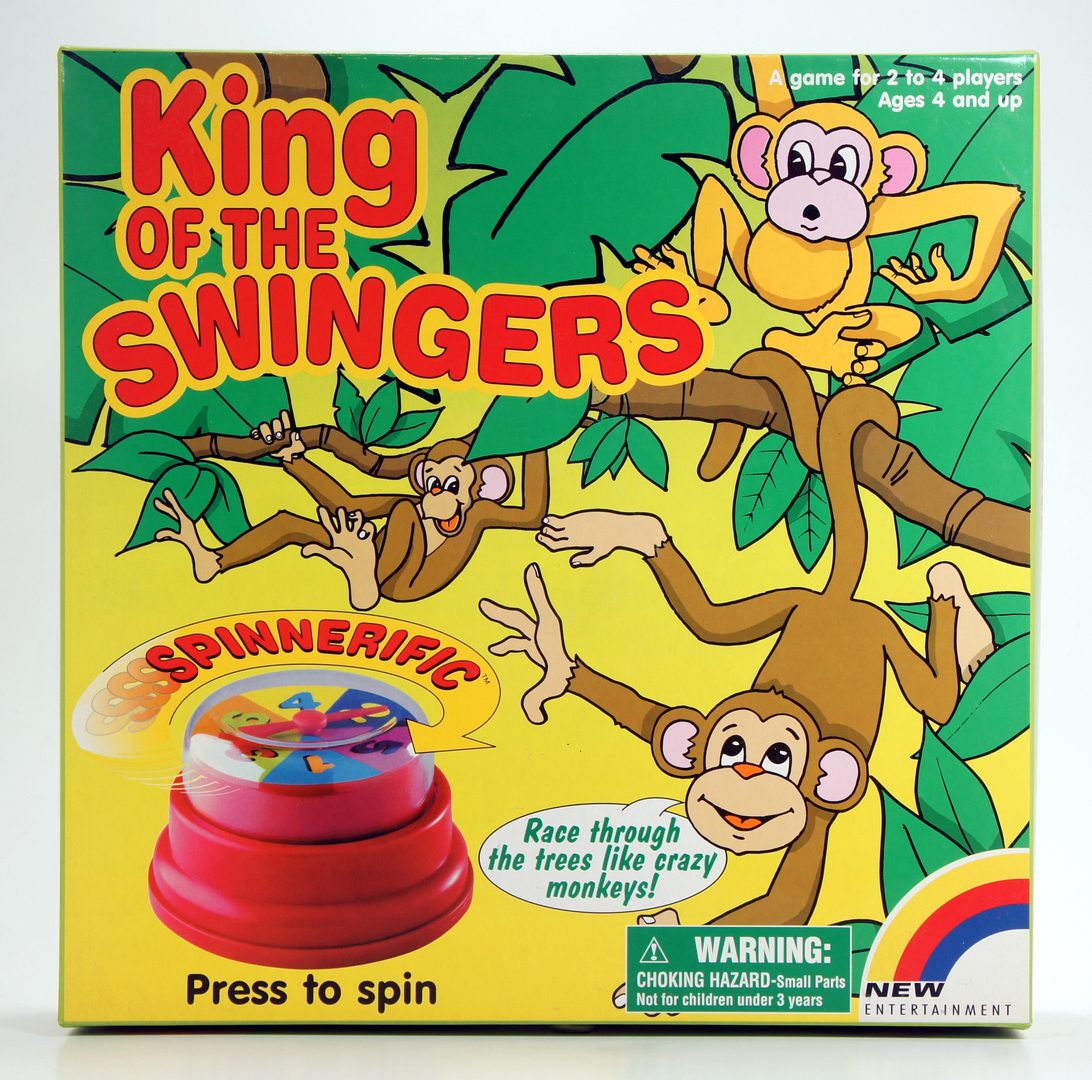
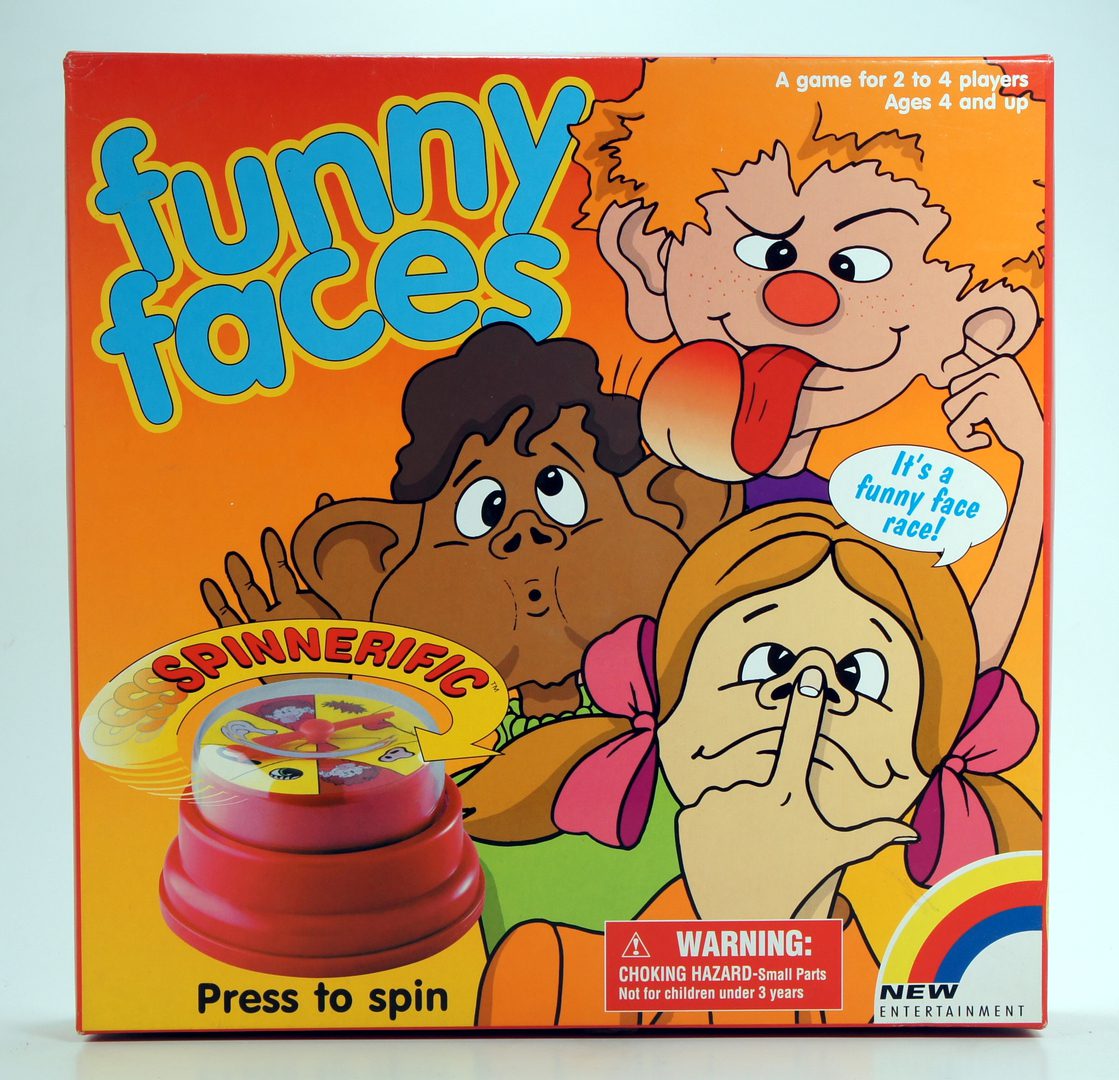
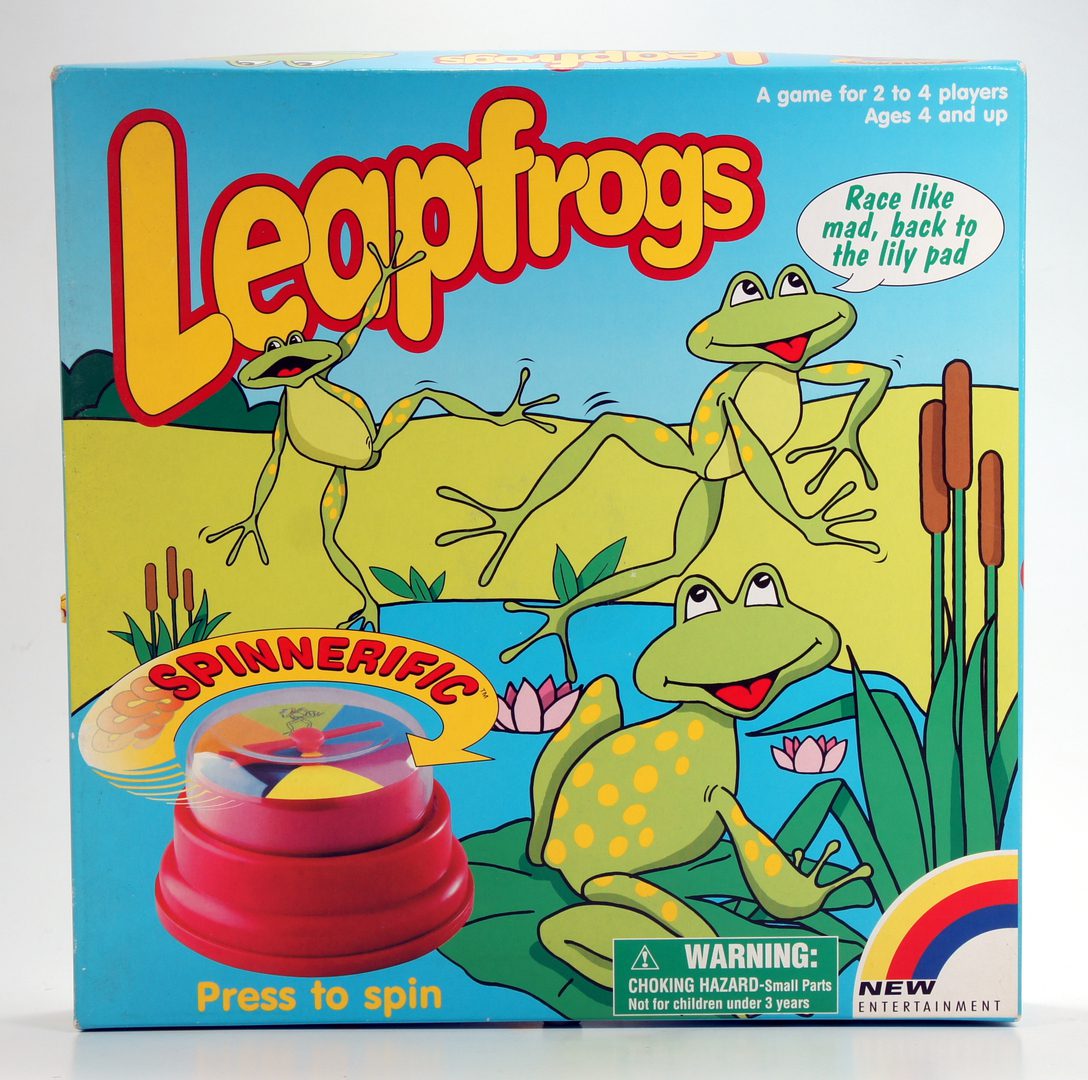
Spin-O-Matic (patented Nov. 27, 2001 -Patent # US 6,322,072 B1) was based on a suggestion that Jim Winslow's wife, Dory, had made to Jim. She said there should be a way to make a spinner that kids could use without having it hit their fingers on the way around. He mentioned it to me and I designed a mechanism that would accomplish just that. It has been used with many different items over the years.
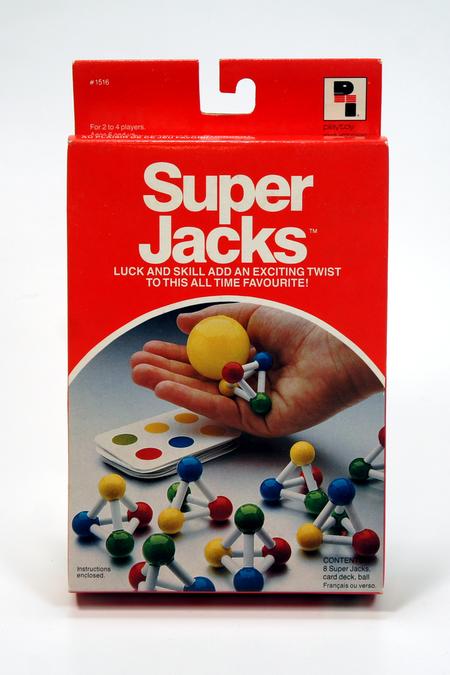
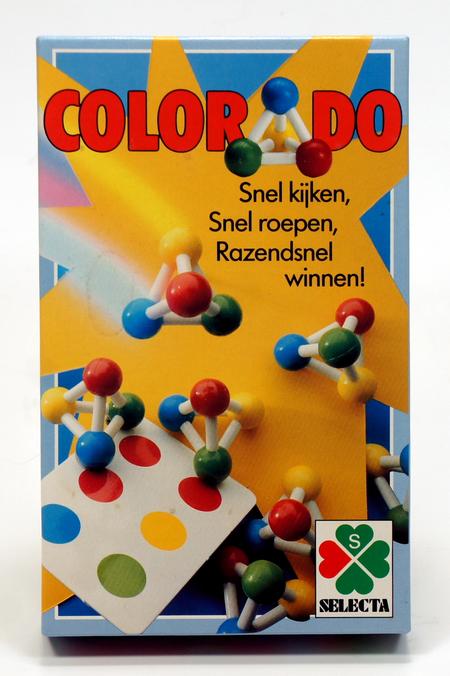
Super Jax
Super Jax (4-1988) is based on the game of jacks. with the 6 pronged jack with two sharper points and four with small balls on the end. The old 6-pronged jack with two sharp points was replaced with a tetrahedron with 4 different colored balls on it. This was done to stop the sharp points from poking into children’s hands, which I remembered experiencing as a child.
Talk About
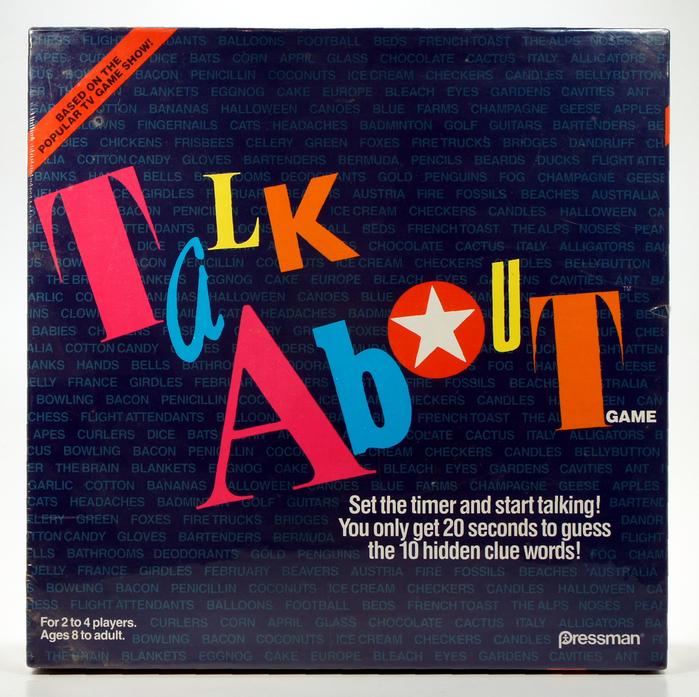
Talk About (1989) was a game for which Pressman hired me to design the game play. An existing TV game show was used as the basic model for the game. They had gotten the rights to make the game just before Toy Fair and needed the working model to use for their presentation. Each player takes turns talking about a given subject, in which 10 key words must be said to get a point for each. A small plastic sliding door on the card holder covers each word as it is said.
Team of Rivals
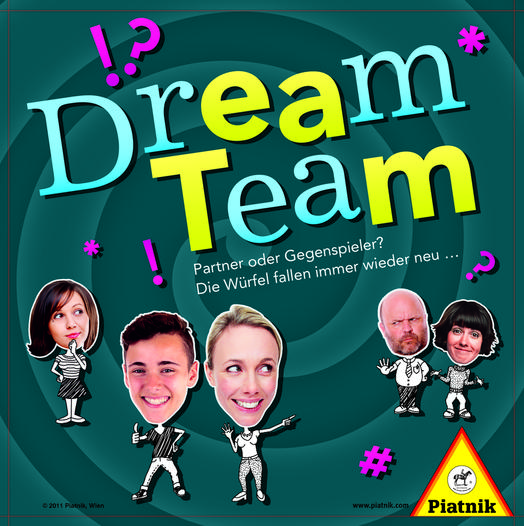
Team of Rivals (1-2013) was co-invented with Tony Vadasz. The game started out as "Touch and Know" where teams were formed differently for each round using a touch sensitive electronic unit, but it cost too much to manufacture so was not taken. I then had the idea to use dice to determine the teams for each round. At times, a given player could be the only member of his/her team. Once the teams are formed, a multiple choice trivia question is asked. The teams must agree on an answer, and each member of the team, that voted correctly, advances along a game track. First player to reach the finish is the winner.
Tetra Yatzy
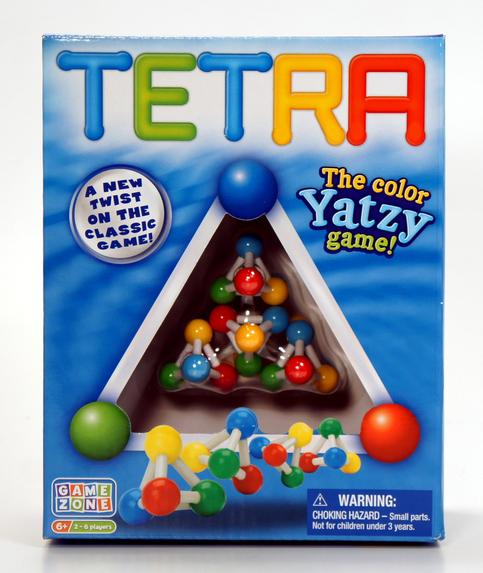
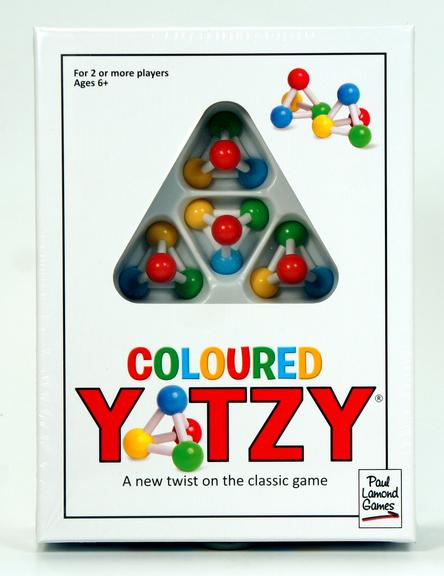
Tetra Yatzy (Janary of 2013) [available on Amazon] is a game that evolved from the gameSuper Jax. It's sort of a combination of jacks and Yahtzee. The players take turns throwing the 8 tetrahedron shapes up to three times. The uppermost colored ball is used to form combinations that are scored like Yahtzee: 4 and 3, 5 of a kind, and of course all 8 the same color, for a Yatzy!
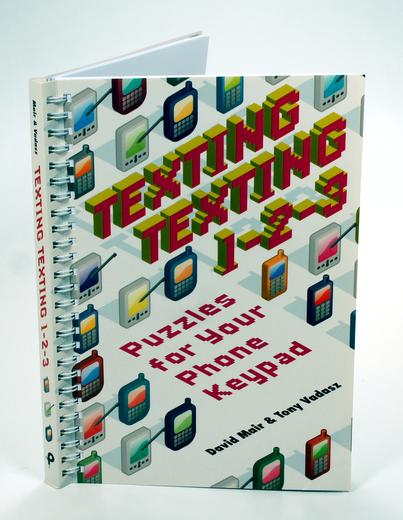
Texting, Texting, 1, 2, 3
"Texting, Texting, 1, 2, 3" (2009) is a book that co-inventor Tony Vadasz and I designed. We were cooperating on a project using the idea of letters being represented by keypads numbers. For example, if you wanted to make a "B", you touched the "2" on the keypad twice. The table top game just didn't work well, and we stopped the project. I then realized that we were working in the wrong medium, so, instead, we created a book of puzzles that used a keypad to solve them. The book did not sell that well, in part, because cell phone keypads changed, and the old system became obsolete.
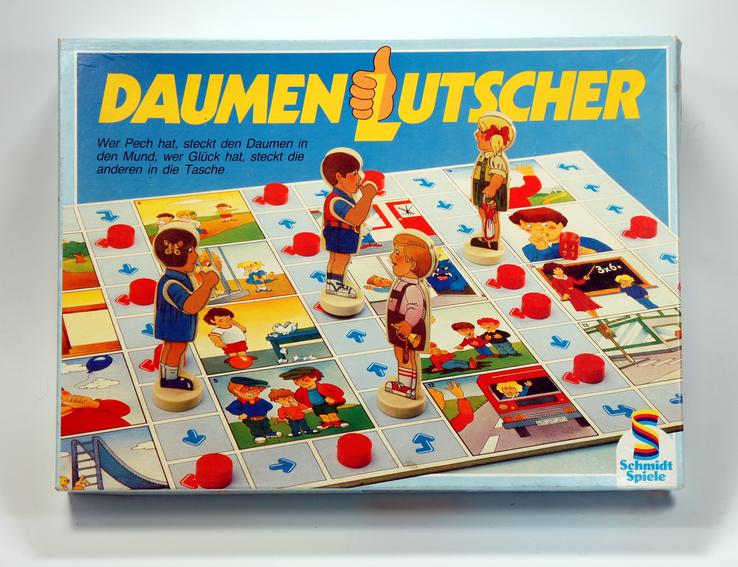
Don't Suck Your Thumb
Don't Suck Your Thumb (Dec. 1986) This game was an idea suggested by my daughter Nadja, who was a thumb sucker at the time. During the play of the game, the playing pieces land on stressful situations and the thumb would go into the mouth where the player would be stopped until spinning a 1, 2, or 3 on his/her next turn. The winner was the first player to reach home.
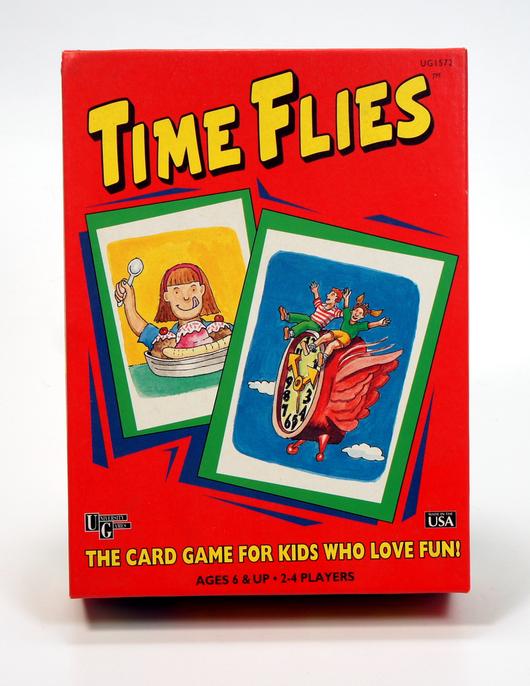
Time Flies
Time Flies was invented in 1995. It was a positive version of Insomnia, rather than have the negative experience of losing sleep, Bob Moog at Universal Games explained to me about their changes to the game. It didn't play all that well.
The Timer Games
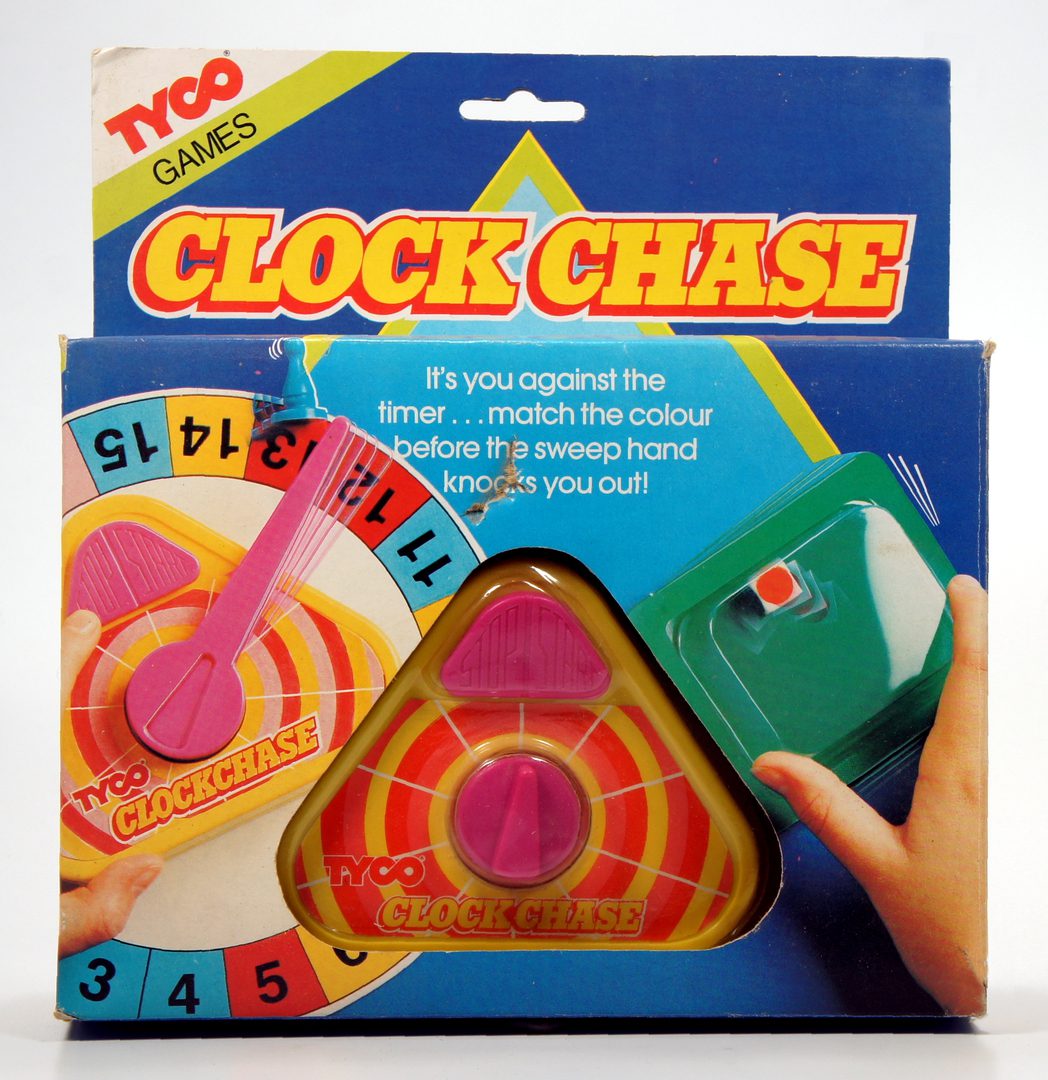
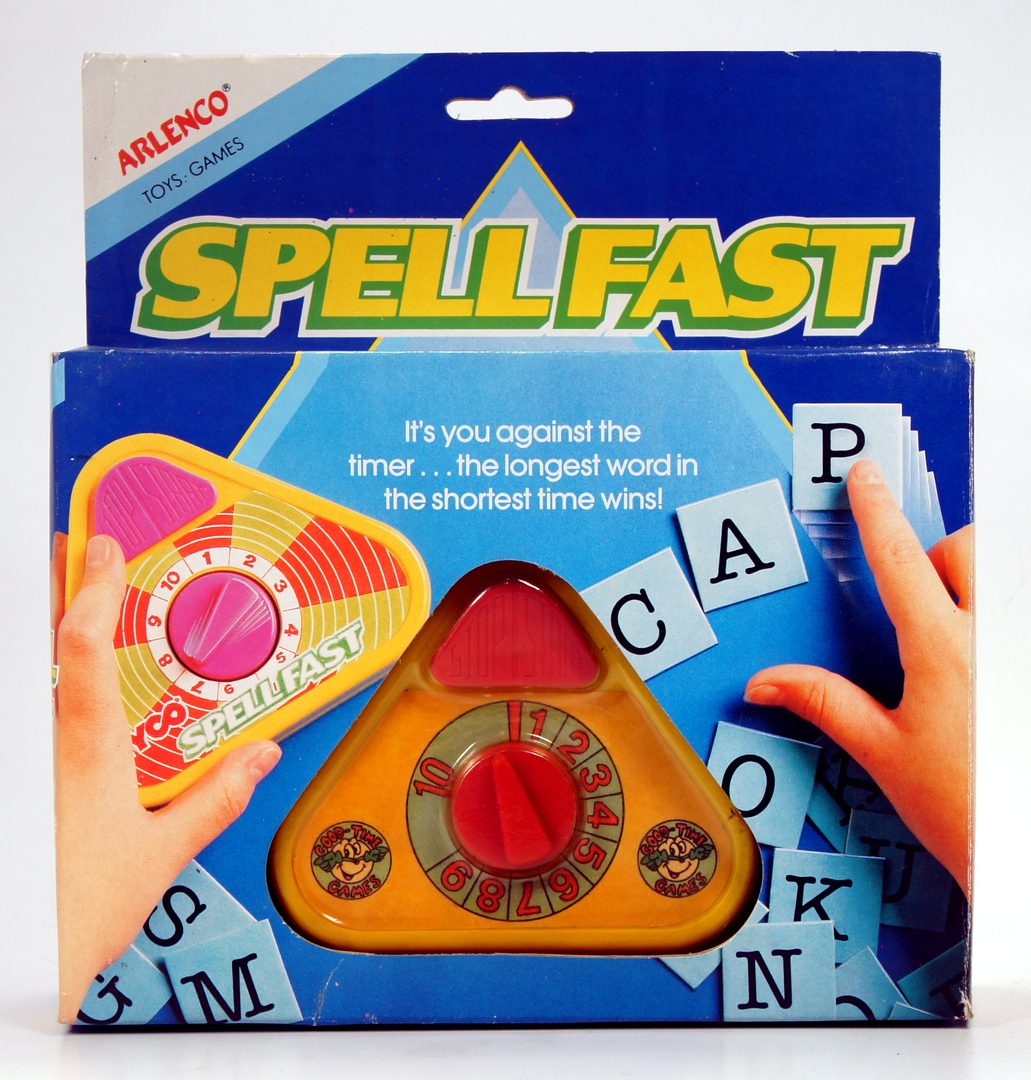
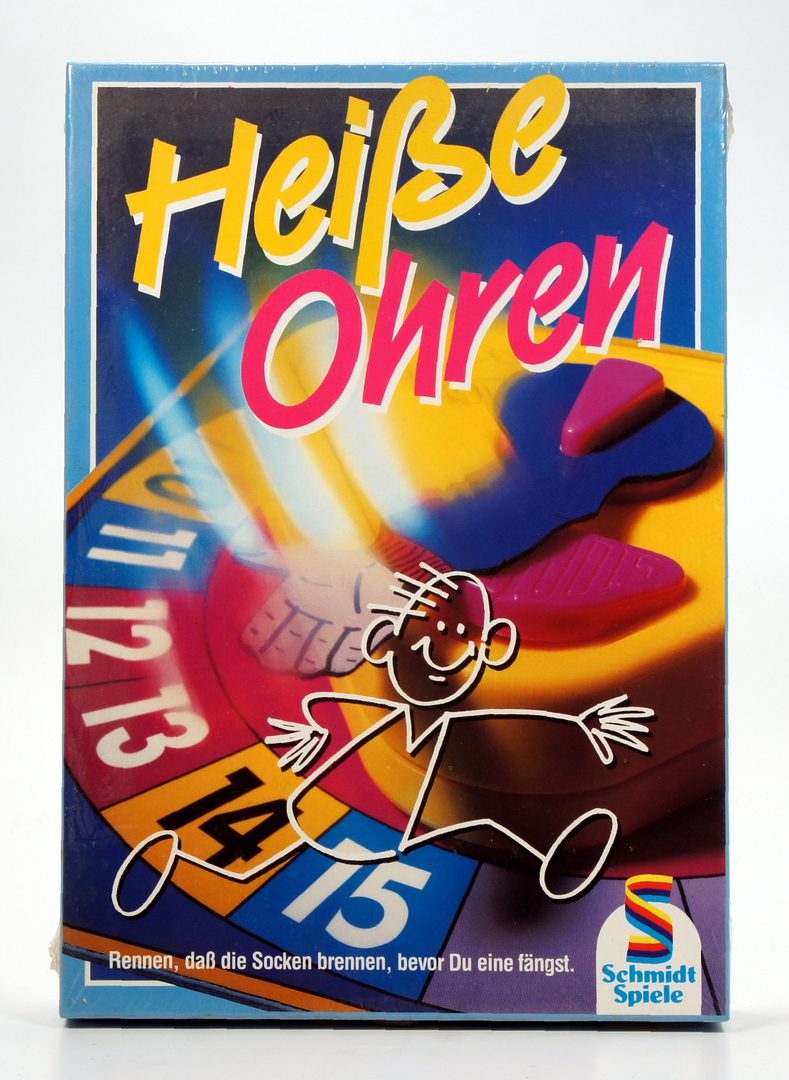
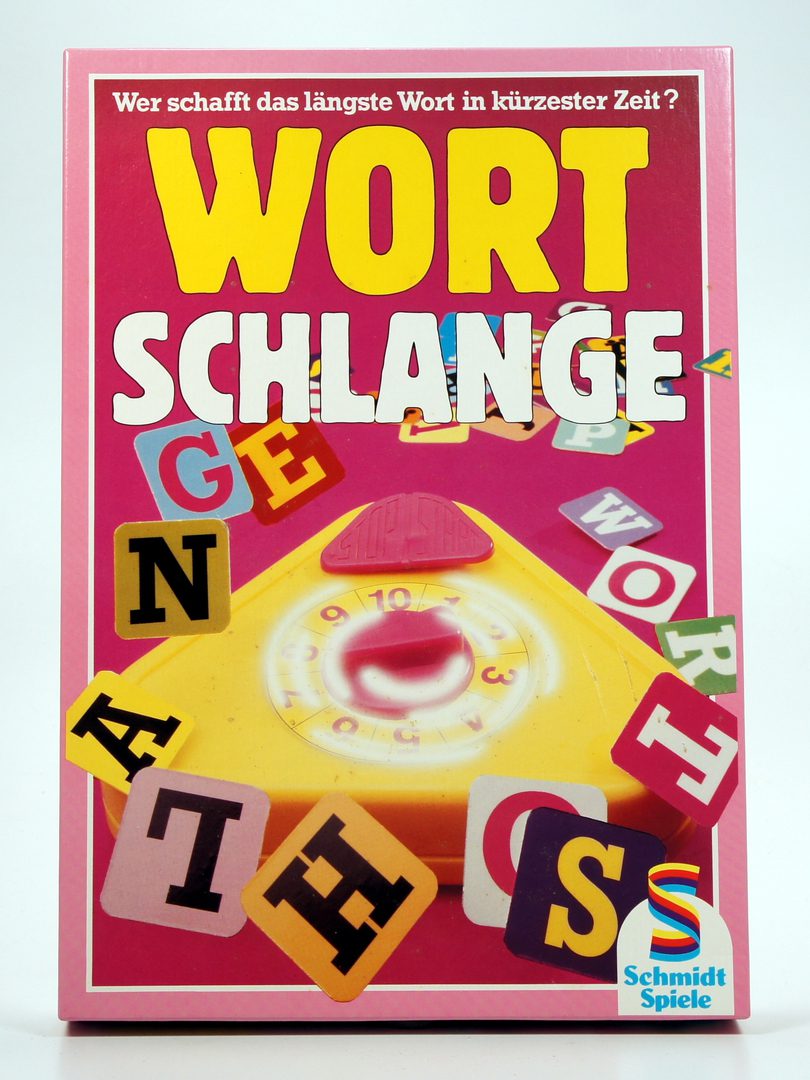
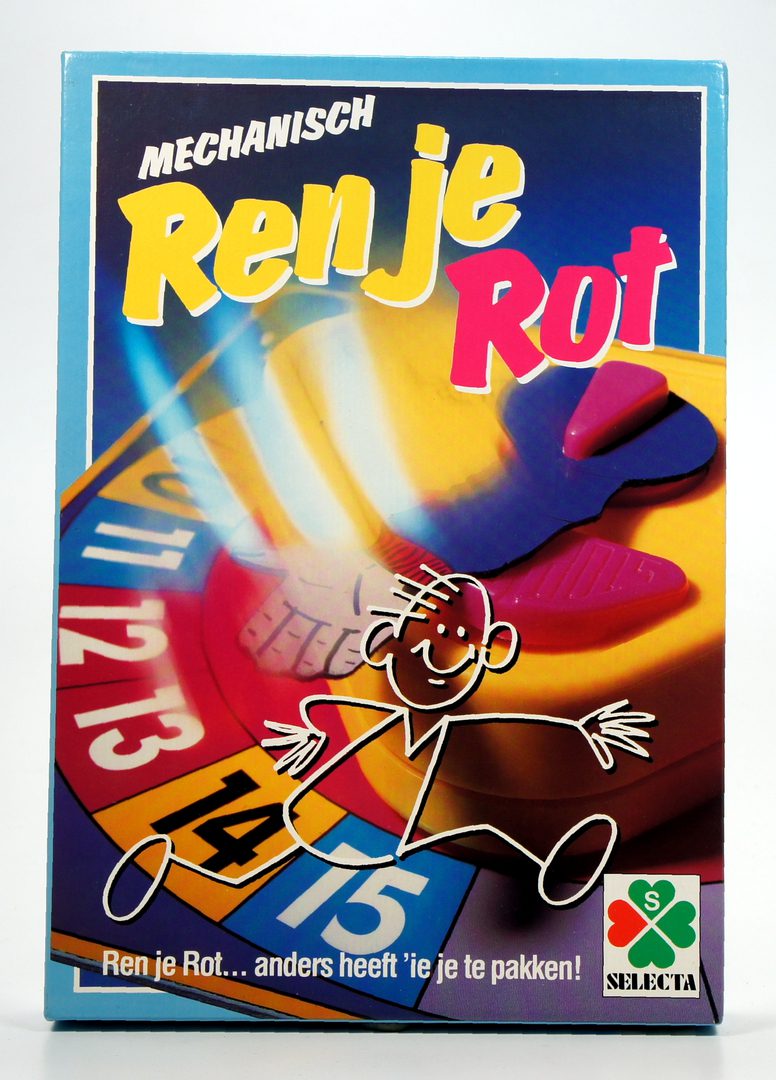
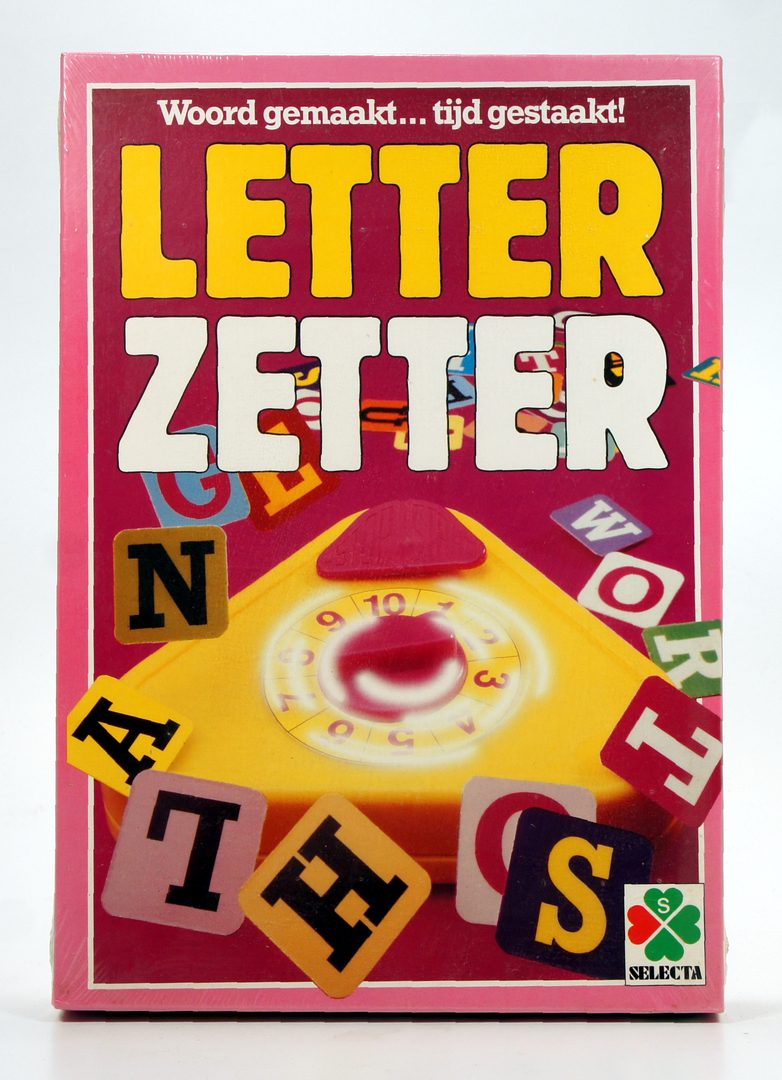
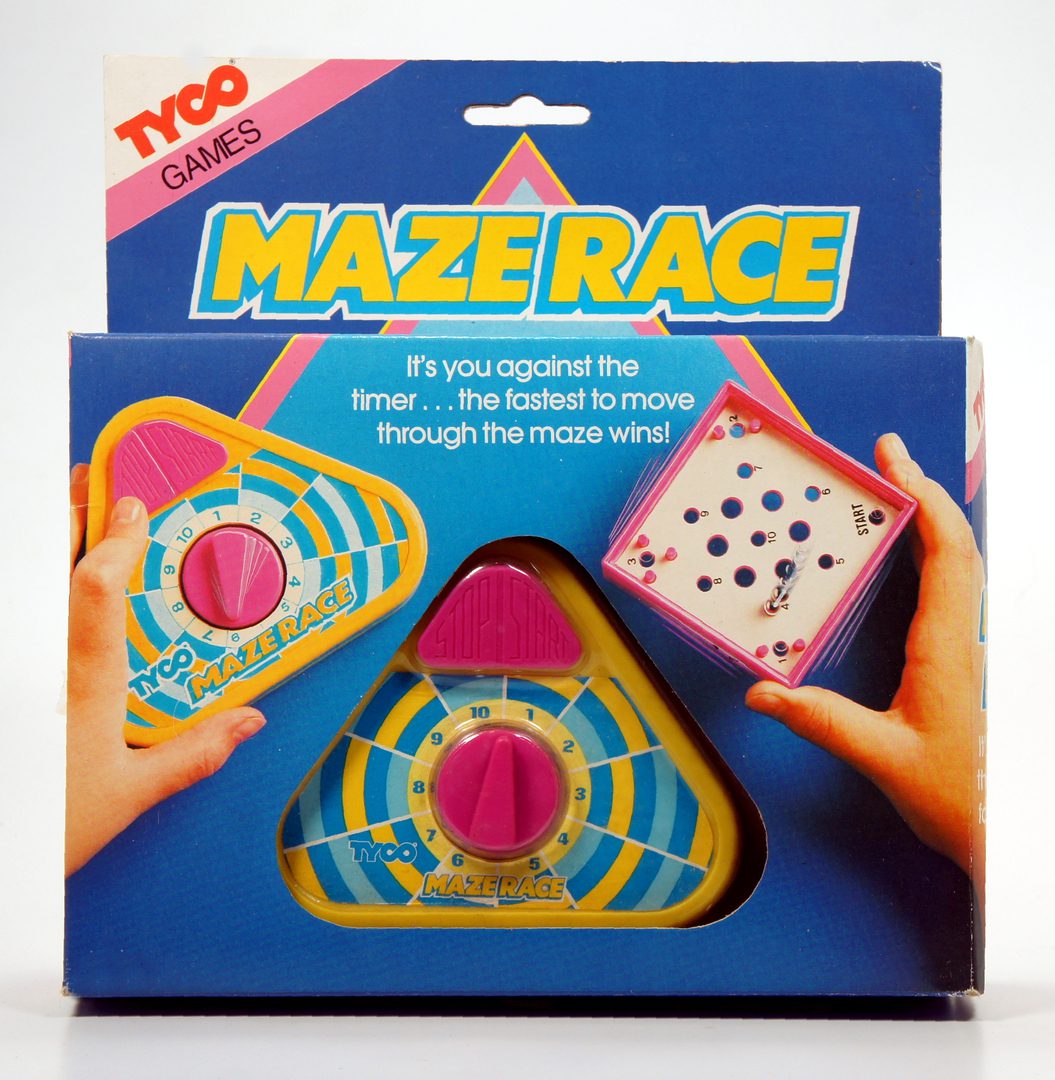
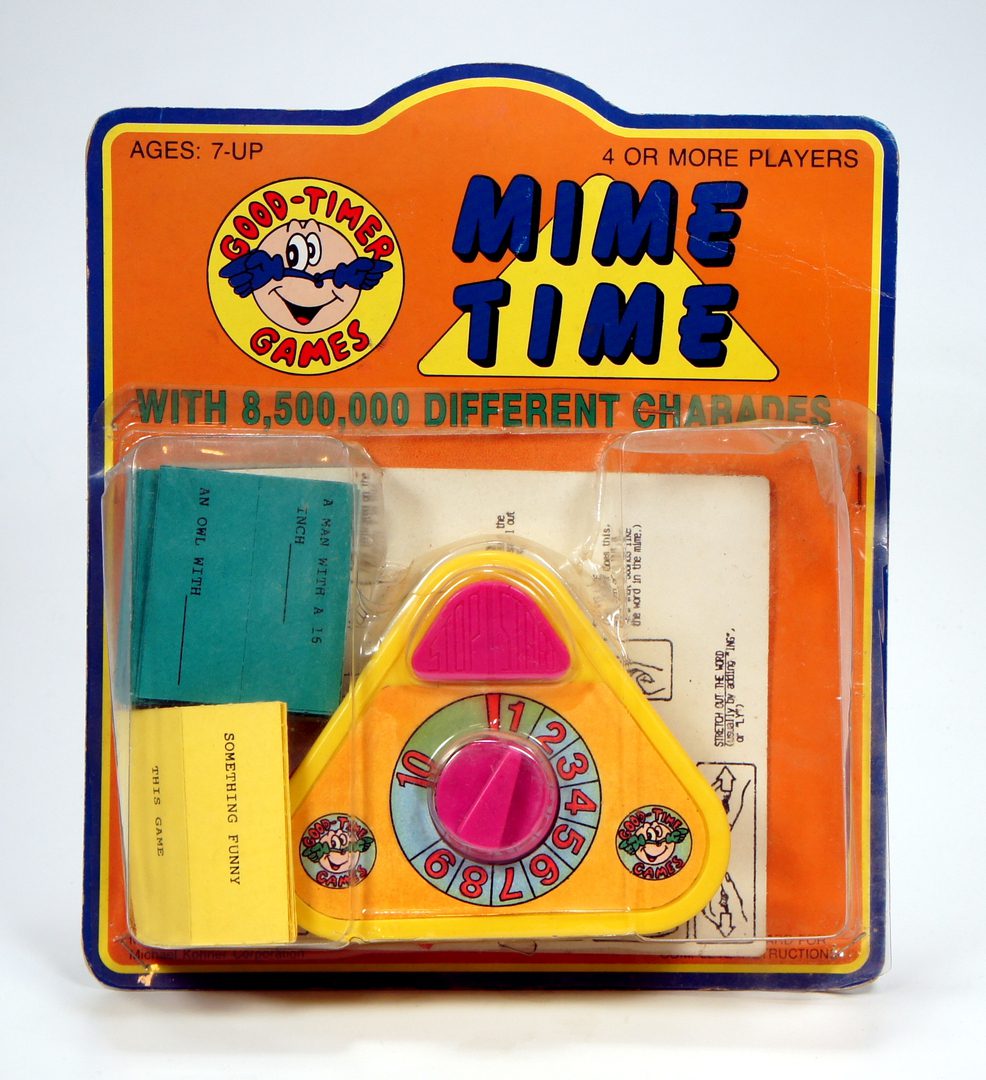
The Timer Games (1988) were a series of games all built around an inexpensive triangle shaped timer.
•In the "Clock Chase", the player has to stay ahead of the sweep hand attached to the timer by rolling the next color and moving his/her playing piece
•In "Spell Fast" the player starts the game with 6 tiles. The player must then try to spell a word with those tiles or add more letters as fast as he/she can. The score is calculated by multiplying the letters in the word times the timer’s score.
•In "Maze Race" the player has to complete a ball puzzle one number at a time. Once the player completes the “1”, he/she stops the timer and records his/her score. Next, he/she completes the “2”, and so on. The final scores are compared and the winner is the one with the highest score.
•In "Mime Time" players act out a three part charade, each part taken from a different color-coded pile.
Tomb of Doom
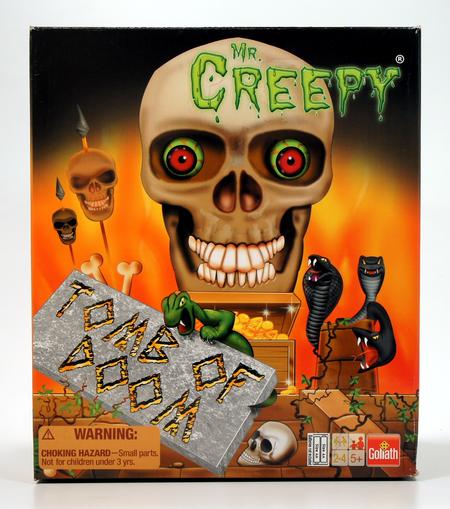
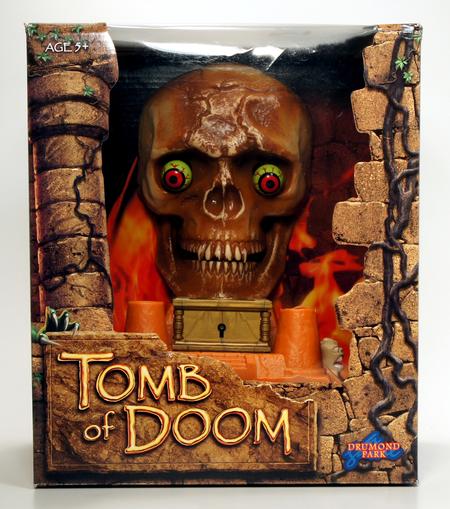
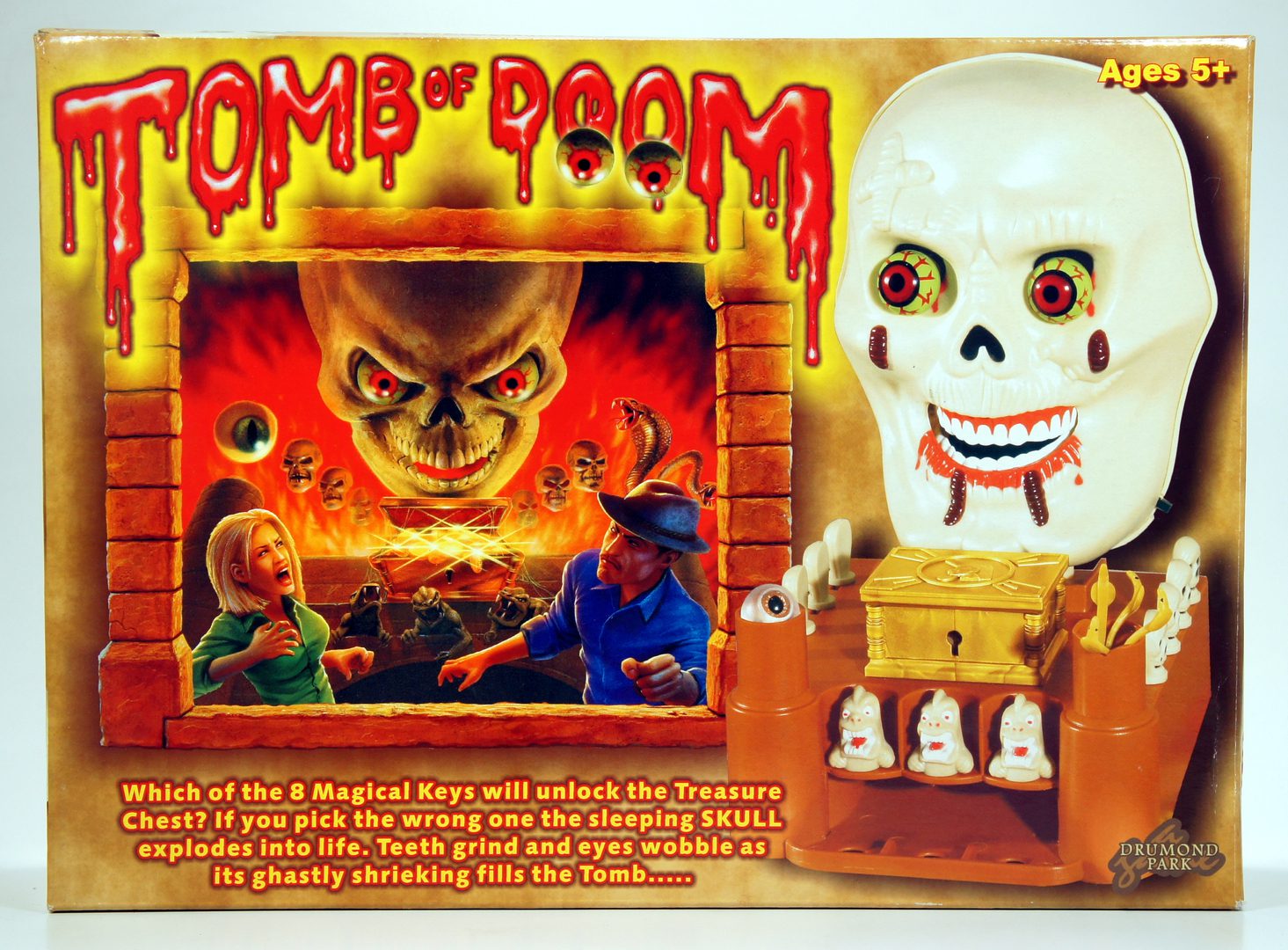
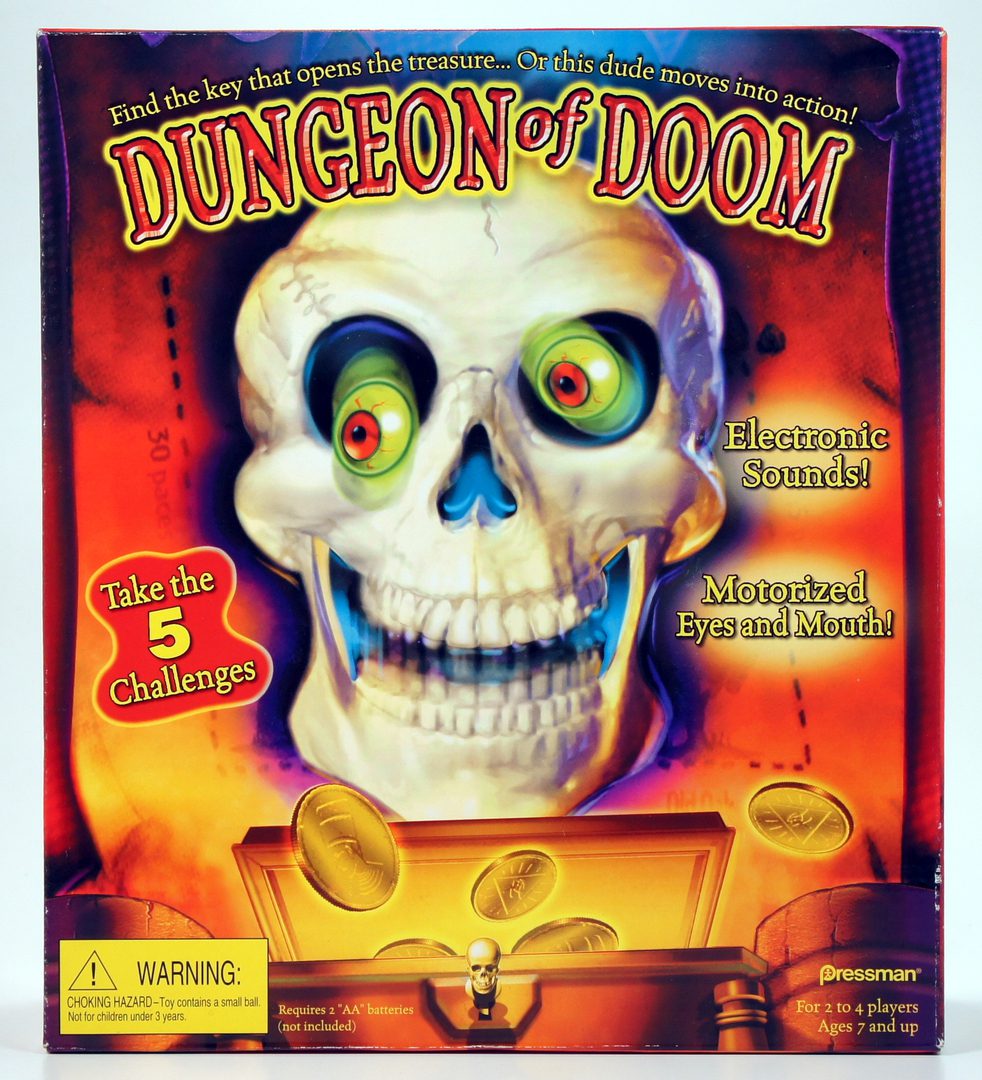
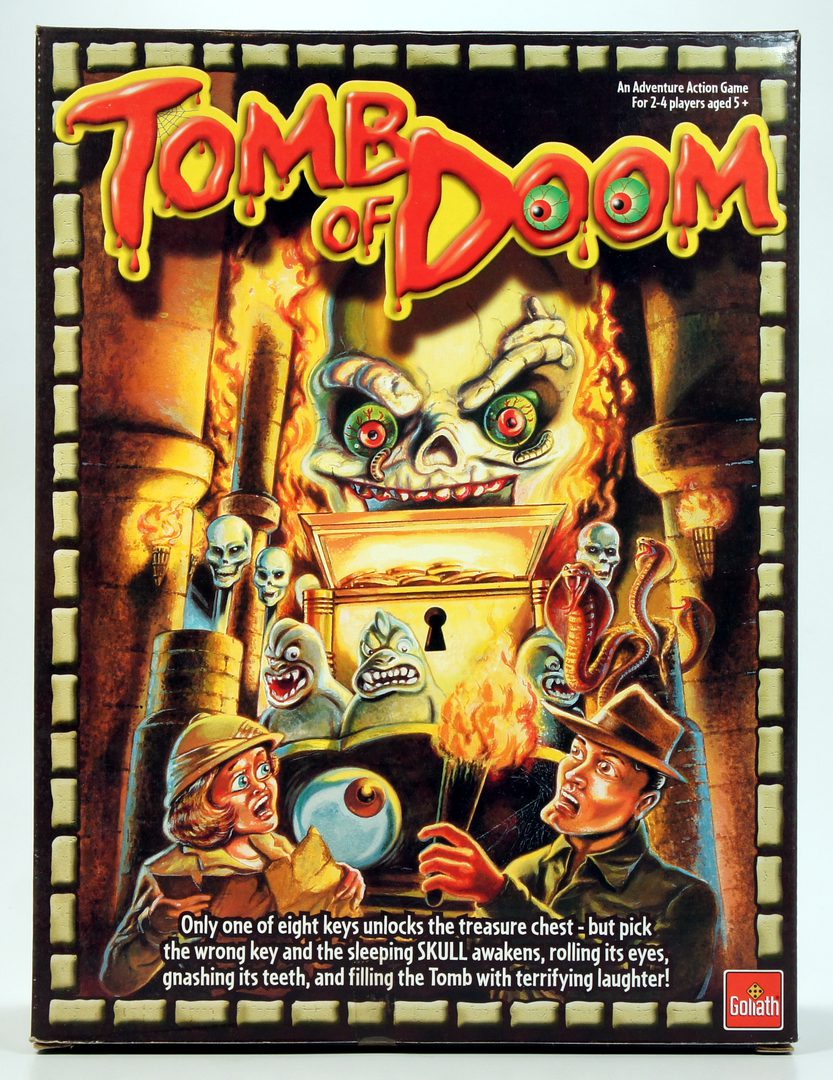
Tomb of Doom (November-1998) began as a Halloween novelty item. The skull laughed and clattered its teeth for 4 or 5 seconds. I added a chest containing gold coins that the skull was guarding. The players had to complete one of 5 "challenges", which were guessing games that included snakes, treasure maps, skulls, and bones. Winning the smaller game gave the player the chance to choose one of the 8 keys, only one of which opened the chest, where the player won a gold coin. The wrong key would set off the skull that shattered it teeth and rolled it's eyes.
The Tooth Fairy Game
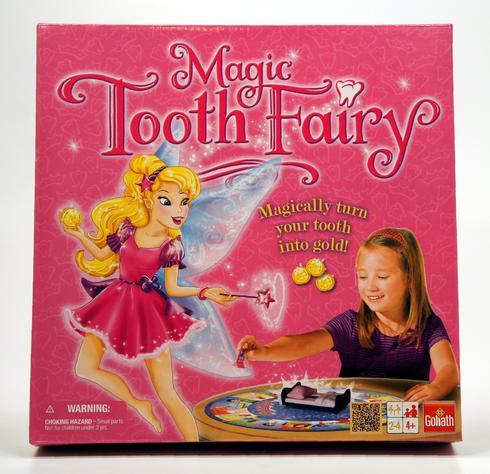
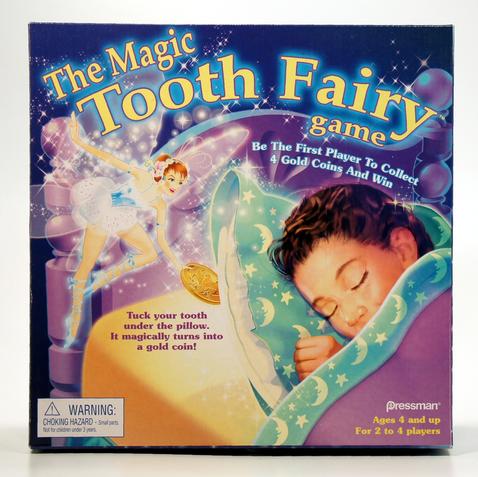
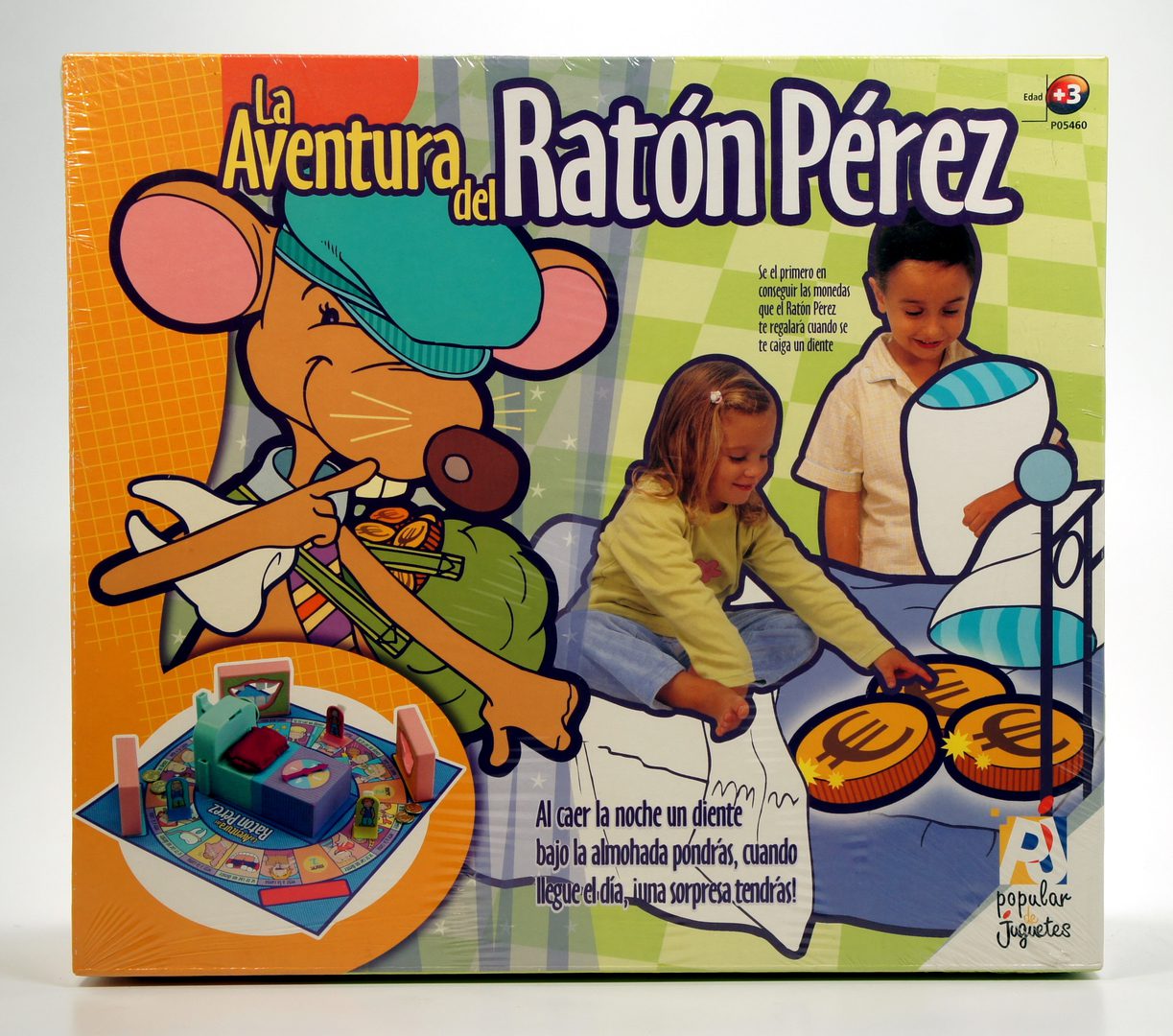
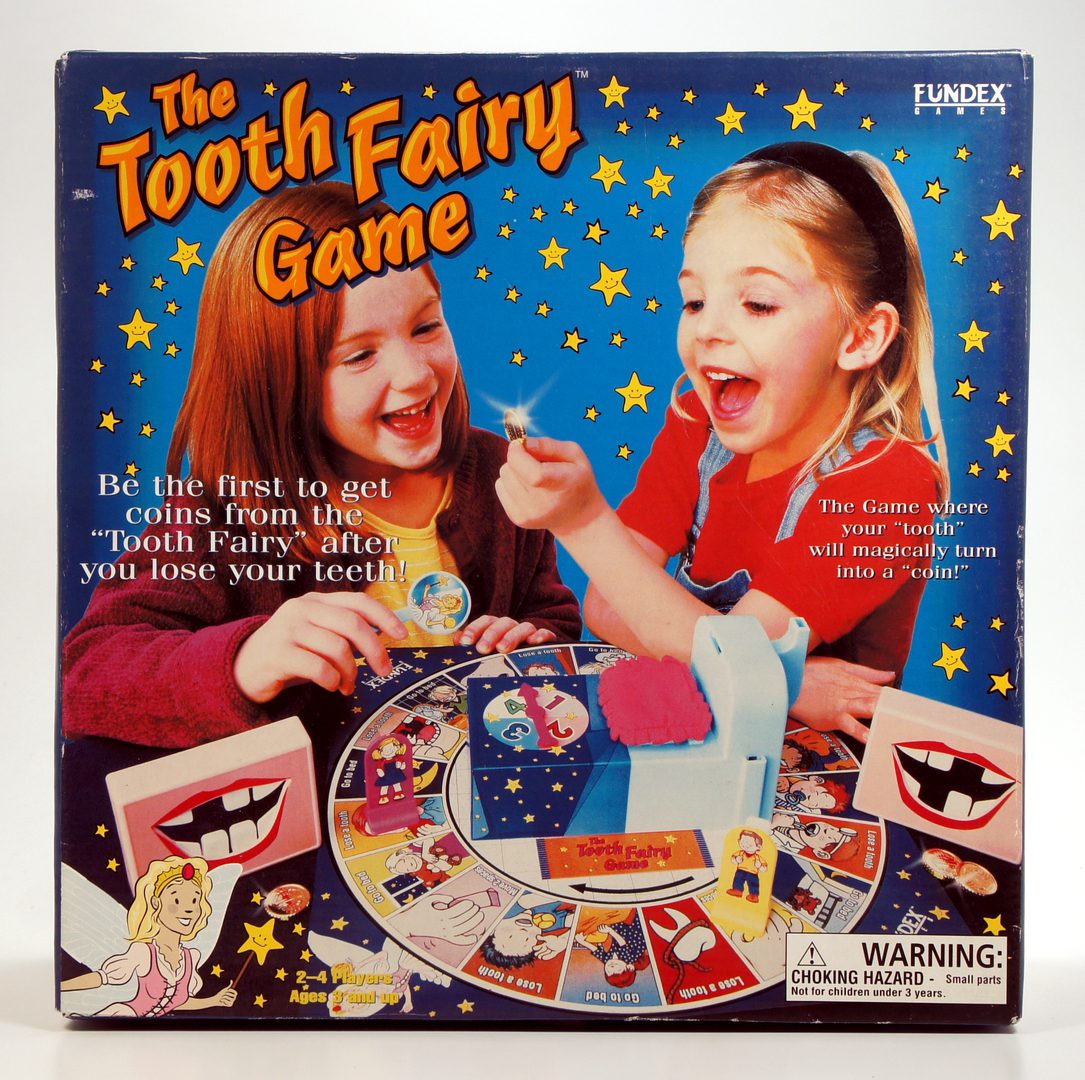
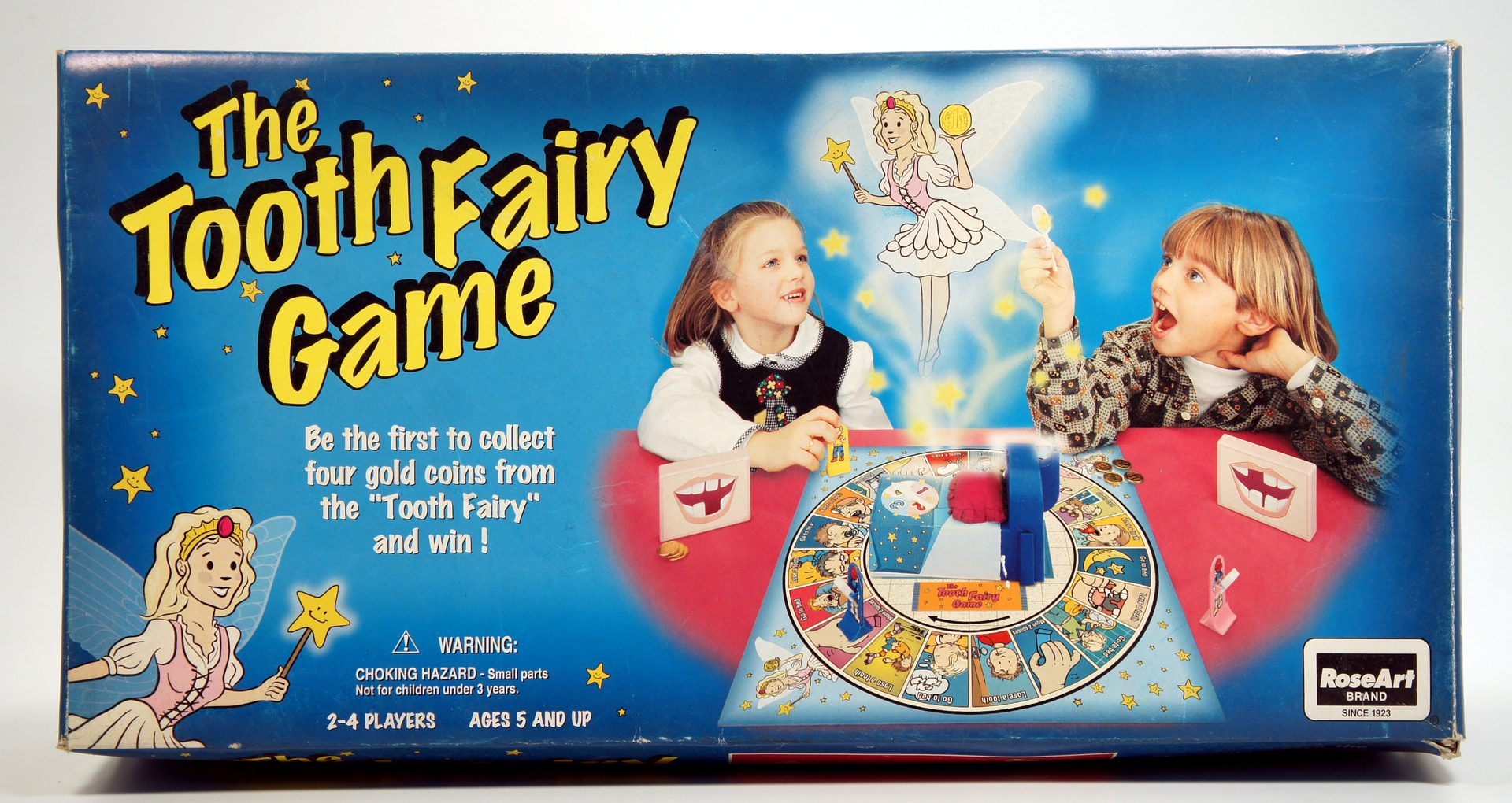
The Tooth Fairy Game (October 1996) was invented in Ruby Tuesdays, where several daughters and I were waiting for our food. I suggested we invent a game while we were waiting. Joana, who was about six at the time, started to protest when one of her very loose teeth fell out and bounced across the table, and the Tooth Fairy game was born. The game is played on a board where the players lose 4 teeth from a smiling plastic mouth. The game is played on a board where players land on different events that cause them to lose teeth from a smiling plastic mouth. When players land on the “Go to Bed” space, they place their tooth under the pillow and the tooth fairy magically turns it into a gold coin.
Total Panic
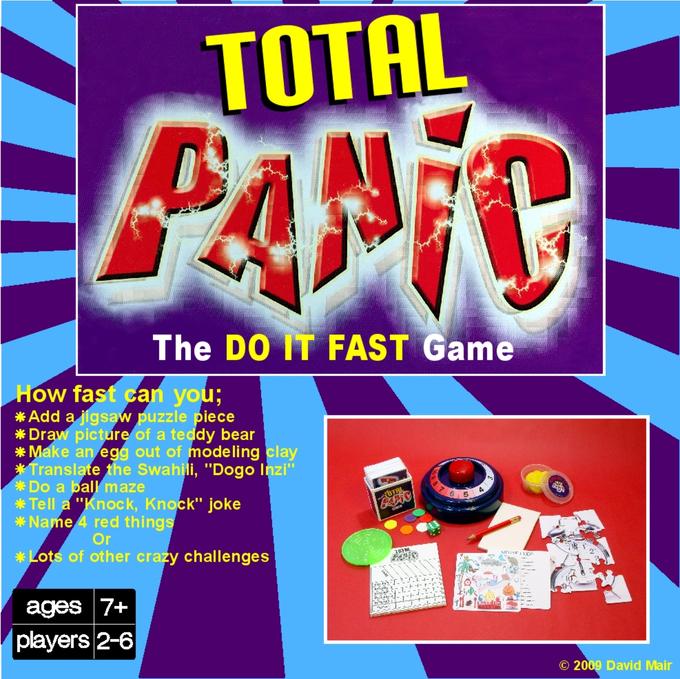
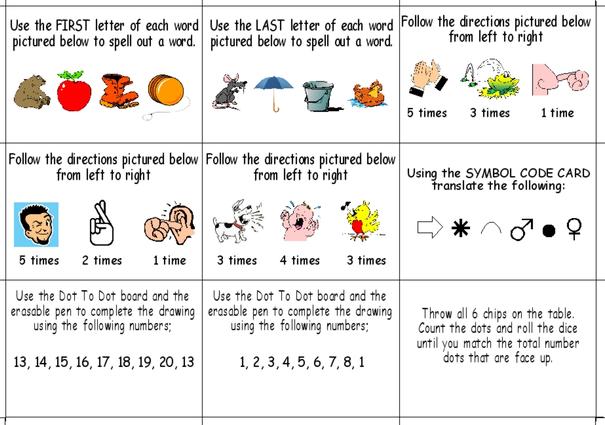
Total Panic (2009) was a direct offshoot of Don't Panic. In Total Panic, players complete different skill puzzles and tasks as fast as they can.For example, on a card with Morse code, players have to decipher the code using a Morse Code key card. [See other cards samples below.] Piatnik in Austria bought the rights in 2010, but the game was never produced, because in part, Goliath bought the right to market Panic in Germany and Austria from Piatnik.
Trapdoor Checkers
Trapdoor Checkers (2004) is a traditional checker game with a twist. In this version, players can open up one of the trapdoors in the board to make their opponent’s pieces disappear. The players spin a randomizer built into the board that indicates whether they can move a piece or move a trapdoor open or closed.
Turbo Panic
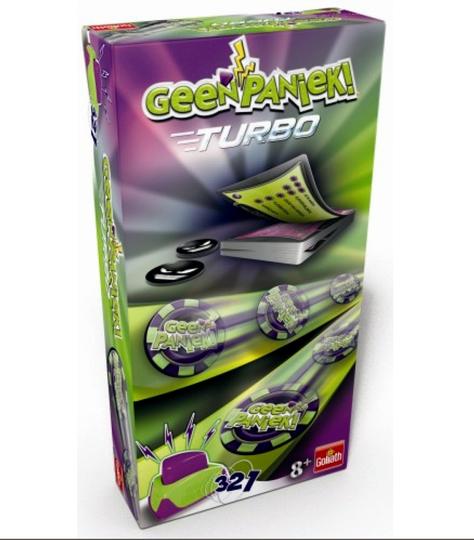
Turbo Panic (2014) is a version of Don't Panic with betting. This game was developed by Goliath with some consultation with me. The game play lets the players bet [chips] on how they will do against another player in naming things in various categories. Other players can also bet on which player will win the head-to-head contest.
Vampire Diaries
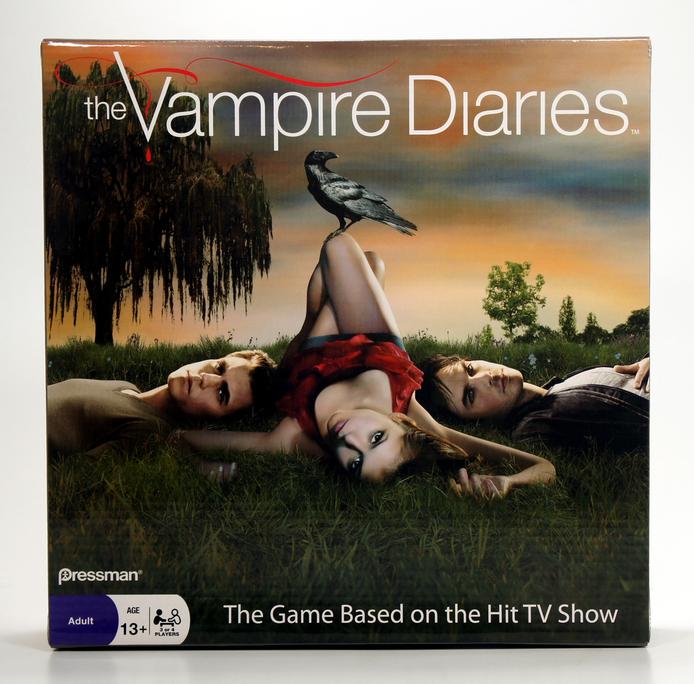
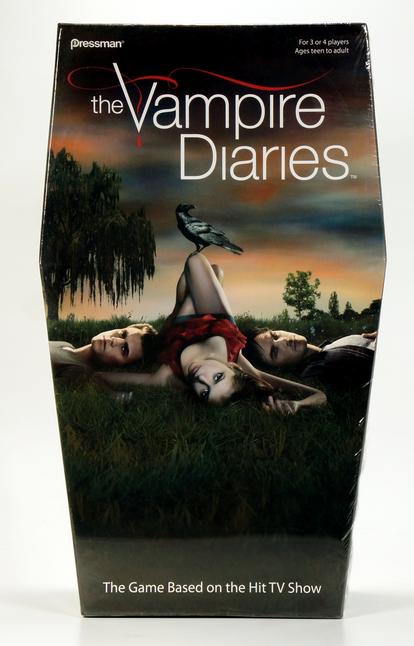
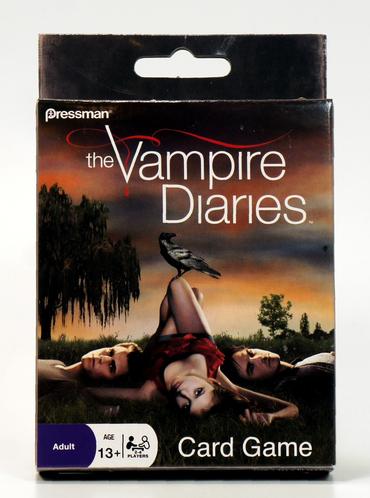
Vampire Diaries (February 2009) started out as Mark of the Vampire. Based on the TV show of the same name, Vampire Diaries has pictures of the characters who get "bitten" using a rubber ink stamp bite. Bill Van Orden suggested the idea, remembering my old Sealed With A Kiss game. After 3 bites, the characters turn into vampires when a lever is pressed on the back of the frame, revealing two fangs . In addition to a card game version, a coffin shaped version was also produced.
What Comes to Mind?
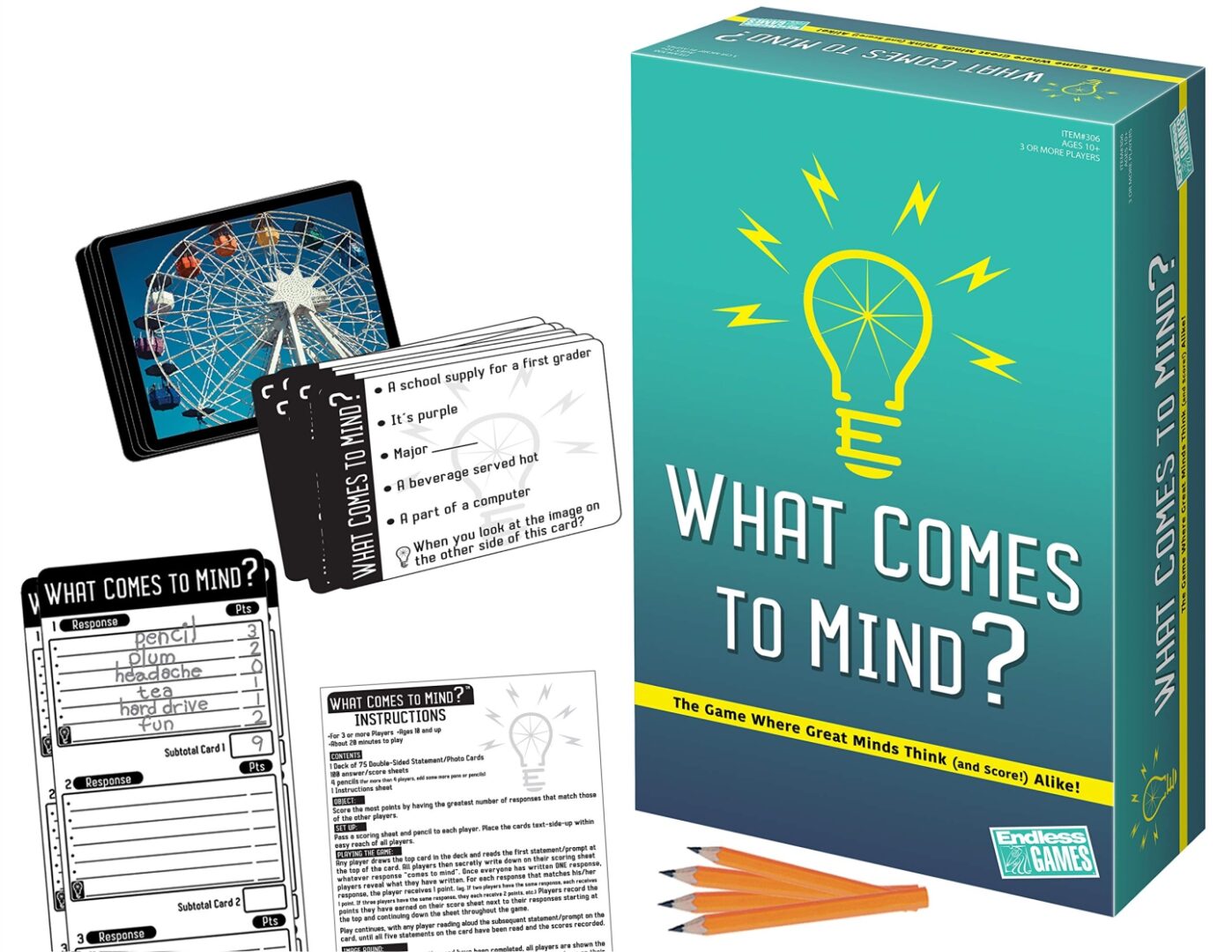
The game was initially invented in 2013 with Tony Vadasz. It was sold to Endless Games in 2018. The basic game play is that everyone is given a prompt from a card, and everyone writes down the first thing that comes to mind. Players that have the same answer score.
Word Search
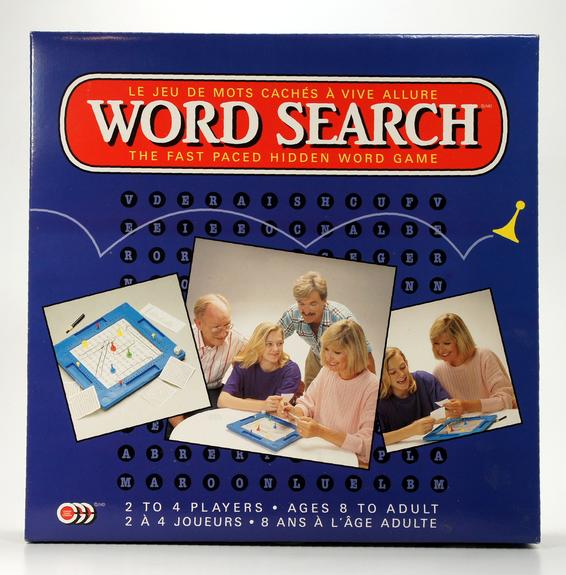
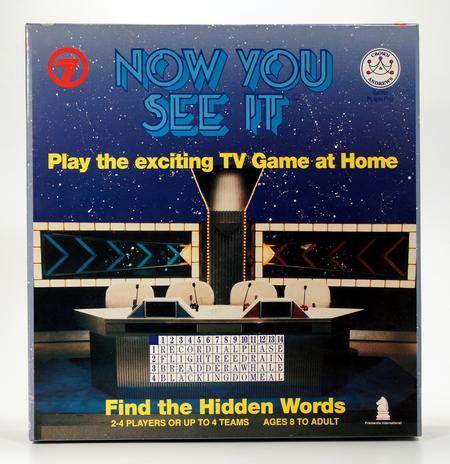
Word Search (December 1986) is based on the popular concept of finding hidden words within a grid, with the hidden words running right and left, up and down, or diagonally. With a word grid in place under a sheet of clear plastic, the players move their playing pieces letter to letter to the first letter in the word. The first player there claimed that word and circled the letters in the word with an erasable crayon. The added feature to the play was the fact that these circled words could be used as a slide to move more quickly around the board.
Wormy Apples
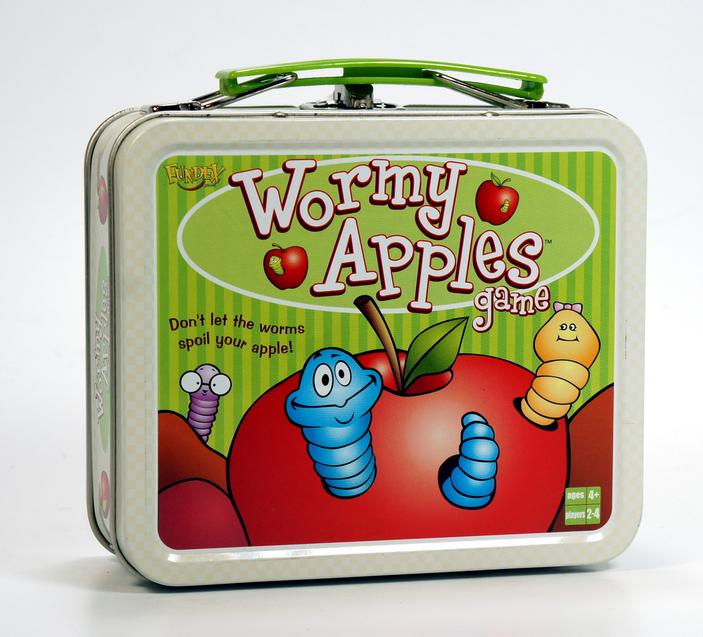
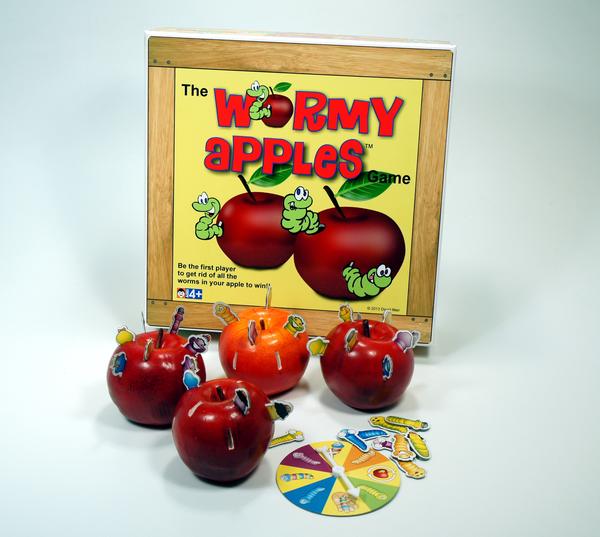
Wormy Apples (invented 2002) was modified by Fundex in 2004. The original game had 3D apples with fuzzy cute worms. The Fundex version used half apples and cardboard worms and came in a metal lunch-box like container. Each player startes with an apple full of worms, and by spinning the spinner, tries to get rid of them. The first to do that, is the winner.
Wrecking Ball
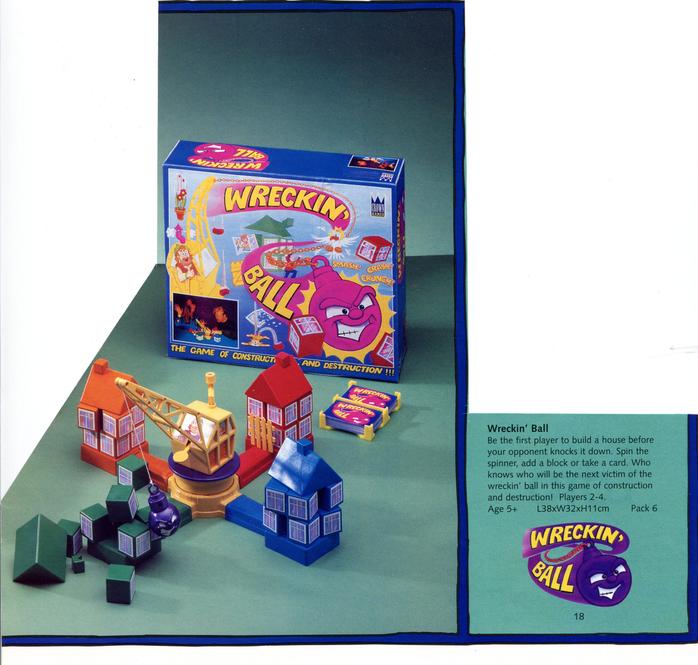
Wrecking Ball (September 1993) is a game that featured a crane and a wrecking ball containing a sound chip of a crash. The players try to assemble their house before any of the other players. The wrecking ball could be released in their direction at any time during the game, and the house would be totally destroyed. During the game, players could draw a card that allowed them to put up a protective picket fence in front of their house that would shield the house against the wrecking ball's release. The game never went into production.